Kirjojen hintavertailu. Mukana 11 627 461 kirjaa ja 12 kauppaa.

Kirjahaku

Etsi kirjoja tekijän nimen, kirjan nimen tai ISBN:n perusteella.

1000 tulosta hakusanalla Kelley Helmstutler Di Dio

Leone Leoni and the Status of the Artist at the End of the Renaissance

Leone Leoni and the Status of the Artist at the End of the Renaissance

Kelley Helmstutler Di Dio

Ashgate Publishing Limited
2010
sidottu
The late Renaissance sculptor Leone Leoni (1509-1590) came from modest beginnings, but died as a nobleman and knight. His remarkable leap in status from his humble birth to a stonemason's family, to his time as a galley slave, to living as a nobleman and courtier in Milan provide a specific case study of an artist's struggle and triumph over existing social structures that marginalized the Renaissance artist. Based on a wealth of discoveries in archival documents, correspondence, and contemporary literature, the author examines the strategies Leoni employed to achieve his high social position, such as the friendships he formed, the type of education he sought out, the artistic imagery he employed, and the aristocratic trappings he donned. Leoni's multiple roles (imperial sculptor, aristocrat, man of erudition, and criminal), the visual manifestations of these roles in his house, collection, and tomb, the form and meaning of the artistic commissions he undertook, and the particular successes he enjoyed are here situated within the complex political, social and economic contexts of northern Italy and the Spanish court in the sixteenth century.
Leone Leoni and the Status of the Artist at the End of the Renaissance
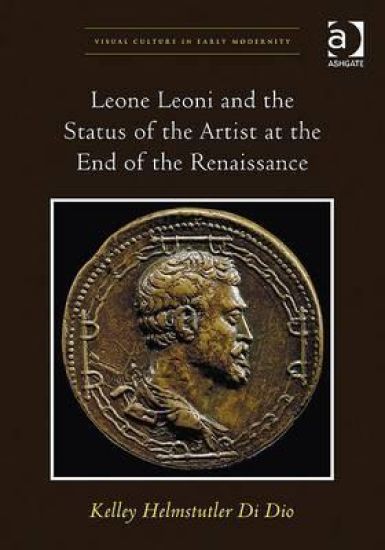
The late Renaissance sculptor Leone Leoni (1509-1590) came from modest beginnings, but died as a nobleman and knight. His remarkable leap in status from his humble birth to a stonemason's family, to his time as a galley slave, to living as a nobleman and courtier in Milan provide a specific case study of an artist's struggle and triumph over existing social structures that marginalized the Renaissance artist. Based on a wealth of discoveries in archival documents, correspondence, and contemporary literature, the author examines the strategies Leoni employed to achieve his high social position, such as the friendships he formed, the type of education he sought out, the artistic imagery he employed, and the aristocratic trappings he donned. Leoni's multiple roles (imperial sculptor, aristocrat, man of erudition, and criminal), the visual manifestations of these roles in his house, collection, and tomb, the form and meaning of the artistic commissions he undertook, and the particular successes he enjoyed are here situated within the complex political, social and economic contexts of northern Italy and the Spanish court in the sixteenth century.
Shipping Sculptures from Early Modern Italy

Shipping Sculptures from Early Modern Italy

Kelley Helmstutler Di Dio

BREPOLS N.V.
2025
sidottu
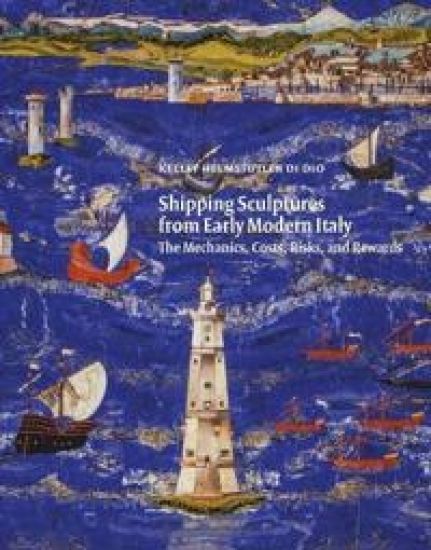
Shipping Sculptures from Early Modern Italy: The Mechanics, Costs, Risks, and Rewards focuses on enormous amounts of sculptures moved from Italy to Spain from ca. 1500-1750. An analysis of an important body of unpublished archival documentation regarding the practical issues involved in making and transporting sculpture, provide the basis for this study of the development of technologies, infrastructure, and labor organization necessary to make such challenging transports of moving sculptures by land and sea possible. Artists, patrons, and agents had the eventual movement to a destination at the center of decision making when new sculptures were commissioned to send. Sending antiquities or second-hand works required even more planning and care. Divided into a series of case studies of major sculptures, Shipping Sculptures offers a new approach to the study of cross-cultural artistic exchange, state gifts, collecting and patronage, by examining the practical details of object movement over challenging geographies.
Sculpture Collections in Early Modern Spain

Sculpture Collections in Early Modern Spain

Kelley Helmstutler Di Dio; Rosario Coppel

TAYLOR FRANCIS LTD
2024
nidottu
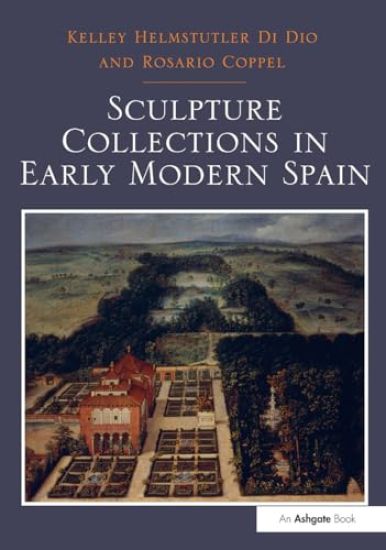
In the past decade, there has been a surge of Anglophone scholarship regarding Spain in the sixteenth and seventeenth centuries, which has led to a reframing of the discourses around Spanish culture of this period. Despite this new interest-in which painting, in particular, has been singled out for treatment-a comprehensive study of sculpture collections and the status of sculpture in Spain has yet to be produced. Sculpture Collections in Early Modern Spain is the first book to assess the phenomenon of sculpture collecting and in doing so, it alters the previously held notion that Spanish society placed little value in this art form. Di Dio and Coppel reveal that, due to the problems and expense of their transport from Italy, sculptures were in fact status symbols in the culture. Thus they were an important component of the collections formed by the royal family, cultivated noble collectors, humanists, and artists who had pretensions of high status. This book is especially useful to specialists for its discussion of the typologies of collections and objects, and of the mechanics of state gifts, transport, and collection display in this period. An appendix presents extensive archival documentation, most of which has never before been published. The authors have uncovered hundreds of new documents about sculpture in Spain; and new documentary evidence allows them to propose several new identifications and attributions. Firmly grounded in extensive archival research, Sculpture Collections in Early Modern Spain redefines the socio-political and art historical importance of sculpture in early modern Spain. Most importantly, it entirely transforms our knowledge regarding the presence of sculpture in a wide range of Spanish collections of the period, which until now has been erroneously characterized as close to non-existent.
Sculpture Collections in Early Modern Spain

Sculpture Collections in Early Modern Spain

Kelley Helmstutler Di Dio; Rosario Coppel

Ashgate Publishing Limited
2013
sidottu
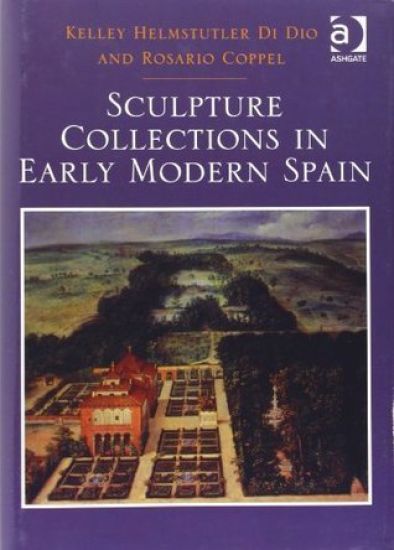
In the past decade, there has been a surge of Anglophone scholarship regarding Spain in the sixteenth and seventeenth centuries, which has led to a reframing of the discourses around Spanish culture of this period. Despite this new interest-in which painting, in particular, has been singled out for treatment-a comprehensive study of sculpture collections and the status of sculpture in Spain has yet to be produced. Sculpture Collections in Early Modern Spain is the first book to assess the phenomenon of sculpture collecting and in doing so, it alters the previously held notion that Spanish society placed little value in this art form. Di Dio and Coppel reveal that, due to the problems and expense of their transport from Italy, sculptures were in fact status symbols in the culture. Thus they were an important component of the collections formed by the royal family, cultivated noble collectors, humanists, and artists who had pretensions of high status. This book is especially useful to specialists for its discussion of the typologies of collections and objects, and of the mechanics of state gifts, transport, and collection display in this period. An appendix presents extensive archival documentation, most of which has never before been published. The authors have uncovered hundreds of new documents about sculpture in Spain; and new documentary evidence allows them to propose several new identifications and attributions. Firmly grounded in extensive archival research, Sculpture Collections in Early Modern Spain redefines the socio-political and art historical importance of sculpture in early modern Spain. Most importantly, it entirely transforms our knowledge regarding the presence of sculpture in a wide range of Spanish collections of the period, which until now has been erroneously characterized as close to non-existent.
Kelley and Uncle Ray's Magical Day

Kelley and Uncle Ray's Magical Day

Cynthia Shaw

IngramSpark
2025
pokkari
Join Kelley, Uncle Ray and The Muffin Man at The Blue Berry Cafe, as they discover that family, friends and magical blueberries can make for a playful, entertaining and magical day. Enjoy the magical blueberries as they come to life to help The Muffin Man make Delicious Muffins and more. If you're ever in Bellbrook, Ohio, make sure you visit The real Blue Berry Cafe.
The Selected Letters of Florence Kelley, 1869-1931

The Selected Letters of Florence Kelley, 1869-1931

Florence Kelley

University of Illinois Press
2009
sidottu
As head of the National Consumers' League from its founding in 1899 until her death in 1932, Florence Kelley led campaigns that reshaped the conditions under which goods were produced in the United States. Her efforts produced the Pure Food and Drug Act of 1906, as well as laws providing for an eight-hour workday and a minimum wage. She mobilized women's organizations to support the passage of the first federal health legislation for women and children in 1921, and she headed the crusade against child labor between 1890 and 1930. An ally of W.E.B. Du Bois, she was a founding member of the National Association for the Advancement of Colored People and served on its board for twenty years. This volume collects nearly three hundred of Florence Kelley's letters, written over the course of more than six decades and embracing such topics as improved working conditions for women and children, intense engagement in electoral politics, struggles against manufacturing interests, and the machinations of a conservative Supreme Court. Rendered in Kelley's vivid, often combative prose, these letters also provide an intimate view into the personal life of a dedicated reformer who balanced her career with her responsibilities as a single mother of three children.