Kirjojen hintavertailu. Mukana 11 699 587 kirjaa ja 12 kauppaa.

Kirjahaku

Etsi kirjoja tekijän nimen, kirjan nimen tai ISBN:n perusteella.

1000 tulosta hakusanalla Ken Delve; John Sheehan

Canberra

Canberra

Ken Delve; John Sheehan

Fonthill Media Ltd
2022
sidottu
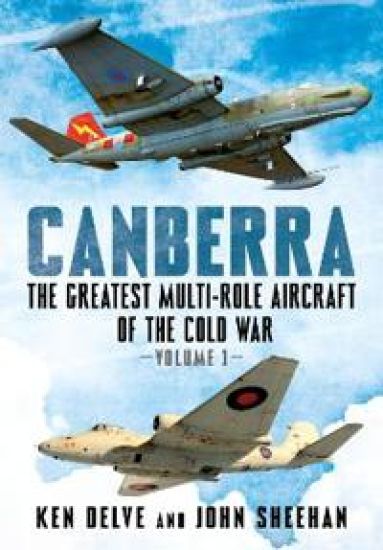
An aviation legend designed in the mid-1940s, the Canberra entered service in 1951 with RAF Bomber Command. It served in the conventional, interdictor and nuclear bomber role with the RAF, in the UK, Germany, the Middle East and Far East. Its performance and adaptability made it ideal as a reconnaissance aircraft, and the final version, the Canberra PR9, only finally retired in July 2006! The Canberra was used in many support roles, especially in signals / electronic warfare. The Canberra was adopted by air forces from South America to Africa and India, as well as Australia and New Zealand, and license-built as the Martin B-57 served. It was involved conflicts from the Suez War and Malaya Confrontation, and various other hot spots with the RAF, to the Australian and USAF ops in Vietnam, and even the India-Pakistan War when both sides used Canberras, and the 1982 Falklands War. Used in trials and evaluation the Canberra held various height and speed records, and NASA's High Altitude Research Program WB-57s are still active. The Canberra has also had dedicated enthusiasts, and aircraft (or cockpits) still survive in museums, as well as some in flying condition.
Canberra

Canberra

Ken Delve; John Sheehan

Fonthill Media Ltd
2022
sidottu
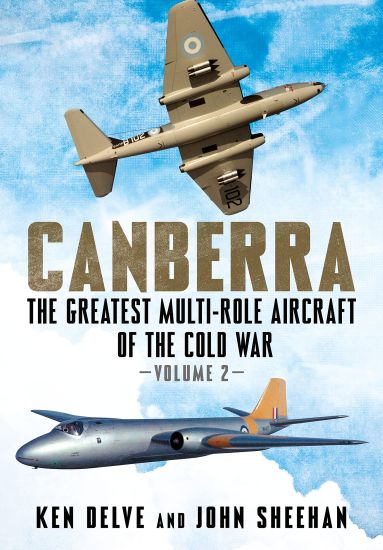
An aviation legend designed in the mid-1940s, the Canberra entered service in 1951 with RAF Bomber Command. It served in the conventional, interdictor and nuclear bomber role with the RAF, in the UK, Germany, the Middle East and Far East. Its performance and adaptability made it ideal as a reconnaissance aircraft, and the final version, the Canberra PR9, only finally retired in July 2006! The Canberra was used in many support roles, especially in signals / electronic warfare. The Canberra was adopted by air forces from South America to Africa and India, as well as Australia and New Zealand, and license-built as the Martin B-57 served. It was involved conflicts from the Suez War and Malaya Confrontation, and various other hot spots with the RAF, to the Australian and USAF ops in Vietnam, and even the India-Pakistan War when both sides used Canberras, and the 1982 Falklands War. Used in trials and evaluation the Canberra held various height and speed records, and NASA’s High Altitude Research Program WB-57s are still active. The Canberra has also had dedicated enthusiasts, and aircraft (or cockpits) still survive in museums, as well as some in flying condition.
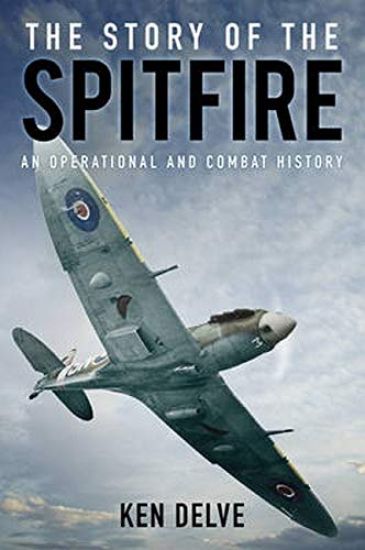
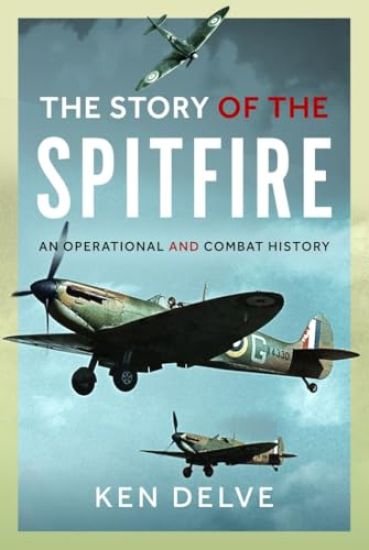
The Story of the Spitfire

The Story of the Spitfire

Ken Delve

The History Press Ltd
2016
nidottu
In a combat career that spanned the entirety of the Second World War, the Spitfire earned a reputation as the iconic fighter that friend and foe alike wanted to fly. Affectionately known as the ‘Spit’, the aircraft played a vital part in helping to lift the morale of the British public at home during the Second World War, where many a donation of pots and pans was made to support Spitfire production. Yet it was the RAF pilots responsible for flying the Spitfire in combat who knew, respected and loved this aeroplane the best. In this book author Ken Delve re-examines the Spitfire’s reputation using a wealth of important primary materials, including combat records, official trial reports and the personal accounts of those who flew the aircraft. The Story of the Spitfire charts the combat evolution of arguably the most important aerial fighting machine of the Second World War.
Story of the Spitfire

Story of the Spitfire

Ken Delve

PEN SWORD BOOKS LTD
2024
sidottu
To many people the Supermarine Spitfire was Britain’s saviour during the Battle of Britain and the embodiment of air combat during the Second World War. The Story of the Spitfire presents a thrilling appraisal of this unique aircraft, focusing on its fighting capability and the tactics of the pilots who flew it. Using official evaluations and reports, alongside technical and tactical developments, plus the recollections of Spitfire pilots, Ken Delve provides a fascinating insight into the combat career of this legendary aircraft. Despite some problems with their new aircraft, the Fighter Command pilots of 1938 were generally delighted with the Spitfire – speed, manoeuvrability and firepower were all far greater than they had been with the earlier biplanes. In tactics and training the RAF was outdated, but it adapted quickly and the air battles over Britain in late 1940 forged the Spitfire legend. How justified was the legend? There were only nineteen Spitfire squadrons in Fighter Command during the Battle of Britain; it was only later, as the RAF turned to the offensive, that the number of Spitfire units increased dramatically. At certain times the combat initiative was lost to improved Messerschmitt Bf 109s and Focke-Wulf Fw 190s, but with increased performance and better training, the Spitfire clawed back the advantage. By 1944 the Spitfire was operating as a fighter-bomber in various theatres of war, with new tactics and new problems. Many fighter pilots thought that having bombs strapped under the aircraft verged on an insult – but with aerial targets in short supply, this was the most effective, if risky, way of taking the war to the enemy. After the war the Spitfire saw action right up to 1948 in the Arab-Israeli War. Today there are approximately seventy airworthy Spitfires in existence and R.J. Mitchell’s remarkable aircraft is still the highlight of flying displays around the world.
D-Day

D-Day

Ken Delve

Independently Published
2019
pokkari
6 June 1944 and the Allied invasion of Europe - D-Day, the return to Europe for the final and decisive battles against Nazi Germany. The scale of the amphibious operation was almost immeasurable, the risks were high, and success was by no means guaranteed. After years of build-up, planning and exercises, the Allies were about to storm a heavily-defended coast that had been occupied by the enemy for four years. It was an all-arms operation by land, sea and air forces, with, as usual, the land forces taking the greatest risks and highest casualties The air campaign in the build-up phase, from bombing to reconnaissance was crucial in preparing the battlefield; the air support of the actual assault, whilst not perfect, ensured there was no air threat; whilst the continued air effort in the weeks after D-Day helped ensure that once the Allies were ashore they would not be pushed back into the sea.
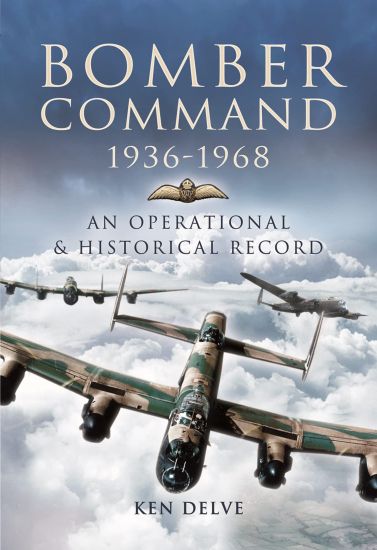
Bomber Command 1936-1968

Bomber Command 1936-1968

Ken Delve

PEN SWORD BOOKS LTD
2022
nidottu
The basic concept is a series of books each of which will focus on one RAF Command during World War Two. Format for each one will be the same, which in outline will comprise: Introduction - outline of the Command and its predecessors in the period up to 1939. Command history 1939-1945. This will be divided into sections either by role or operation, the exact composition of these sections will of course depend of the Command (for example, Battle of Britain for Fighter Command). This section will include information panels on topics such as: a. Commanders. b. Aircraft. c. Orders of Battle. d. Group overviews. Outline history of the Command post 1945. Appendices, including airfields, squadron histories, reading list, heritage trail (what can you see now).
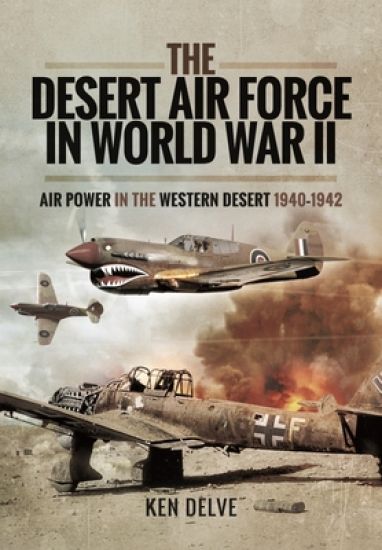
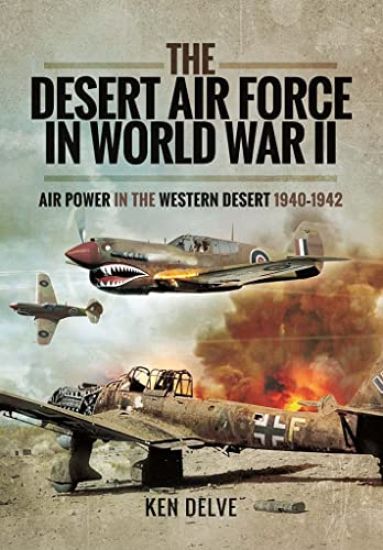
The Desert Air Force in World War II

The Desert Air Force in World War II

Ken Delve

PEN SWORD BOOKS LTD
2022
nidottu
This is a comprehensive reference to the structure, operation, aircraft and men of the 1st Tactical Air Force, or Desert Air Force as it became known. It was formed in North Africa to support the 8th Army and included squadrons from the RAF, SAAF, RAAF and eventually the USAAF. The book includes descriptions of many notable defensive and offensive campaigns, the many types of aircraft used, weapons and the airfields that played host to these events. The five main sections of the book include a general historical introduction and overview, operations, operational groups, aircrew training and technical details of each aircraft type. Lengthy annexes cover personnel, the squadrons in World War II, accuracy of attacks, orders of battle for each wartime year, maps of airfield locations and numbers of enemy aircraft downed.
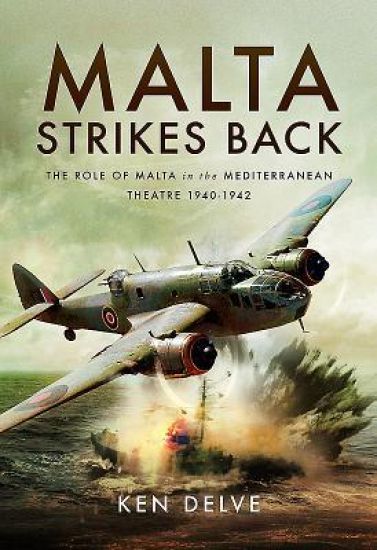
Malta Strikes Back

Malta Strikes Back

Ken Delve

Pen Sword Aviation
2017
sidottu
The key to our position in the whole Mediterranean lay in Malta. (Tedder) Two of the greatest strategic mistakes by Hitler involved failure to take control of two key locations, Gibraltar and Malta; between them these two were able to influence, and at times dominate, the Western Mediterranean area, and surrounding land masses. Malta, with its strategic partner, Alexandria (and Egypt) likewise dominated the Eastern Mediterranean and surrounding land masses. Malta only existed strategically for its ability to attack the enemy Lines of Communication between European bases (now stretching from France to Crete) and North Africa. Every piece of equipment, every man and all supplies had to move from Europe to North Africa, the majority by surface vessel, and had to be gathered at a limited number of port facilities in both locations, which made those locations key choke points and targets. Once in North Africa, everything had to move along the main coastal road from the supply ports to dumps and to units. Every campaign is to a greater or lesser extent one of logistics, the Desert War more so than most. It has often been called a war of airfields but it is more accurately described as a war of logistics , with airfields playing a major role in defending one s own supply lines whilst striking at the enemy s lines. If Malta could not attack, then it was a drain on resources; but in order to attack it had to protect the infrastructure and equipment needed for attack. The ability to take a pounding, shake it off and fight back was the key to survival. The Island required determined leadership, external support dedicated to supplying the Island, and the committed resilience of all those on the Island to ensure success. This is the story of how Malta rose to meet the challenges facing its defences during the Second World War; how it struck back and survived one of its darkest eras.
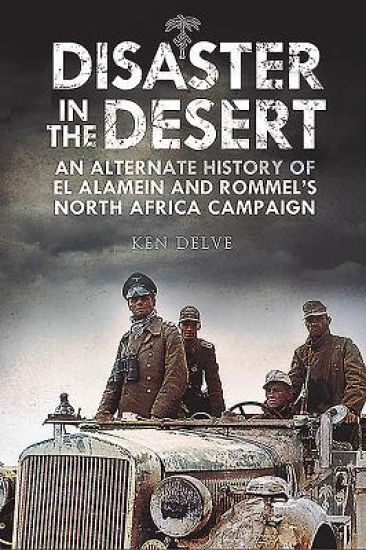
Disaster in the Desert

Disaster in the Desert

Ken Delve

Greenhill Books
2019
sidottu
Summer 1942 and the war in the Middle East is in the balance; Rommel's Axis forces are posed on the borders of Egypt and all that is needed is one last push. For that to succeed, Rommel needs supplies and for the Allies to be denied supplies. With Malta still active and disrupting the Axis shipping routes across the Mediterranean he is denied those supplies. Meanwhile, the Allied build-up continues, and Montgomery holds at El Alamein and then counter attacks Rommel is pushed back and then in a double blow, the Allies land in Tunisia. The collapse of North Africa leads to the invasion of Italy and contributes to the final Axis defeat. But what if Rommel had won? In this alternate history, Ken Delve proposes that with a few strategic changes by the Axis, poor decision by Allied Commanders, the outcome of could have been very different. In this scenario, the Allied invasion in Tunisia fails, Rommel defeats Montgomery and seizes Egypt, leaving the Germans well-placed to sweep up through the Middle East, capturing oil installations and joining up with German forces in Russia.
Desert Air Force in World War II

Desert Air Force in World War II

Ken Delve

Pen Sword Aviation
2017
sidottu
This is a comprehensive reference to the structure, operation, aircraft and men of the 1st Tactical Air Force, or Desert Air Force as it became known. It was formed in North Africa to support the 8th Army and included squadrons from the RAF, SAAF, RAAF and eventually the USAAF. The book includes descriptions of many notable defensive and offensive campaigns, the many types of aircraft used, weapons and the airfields that played host to these events. The five main sections of the book include a general historical introduction and overview, operations, operational groups, aircrew training and technical details of each aircraft type. Lengthy annexes cover personnel, the squadrons in World War II, accuracy of attacks, orders of battle for each wartime year, maps of airfield locations and numbers of enemy aircraft downed.
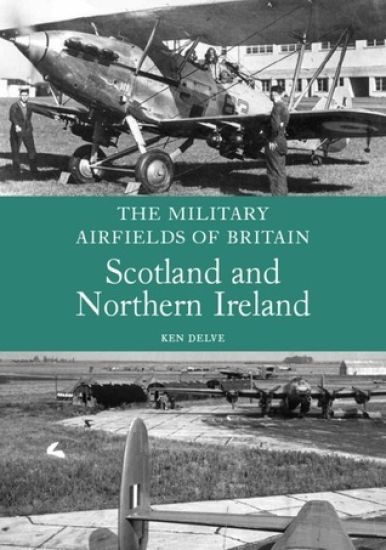
The Military Airfields of Britain: Scotland and Northern Ireland
This series of books, based on the author's popular series for Flypast magazine, provides a fresh user-friendly look at the military airfields of Britain. The books, each of which includes a number of counties on a regional basis, are designed for the historian, the tourist and anyone with an interest in their local area. Entries cover every military airfield within the counties, from World War One to the present day, and comprise:
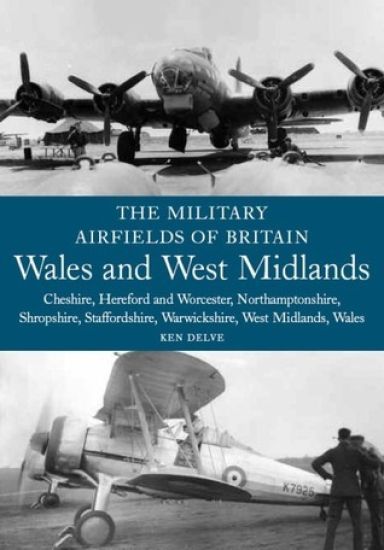
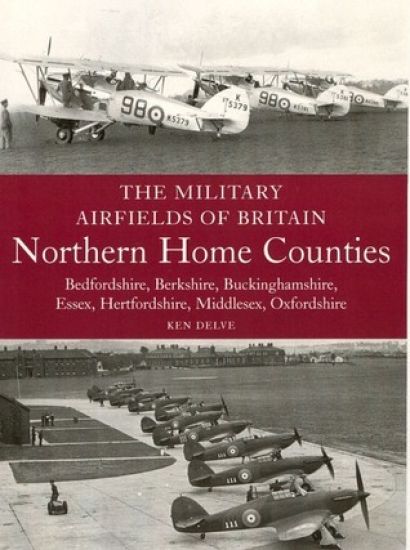
The Military Airfields of Britain: Northern Home Counties (Bedfordshire, Berkshire, Buckinghamshire, Essex, Hertfordshire, Middlesex, Oxfordshire)
This series of books provides a fresh user-friendly look at the military airfields of the British Isles. The series is split geographically, each book including a number of counties on a regional basis. Entries cover every military airfield within the counties, from WW1 to the present day and comprise: · Brief history of the airfield, construction and use including decoy sites · Comprehensive list of flying units with dates and aircraft types · List of HQ units based at the airfield · Details of memorials · Maps and plans of almost every airfield · Location details · Selection of period photographs
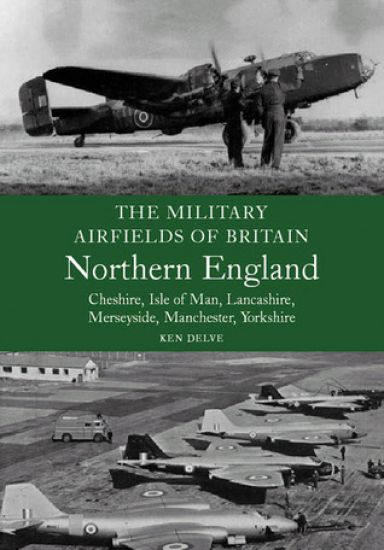
Military Airfields of Britain: No.3, Northern England-cheshire/isle of Man/lancashire/manchester/
This series of books provides a fresh user-friendly look at the military airfields of the British Isles. The series is split geographically, each book including a number of counties on a regional basis. Entries cover every military airfield within the counties, from WW1 to the present day and comprise: brief history of the airfield, construction and use including decoy sites; comprehensive list of flying units with dates and aircraft types; list of HQ units based at the airfield; details of memorials; maps and plans of almost every airfield; location details; and selection of period photographs. Bomber airfields of WWII dominated Northern England, with the Vale of York at its operational centre, but the area was also home to much aircraft manufacture, and the western side of the region trained thousands of aircrew in relative safety. Today it is almost all gone.
Ken Frane Short Stories

Ken Frane Short Stories

David Williams

Lulu.com
2019
pokkari
Five Short Stories to excite and enthrall. Here are examples of the anti-detective novel genre. Ken Frane is not a very successful gumshoe but he is tenacious. Former police detective turned private investigator he embarks on a number of strange and challenging cases. After a gentle introduction to the protagonist himself in the Dubrovnik Postcard affair he takes a holiday in Barmouth which turns into Big trouble in little Bermo. His lifelong love of Cardiff City FC gives him that extra bit of insight into solving the Bluebird Voodoo Doll. The Welsh political establishment is shaken by the murder of Andrew Leighton on the steps of the National Assembly and Ken Frane is inadvertently drawn into the Arab Israeli conflict in the final short story Farewell and a Jew. Tall tales that will keep you thinking long after you have closed the book.
Ken Russell On Screen

Ken Russell On Screen

chris wade

Lulu.com
2019
nidottu
Ken Russell: On Screen celebrates the film and television career of one of the world's most innovative, controversial, and outrageous directors of all time. Over the top, operatic, eccentric, flamboyant and magnificent, Ken Russell was a one off, a notorious enfant terrible, and the definition of a true maverick. He was also a genius.In a series of articles, writer, musician and filmmaker Chris Wade goes through Ken's long and varied career, focusing on such seminal works as The Devils, Tommy and Lair of the White Worm, as well as assessing his seminal BBC films of the 1960s. Also explored in depth is Ken's final era, The Gorsewood Years, his time as a truly independent filmmaker. The book features new recollections from Russell collaborators like Murray Melvin, who looks back on The Devils, his son Xavier Russell, Rick Wakeman and many more, plus pictures provided by Ken's wife Lisi. It is a tribute to one of the bravest and most overlooked directors of all time.
Joni and   Ken

Joni and Ken

Ken Tada; Joni Eareckson Tada

Zondervan
2015
pokkari
Joni and Ken is a true love story of one of the most adored, respected couples on the planet---Ken and Joni Eareckson Tada---who, through depression, pain, and cancer, faced the kind of testing and trials few could even conceive, all while displaying the love of Jesus in their relationship â?¦ for almost thirty years. Includes an eight-page photo section.