Kirjojen hintavertailu. Mukana 11 244 527 kirjaa ja 12 kauppaa.

Kirjahaku

Etsi kirjoja tekijän nimen, kirjan nimen tai ISBN:n perusteella.

1000 tulosta hakusanalla Ken Hyland

The Essential Hyland

The Essential Hyland

Ken Hyland

Bloomsbury Academic
2018
sidottu
Writing in the academy has assumed huge importance in recent years as countless students and academics around the world must now gain fluency in the conventions of academic writing in English to understand their disciplines, to establish their careers or to successfully navigate their learning. Professor Ken Hyland has been a contributor to the literature on this topic for over 20 years, with 26 books and over 200 chapters and articles. This work has had considerable influence in shaping the direction of the field and generating papers and PhD theses from researchers around the world. This is a topic which has found its time, as a central concept in applied linguistics, sociology of science, library studies, bibliometrics, and so on.This book brings together Ken Hyland's most influential and cited papers. These are organised thematically to provide both an introduction to the study of academic discourse and an overview of his contribution to the understanding of how academics construct themselves, their disciplines and knowledge through written texts. Several academic celebrities from the field provide a brief commentary on the papers and the book includes an overall reflection by the author on the impact of the papers and the direction of the field together with linear notes on the specific papers in each section. The volume not only includes some of Hyland's best chapters and journal articles but the thoughts of disciplinary luminaries on both the ideas in the book and the general state and direction of the field.
The Essential Hyland

The Essential Hyland

Ken Hyland

Bloomsbury Academic
2018
nidottu
Writing in the academy has assumed huge importance in recent years as countless students and academics around the world must now gain fluency in the conventions of academic writing in English to understand their disciplines, to establish their careers or to successfully navigate their learning. Professor Ken Hyland has been a contributor to the literature on this topic for over 20 years, with 26 books and over 200 chapters and articles. This work has had considerable influence in shaping the direction of the field and generating papers and PhD theses from researchers around the world. This is a topic which has found its time, as a central concept in applied linguistics, sociology of science, library studies, bibliometrics, and so on. This book brings together Ken Hyland's most influential and cited papers. These are organised thematically to provide both an introduction to the study of academic discourse and an overview of his contribution to the understanding of how academics construct themselves, their disciplines and knowledge through written texts. Several academic celebrities from the field provide a brief commentary on the papers and the book includes an overall reflection by the author on the impact of the papers and the direction of the field together with linear notes on the specific papers in each section. The volume not only includes some of Hyland's best chapters and journal articles but the thoughts of disciplinary luminaries on both the ideas in the book and the general state and direction of the field.
English for Academic Purposes

English for Academic Purposes

Ken Hyland

Routledge
2006
sidottu
Routledge Applied Linguistics is a series of comprehensive resource books, providing students and researchers with the support they need for advanced study in the core areas of English Language and Applied Linguistics. Each book in the series guides readers through three main sections, enabling them to explore and develop major themes within the discipline. Section A, Introduction, establishes the key terms and concepts and extends readers' techniques of analysis through practical application. Section B, Extension, brings together influential articles, sets them in context, and discusses their contribution to the field. Section C, Exploration, builds on knowledge gained in the first two sections, setting thoughtful tasks around further illustrative material. This enables readers to engage more actively with the subject matter and encourages them to develop their own research responses. Throughout the book, topics are revisited, extended, interwoven and deconstructed, with the reader's understanding strengthened by tasks and follow-up questions. English for Academic Purposes: introduces the major theories, approaches and controversies in the fieldgathers together influential readings from key names in the discipline, including: John Swales, Alasair Pennycook, Greg Myers, Brian Street and Ann Johns provides numerous exercises as practical study tools that encourage in students a critical approach to this subject. Written by an experienced teacher and researcher in the field, English for Academic Purposes is an essential resource for students and researchers of Applied Linguistics.
English for Academic Purposes

English for Academic Purposes

Ken Hyland

Routledge
2006
nidottu
Routledge Applied Linguistics is a series of comprehensive resource books, providing students and researchers with the support they need for advanced study in the core areas of English Language and Applied Linguistics. Each book in the series guides readers through three main sections, enabling them to explore and develop major themes within the discipline. Section A, Introduction, establishes the key terms and concepts and extends readers' techniques of analysis through practical application. Section B, Extension, brings together influential articles, sets them in context, and discusses their contribution to the field. Section C, Exploration, builds on knowledge gained in the first two sections, setting thoughtful tasks around further illustrative material. This enables readers to engage more actively with the subject matter and encourages them to develop their own research responses. Throughout the book, topics are revisited, extended, interwoven and deconstructed, with the reader's understanding strengthened by tasks and follow-up questions. English for Academic Purposes: introduces the major theories, approaches and controversies in the fieldgathers together influential readings from key names in the discipline, including: John Swales, Alasair Pennycook, Greg Myers, Brian Street and Ann Johns provides numerous exercises as practical study tools that encourage in students a critical approach to this subject. Written by an experienced teacher and researcher in the field, English for Academic Purposes is an essential resource for students and researchers of Applied Linguistics.
Genre and Second Language Writing

Genre and Second Language Writing

Ken Hyland

The University of Michigan Press
2004
nidottu
Second language students not only need strategies for drafting and revising to write effectively, but also a clear understanding of genre so that they can appropriately structure their writing for various contexts. Over that last decade, increasing attention has been paid to the notion of genre and its central place in language teaching and learning. Genre and Second Language Writing enters into this important debate, providing an accessible introduction to current theory and research in the area of written genres-and applying these understandings to the practical concerns of today's EFL/ESL classroom. Each chapter includes discussion and review questions and small-scale practical research activities. Like the other texts in the popular Michigan Series on Teaching Multilingual Writers, this book will interest ESL teachers in training, teacher educators, current ESL instructors, and researchers and scholars in the area of ESL writing.
Disciplinary Discourses, Michigan Classics Ed.

Disciplinary Discourses, Michigan Classics Ed.

Ken Hyland

The University of Michigan Press
2004
nidottu
Why do engineers "report" while philosophers "argue" and biologists "describe"? In the Michigan Classics Edition of Disciplinary Discourses: Social Interactions in AcademicWriting, Ken Hyland examines the relationships between the cultures of academic communities and their unique discourses. Drawing on discourse analysis, corpus linguistics, and the voices of professional insiders, Ken Hyland explores how academics use language to organize their professional lives, carry out intellectual tasks, and reach agreement on what will count as knowledge. In addition, Disciplinary Discourses presents a useful framework for understanding the interactions between writers and their readers in published academic writing. From this framework, Hyland provides practical teaching suggestions and points out opportunities for further research within the subject area.As issues of linguistic and rhetorical expression of disciplinary conventions are becoming more central to teachers, students, and researchers, the careful analysis and straightforward style of Disciplinary Discourses make it a remarkable asset.The Michigan Classics Edition features a new preface by the author and a new foreword by John M. Swales.
Disciplinary Identities

Disciplinary Identities

Ken Hyland

Cambridge University Press
2012
pokkari
This book uses findings from corpus research to present insights into the relationship between author identity and disciplinarity in academic discourse. Disciplinary Identities uses findings from corpus research to present fascinating insights into the relationship between author identity and disciplinarity in academic writing. Ken Hyland draws on a number of sources to explore how authors convey aspects of their identities within the constraints placed upon them by their disciplines' rhetorical conventions. He promotes corpus methods as important tools in identity research, demonstrating the effectiveness of keyword and collocation analysis in highlighting both the norms of a particular genre and an author's idiosyncratic choices. Also available separately as a hardback.
Metadiscourse

Metadiscourse

Ken Hyland

BLOOMSBURY PUBLISHING PLC
2005
sidottu
This book provides an accessible introduction to metadiscourse, discussing its role and importance in written communication. It explores examples from a wide range of texts from business, journalism, academia and student writing to present a new theory of metadiscourse. The final section of the book explores the importance of metadiscourse for teachers and students, and details its practical advantages and applications in the writing class. Accessibly written and packed with examples, Metadiscourse is an essential introduction for students of applied linguistics, language teachers and academics.
Metadiscourse

Metadiscourse

Ken Hyland

Continuum International Publishing Group Ltd.
2005
nidottu
This book addresses an important aspect of how language is used in written communication: the ways that writers reflect on their texts to refer to themselves, their readers or the text itself. This is known as METADISCOURSE. Metadiscourse is a key resource in language, as it allows the writer to engage with readers in familiar and expected ways. Writers use the devices of metadiscourse to adjust the level of personality in their texts, to offer a representation of themselves and their arguments. This helps the reader organise, interpret and evaluate the information presented in the text. Metadiscourse is therefore crucial to successful communication. Knowing how to identify metadiscourse as a reader is a key skill to be learnt by students of discourse analysis. Learning how to use metadiscourse in writing is an important tool for students of academic writing in both the L1 and L2 context. This book has four main purposes: - to provide an accessible introduction to metadiscourse, discussing its role and importance in written communication and reviewing current thinking on the topic.- to explore examples of metadiscourse in a range of texts from business, academic, journalistic, and student writing- to offer a new theory of metadiscourse- to show the relevance of this theory to students, academics and language teachers.
Academic Discourse

Academic Discourse

Ken Hyland

Continuum International Publishing Group Ltd.
2009
sidottu
This book presents an accessible, genre-based introduction to a growing area of linguistics - academic discourse. By highlighting its nature and importance to the modern world, this is an essential read for students. Academic discourse is a rapidly growing area of study, attracting researchers and students from a diverse range of fields. This is partly due to the growing awareness that knowledge is socially constructed through language and partly because of the emerging dominance of English as the language of scholarship worldwide. Large numbers of students and researchers must now gain fluency in the conventions of English language academic discourses to understand their disciplines, establish their careers and to successfully navigate their learning.This accessible and readable book shows the nature and importance of academic discourses in the modern world, offering a clear description of the conventions of spoken and written academic discourse and the ways these construct both knowledge and disciplinary communities. This unique genre-based introduction to academic discourse will be essential reading for undergraduate and postgraduate students studying TESOL, applied linguistics, and English for Academic Purposes.Discourse is one of the most significant concepts of contemporary thinking in the humanities and social sciences as it concerns the ways language mediates and shapes our interactions with each other and with the social, political and cultural formations of our society. "The Continuum Discourse Series" aims to capture the fast-developing interest in discourse to provide students, new and experienced teachers and researchers in applied linguistics, ELT and English language with an essential bookshelf. Each book deals with a core topic in discourse studies to give an in-depth, structured and readable introduction to an aspect of the way language in used in real life.
Academic Discourse

Academic Discourse

Ken Hyland

Continuum International Publishing Group Ltd.
2009
nidottu
Academic discourse is a rapidly growing area of study, attracting researchers and students from a diverse range of fields. This is partly due to the growing awareness that knowledge is socially constructed through language and partly because of the emerging dominance of English as the language of scholarship worldwide. Large numbers of students and researchers must now gain fluency in the conventions of English language academic discourses to understand their disciplines, establish their careers and to successfully navigate their learning. This accessible and readable book shows the nature and importance of academic discourses in the modern world, offering a clear description of the conventions of spoken and written academic discourse and the ways these construct both knowledge and disciplinary communities. This unique genre-based introduction to academic discourse will be essential reading for undergraduate and postgraduate students studying TESOL, applied linguistics, and English for Academic Purposes.
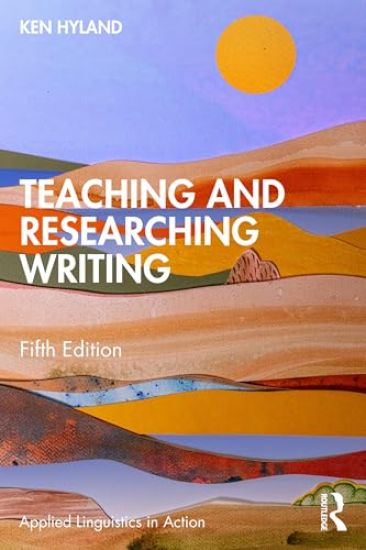
Teaching and Researching Writing

Teaching and Researching Writing

Ken Hyland

Taylor Francis Ltd
2021
sidottu
The new edition of Ken Hyland’s text provides an authoritative guide to writing theory, research, and teaching. Emphasising the dynamic relationship between scholarship and pedagogy, it shows how research feeds into teaching practice. Teaching and Researching Writing introduces readers to key conceptual issues in the field today and reinforces their understanding with detailed cases, then offers tools for further investigating areas of interest. This is the essential resource for students of applied linguistics and language education to acquire and operationalise writing research theories, methods, findings, and practices––as well as for scholars and practitioners looking to learn more about writing and literacy.New to the fourth edition: Added or expanded coverage of important topics such as translingualism, digital literacies and technologies, multimodal and social media writing, action research, teacher reflection, curriculum design, teaching young learners, and discipline-specific and profession-specific writing. Updated throughout––including revision to case studies and classroom practices––and discussion of Rhetorical Genre Studies, intercultural rhetoric, and expertise. Reorganised References and Resources section for ease of use for students, researchers, and teachers.
Teaching and Researching Writing

Teaching and Researching Writing

Ken Hyland

Taylor Francis Ltd
2021
nidottu
The new edition of Ken Hyland’s text provides an authoritative guide to writing theory, research, and teaching. Emphasising the dynamic relationship between scholarship and pedagogy, it shows how research feeds into teaching practice. Teaching and Researching Writing introduces readers to key conceptual issues in the field today and reinforces their understanding with detailed cases, then offers tools for further investigating areas of interest. This is the essential resource for students of applied linguistics and language education to acquire and operationalise writing research theories, methods, findings, and practices––as well as for scholars and practitioners looking to learn more about writing and literacy.New to the fourth edition: Added or expanded coverage of important topics such as translingualism, digital literacies and technologies, multimodal and social media writing, action research, teacher reflection, curriculum design, teaching young learners, and discipline-specific and profession-specific writing. Updated throughout––including revision to case studies and classroom practices––and discussion of Rhetorical Genre Studies, intercultural rhetoric, and expertise. Reorganised References and Resources section for ease of use for students, researchers, and teachers.
Teaching and Researching Writing

Teaching and Researching Writing

Ken Hyland

TAYLOR FRANCIS LTD
2026
nidottu
Now in its fifth edition, Teaching and Researching Writing offers a practical and accessible guide to understanding, researching, and teaching writing in today’s world. It explores what writing is, why it matters, and how it is shaped by context, culture, and technology—including the fast-changing role of artificial intelligence. Drawing on real research cases and classroom practices, the book demonstrates how writing can be studied and taught across different settings. Readers will find practical tools such as blogs, wikis, and e-portfolios, alongside discussions of key issues like feedback, plagiarism, identity, and multimodal communication. Hyland also presents practical insights into researching writing, illustrating methods from questionnaires and interviews to corpus and ethnographic studies. By exploring the ethical dimensions of the interplay between technology and writing improvement, this book equips readers with both a reliable overview and innovative ideas they can apply critically in their own work. Bridging theory and practice, this comprehensive book is an ideal resource for educators, researchers, and students in applied linguistics, language teaching and TESOL interested in multiple frameworks for writing instruction. It is also a valuable companion for teacher training courses.
Teaching and Researching Writing

Teaching and Researching Writing

Ken Hyland

TAYLOR FRANCIS LTD
2026
sidottu
Now in its fifth edition, Teaching and Researching Writing offers a practical and accessible guide to understanding, researching, and teaching writing in today’s world. It explores what writing is, why it matters, and how it is shaped by context, culture, and technology—including the fast-changing role of artificial intelligence. Drawing on real research cases and classroom practices, the book demonstrates how writing can be studied and taught across different settings. Readers will find practical tools such as blogs, wikis, and e-portfolios, alongside discussions of key issues like feedback, plagiarism, identity, and multimodal communication. Hyland also presents practical insights into researching writing, illustrating methods from questionnaires and interviews to corpus and ethnographic studies. By exploring the ethical dimensions of the interplay between technology and writing improvement, this book equips readers with both a reliable overview and innovative ideas they can apply critically in their own work. Bridging theory and practice, this comprehensive book is an ideal resource for educators, researchers, and students in applied linguistics, language teaching and TESOL interested in multiple frameworks for writing instruction. It is also a valuable companion for teacher training courses.
Second Language Writing

Second Language Writing

Ken Hyland

Cambridge University Press
2019
pokkari
Authoritative and accessible, this book introduces the theory and practice of teaching writing to students of EFL/ESL learners. While assuming no specialist knowledge, Ken Hyland systematically sets out the key issues of course design, lesson planning, texts and materials, tasks, feedback and assessment and how current research can inform classroom practice. This second edition is completely revised to include up-to-date work on automated feedback, plagiarism, social media, Virtual Learning Environments and teacher workload issues. It takes the clear stance that student writers not only need realistic strategies for drafting and revising, but also a clear understanding of genre to structure their writing experiences according to the expectations of particular communities of readers and the constraints of particular contexts. Review exercises, reflection questions, plentiful examples and a new extensive glossary make the book invaluable to both prospective and practicing teachers alike.
Second Language Writing

Second Language Writing

Ken Hyland

Cambridge University Press
2019
sidottu
Authoritative and accessible, this book introduces the theory and practice of teaching writing to students of EFL/ESL learners. While assuming no specialist knowledge, Ken Hyland systematically sets out the key issues of course design, lesson planning, texts and materials, tasks, feedback and assessment and how current research can inform classroom practice. This second edition is completely revised to include up-to-date work on automated feedback, plagiarism, social media, Virtual Learning Environments and teacher workload issues. It takes the clear stance that student writers not only need realistic strategies for drafting and revising, but also a clear understanding of genre to structure their writing experiences according to the expectations of particular communities of readers and the constraints of particular contexts. Review exercises, reflection questions, plentiful examples and a new extensive glossary make the book invaluable to both prospective and practicing teachers alike.
Metadiscourse

Metadiscourse

Ken Hyland

Bloomsbury Academic
2018
nidottu
First released in 2005, Ken Hyland's Metadiscourse has become a canonical account of how language is used in written communication. 'Metadiscourse' is defined as the ways that writers reflect on their texts to refer to themselves, their readers or the text itself. It is a key resource in language as it allows the writer to engage with readers in familiar and expected ways and as such it is an important tool for students of academic writing in both the L1 and L2 context.This book achieves for main goals:- to provide an accessible introduction to metadiscourse, discussing its role and importance in written communication and reviewing current thinking on the topic- to explore examples of metadiscourse in a range of texts from business, academic, journalistic, and student writing- to offer a new theory of metadiscourse- to show the relevance of this theory to students, academics and language teachersThe book shows how writers use the devices of metadiscourse to adjust the level of personality in their texts, to offer a representation of themselves and their arguments. It shows how these tools help the reader organise, interpret and evaluate the information presented in the text. Knowing how to identify metadiscourse as a reader is a key skill to be learnt by students of discourse analysis and this book makes this a central goal.
Feedback in Second Language Writing

Feedback in Second Language Writing

Ken Hyland; Fiona Hyland

Cambridge University Press
2006
pokkari
How to provide appropriate feedback to students on their writing has long been an area of central significance to teachers and educators. Feedback in Second Language Writing: Context and Issues provides scholarly articles on the topic by leading researchers, who explore topics such as the socio-cultural assumptions that participants bring to the writing class; feedback delivery and negotiation systems; and the role of student and teacher identity in negotiating feedback and expectations. This text provides empirical data and an up-to-date analysis of the complex issues involved in offering appropriate feedback during the writing process.
Academic Discourse and Global Publishing

Academic Discourse and Global Publishing

Ken Hyland; Feng (Kevin) Jiang

Routledge
2019
sidottu
Academic Discourse and Global Publishing offers a coherent argument for changes in published academic writing over the past 50 years. Demonstrating how published writing represents academics’ decisions about how best to present their work, their readers and themselves in the global context of a rapidly shifting university system, this book provides: An up-to-date reference on contemporary topics in specialist discourse analysis, current research methodologies and innovative approaches to the study of writing; New insights into conceptual and theoretical issues related to the analysis of academic writing; An accessible introduction to diachronic research in EAP and a case for the value of the diachronic study of texts using corpus techniques; A clear overview of how texts work in interaction and how they relate to evolving institutional and political contexts; Links between the practices of different disciplines and the environments in which they operate, as well as observations on the ways in which they differ.This volume is essential reading for students and researchers of EAP/ESP and Applied Linguistics and will also be of significant interest to academics and students looking to have their work published.