A review of boy culture since the late nineteenth century explains how the education and supervision of boys has been shaped by two approaches--boyology, the biological and social development of boys, and feral tale, emphasizing boys' wild nature. Reprint.
Children’s literature has spent decades on the psychiatrist’s couch, submitting to psychoanalysis by scores of scholars and popular writers alike. Freud in Oz turns the tables, suggesting that psychoanalysts owe a significant and largely unacknowledged debt to books ostensibly written for children. In fact, Kenneth B. Kidd argues, children’s literature and psychoanalysis have influenced and interacted with each other since Freud published his first case studies.In Freud in Oz, Kidd shows how psychoanalysis developed in part through its engagement with children’s literature, which it used to articulate and dramatize its themes and methods, turning first to folklore and fairy tales, then to materials from psychoanalysis of children, and thence to children’s literary texts, especially such classic fantasies as Peter Pan and Alice’s Adventures in Wonderland. He traces how children’s literature, and critical response to it, aided the popularization of psychoanalytic theory. With increasing acceptance of psychoanalysis came two new genres of children’s literature-known today as picture books and young adult novels-that were frequently fashioned as psychological in their forms and functions.Freud in Oz offers a history of reigning theories in the study of children’s literature and psychoanalysis, providing fresh insights on a diversity of topics, including the view that Maurice Sendak and Bruno Bettelheim can be thought of as rivals, that Sendak’s makeover of monstrosity helped lead to the likes of the Muppets, and that “Poohology” is its own kind of literary criticism-serving up Winnie the Pooh as the poster bear for theorists of widely varying stripes.
Since its inception in the 1970s, the Philosophy for Children movement (P4C) has affirmed children's literature as important philosophical work. Theory, meanwhile, has invested in children's classics, especially Lewis Carroll's Alice books, and has also developed a literature for beginners that resembles children's literature in significant ways. Offering a novel take on this phenomenon, Theory for Beginners explores how philosophy and theory draw on children's literature and have even come to resemble it in their strategies for cultivating the child and/or the beginner. Examining everything from the rise of French Theory in the United States to the crucial pedagogies offered in children's picture books, from Alison Bechdel's graphic memoir Are You My Mother? and Lemony Snicket's A Series of Unfortunate Events to studies of queer childhood, Kenneth B. Kidd deftly reveals the way in which children may learn from philosophy and vice versa.
Since its inception in the 1970s, the Philosophy for Children movement (P4C) has affirmed children's literature as important philosophical work. Theory, meanwhile, has invested in children's classics, especially Lewis Carroll's Alice books, and has also developed a literature for beginners that resembles children's literature in significant ways. Offering a novel take on this phenomenon, Theory for Beginners explores how philosophy and theory draw on children's literature and have even come to resemble it in their strategies for cultivating the child and/or the beginner. Examining everything from the rise of French Theory in the United States to the crucial pedagogies offered in children's picture books, from Alison Bechdel's graphic memoir Are You My Mother? and Lemony Snicket's A Series of Unfortunate Events to studies of queer childhood, Kenneth B. Kidd deftly reveals the way in which children may learn from philosophy and vice versa.
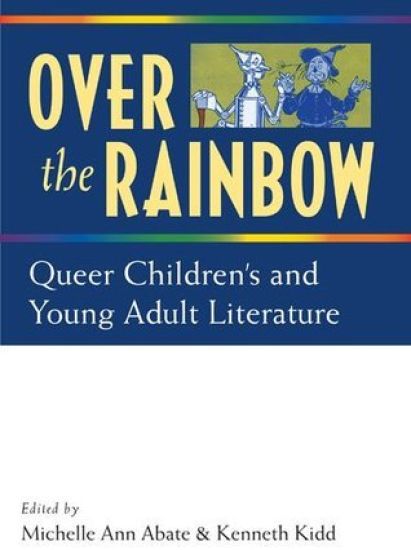
"Over the Rainbow is lively, engaging, and thoughtful. More to the point, the field of children's literature needs such a collection."---Katherine Capshaw Smith, University of ConnecticutIn spite of the growing critical interest concerning gender and sexual nonnormativity in and around narratives written for young readers, no book-length volume on the subject has yet appeared. Over the Rainbow: Queer Children's and Young Adult Literature is the first collection of essays dedicated to LGBTQ issues in children's literature. Bringing together significant essays and introducing new work, Over the Rainbow is intended to serve both as a scholarly reference and as a textbook for students of children's studies; gender/queer studies; and related disciplines such as English, history, sociology, and education. Editors Michelle Ann Abate and Kenneth Kidd showcase important essays on the subject of LGBTQ children's and young adult literature ---including Harriet the Spy, Rainbow Boys, Little Women, the Harry Potter series, and A Separate Peace---while providing a provisional history of both the literature and the scholarship and examining the field's origins, current status, and possible future orientations.Over the Rainbow collects essays by Jes Battis, Robin Bernstein, Thomas Crisp, June Cummins, Elizabeth A. Ford, Sherrie A. Inness, Christine A. Jenkins, Vanessa Wayne Lee, Biddy Martin, Robert McRuer, Claudia Nelson, Jody Norton, Tison Pugh, Catherine Tosenberger, Eric L. Tribunella, Roberta Seelinger Trites, and Andrea Wood. These pieces will be of interest to scholars and students in the fields of children's literature, American Studies, LGBTQ and queer studies, cultural studies, and literary criticism.Cover art: Original title page of The Wonderful Wizard of Oz, by Frank L. Baum, illustrated by W. W. Denslow. New York: George M. Hill, 1900.
"Over the Rainbow is lively, engaging, and thoughtful. More to the point, the field of children's literature needs such a collection."---Katherine Capshaw Smith, University of ConnecticutIn spite of the growing critical interest concerning gender and sexual nonnormativity in and around narratives written for young readers, no book-length volume on the subject has yet appeared. Over the Rainbow: Queer Children's and Young Adult Literature is the first collection of essays dedicated to LGBTQ issues in children's literature. Bringing together significant essays and introducing new work, Over the Rainbow is intended to serve both as a scholarly reference and as a textbook for students of children's studies; gender/queer studies; and related disciplines such as English, history, sociology, and education. Editors Michelle Ann Abate and Kenneth Kidd showcase important essays on the subject of LGBTQ children's and young adult literature ---including Harriet the Spy, Rainbow Boys, Little Women, the Harry Potter series, and A Separate Peace---while providing a provisional history of both the literature and the scholarship and examining the field's origins, current status, and possible future orientations.Over the Rainbow collects essays by Jes Battis, Robin Bernstein, Thomas Crisp, June Cummins, Elizabeth A. Ford, Sherrie A. Inness, Christine A. Jenkins, Vanessa Wayne Lee, Biddy Martin, Robert McRuer, Claudia Nelson, Jody Norton, Tison Pugh, Catherine Tosenberger, Eric L. Tribunella, Roberta Seelinger Trites, and Andrea Wood. These pieces will be of interest to scholars and students in the fields of children's literature, American Studies, LGBTQ and queer studies, cultural studies, and literary criticism.Cover art: Original title page of The Wonderful Wizard of Oz, by Frank L. Baum, illustrated by W. W. Denslow. New York: George M. Hill, 1900.
Children’s literature has spent decades on the psychiatrist’s couch, submitting to psychoanalysis by scores of scholars and popular writers alike. Freud in Oz turns the tables, suggesting that psychoanalysts owe a significant and largely unacknowledged debt to books ostensibly written for children. In fact, Kenneth B. Kidd argues, children’s literature and psychoanalysis have influenced and interacted with each other since Freud published his first case studies.In Freud in Oz, Kidd shows how psychoanalysis developed in part through its engagement with children’s literature, which it used to articulate and dramatize its themes and methods, turning first to folklore and fairy tales, then to materials from psychoanalysis of children, and thence to children’s literary texts, especially such classic fantasies as Peter Pan and Alice’s Adventures in Wonderland. He traces how children’s literature, and critical response to it, aided the popularization of psychoanalytic theory. With increasing acceptance of psychoanalysis came two new genres of children’s literature—known today as picture books and young adult novels—that were frequently fashioned as psychological in their forms and functions.Freud in Oz offers a history of reigning theories in the study of children’s literature and psychoanalysis, providing fresh insights on a diversity of topics, including the view that Maurice Sendak and Bruno Bettelheim can be thought of as rivals, that Sendak’s makeover of monstrosity helped lead to the likes of the Muppets, and that “Poohology” is its own kind of literary criticism—serving up Winnie the Pooh as the poster bear for theorists of widely varying stripes.
You are part of a relief crew flying out to Plamer Station, Antarctica when an odd atmospheric disturbance nearly crashes your helicopter. Upon arriving at the remote station, all is quiet: radios are silent, heaters are set at maximum, and the station is empty. What happened to the previous crew? How are the odd occurrences and new creatures logged connected to what has happened to the station?Palmer Station is a Tortured Earth adventure modified to either run with the expanded rule set or the free-to-play download available at www.torturedearth.com.
Bits and Pieces tells the story of chiptune, a style of lo-fi electronic music that emerged from the first generation of video game consoles and home computers in the late 1970s and early 1980s. Through ingenuity and invention, musicians and programmers developed code that enabled the limited hardware of those early 8-bit machines to perform musical feats that they were never designed to achieve. In time, that combination of hardware and creative code came to define a unique 8-bit sound that imprinted itself on a generation of gamers. For a new generation of musicians, this music has currency through the chipscene, a vibrant musical subculture that repurposes obsolete gaming hardware. It's performative: raw and edgy, loaded with authenticity and driven by a strong DIY ethic. It's more punk than Pac-Man, and yet, it's part of that same story of ingenuity and invention; 8-bit hardware is no longer a retired gaming console, but a quirky and characterful musical instrument. Taking these consoles to the stage, musicians fuse 8-bit sounds with other musical styles - drum'n'bass, jungle, techno and house - to create a unique contemporary sound. Analyzing musical structures and technological methods used with chiptune, Bits and Pieces traces the simple beeps of the earliest arcade games, through the murky shadows of the digital underground, to global festivals and movie soundtracks.
Bits and Pieces tells the story of chiptune, a style of lo-fi electronic music that emerged from the first generation of video game consoles and home computers in the late 1970s and early 1980s. Through ingenuity and invention, musicians and programmers developed code that enabled the limited hardware of those early 8-bit machines to perform musical feats that they were never designed to achieve. In time, that combination of hardware and creative code came to define a unique 8-bit sound that imprinted itself on a generation of gamers. For a new generation of musicians, this music has currency through the chipscene, a vibrant musical subculture that repurposes obsolete gaming hardware. It's performative: raw and edgy, loaded with authenticity and driven by a strong DIY ethic. It's more punk than Pac-Man, and yet, it's part of that same story of ingenuity and invention; 8-bit hardware is no longer a retired gaming console, but a quirky and characterful musical instrument. Taking these consoles to the stage, musicians fuse 8-bit sounds with other musical styles - drum'n'bass, jungle, techno and house - to create a unique contemporary sound. Analyzing musical structures and technological methods used with chiptune, Bits and Pieces traces the simple beeps of the earliest arcade games, through the murky shadows of the digital underground, to global festivals and movie soundtracks.
Humans are on the brink of disaster...In the United States, President Samuel Cummings has taken the reins of a deeply divided country at a time when nuclear, chemical, biological and cyberthreats loom.Things look bleak until God's emissary Sarah, a composite of 40 million female souls from Heaven, arrives on Earth with the message that God is intervening in human affairs to save the human race from itself. God, she explains, is the life force of the universe, the only intelligent form of energy. People who help others grow their own life force will join God in Heaven. However, many humans are more inclined toward hatred, intolerance and greed and so God is intervening to course-correct them.The first thing Sarah does is to announce God's edict of 'thou shalt not kill' to the world. Anyone who tries to kill another person-or who enables someone to do so-will die instead. As commander-in-chief, Cummings must call back his military troops or risk his life. He must then deal with both the fallout and benefits of the dissolution of America's military-industrialcomplex.Sarah's mission is to establish a new world order that is kinder, better and united. As she guides the world through this evolution, President Cummings begins to notice a depth in his own soul that makes him both a better man and a better leader.Sarah remains on Earth for one year to help the world come together, andleaves behind a legacy of hope-a second chance for humankind.
Austin, Texas, entered the aviation age on October 29, 1911, when Calbraith Perry Rodgers landed his Wright EX Flyer in a vacant field near the present-day intersection of Duval and 45th Streets. Some 3,000 excited people rushed out to see the pilot and his plane, much like the hundreds of thousands who mobbed Charles A. Lindbergh and The Spirit of St. Louis in Paris sixteen years later. Though no one that day in Austin could foresee all the changes that would result from manned flight, people here-as in cities and towns across the United States-realized that a new era was opening, and they greeted it with all-out enthusiasm.This popularly written history tells the story of aviation in Austin from 1911 to the opening of Austin-Bergstrom International Airport in 1999. Kenneth Ragsdale covers all the significant developments, beginning with military aviation activities during World War I and continuing through the barnstorming era of the 1920s, the inauguration of airmail service in 1928 and airline service in 1929, and the dedication of the first municipal airport in 1930. He also looks at the University of Texas's role in training pilots during World War II, the growth of commercial and military aviation in the postwar period, and the struggle over airport expansion that occupied the last decades of the twentieth century. Throughout, he shows how aviation and the city grew together and supported each other, which makes the Austin aviation experience a case study of the impact of aviation on urban communities nationwide.
Against a backdrop of revolution, border banditry, freewheeling aerial dramatics, and World War II comes this compelling look at the rise of U.S. combat aviation at an unlikely proving ground-a remote airfield in the rugged reaches of the southwestern Texas borderlands. Here, at Elmo Johnson's Big Bend ranch, hundreds of young Army Air Corps pilots demonstrated the U.S. military's reconnaissance and emergency response capabilities and, in so doing, dramatized the changing role of the airplane as an instrument of war and peace.Kenneth Ragsdale's gripping account not only sets the United States squarely in the forefront of aerial development but also provides a reflective look at U.S.-Mexican relations of the 1920s, 1930s, and 1940s, particularly the tense days and aftermath of the Escobar Rebellion of 1929. He paints a vivid picture of the development of the U.S. aerial strike force; the character, ideals, and expectations of the men who would one day become combat leaders; and the high esteem in which U.S. citizens held the courageous pilots.Particularly noteworthy is Ragsdale's portrait of Elmo Johnson, the Big Bend rancher, trader, and rural sage who emerges as the dominant figure at one of the most unusual facilities in the annals of the Air Corps. Wings over the Mexican Border tells a stirring story of the American frontier juxtaposed with the new age of aerial technology.
This practical book introduces readers to the essential business aspects of innovation and new product planning. The product planning process is discussed across two broad themes: product development and product management. Importantly, the book emphasizes the 21st-century strategic and creative mindset necessary to drive business innovation activities in a concise, yet comprehensive manner.The book delves into the front end of innovation and formal product development activities, examining the topics of opportunity identification, concept generation and evaluation, technical development, product design, testing, launch strategies, product management, life cycle management, brand management, and vital elements for international success. There are stand-alone notes that serve to apprise readers on related topics such as the use of agile product development methodologies, the formation of business entities, and recommended best practices for new product development. The book excels at providing relevant examples and applied tools that augment the concepts to offer valuable connections to real-world product planning efforts.This book is particularly useful as a guide to learning the fundamental concepts and strategies associated with innovation and new product planning. Among student audiences, upper-level undergraduate and first-year graduate students are likely to benefit as the book embraces its position to serve as a primer on product development and management.
This practical book introduces readers to the essential business aspects of innovation and new product planning. The product planning process is discussed across two broad themes: product development and product management. Importantly, the book emphasizes the 21st-century strategic and creative mindset necessary to drive business innovation activities in a concise, yet comprehensive manner.The book delves into the front end of innovation and formal product development activities, examining the topics of opportunity identification, concept generation and evaluation, technical development, product design, testing, launch strategies, product management, life cycle management, brand management, and vital elements for international success. There are stand-alone notes that serve to apprise readers on related topics such as the use of agile product development methodologies, the formation of business entities, and recommended best practices for new product development. The book excels at providing relevant examples and applied tools that augment the concepts to offer valuable connections to real-world product planning efforts.This book is particularly useful as a guide to learning the fundamental concepts and strategies associated with innovation and new product planning. Among student audiences, upper-level undergraduate and first-year graduate students are likely to benefit as the book embraces its position to serve as a primer on product development and management.
This is a fourth edition of a work first published in 1983. It contains the same number of chapters as the third edition, published in 1990. However, it has a substantial amount of new material. Major changes in warehousing in the last seven years have caused appropriate changes in the content of this text. Nearly three decades have passed since our first published writing about warehousing. The goal of our early writing was to develop a better understanding between the third-party warehouse operator and the user of these services. Today the emphasis has changed to a work that provides the tools that every warehouse manager needs. This book intends to be a comprehensive handbook consisting of everything we know that would help the manager of warehouses. Much of the information is based upon materials previously used in Warehousing Forum, our monthly subscription newsletter. While the work is designed primarily as a handbook for manag ers, it also serves as a guide for students. It is based upon my experience, both as a warehousing manager and executive, and later as a management advisor. The work is designed as a management reference for anyone involved in operating, using, constructing, or trading in industrial warehouses.
"Reviews in Computational Chemistry remains the most valuable reference to methods and techniques in computational chemistry" Journal of Molecular Graphics and Modeling Reviews in Computational Chemistry provides an ideal one-stop resource for researchers from all chemical and biochemical disciplines. Covering all areas of computational chemistry from chemoinformatics to molecular modeling, this series gives researchers a review of key developments including a historic picture of research with the access to the early volumes.