Kirjojen hintavertailu. Mukana 11 238 394 kirjaa ja 12 kauppaa.

Kirjahaku

Etsi kirjoja tekijän nimen, kirjan nimen tai ISBN:n perusteella.

1000 tulosta hakusanalla Kenneth C Springirth

Street Cars of Washington D.C.

Street Cars of Washington D.C.

Kenneth C Springirth

Fonthill Media LLc
2016
nidottu
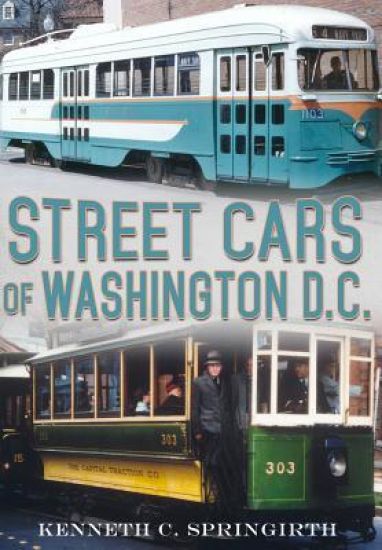
Street Cars of Washington D.C. is a photographic essay of the history of the well-kept modern street car system that provided frequent transit service to much of our nation's capital up to its closure in January, 1962. Washington D.C. was the first North American city to operate its entire base service by President's Conference Committee (PCC) cars. Washington D.C. had the fifth largest PCC car fleet in North America. While these cars had poles for overhead wire operation, they were the only PCC cars in the world equipped with plows for conduit operation. Washington D.C. PCC cars, all built by St. Louis Car Company, were about two foot shorter in length or one less window than other PCC cars, because of short clearances in car house transfer tables. The Silver Sightseer in Washington D.C. was the world's first air conditioned street car. Fifty four years later in February 2016, street cars returned to Washington D.C. All of this has been included in Street Cars of Washington D.C.
Toronto Streetcars Serve the City

Toronto Streetcars Serve the City

Kenneth C Springirth

Fonthill Media LLc
2014
nidottu
The Toronto Beaches Lions Club Easter Parade of April 8, 2012 leading off with Toronto Transit Commission historic Presidents' Conference Committee car No. 4500, vintage Peter Witt car No. 2766, and Canadian Light Rail Vehicle No. 4074 in this view on Queen Street at Woodbine Avenue was witnessed by thousands of people. Kenneth Springirth, with a lifelong interest in rail transportation, has made numerous trips to Toronto to ride, research, walk, and photograph the streetcar lines. Born and raised in the United States, he commuted to the Drexel Institute of Technology (now Drexel University) in Philadelphia by streetcar, subway, and sometimes commuter train. His father was a streetcar motorman in Philadelphia and his grandfather was a streetcar motorman in Washington D.C. This book is a photographic essay documenting Toronto's extensive streetcar system that during 2012 on an average Monday to Friday work day carried an average of 285,000 passengers with its 11 routes, 671 stops, and 247 cars. From the urban residential area of Kingston Road to the commercial district of Spadina Avenue where between King and Bloor Streets there is a streetcar in peak periods every 2 to 3 minutes, this book provides an insight to an amazing streetcar system.
Reading Railroad Heritage

Reading Railroad Heritage

Kenneth C Springirth

Fonthill Media LLc
2017
nidottu
Reading Railroad Heritage is a photographic essay of the history of a well-run system up to its acquisition by the Consolidated Rail Corporation in 1976, and its legacy that includes the Reading & Northern Railroad, certain electrified commuter lines operated by the Southeastern Pennsylvania Transportation Authority in the Philadelphia area, and a sampling of a number of short line railroads that were initiated to preserve rail service. The Philadelphia & Reading Railroad opened its first line from Philadelphia to Reading in 1839. Within a few years, it constructed railroad lines throughout the coal fields of eastern Pennsylvania and in 1893 became the Reading Company. The railroad was noted for its design and building of steam locomotives, which culminated in the fabulous T1 class of steam locomotives placed in service in 1945-1946. Some of these freight locomotives, with their classic arched cab windows, powered the Iron Horse Rambles of the 1960s. Circumstances beyond its control, including the decline in the hauling of anthracite coal and passenger business, ended in the bankruptcy of the railroad.
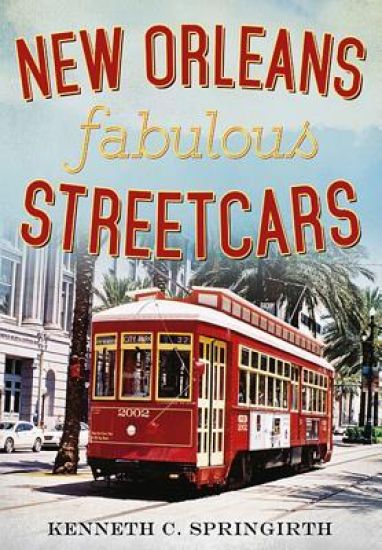
New Orleans Fabulous Streetcars

New Orleans Fabulous Streetcars

Kenneth C. Springirth

Fonthill Media LLc
2014
nidottu
The first street railway opened in New Orleans in 1835. Over the years various methods of powering the streetcars including horses, stream locomotives, overhead cable system, and fireless locomotives were tried. In 1893, electric streetcar operation began. At its peak in 1922, New Orleans had 225 miles of electric streetcar lines in operation. Ridership and streetcar lines declined with increased use of automobiles and the hard economic times of the Great Depression. While ridership surged during World War II, following the war the decline in transit riding continued the conversion of streetcar lines to bus operation. With the end of the Canal streetcar line in 1964, only the St. Charles streetcar line remained. In 1983, the New Orleans Regional Transit Authority acquired the public transit system. With increased public awareness of the important heritage of the St. Charles streetcar line, the first new streetcar line in 60 years in New Orleans opened on the Riverfront during 1988. Its success contributed to the restoration of streetcars on Canal Street in 2004. This book provides a photographic essay of the New Orleans streetcar system including the new Loyola streetcar line that opened in 2013 and is part of "New Orleans Fabulous Streetcars."
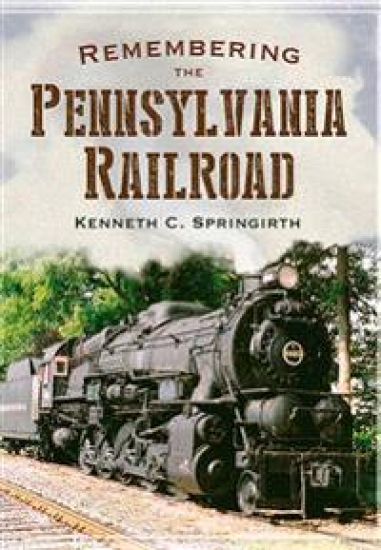
Remembering the Pennsylvania Railroad

Remembering the Pennsylvania Railroad

Kenneth C. Springirth

Fonthill Media LLc
2014
nidottu
On August 7, 2011, former Pennsylvania Railroad type E8A diesel units No. 5711 and No. 5809 are passing through the borough of Greenville in Mercer County, Pennsylvania on the former Erie Railroad now Norfolk Southern Railway on a rail excursion in this photograph by the author. The Erie and Pittsburgh line of the Pennsylvania Railroad once served Greenville. Kenneth Springirth, with a lifelong interest in rail transportation, has been researching the Pennsylvania Railroad since 1960. Born and raised in Philadelphia, Pennsylvania, he commuted to Drexel Institute of Technology (now Drexel University) in Philadelphia by trolley car, subway, and sometimes Pennsylvania Railroad commuter train. His father was a trolley car motorman in Philadelphia, and his grandfather was a trolley car motorman in Washington D.C. This book is a photographic essay documenting the Pennsylvania Railroad, which considered itself the standard railroad of the world. Classic scenes of the Pennsylvania Railroad's amazing GG1 electric locomotives operating on the most successful electrification project in the United States are included. This book provides an insight to an extensive railroad system that survives today with the Norfolk Southern Railway owning much of former mainline trackage in Pennsylvania and Amtrak owning the Northeast Corridor plus trackage between Philadelphia and Harrisburg. In addition, there are a variety of regional and shortline railroads that contribute to Remembering the Pennsylvania Railroad.
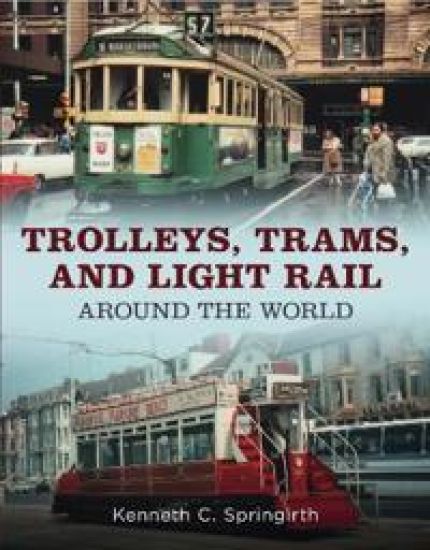
Trolleys, Trams, and Light Rail Around the World

Trolleys, Trams, and Light Rail Around the World

Kenneth C. Springirth

Fonthill Media LLc
2023
nidottu
Trolleys, Trams, and Light Rail Around The World covers the Pittsburgh light rail system with its downtown subway, street running, and private right of way. In the British Isles, the amazing Isle of Man is shown with its vintage open-air horse-drawn trams along with electric trams, as is Blackpool, England, with its neat, efficient, and well-patronized double deckers. Hong Kong has the world's largest fleet of double-decker trams and is extensively covered. Trolleys in Toronto, Canada, have been well-maintained over the years, and today Toronto has the largest trolley car system in North America. In Amsterdam, The Netherlands, the decision made by municipal authorities to re-equip its system with new tram cars was well received by the public and has resulted in the retention of the tram service. The decision in Helsinki, Finland, in 1969 to have trams only in the city center has been reversed, and the system has since been expanded. The tram system in Melbourne, Australia, has never shut down and is today the largest tram system in the English-speaking world. In a challenging world, this book clearly shows an exciting future for the trolley car.
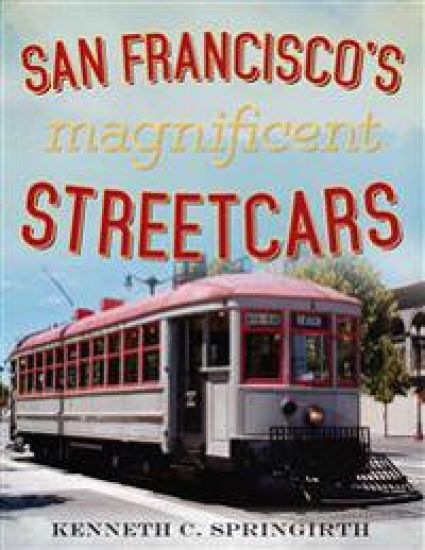
San Francisco's Magnificent Streetcars

San Francisco's Magnificent Streetcars

Kenneth C. Springirth

Fonthill Media LLc
2015
nidottu
San Francisco's first cable car line opened in 1873. The successful development of the electric streetcar by Frank Sprague in 1888 plus the 1906 San Francisco earthquake resulted in the decline of the cable car system. Concerned that the cable car system would vanish, San Francisco resident Friedel Klussmann rallied public support to save the cars. The 1982 shutdown of the cable car lines for their rebuilding led to Trolley Festivals beginning in 1983 until 1987 using a variety of historic streetcars on Market Street.Those successful festivals resulted in rebuilding the streetcar track on Market Street and the establishment of the F streetcar line in 1995 using Presidents' Conference Committee streetcars purchased from Philadelphia and refurbished in a variety of paint schemes that represented cities that once had streetcar service. In addition, the line features vintage Peter Witt streetcars from Milan, Italy; a boat like streetcar from England; and other unique cars. During 2000, the F line was extended to Fisherman's wharf and has become one of the most successful streetcar lines in the United States. This book is a photographic essay of "San Francisco's Magnificent Streetcars" along with its historic cable cars and hill climbing trolley coaches.
Cincinnati Streetcar Heritage

Cincinnati Streetcar Heritage

Kenneth C. Springirth

Fonthill Media LLc
2017
nidottu
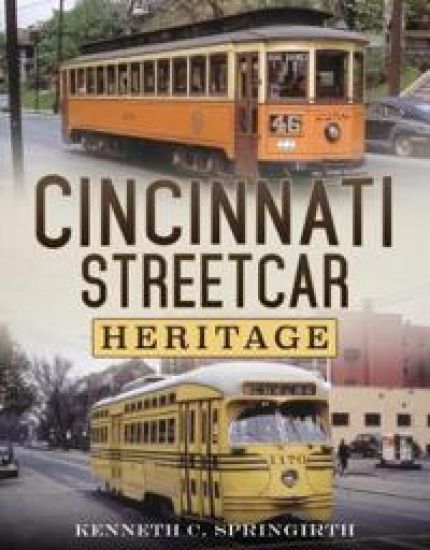
`Cincinnati Streetcar Heritage’ is a photographic essay of the Cincinnati, Ohio, streetcar system. Cincinnati’s first electric streetcar line was the conversion of the Mt. Adams & Eden Park Inclined Railway Company cable car line to electric operation in 1888, which became part of the Cincinnati Street Railway Co. in 1896. Because of concern over corrosion of underground conduits and water pipes, Cincinnati’s streetcar lines were required to have a double overhead wire within city limits. Cincinnati, along with Merrill, Wisconsin, and Havana, Cuba, were the only streetcar systems in North America with a double overhead wire system. Two open observation streetcars were placed in sightseeing service during 1939. The only Presidents’ Conference Committee (PCC) cars ever built with two trolley poles were operated in Cincinnati. Although Cincinnati’s streetcars made their last run in 1951, the Toronto Transit Commission purchased 52 of Cincinnati’s PCC cars with the last one taken out of service in 1982. `Cincinnati Streetcar Heritage’ documents the city’s streetcar era, including the Cincinnati Bell Connector streetcar line which opened in 2016, linking downtown Cincinnati with the Over the Rhine neighborhood.
Baltimore Streetcar Memories

Baltimore Streetcar Memories

Kenneth C. Springirth

Fonthill Media
2017
nidottu
`Baltimore Streetcar Memories’ is a photographic essay of the Baltimore, Maryland streetcar system. Baltimore was the first United States city to begin regularly scheduled electric railway service in 1885. However, because of technical problems the line had to go back to horse car operation. After Frank J. Sprague developed an electric streetcar powered by an overhead wire for Richmond, Virginia; Baltimore adopted the new system and in 1893 opened the first electric line in the United States to operate on an elevated structure. By 1899, Baltimore streetcar lines, with their unique 5 foot 4½ inch track gauge, were unified by the United Railways and Electric Company which purchased 885 semi-convertible cars with windows that could be raised up for summer operation and lowered for winter operation. Baltimore Transit Company was the third United States system to introduce modern Presidents’ Conference Committee (PCC) cars and at its peak operated the eighth largest fleet of these cars. Although Baltimore’s streetcars made their last run in 1963, a new light rail system opened in 1992. `Baltimore Streetcar Memories’ documents the city’s street railway era.
Chicago's South Shore Line

Chicago's South Shore Line

Kenneth C. Springirth

Fonthill Media LLc
2018
nidottu
Chicago's South Shore Line is a photographic essay of the last interurban electric railroad operating in the United States. Completed as the Chicago, Lake Shore & South Bend Railway (CLS&SBR) connecting South Bend, Indiana, with Pullman, Illinois, in 1909, the line went into receivership in 1925. It reorganized as the Chicago South Shore & South Bend Railroad (CSS&SBR) which rebuilt the railroad and provided direct passenger service from South Bend to downtown Chicago. The Great Depression forced the railroad into bankruptcy in 1933 but reorganized in 1938 and handled record ridership during World War II. After the Chesapeake & Ohio Railroad acquired the railroad in 1970, the electric freight service was dieselized. Soaring passenger deficits resulted in the formation of the Northern Indiana Commuter Transportation District (NICDT). Beginning in 1984, the Venango River Corporation operated the line until it went bankrupt in 1988. The Anacostia & Pacific Company began operating the freight service in 1990, and NICDT handles passenger service. Chicago's South Shore Line documents the history of this railway that has survived obstacles to maintain passenger service over its original route.