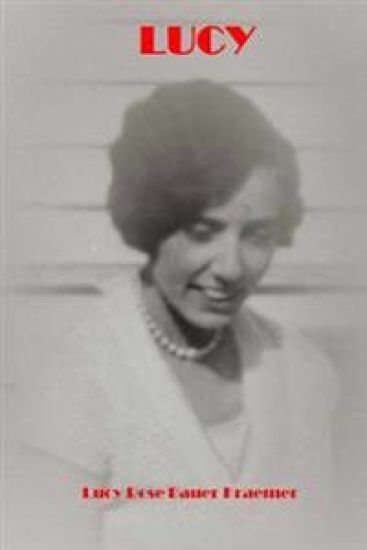
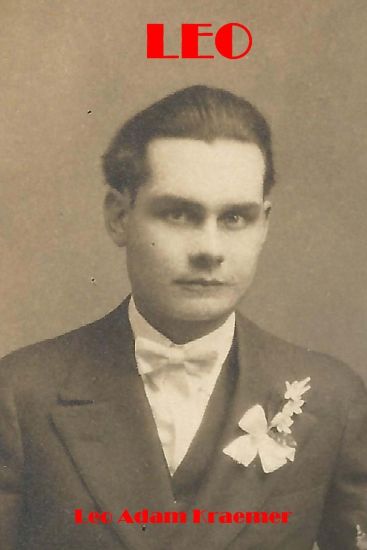
Leo Kraemer was born in 1905 on a farm in Wilson Creek, Spring Green Township, Sauk County, Wisconsin. He lived to be 97 and died from old age at The Meadows in Spring Green. He came from a family of 14, three of whom died as children. He never knew his mother as she died when he was two years old. His aunt raised him for the next three years and he returned home at age five to a rude awakening with his new step-mother. He was the youngest of the children that lived, separated from his next oldest brother, Ben, by three olders sisters and eight years. He married the first and only girl that he kissed, Lucy, and celebrated 70 plus married years with her. He worked 45 years for Edward Kraemer and sons as laborer, truck driver, power shovel operator and foreman on road construction projects all over Wisconsin. He was a quiet man, with great dignity and although a loner, he was well-liked and respected.
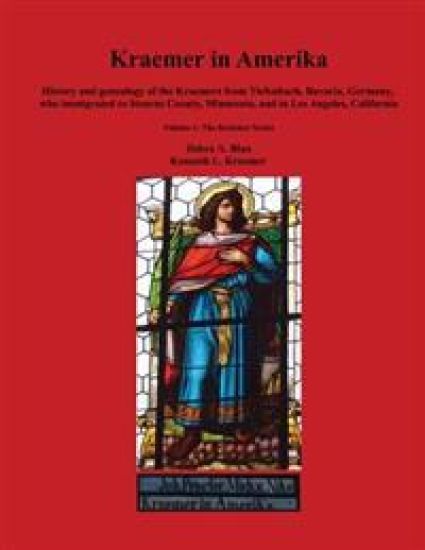
The authors stumbled upon an unsolved mystery far away in the homeland of their ancestors, in a small village named Tiefenbach, set among the beautiful rolling hills in the Oberpfalz region of eastern Bavaria, Germany. The mystery involved a unique stained-glass church window with an intriguing inscription, "Kraemer in Amerika." Setting out to discover the meaning behind the inscription, the authors found themselves faced with many unanswered questions: - Who did "Kraemer in Amerika" represent? - Where in America did this Kraemer live? - Who donated money for the Kraemer window? - In what year was the window inscribed? - Could there be a fascinating story behind the donation? Research in Germany led to the discovery of several Kraemer families who lived in the Catholic parish of Tiefenbach. One of these Kraemers, namely Paul (the great-great-grandfather of author Ken Kraemer), worked as a weaver in the nearby village of Irlach. Paul left Irlach in 1866 and eventually settled on a farm in Wisconsin. Some of his descendants, the "Wisconsin Kraemers," established prosperous construction and road building firms in Sauk County, Wisconsin. The authors were astounded to find out that another Kraemer had ties to America Paul's distant cousin, Michael Kraemer, worked as a tobacco maker in Tiefenbach, and had three married sons who immigrated to America as early as 1852. Could the three brothers in this line of Kraemers provide the missing piece of the puzzle of the stained-glass window? The three brothers were some of the early rugged pioneers in Stearns County, Minnesota. The oldest brother, named after his father, Michael, was a kindhearted Minnesotan whom everyone called "Papa." He created a town, built a Catholic church in the name of his wife, and left a legacy of multiple Century Farms, businesses, and descendants in the state. The middle brother named George experienced the worst kind of grief when he lost three of his children in the 1881 smallpox epidemic, which affected nearly every family in Stearns County, including the family of his brother Michael. George never fully recovered from the tragedy. Nikolaus, the youngest of these brothers, started out as a cigar manufacturer in St. Cloud, Minnesota, in 1862, then later uprooted his family to Los Angeles, California; his eldest child remained in St. Cloud. This distinguished bearded Californian left a legacy through his five beautiful and talented daughters and a son, and became modestly wealthy in the 1890s land boom in LA. In 1900, an unexplainable tragedy befell the family. The daughters survived through successful marriages and bonds of sisterhood on ranches in rural Los Angeles. This book reveals the identity of the "Kraemer in Amerika" mystery, and details the struggles, tragedies, and ultimate triumph in the new world of the "Minnesota Kraemers." The authors have filled the chapters with family history, original documents, and family photos, along with an extensive index of names, places and occupations.
This book examines the evolution of the computer industry in the Pacific Asia region. It explains the key factors that account for the different levels of success among the nations in the area, and explores the strategic implications for the United States and the Asian Pacific countries as they compete in computers in the emerging network era. This book is intended for academics and computer professionals.
D. Duane Cummins describes this book as "an appreciative biography"; Cummins' approach combines the warmth of personal acquaintance with a lucid and well-researched account of Teegarden's life. Kenneth Teegarden was born in Cushing, Oklahoma, in 1921, "a fourth-generation Oklahoman and a sixth-generation Disciple," and the Christian Church (Disciples of Christ) never lost its importance in his life. Teegarden served as general minister and president of the Christian Church (Disciples of Christ) for many years. He was a central figure in planning and explaining the new ""design"" of the church through the Commission for Brotherhood Restructure and was ""a powerful and constant advocate of peace with justice,"" working toward the passage of peace resolutions and encouraging racial integration in the battle for civil rights. Kenneth Teegarden was minister in residence at the Brite Divinity School after he resigned as general minister and president of the Christian Church (Disciples of Christ), and he continued to teach and mentor students, parishioners, friends, and family until his death in 2002.
This biography examines the life of a most unusual twentieth-century evangelical, Kenneth L. ""Ken"" Pike (1912-2000), who served with the Wycliffe Bible Translators and the Summer Institute of Linguistics. Pike began his missionary career as a Bible translator, but he went on to become a world-class linguist who made his mark on the science of linguistics and the study of indigenous languages around the world. Known among linguists and anthropologists for his theoretical contributions, this volume seeks to bring Pike to a wider audience by illuminating his life as a key evangelical figure, one who often broke with conventional evangelical constraints to pursue the life of the mind as a Christian intellectual and scholar. Here is a story of how one evangelical Christian man served the global church, the scientific community, and the world's indigenous peoples with his entire heart, soul, and mind.
This biography examines the life of a most unusual twentieth-century evangelical, Kenneth L. ""Ken"" Pike (1912-2000), who served with the Wycliffe Bible Translators and the Summer Institute of Linguistics. Pike began his missionary career as a Bible translator, but he went on to become a world-class linguist who made his mark on the science of linguistics and the study of indigenous languages around the world. Known among linguists and anthropologists for his theoretical contributions, this volume seeks to bring Pike to a wider audience by illuminating his life as a key evangelical figure, one who often broke with conventional evangelical constraints to pursue the life of the mind as a Christian intellectual and scholar. Here is a story of how one evangelical Christian man served the global church, the scientific community, and the world's indigenous peoples with his entire heart, soul, and mind.
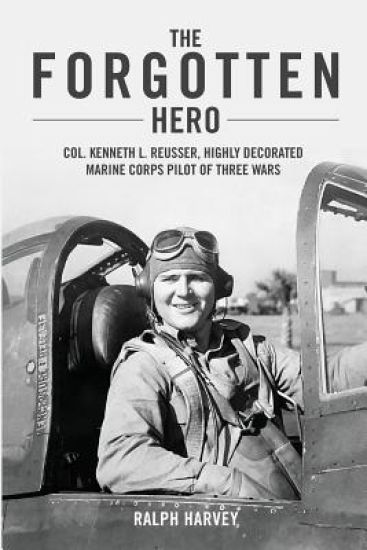
Growing up in a small farming community near the Oregon coast, Ken Reusser saw a 1920s barnstormer and dreamed of becoming a military pilot. Coming of age during the Great Depression, he overcame many obstacles and learned to fly in the pre-war Civilian Pilot Training program (CPT). Enlisting in the Naval Reserve, Reusser completed naval flight training as an enlisted Aviation Cadet and accepted a commission in the Marine Corps upon graduation. After that, it was off to war. Ken Reusser's twenty-seven year military career included two combat tours as a fighter pilot in the Pacific during World War Two, a deployment as a carrier-based pilot aboard U.S.S. Sicily (CVE-118) during the Korean War, and a period commanding Marine Air group 16 during the helicopter air war in Vietnam. Known as an aggressive combat leader, he was officially credited with shooting down 1.5 enemy aircraft in WW II, and was awarded a Navy Cross for a daring, high altitude intercept mission over Okinawa. Flying an F4U off Sicily near Inchon, South Korea, he was awarded another Navy Cross for leading an audacious attack on a tank repair factory and then destroying a concealed tanker at anchors. But his bold exploits and long list of medals came at a steep price. Reusser was shot down five times: twice in WW II, twice in Korea, and once more in Vietnam, and suffered serious wounds in all three wars. The Forgotten Hero is more than the true story of a celebrated Marine Corps pilot. This long awaited biography reveals Ken Reusser's entire life story, including both triumphs and tragedies, and provides a testament to the power of one man's faith, determination and courage. Leader quotes: "This biography goes well beyond the retelling of brave deeds and fearless exploits. Every aspect of Col. Reusser's remarkable life is covered with meticulous detail that left this reader in absolute awe. It is not often that one man's life can cover the sweep of history, but here is a compelling narrative that does so with style, momentum and depth. It should not be missed." - Peter A. Young, a former Naval Flight Officer, flew the Grumman A-6A Intruder as a bombardier/navigator over South and North Vietnam and Laos. "Colonel Ken Reusser is an American hero whose service and sacrifice represent true valor. From flying the skies over Guadalcanal, to serving with the legendary Black Sheep squadron in Korea, to surviving the harrowing crash of his helicopter in Vietnam, Col. Ken Reusser is a Marine who should be recalled with the top aviators of all time." "Meticulously researched and vividly written, The Forgotten Hero is amazingly detailed and a must read chronicle of a highly decorated aviator whose story deserves to be remembered." - Kevin Bennett, general manager of the American Heroes Channel. "Colonel Kenneth Reusser was an amazing man and an amazing Marine. This book provides insight into his commitment to get the job done in combat-very specific details are provided. His commitment to serve our nation in time of war is a great example of why America wins wars-our military people who do more than is required of them. Reusser is an example of why America is great." - Lt. Col. Denny Gillem, U.S. Army (ret), is a West Point graduate, and a highly decorated airborne infantry officer and war planner. For many years Col. Gillem has hosted the nationally syndicated radio program Frontlines of Freedom. "The Forgotten Hero contains everything you should know about his life and the dangerous combat missions Ken Reusser flew in World War II, the Korean War and Vietnam." - Col. Warren MacQuarrie (ret), was a Marine Corps pilot who flew PBJ (B-25) Mitchell bombers during WW II and F4U Corsairs in Korea. Like Ken, Col. MacQuarrie also had a tour commanding Marine Air Group 16 in Vietnam, where the unit operated UH-1E, CH-46 and CH-53 helicopters.
Admiral Veth's naval career, almost from the outset, has been concentrated on mine warfare. After being graduated from the Naval Academy in 1935 and tours in the battleship USS Pennsylvania (BB-38) and light cruiser USS Phoenix (CL-46), he transferred to the minelayer USS Ramsay (DM-16), serving as mining officer. In 1941-1942, he served as assistant naval attaché in London. There he learned of the great British advances in mine warfare and reported them to U.S. authorities. Other events he relates were when he served on the staff of Admiral Lord Louis Mountbatten, RN, in Southeast Asia (1943-1945); when he concentrated on mine warfare in the Office of the Chief of Naval Operations (1945-1947); and again in 1967-1968 when he served as Commander, U.S. Naval Forces, Vietnam. The appendices contain a number of his reports on aircraft minelaying and mining operations.
The networking capabilities of the Java platform have been extended considerably since the first edition of the book. This new edition covers version 1.5-1.7, the most current iterations, as well as making the following improvements: The API (application programming interface) reference sections in each chapter, which describe the relevant parts of each class, have been replaced with (i) a summary section that lists the classes and methods used in the code, and (ii) a "gotchas" section that mentions nonobvious or poorly-documented aspects of the objects. In addition, the book covers several new classes and capabilities introduced in the last few revisions of the Java platform. New abstractions to be covered include NetworkInterface, InterfaceAddress, Inet4/6Address, SocketAddress/InetSocketAddress, Executor, and others; extended access to low-level network information; support for IPv6; more complete access to socket options; and scalable I/O. The example code is also modified to take advantage of new language features such as annotations, enumerations, as well as generics and implicit iterators where appropriate. Most Internet applications use sockets to implement network communication protocols. This book's focused, tutorial-based approach helps the reader master the tasks and techniques essential to virtually all client-server projects using sockets in Java. Chapter 1 provides a general overview of networking concepts to allow readers to synchronize the concepts with terminology. Chapter 2 introduces the mechanics of simple clients and servers. Chapter 3 covers basic message construction and parsing. Chapter 4 then deals with techniques used to build more robust clients and servers. Chapter 5 (NEW) introduces the scalable interface facilities which were introduced in Java 1.5, including the buffer and channel abstractions. Chapter 6 discusses the relationship between the programming constructs and the underlying protocol implementations in more detail. Programming concepts are introduced through simple program examples accompanied by line-by-line code commentary that describes the purpose of every part of the program. No other resource presents so concisely or so effectively the material necessary to get up and running with Java sockets programming.
Ideal for introduction to archaeology and world prehistory courses, The Past in Perspective: An Introduction to Human Prehistory, Eighth Edition, is an engaging and up-to-date chronological overview of human prehistory. Kenneth L. Feder introduces students to "the big picture"--the grand sweep of human evolutionary history--presenting the human past within the context of fundamental themes of cultural evolution. Feder's unique, refreshing, and accessible narrative personalizes the past and makes it relevant to today's students. Using a consistent chapter format--"Prelude, Chronicle, Issues and Debates, Messages from the Past, and Case Study Close-up"--Feder helps students master both what we know and what is still debated about the complex story of the human past.
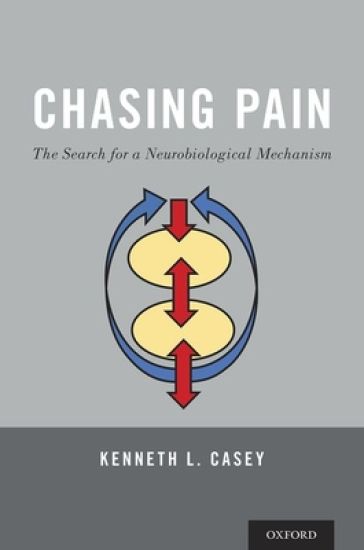
Conceptual models of how pain is created influence medical practice, neuroscientific research, and philosophical ideas about pain and other neurological functions. Given the broad scope of pain experiences, realistic models of pain neurobiology must consider the correlation between pain and tissue damage and how it is strongly affected by neurological disease, emotionally compelling circumstances, and by complex cognitive processes. Recent discoveries have made it clear that both sensory and affective systems are strongly modulated by activity in other sensory pathways and by affective and cognitive processes originating in the brain. As a result, pain should then be conceived as emerging from the conjoint activity of both sensory and affective neural systems, each becoming a target for pain treatment. Historically, pain has been conceived as emerging either from an undefined pattern of neural activity or from anatomically and physiologically unique structures in the nervous system. Observations made during the early and mid- 20th century showed that pain and pain-like behaviors normally require not only sensory detectors of noxious events (called nociceptors) but also brain affective (hedonic) mechanisms that generate emotional experience and expression. In Chasing Pain, pain specialists and neuroscientists will find a thoughtful discussion of the neuroscientific and clinical evidence that has led to contemporary concepts of pain neurobiology and how pain might emerge from neuronal activity. Written in a concise and annotated format, Doctor Kenneth Casey reveals that while contemporary research has greatly enriched our model of pain neurobiology, several important and therapeutically challenging clinical conditions remain poorly understood.