Kirjojen hintavertailu. Mukana 11 212 761 kirjaa ja 11 kauppaa.

Kirjahaku

Etsi kirjoja tekijän nimen, kirjan nimen tai ISBN:n perusteella.

1000 tulosta hakusanalla Kenneth MacKinnon

Representing Men

Representing Men

Kenneth MacKinnon

Hodder Arnold
2003
nidottu
In this study, Kenneth MacKinnon suggests that ultimately masculinity is no straightforward actuality. Instead, several aspects of masculinity are ideals rather than social realities. These ideals might be best understood as forming a near-impossible version of masculinity to which males in society are encouraged to aspire if they want to be 'real men'.
Greek Tragedy into Film

Greek Tragedy into Film

Kenneth MacKinnon

Routledge
2013
sidottu
If Greek tragedy is sometimes regarded as a form long dead and buried, both theatre producers and film directors seem slow to accept its interment. Originally published in 1986, this book reflects the renewed interest in questions of staging the Greek plays, to give a comprehensive account and critical analysis of all the important versions of Greek tragedy made on film. From the 1927 footage of the re-enactment of Aeschylus’ Prometheus in Chains at the Delphi Festival organised by Angelos Sikelianos to Pasolini’s Notes for an African Oresteia, the study encompasses the version of Oedipus by Tyrone Guthrie, Tzavellas’s Antigone (with Irene Papas), Michael Cacoyannis’s series which included Electra, The Trojan Women, and Iphigeneia, Pasolini’s Oedipus and Medea (with Maria Callas), Miklos Jancso’s Elektreia, Dassim’s Phaedra and others. Many interesting questions are raised by the transference of a highly stylised form such as Greek tragedy to what is often claimed to be the ‘realistic’ medium of film. What becomes clear is that the heroic myths retain with ease the power to move the audiences in very different milieux through often strikingly different means.The book may be read as an adjunct to viewing of the films, but enough synopsis is given to make its arguments accessible to those familiar only with the classical texts, or with neither version.
Greek Tragedy into Film

Greek Tragedy into Film

Kenneth Mackinnon

Routledge
2016
nidottu
If Greek tragedy is sometimes regarded as a form long dead and buried, both theatre producers and film directors seem slow to accept its interment. Originally published in 1986, this book reflects the renewed interest in questions of staging the Greek plays, to give a comprehensive account and critical analysis of all the important versions of Greek tragedy made on film. From the 1927 footage of the re-enactment of Aeschylus’ Prometheus in Chains at the Delphi Festival organised by Angelos Sikelianos to Pasolini’s Notes for an African Oresteia, the study encompasses the version of Oedipus by Tyrone Guthrie, Tzavellas’s Antigone (with Irene Papas), Michael Cacoyannis’s series which included Electra, The Trojan Women, and Iphigeneia, Pasolini’s Oedipus and Medea (with Maria Callas), Miklos Jancso’s Elektreia, Dassim’s Phaedra and others. Many interesting questions are raised by the transference of a highly stylised form such as Greek tragedy to what is often claimed to be the ‘realistic’ medium of film. What becomes clear is that the heroic myths retain with ease the power to move the audiences in very different milieux through often strikingly different means.The book may be read as an adjunct to viewing of the films, but enough synopsis is given to make its arguments accessible to those familiar only with the classical texts, or with neither version.
Economic segregation in England

Economic segregation in England

Geoffrey Meen; Kenneth Gibb; Jennifer Goody; Thomas McGrath; Jane Mackinnon

Policy Press
2005
nidottu
One of the key objectives of government neighbourhood policy is to encourage a sustainable mix of tenures and incomes. This report addresses questions of why integration has been so difficult to achieve in practice and draws conclusions for future policy. The report analyses data from three related empirical studies. The first models, locally, the links between housing, labour markets, migration, deprivation and segregation. The second examines the factors behind the individual moving decisions that lie at the heart of segregation and how policy can influence choices. The third presents three case studies. These are the first empirical studies of their kind to show how segregation and deprivation arise. Economic segregation in Britain is aimed at policy practitioners, economists and academics working in the fields of housing and neighbourhood revitalisation. Although the report deals with technical modelling issues, it is written in a style accessible to the non-specialist.
Kenneth

Kenneth

Giuseppe Longo; Melissa Rivers

Schiffer Publishing Ltd
2020
sidottu
The extraordinary life and career of Kenneth Battelle, pioneering hairstylist to the stars in the 1950's and beyond. Kenneth Battelle, known simply as “Kenneth,” was a pioneering hairstylist who obliterated the once-omnipresent hat and transformed the fashion industry through his A-list clients at his iconic 54th Street Salon. His 50-year career started in the early 1950s in New York City. The loyal client list he built, which included Jacqueline Kennedy, Marilyn Monroe, Judy Garland, Countess Consuelo Crespi, Diana Vreeland, Lucille Ball, and Gloria Vanderbilt, swore by his skills. Kenneth: Shear Elegance is a biography that not only celebrates Kenneth's extraordinary talent but examines his behind-the-scenes life and career struggles, including the disastrous fire that destroyed his salon, and his perseverance moving forward. Through personal memories of those closest to him, including friends, clients, and former employees, the man who created a cult of classic, timeless women comes to life. Previously unpublished photographs, notes, clippings, and original Joe Eula illustrations richly exhibit both his myriad achievements and America's 20th-century high-fashion scene.
Kenneth

Kenneth

Katrine Sele

Samlaget
2013
sidottu
Historia om Kenneth Sivertsen er ei historie om eit uvanleg talent, absurde innfall og ville påfunn, intense kjærleikshistorier, men også om alt som kan bryte ned eit menneske. Kenneth Sivertsen døydde julaftan 2006, berre 45 år gammal. Mange hugsar ein brutal nedtur og eit halvt hovud, men Sivertsen var mykje meir enn eit fall for open scene. Han var gitarist, komponist, songar og humorist. Han voks opp på Mosterøy i Bømlo, med Jesus og englar som ein sjølvsagd del av kvardagen. Alt som 22-åring skreiv han sin første symfoni. Kenneth Sivertsen var klassisk komponist, skreiv viser, spelte med dei fremste amerikanske jazzmusikarane, vart rikskjendis som kabaretartist saman med kjærasten Herborg Kråkevik og turnerte ein periode saman med 47 teddybjørnar.
Kenneth Williams Diaries

Kenneth Williams Diaries

Harpercollins Publishers
1994
pokkari
â??Iâ??ll put you in my diary!â?? comedian Kenneth Williams was known to threaten on occasion, although tantalisingly he kept the journal to himself during his lifetime. Here at last, in one spellbinding volume, are four million words of it.
Kenneth Clark

Kenneth Clark

James Stourton

Harpercollins Publishers
2017
pokkari
Sunday Times Art Book of the Year The astonishing life of Kenneth Clark - the greatest British art historian of his time. As writer and presenter of the TV series Civilisation he was responsible for the greatest syntheses of art, music, literature and thought ever made - 'a contribution to civilisation itself'.
Kenneth Waltz

Kenneth Waltz

Paul R. Viotti

Columbia University Press
2024
sidottu
Kenneth Waltz (1924–2013) is perhaps the most enduringly influential figure in international relations theory of the second half of the twentieth century. He is considered the father of the structural-realist or neorealist school, and his views on core questions, such as the causes of war and the structure of the international system, are foundational to the field today and likely will remain so for decades to come. Waltz’s writings on both theoretical and policy-related topics, from the balance of power to the spread of nuclear weapons, continue to fuel debate.This book is a groundbreaking intellectual biography of Kenneth Waltz, shedding new light on the development and significance of his key contributions. Paul R. Viotti draws on extensive, candid interviews with Waltz as well as Waltz’s personal files and archival research to provide a nuanced account of the great scholar’s life and thought. He traces the intellectual sources and personal experiences that shaped Waltz’s work, including an intense Lutheran upbringing; service in World War II and the Korean War; and the academic environments of Oberlin College, Columbia University, and the University of California, Berkeley. Viotti examines the key influences on Waltz’s major works, Man, the State, and War and Theory of International Politics, and analyzes their distinctive insights. Engaging with the views of Waltz’s critics and featuring reminiscences from his colleagues, this book is a compelling portrait of an intellectual titan.
Kenneth Waltz

Kenneth Waltz

Paul R. Viotti

Columbia University Press
2025
pokkari
Kenneth Waltz (1924–2013) is perhaps the most enduringly influential figure in international relations theory of the second half of the twentieth century. He is considered the father of the structural-realist or neorealist school, and his views on core questions, such as the causes of war and the structure of the international system, are foundational to the field today and likely will remain so for decades to come. Waltz’s writings on both theoretical and policy-related topics, from the balance of power to the spread of nuclear weapons, continue to fuel debate.This book is a groundbreaking intellectual biography of Kenneth Waltz, shedding new light on the development and significance of his key contributions. Paul R. Viotti draws on extensive, candid interviews with Waltz as well as Waltz’s personal files and archival research to provide a nuanced account of the great scholar’s life and thought. He traces the intellectual sources and personal experiences that shaped Waltz’s work, including an intense Lutheran upbringing; service in World War II and the Korean War; and the academic environments of Oberlin College, Columbia University, and the University of California, Berkeley. Viotti examines the key influences on Waltz’s major works, Man, the State, and War and Theory of International Politics, and analyzes their distinctive insights. Engaging with the views of Waltz’s critics and featuring reminiscences from his colleagues, this book is a compelling portrait of an intellectual titan.
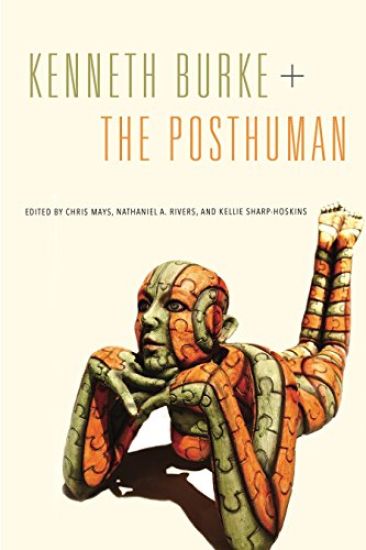
Kenneth Burke + The Posthuman

Kenneth Burke + The Posthuman

Pennsylvania State University Press
2017
sidottu
While rhetoric as a discipline is firmly planted in humanism and anthropology, posthumanism seeks to leave the human behind. This highly original examination of Kenneth Burke’s thought grapples with these ostensibly contradictory concepts as opportunities for invention, revision, and, importantly, transdisciplinary knowledge making.Rather than simply mapping posthumanist rhetorics onto Burke’s scholarship, Kenneth Burke + The Posthuman focuses on the multiplicity of ideas found both in his work and in the idea of posthumanism. Taking varied approaches organized within a framework of boundaries and futures, the contributors show that studying the humanist theories of Burke in this way creates a satisfyingly chaotic web of interconnections. The essays look at how Burke’s writing on the human mind and technology, from his earliest works to his very latest revisions, interrelates with current concepts such as new materiality and coevolution. Throughout, the contributors pay close attention to the fluidity, concerns, and contradictions inherent in language, symbolism, and subjectivity.A unique, illuminating exploration of the contested relationship between bodies and language, this inherently transdisciplinary book will propel important future inquiry by scholars of rhetoric, Burke, and posthumanism.In addition to the editors, the contributors are Casey Boyle, Kristie Fleckenstein, Nathan Gale, Julie Jung, Steven B. Katz, Steven LeMieux, Jodie Nicotra, Jeff Pruchnic, Timothy Richardson, Thomas Rickert, and Robert Wess.
Kenneth Burke + The Posthuman

Kenneth Burke + The Posthuman

Pennsylvania State University Press
2017
pokkari
While rhetoric as a discipline is firmly planted in humanism and anthropology, posthumanism seeks to leave the human behind. This highly original examination of Kenneth Burke’s thought grapples with these ostensibly contradictory concepts as opportunities for invention, revision, and, importantly, transdisciplinary knowledge making.Rather than simply mapping posthumanist rhetorics onto Burke’s scholarship, Kenneth Burke + The Posthuman focuses on the multiplicity of ideas found both in his work and in the idea of posthumanism. Taking varied approaches organized within a framework of boundaries and futures, the contributors show that studying the humanist theories of Burke in this way creates a satisfyingly chaotic web of interconnections. The essays look at how Burke’s writing on the human mind and technology, from his earliest works to his very latest revisions, interrelates with current concepts such as new materiality and coevolution. Throughout, the contributors pay close attention to the fluidity, concerns, and contradictions inherent in language, symbolism, and subjectivity.A unique, illuminating exploration of the contested relationship between bodies and language, this inherently transdisciplinary book will propel important future inquiry by scholars of rhetoric, Burke, and posthumanism.In addition to the editors, the contributors are Casey Boyle, Kristie Fleckenstein, Nathan Gale, Julie Jung, Steven B. Katz, Steven LeMieux, Jodie Nicotra, Jeff Pruchnic, Timothy Richardson, Thomas Rickert, and Robert Wess.
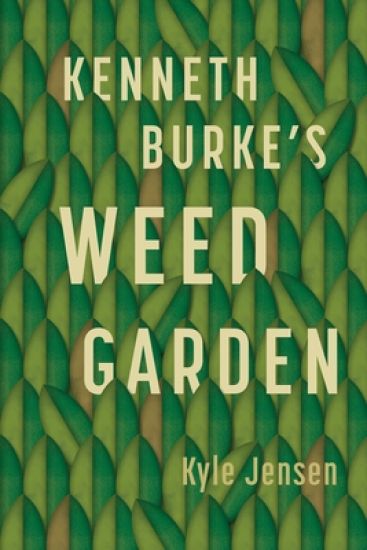
Kenneth Burke’s Weed Garden

Kenneth Burke’s Weed Garden

Kyle Jensen

Pennsylvania State University Press
2022
sidottu
Since its publication in 1950, Kenneth Burke’s A Rhetoric of Motives has been one of the most influential texts of theory and criticism. Critics have discovered in its pages concepts that reveal new dimensions of human motivation. And yet, despite its obvious genius, critics have interpreted A Rhetoric of Motives as a collection of provocations rather than a systematic treatment of rhetoric.In this book, Kyle Jensen argues that the coherence in Burke’s thought has yet to be fully appreciated. Drawing on unpublished drafts and voluminous correspondence, he reconstructs Burke’s drafting and revision process for A Rhetoric of Motives as well as its recently discovered second volume, The War of Words. Jensen’s extensive archival analysis reveals that Burke relied on the concept of myth to draw together the loose ends in his argument. For Burke, all general theories of rhetoric are formed and structured using mythic images and terms.By exploring what Burke added and omitted, and by putting his writing process into the context of daily life after the Second World War—including Burke’s attempts to clear the weeds from his Andover farm—Jensen sheds new light on the key problems that Burke encountered and the methods he used to overcome them. Kenneth Burke’s Weed Garden is essential for those who study Burke and the tradition of modern rhetoric that he helped found.
Kenneth Burke’s Weed Garden

Kenneth Burke’s Weed Garden

Kyle Jensen

Pennsylvania State University Press
2024
pokkari
Since its publication in 1950, Kenneth Burke’s A Rhetoric of Motives has been one of the most influential texts of theory and criticism. Critics have discovered in its pages concepts that reveal new dimensions of human motivation. And yet, despite its obvious genius, critics have interpreted A Rhetoric of Motives as a collection of provocations rather than a systematic treatment of rhetoric.In this book, Kyle Jensen argues that the coherence in Burke’s thought has yet to be fully appreciated. Drawing on unpublished drafts and voluminous correspondence, he reconstructs Burke’s drafting and revision process for A Rhetoric of Motives as well as its recently discovered second volume, The War of Words. Jensen’s extensive archival analysis reveals that Burke relied on the concept of myth to draw together the loose ends in his argument. For Burke, all general theories of rhetoric are formed and structured using mythic images and terms.By exploring what Burke added and omitted, and by putting his writing process into the context of daily life after the Second World War—including Burke’s attempts to clear the weeds from his Andover farm—Jensen sheds new light on the key problems that Burke encountered and the methods he used to overcome them. Kenneth Burke’s Weed Garden is essential for those who study Burke and the tradition of modern rhetoric that he helped found.
Kenneth Tynan

Kenneth Tynan

Dominic Shellard

Yale University Press
2012
pokkari
The first in-depth biography of theater genius Kenneth Tynan, looking behind the celebrity myth to show how Tynan’s eloquence and fervor helped change the course of theater in Britain and America Kenneth Tynan (1927–1980) lived one of the most intriguing theater lives of his century. A brilliant writer, critic, and agent provocateur, he made friends or enemies of nearly every major actor, playwright, impresario, and movie mogul of the 1950s, ‘60s, and ‘70s. He wrote for the Evening Standard, the Observer, and the New Yorker; served eleven years as dramaturg for Britain’s newly formed National Theatre, and spent his final years in Los Angeles. This biography offers the first complete appraisal of Tynan’s powerful contribution to post-war British theater, set against the context of the fifties, sixties, and seventies and his own turbulent life. Dominic Shellard highlights Tynan’s writings of 1952–1963, when the coruscating young critic came to prominence. He discusses how Tynan took his place at the vanguard of the new realist movement, helped to establish subsidized theater, fought censorship, and assisted in the creation of such groundbreaking theatrical phenomena as Oh Calcutta! in1970. The book reveals both the public and private Tynan, an outspoken, explicit, and sometimes savage critic who became one of the most influential theater figures of the twentieth century.
Kenneth Leighton

Kenneth Leighton

Carolyn J. Smith

Praeger Publishers Inc
2004
sidottu
Kenneth Leighton, best known for his organ and sacred choral music, was a composer of great depth and talent who wrote a significant body of works. Many of those works were written for large orchestras and a significant number of pieces of chamber music were composed for a variety of instrument groupings, as well as for instrumental solos. Anyone interested in 20th-century music as well as British and Scottish Cathedral music will find a wealth of works listed with a description of each.Kenneth Leighton, best known for his organ and sacred choral music, was a composer of great depth and talent who wrote a significant body of works. Many of those works were written for large orchestras and a significant number of pieces of chamber music were composed for a variety of instrument groupings, as well as for instrumental solos. Anyone interested in 20th-century music as well as British and Scottish Cathedral music will find a wealth of works listed with a description of each.This volume begins with a brief biography of Leighton and is followed by an alphabetical listing of works and performances. Also included is a discography and a bibliography of articles, reviews, books, and dissertations. The last section is a chronological list of compositions. Smith helps us to realize that Kenneth Leighton was an extraordinary composer of 20th-century music with a varied body of works and also a virtuoso pianist of some note.