

Kirjahaku
Etsi kirjoja tekijän nimen, kirjan nimen tai ISBN:n perusteella.
1000 tulosta hakusanalla Kenneth W. (EDT) Thompson

Agricultural Salinity Assessment and Management
Wesley W. (EDT) Wallender; Kenneth K. (EDT) Tanj
Amer Society of Civil Engineers
2011
sidottu
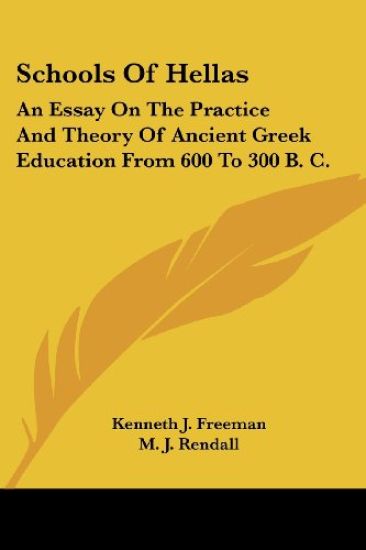
Schools of Hellas
Kenneth J. Freeman; M. J. (EDT) Rendall; A. W. (CON) Verrall
Kessinger Pub
2007
pokkari
This work has been selected by scholars as being culturally important and is part of the knowledge base of civilization as we know it.This work is in the public domain in the United States of America, and possibly other nations. Within the United States, you may freely copy and distribute this work, as no entity (individual or corporate) has a copyright on the body of the work.Scholars believe, and we concur, that this work is important enough to be preserved, reproduced, and made generally available to the public. To ensure a quality reading experience, this work has been proofread and republished using a format that seamlessly blends the original graphical elements with text in an easy-to-read typeface.We appreciate your support of the preservation process, and thank you for being an important part of keeping this knowledge alive and relevant.

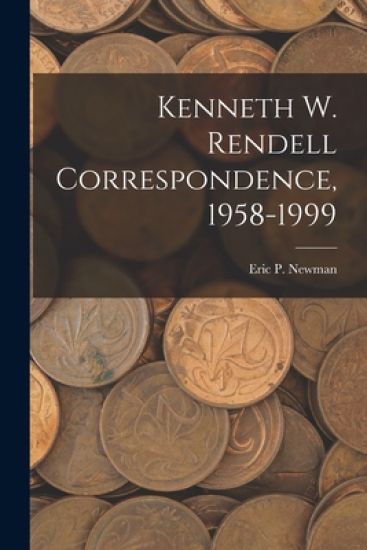
Explore the fascinating correspondence of Kenneth W Rendell, one of the most renowned autograph and historical document dealers of the 20th century. Compiled by Eric P. Newman, this collection provides a unique glimpse into the world of autograph collecting and historical research.This work has been selected by scholars as being culturally important, and is part of the knowledge base of civilization as we know it.This work is in the "public domain in the United States of America, and possibly other nations. Within the United States, you may freely copy and distribute this work, as no entity (individual or corporate) has a copyright on the body of the work.Scholars believe, and we concur, that this work is important enough to be preserved, reproduced, and made generally available to the public. We appreciate your support of the preservation process, and thank you for being an important part of keeping this knowledge alive and relevant.

The aim of this book is to capture, the international thought and practice of Kenneth W. Thompson. His career embodied three roles in which he revealed his thoughts and practice: as a facilitator of space for encouraging debates, scholarship and practice; as an educator; and most importantly as a theorist of international relations.
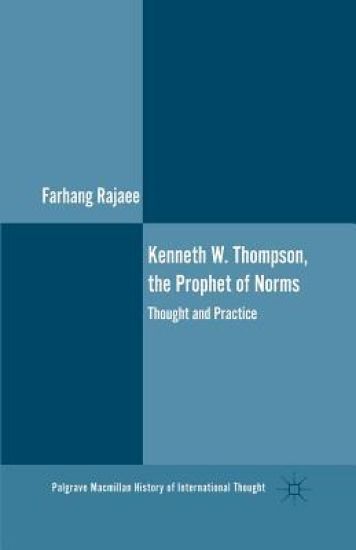
The aim of this book is to capture, the international thought and practice of Kenneth W. Thompson. His career embodied three roles in which he revealed his thoughts and practice: as a facilitator of space for encouraging debates, scholarship and practice; as an educator; and most importantly as a theorist of international relations.

The Starr Report: Referral from Independent Counsel Kenneth W. Starr Regarding President Clinton
The Independent Counsel; Kenneth W. Starr
Cosimo Reports
2020
nidottu
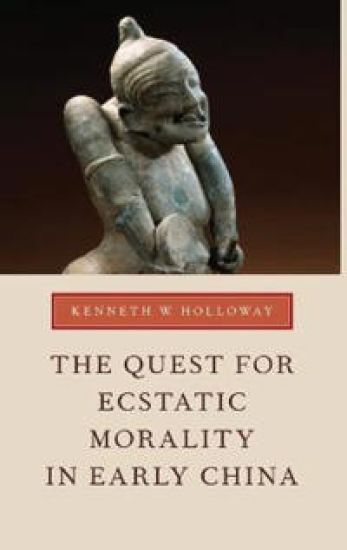
The Quest for Ecstatic Morality in Early China
Kenneth W. Holloway
Oxford University Press Inc
2013
sidottu
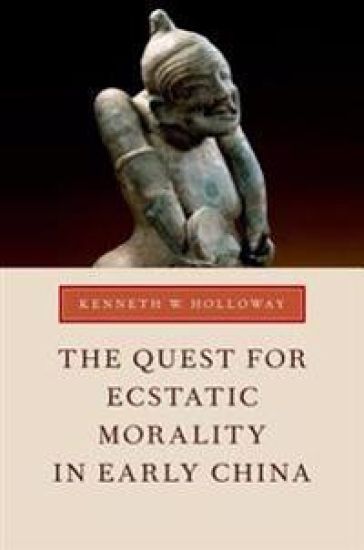
There is an intense love of freedom evident in the "Xing zi mingchu," a text last seen when it was buried in a Chinese tomb in 300 B.C.E. It tells us that both joy and sadness are the ecstatic zenith of what the text terms "qing." Combining emotions into qing allows them to serve as a stepping stone to the Dao, the transcendent source of morality for the world. There is a process one must follow to prepare qing: it must be beautified by learning from the classics written by ancient sages. What is absent from the process is any indication that the emotions themselves need to be suppressed or regulated, as is found in most other texts from this time. The Confucian principles of humanity and righteousness are not rejected, but they are seen as needing our qing and the Dao. Holloway argues that the Dao here is the same Dao of Laozi's Daode jing. As a missing link between what came to be called Confucianism and Daoism, the "Xing zi mingchu" is changing the way we look at the history of religion in early China.
The Quest for Ecstatic Morality in Early China
Kenneth W. Holloway
Oxford University Press Inc
2013
nidottu
There is an intense love of freedom evident in the "Xing zi mingchu," a text last seen when it was buried in a Chinese tomb in 300 B.C.E. It tells us that both joy and sadness are the ecstatic zenith of what the text terms "qing." Combining emotions into qing allows them to serve as a stepping stone to the Dao, the transcendent source of morality for the world. There is a process one must follow to prepare qing: it must be beautified by learning from the classics written by ancient sages. What is absent from the process is any indication that the emotions themselves need to be suppressed or regulated, as is found in most other texts from this time. The Confucian principles of humanity and righteousness are not rejected, but they are seen as needing our qing and the Dao. Holloway argues that the Dao here is the same Dao of Laozi's Daode jing. As a missing link between what came to be called Confucianism and Daoism, the "Xing zi mingchu" is changing the way we look at the history of religion in early China.

In The Rules of the Global Game Kenneth W. Dam provides, in clear and practical language, a comprehensive examination that helps non-economists make sense of the forces that shape U.S. international monetary policies. Elucidating both the internal structures and external ramifications of global economics, this book can be read with pleasure and profit by layperson and economist alike. It allows readers to go beyond the headlines to understand the policies that shape our economy and thus our lives.
In The Rules of the Global Game Kenneth W. Dam provides, in clear and practical language, a comprehensive examination that helps non-economists make sense of the forces that shape U.S. international monetary policies. Elucidating both the internal structures and external ramifications of global economics, this book can be read with pleasure and profit by layperson and economist alike. It allows readers to go beyond the headlines to understand the policies that shape our economy and thus our lives.

"So Black and Blue is the best work we have on Ellison in his combined roles of writer, critic, and intellectual. By locating him in the precarious cultural transition between Jim Crow and the era of promised civil rights, Warren has produced a thoroughly engaging and compelling book, original in its treatment of Ellison and his part in shaping the history of ideas in the twentieth century."—Eric J. Sundquist, University of California, Los AngelesWhat would it mean to read Invisible Man as a document of Jim Crow America? Using Ralph Ellison's classic novel and many of his essays as starting points, Kenneth W. Warren illuminates the peculiar interrelation of politics, culture, and social scientific inquiry that arose during the post-Reconstruction era and persisted through the Civil Rights movement. Warren argues that Ellison's novel expresses the problem of who or what could represent and speak for the Negro in an age of limited political representation. So Black and Blue shows that Ellison's successful transformation of these limits into possibilities has also, paradoxically, cast a shadow on the postsegregation world. What can be the direction of African American culture once the limits that have shaped it are stricken down? Here Warren takes up the recent, ongoing, and often contradictory veneration of Ellison's artistry by black writers and intellectuals to reveal the impoverished terms often used in discussions about the political and cultural future of African Americans. Ultimately, by showing what it would mean to take seriously the idea of American novels as creatures of their moment, Warren questions whether there can be anything that deserves the label of classic American literature.
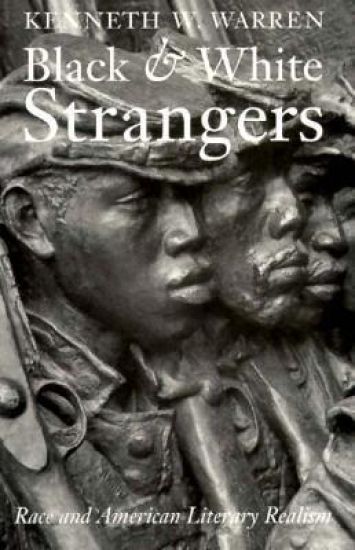
In a major contribution to the study of race in American literature, Kenneth W. Warren argues that late-nineteenth-century literary realism was shaped by and in turn helped to shape post-Civil War racial politics. Taking up a variety of novelists, including Henry James and William Dean Howells, he shows that even works not directly concerned with race were instrumental in the return after reconstruction to a racially segregated society.
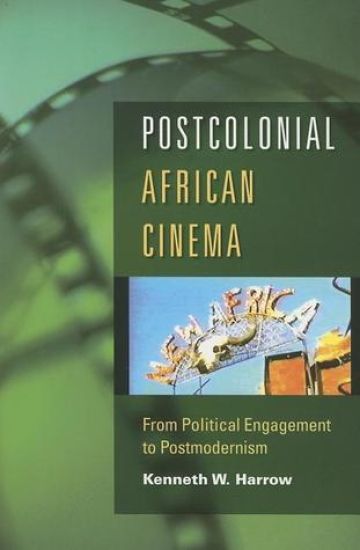
Kenneth W. Harrow offers a new critical approach to African cinema—one that requires that we revisit the beginnings of African filmmaking and the critical responses to which they gave rise, and that we ask what limitations they might have contained, what price was paid for the approaches then taken, and whether we are still caught in those limitations today. Using Žižek, Badiou, and a range of Lacanian and postmodern-based approaches, Harrow attempts to redefine the possibilities of an African cinematic practice—one in which fantasy and desire are placed within a more expansive reading of the political and the ideological. The major works of Sembène Ousmane, Djibril Diop Mambéty, Souleymane Cisse, Jean-Pierre Bekolo, Jean-Marie Teno, Bassak ba Kohbio, and Fanta Nacro are explored, while at the same time the project of current postmodern theory, especially that of Jameson, is called into question in order that an African postmodernist cultural enterprise might be envisioned.
International Rights and Responsibilities for the Future
Kenneth W. Hunter; Timothy Mack
Praeger Publishers Inc
1996
sidottu
Underpinning contemporary political debates and organizational restructuring is a serious rethinking of rights and responsibilities in the roles of governments, communities, companies, and individuals in a civil society. International Rights and Responsibilities for the Future provides a foundation for these debates by focusing on the need to reintegrate rights and responsibilities with contributions by authorities engaged in the process. A wide range of notable figures weigh in on the subject: Audrey R. Chapman argues for a revisioning of human rights as an instrument through which interrelated persons shape and reshape a social covenant defining reciprocal rights and responsibilities. Philippa Strum contends that the idea of individual responsibility to the community is central to rights and contract theory, as articulated in the Western tradition. Amitai Etzioni presents the communitarian view of too many rights, too few responsibilities. And David Boaz gives the libertarian view that one fundamental right is the right to live your life as you choose so long as you don't infringe on the equal rights of others. Particular attention is given to the arguments for a new international bill of rights and the issues of peace and security, information and knowledge technologies, the Global Society and knowledge-based development, criminal justice, human rights education, and sustainable development.

Dysphagia, An Issue of Otolaryngologic Clinics
Kenneth W. Altman
Elsevier - Health Sciences Division
2013
sidottu
Information on Dysphagia for Otolaryngolotists in this issue of Otolaryngologic Clinics: Emphasizes procedure-oriented evaluation and management; Discusses the importance of this subject in terms of medical and surgical risk; Heightens Otolaryngologists' role in dysphagia patient care; Provides a set of recommendations to standardize the approach to these complicated patients; Describes aspects of dysphagia concisely, with prominent use of Tables and Figures. Among topics presented are: Etiology of Dysphagia; Dysphagia Screening and Assessment Instruments; The Modified Barium Swallow; Functional Endoscopic Evaluation of Swallowing; Esophageal Disease; Ancillary Testing in the Evaluation of Dysphagia; Malnutrition and Dehydration; Management of Cricopharyngeal Dysfunction; Zenker's Diverticulum; Glottal Insufficiency with Aspiration Risk in Dysphagia; Global Laryngeal Dysfunction; Screening High-risk Groups, Pathway for Intervention, and more. Guest Editor Kenneth Altman of Mount Sinai, whose expertise, clinical work, and teaching is focused on laryngology, leads the group of expert physicians in this issue.
"This volume is a memorial tribute to the late Professor F. Earl Swisher. Born in Lyons, Kansas, July 22, 1902, he was a member of the pioneer generation of American scholars to study China. His early life offered no indication that he would become involved in Chinese studies. At an early age he moved with his family to Palisades, Colorado, where his father owned a farm. There he completed his public education. He was an avid reader as a student, and by the time of his graduation had exhaustea the libraries of his teachers and school. He entered the University of Colorado in 1920, majoring in history. Although he received an academic scholarship, he had to work his way through the University. In May 1924, he was graduated with. honors. Still he was uncertain about his career. While walking across campus to work one day shortly before graduation, he was caught in a typical Colorado cloudburst. He found shelter in a nearby building being used by Canton Christian College to recruit faculty for the forthcoming year. Waiting for the rain to stop, Swisher expressed a mild interest in a position at the College and left his name and address. He was somewhat surprised several weeks later to be offered a contract. By the end of August, he had arrived in Canton to assume his duties."
This collection of letters and diary entries by late Professor Earl Swisher takes us on a journey into the life and politics of Canton in the mid-1920s. His account of the creation and destruction of the 'Canton Commune' includes rare photographs taken when Canton was liberated from the Communists.