Kirjojen hintavertailu. Mukana 11 582 835 kirjaa ja 12 kauppaa.

Kirjahaku

Etsi kirjoja tekijän nimen, kirjan nimen tai ISBN:n perusteella.

1000 tulosta hakusanalla Kenya Gallion Johnson

The Christopher Chronicles 2.0: Proverbs & Christopherisms

The Christopher Chronicles 2.0: Proverbs & Christopherisms

Kenya Gallion Johnson

Createspace Independent Publishing Platform
2016
nidottu
Need some comic relief? This is the third book in the series of The Christopher Chronicles (TCC). The Christopher Chronicles is a funny coffee table/bedside book of laughs. This book is a would a great gift for, Mothers, Aunts, Sisters, Fathers, Uncles, Brothers, a simple "Get Well", Baby showers, Pastors, Grandparents, Sunday/school teachers and so on. It's a book for laughs and for anyone who needs a bright spot in their day - just because. This book includes over 200 original "Christopherisms" (affectionately named by Facebook friends) with a sprinkling of a few from the original book. The Christopherisms are humorous narratives from a kids point of view.
Kenya

Kenya

Oxford University Press
2010
sidottu
This is the first volume in a new series Africa: Policies for Prosperity. For the first time in more than a generation, sustained economic growth has been achieved across the continent - despite the downturn in global economic fortunes since 2008 - and in many countries these gains have been realized through policy reforms driven by the decisive leadership of a new generation of economic policymakers. The process of reform is continuous, however, and the challenge currently facing this new generation is how to harness these favourable gains in macroeconomic stability and turn them into a coherent strategy for sustainable growth and poverty reduction over the coming decades. These challenges are substantial and encompass the broad remit of economic policy. Each volume in this series brings leading scholars into the policy arena to examine these challenges and to lay out, in a rigorous but accessible manner, key challenges and policy options facing policymakers on the continent. Kenya has experienced a period of high and sustained growth since the mid 1990s, growth that has involved economic transformation away from a heavy reliance on traditional economic activities towards an emerging manufacturing economy. But this process, and the economic and social stability that had come to characterize Kenya, have been severely tested by the post-election violence of 2008. Restoring equitable growth and sustaining the structural transformation of the economy is essential if Kenya is to leave this period behind. The chapters in this volume address the key issues that will face economic policy makers in the coming years. They cover the conventional but central questions of finance and macroeconomic management, but also much deeper structural issues of trade, employment generation and education; of land policy, migration and urbanization; and the fiscal challenges facing an ageing but increasingly urbanized, and increasingly affluent, society.
Kenya

Kenya

Branch Daniel

Yale University Press
2019
pokkari
On December 12, 1963, people across Kenya joyfully celebrated independence from British colonial rule, anticipating a bright future of prosperity and social justice. As the nation approached the fiftieth anniversary of its independence, however, the people's dream remained elusive. During its first five decades Kenya has experienced assassinations, riots, coup attempts, ethnic violence and political corruption. The ranks of the disaffected, the unemployed and the poor have multiplied. In this authoritative and insightful account of Kenya's history from 1963 to the present day, Daniel Branch sheds new light on the nation's struggles and the complicated causes behind them. Branch describes how Kenya constructed itself as a state and how enthnicity has proved a powerful force in national politics from the start, as have disorder and violence. He explores such divisive political issues as the needs of the landless poor, international relations with Britain and with the Cold War superpowers, and the direction of economic development. Tracing an escalation of government corruption over time, the author brings his discussion to the present, paying particular attention to the rigged election of 2007, the subsequent compromise government, and Kenya's prospects as a still-evolving independent state.
Kenya

Kenya

Norman Miller; Rodger Yeager

Routledge
2019
sidottu
Kenya is one of Africa's most important and controversial nations. It has simultaneously been heralded for its political stability and economic success and criticized as a wellspring of elitism and class exploitation. Kenya remains a close ally of the West and a symbol of capitalism in Africa, and it occupies a position of strategic importance to t
Kenya

Kenya

Pavitt Nigel

WW Norton Co
2008
sidottu
This stunning collection of 720 photographs, many of them drawn from family archives and scrapbooks and all carefully restored, is one of the most important visual records of Africa in the late nineteenth and early twentieth centuries ever to have been published.The early photographers captured the beauty and dangerous allure of life on this spectacular frontier: the ceremonies and traditional attire of the native people, the fantastic machinery used in construction of the Uganda Railway, the gradual development of trade on the coast and in the country's interior, the hardships of the East African Campaign during World War I, and the pioneering spirit of early European settlers and farmers. Many of the most famous names and places connected with Africa appear in these pages, including Karen Blixen's farm and Ernest Hemingway and Theodore Roosevelt on safari. This is a book to delight anyone who has ever traveled to East Africa or been intrigued by its history.
Kenya

Kenya

Henry S. Bienen

Princeton University Press
2015
pokkari
Kenya has been the object of much controversy among students of African politics. Some view it as one of the greatest "successes" of the post-independence period; others see it as an example of all that is wrong with African development. Henry Bienen approaches this controversy by asking whether the concept of political participation has been properly understood in the African context. His case study of political participation in Kenya discusses administration, party politics, ethnicity, and class. He suggests that in a system dominated by elites, individuals and groups exert influence primarily through patron-client networks and local administrative and party organs. Local politics is the most important arena for most people, it is argued. As long as the regime adopts policies which maximize economic growth and take account of peasant middle and small holders, and as long as individual representatives can be replaced even though no change of regime occurs, limited political participation leads to political stability. Originally published in 1974. The Princeton Legacy Library uses the latest print-on-demand technology to again make available previously out-of-print books from the distinguished backlist of Princeton University Press. These editions preserve the original texts of these important books while presenting them in durable paperback and hardcover editions. The goal of the Princeton Legacy Library is to vastly increase access to the rich scholarly heritage found in the thousands of books published by Princeton University Press since its founding in 1905.
Kenya

Kenya

Henry S. Bienen

Princeton University Press
2016
sidottu
Kenya has been the object of much controversy among students of African politics. Some view it as one of the greatest "successes" of the post-independence period; others see it as an example of all that is wrong with African development. Henry Bienen approaches this controversy by asking whether the concept of political participation has been properly understood in the African context. His case study of political participation in Kenya discusses administration, party politics, ethnicity, and class. He suggests that in a system dominated by elites, individuals and groups exert influence primarily through patron-client networks and local administrative and party organs. Local politics is the most important arena for most people, it is argued. As long as the regime adopts policies which maximize economic growth and take account of peasant middle and small holders, and as long as individual representatives can be replaced even though no change of regime occurs, limited political participation leads to political stability. Originally published in 1974. The Princeton Legacy Library uses the latest print-on-demand technology to again make available previously out-of-print books from the distinguished backlist of Princeton University Press. These editions preserve the original texts of these important books while presenting them in durable paperback and hardcover editions. The goal of the Princeton Legacy Library is to vastly increase access to the rich scholarly heritage found in the thousands of books published by Princeton University Press since its founding in 1905.
Kenya

Kenya

R. Mugo Gatheru

McFarland Co Inc
2005
pokkari
"Beginning with the advent of Europeans in the late 1800s, this volume presents Kenya as a land of contrasts--in geography as well as people. Gatheru discusses the viewpoint of the Kenyan people, enumerating the events and attitudes which led to the eventual eruption of violence"--Provided by publisher.
Kenya

Kenya

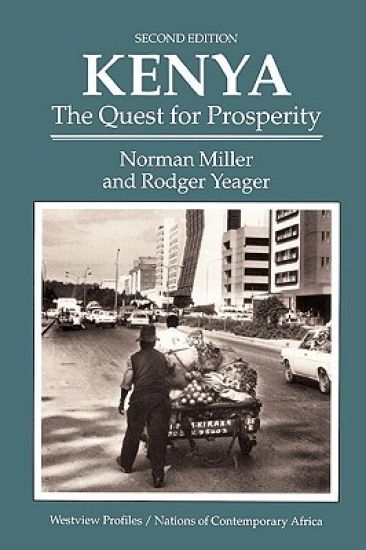
Norman Miller; Rodger Yeager

Westview Press Inc
1993
nidottu
Kenya is one of Africa's most important and controversial nations. It has simultaneously been heralded for its political stability and economic success and criticized as a wellspring of elitism and class exploitation. Kenya remains a close ally of the West and a symbol of capitalism in Africa, and it occupies a position of strategic importance to the Middle East and the Indian Ocean. Yet all of these distinctions are now coming under question in the fourth decade of independence.Kenya's exquisite natural beauty and renowned wildlife refuges hide a more mundane reality. The country is vast, rural, poor, and without oil or other mineral wealth. It is dependent on smallholder agriculture and export earnings from international tourism, tea, and coffee. Although the population is only 28 million, less than 20 percent of Kenya's land area is readily available for dense human settlement. Population growth has slowed, but demographic pressures still pose very serious socioeconomic, ecological, and environmental challenges.In this second edition of a critically acclaimed profile, Miller and Yeager address these and other social issues while tracing political and economic developments from early precolonial times to the contemporary period and the recent fourth-term reelection of President Daniel arap Moi. The book captures the aggressive, self-confident spirit that characterizes Kenya and provides unique insights into how this nation of contemporary Africa is faring in its continuing quest for prosperity.
Kenya

Kenya

Geoff Sayer

Oxfam
1998
nidottu
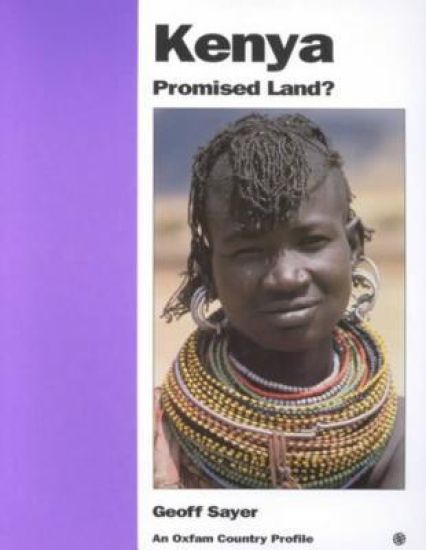
This outstanding series provides concise and lively introductions to countries and the major development issues they face. Packed full of factual information, photographs, and maps, the guides also focus on ordinary people and the impact that historical, economic, and environmental issues have on their lives.
Kenya

Kenya

Julie Murray

Abdo Kids Jumbo
2022
sidottu
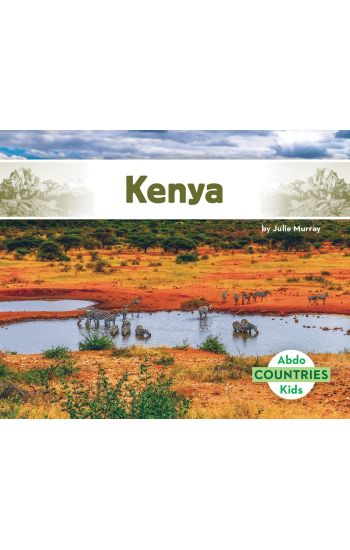
This title introduces beginning readers to the country of Kenya. The book covers Kenya's geography, capital and largest cities, exciting animals, and its most popular sports. Complete with large, full color photographs, a large map, and more exciting landmarks to explore. Aligned to Common Core Standards and correlated to state standards. Abdo Kids Jumbo is an imprint of Abdo Kids, a division of ABDO.
Kenya

Kenya

Charles Hornsby

BLOOMSBURY PUBLISHING PLC
2022
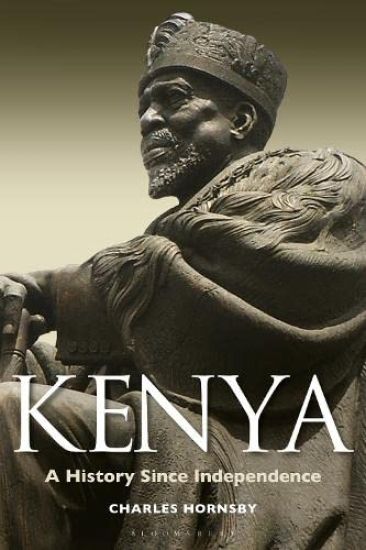
nidottu
'Magisterial' Richard Waller, AfricaSince independence from Great Britain in 1963, Kenya has survived five decades as a functioning nation-state, holding regular elections; its borders and political system intact and avoiding open war with its neighbours and military rule internally. It has been a favoured site for Western aid, trade, investment and tourism and has remained a close security partner for Western governments. However, Kenya's successive governments have failed to achieve adequate living conditions for most of its citizens; violence, corruption and tribalism have been ever-present, and its politics have failed to transcend its history. The decisions of the early years of independence and the acts of its leaders in the decades since have changed the country's path in unpredictable ways, but key themes of conflicts remain: over land, money, power, economic policy, national autonomy and the distribution of resources between classes and communities.While the country's political institutions have remained stable, the nation has changed, its population increasing nearly five-fold in five decades.But the economic and political elite's struggle for state resources and the exploitation of ethnicity for political purposes still threaten the country's existence. Today, Kenyans are arguing over many of the issues that divided them 50 years ago. The new constitution promulgated in 2010 provides an opportunity for national renewal, but it must confront a heavy legacy of history. This book reveals that history.