
Kirjahaku
Etsi kirjoja tekijän nimen, kirjan nimen tai ISBN:n perusteella.
1000 tulosta hakusanalla Kenyon Wright

Kenyan Foreign and Security Policies
Kipyego Cheluget; Stephen Wright
BLOOMSBURY PUBLISHING PLC
2025
sidottu
Kipyego Cheluget and Stephen Wright evaluate the legacy of Kenya’s first president, Jomo Kenyatta. Following a nationalist uprising and brutal colonial repression, Kenya became independent in December 1963. With much of the agricultural land still under European settler control, Jomo Kenyatta promoted foreign and security policies to balance Kenyan, African, and settler interests, attracting foreign investment into the new country. Kenyatta’s programs, however, favored the West and established a growing need for British and American security guarantees to sustain Kenya in an increasingly unstable Eastern African region. In this book, Cheluget and Wright show that despite the growing pressures within Kenyan civil society for diversification of policies and redistribution of economic wealth, Kenyatta consistently maintained pro-western policies until his death in 1978. This book is split into 3 parts. Part I discusses the growth of Kenyan nationalism, the end of the colonial era, and the birth of the Kenyan State. Part II considers the political economy and development strategies of the Kenyan State. Part III assesses the degree of continuity of the succeeding leadership portrayed from the Jomo Kenyatta presidency. Through this detailed analysis, the authors examine Kenyatta’s policies and examine how successive Kenyan presidents have largely maintained his policies and venerated his legacy.


Leslie Kenton's New Cura Romana Weightloss Plan is a major advance on her original Cura Romana book. This New Cura Romana Weightloss Plan book shares Kenton's hands-on experience with thousands of men and women who have done Cura Romana in recent years then merges this with important, up-to-the-minute, research.

Transform Your Looks, Energy and LifeAward-winning writer Leslie Kenton is renowned for her expertise in all matters relating to health and wellbeing. Now, with The Cura Romana Weightloss Plan, she shares the secrets of this revolutionary diet and guides you through its fast, effective three-step programme...·STEP 1 - a short-term, low-calorie diet which, combined with a natural oral spray that resets the fat-controlling centre in the brain, turns inessential fat into usable energy and uncovers your body's natural shape and size... ·STEP 2 - once you lose your excess weight, Leslie helps you to return to normal, healthy eating and to identify the foods that your body doesn't handle well; by eliminating these foods, you'll be free of food cravings and weight gain...·STEP 3 - expertly guided through a series of simple practices, you will achieve an amazing sense of wellbeing, increased vitality, creativy and emotional balance...The Cura Romana Weightloss Plan will lead you to discover the authentic you as you transform not only the way you look and feel, but the way you live your life now and long into the future.

Kenyon - The Physiotherapist's Pocketbook: Essential Facts at Your Fingertips
Karen Kenyon; Jonathan Kenyon
Elsevier Health Sciences
2025
nidottu
Now in its 4th edition, the best-selling The Physiotherapist's Pocketbook continues to provide an indispensable and comprehensive reference guide for clinicians in their daily practice. This edition has been expanded and updated to include the latest evidence and covers the core areas of physiotherapy - musculoskeletal, neurology, and respiratory. Key facts and figures at your fingertips A to Z list of pathologies and contraindications to treatment Special tests and assessment tools Over 100 illustrations detailing anatomy, nerve pathways, trigger points etc. Pharmacology section with over 150 drugs described Biochemical and haematological values Common abbreviations
The Kenyon Reveille for the Collection Year 1902-1903
Kenyon College
Trieste Publishing
2018
nidottu
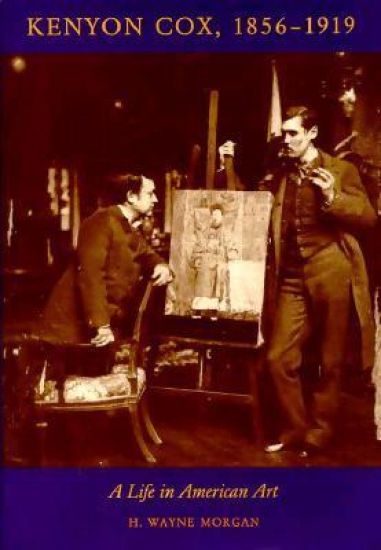
Kenyon Cox, 1856-1919
Kent State University Press
1994
sidottu
This is a biography of Kenyon Cox, one of the best-known cultural figures in the United States from 1900 to 1920. His reputation was earned chiefly as a painter of murals and as a critic. His large allegorical works can be found in Wisconsin, Iowa, Minnesota, the Library of Congress, and New York.


Kenyon Review, V10, No. 2, Spring, 1948
John Crowe Ransom; Philip Blair Rice; Eric Bentley
Literary Licensing, LLC
2011
nidottu

Statement and Appeal in Behalf of Kenyon College. December, 1881
Kenyon College
Outlook Verlag
2024
nidottu


Kenyon College
Antigonos Verlag
2025
sidottu
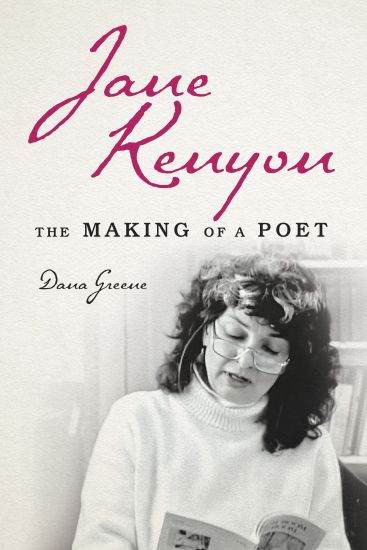
Demystifying the “Poet Laureate of Depression” Pleasure-loving, sarcastic, stubborn, determined, erotic, deeply sad--Jane Kenyon’s complexity and contradictions found expression in luminous poems that continue to attract a passionate following. Dana Greene draws on a wealth of personal correspondence and other newly available materials to delve into the origins, achievement, and legacy of Kenyon’s poetry and separate the artist’s life story from that of her husband, the award-winning poet Donald Hall. Impacted by relatives’ depression during her isolated childhood, Kenyon found poetry at college, where writers like Robert Bly encouraged her development. Her graduate school marriage to the middle-aged Hall and subsequent move to New Hampshire had an enormous impact on her life, moods, and creativity. Immersed in poetry, Kenyon wrote about women’s lives, nature, death, mystical experiences, and melancholy--becoming, in her own words, an “advocate of the inner life.” Her breakthrough in the 1980s brought acclaim as “a born poet” and appearances in the New Yorker and elsewhere. Yet her ongoing success and artistic growth exacerbated strains in her marriage and failed to stave off depressive episodes that sometimes left her non-functional. Refusing to live out the stereotype of the mad woman poet, Kenyon sought treatment and confronted her illness in her work and in public while redoubling her personal dedication to finding pleasure in every fleeting moment. Prestigious fellowships, high-profile events, residencies, and media interviews had propelled her career to new heights when leukemia cut her life short and left her husband the loving but flawed curator of her memory and legacy. Revelatory and insightful, Jane Kenyon offers the first full-length biography of the elusive poet and the unquiet life that shaped her art.
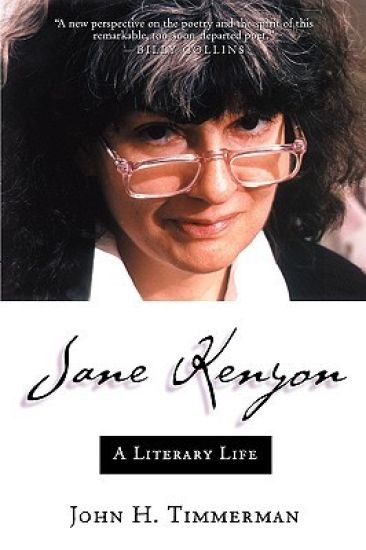
It is a testament to the enduring power and beauty of Jane Kenyon's poetry that many people - even those not particularly interested in poetry - know her work. What forces and influences shaped Kenyon's writing? And what shaped her as a person and a poet? These are the questions that John Timmerman seeks to answer in Jane Kenyon: A Literary Life. In the opening chapters Timmerman beautifully limns the story of Kenyon's life, drawing on unpublished journals and papers of hers and recollections by her husband, the poet Donald Hall. To show how her art grew out of her life, Timmerman proceeds to explore, volume by volume, the form and substance of Kenyon's work. By frequently examining the multiple drafts that Kenyon wrote in the process of reaching a finished poem, Timmerman reveals how she winnowed and refined ideas, images, and language until a poem was honed to its essence. She was especially interested in the "luminous particular," the arresting image that would focus a poem. She also took care to use simple, grounded language and natural objects and events - often drawing on and reflecting on the life she lived at Eagle Pond Farm in rural New Hampshire.Throughout her life Kenyon struggled with depression, but she never let it define her or her work. She also struggled with her faith almost constantly, yet her faith was "unrelenting," according to Timmerman, and she still wrote poems of great beauty and spiritual consolation. Her poetry, even when very personal, reached out - and still reaches out - to the reader, establishing that vital thread of human connection. Indeed, as Timmerman says, Kenyon's poems are "soundings of the human soul." Kenyon was cut down in the prime of her writing life by leukemia, and Timmerman concludes by exploring Hall's mourning of her death in Without, a wrenching collection of poems. But Kenyon's voice lives on in her work, and Timmerman's insightful, often moving study shows why this unique literary voice continues to touch readers with its beauty, grace, and power.

Letters From His Late Majesty to the Late Lord Kenyon, on the Coronation Oath, With His Lordship's Answers; and the Letters of the Rt. Hon. William Pitt to His Late Majesty, With His Majesty's Answers, Previous to the Dissolution of the Ministry in 1801
Lloyd Kenyon Kenyon; William Pitt
Palala Press
2018
pokkari
This work has been selected by scholars as being culturally important, and is part of the knowledge base of civilization as we know it. This work was reproduced from the original artifact, and remains as true to the original work as possible. Therefore, you will see the original copyright references, library stamps (as most of these works have been housed in our most important libraries around the world), and other notations in the work.This work is in the public domain in the United States of America, and possibly other nations. Within the United States, you may freely copy and distribute this work, as no entity (individual or corporate) has a copyright on the body of the work.As a reproduction of a historical artifact, this work may contain missing or blurred pages, poor pictures, errant marks, etc. Scholars believe, and we concur, that this work is important enough to be preserved, reproduced, and made generally available to the public. We appreciate your support of the preservation process, and thank you for being an important part of keeping this knowledge alive and relevant.
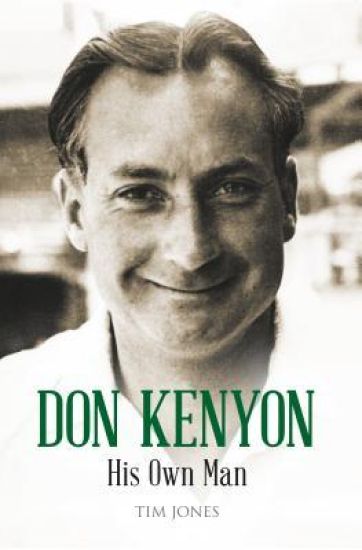
Don Kenyon was a ‘leader of champions and a champion of leaders’ for good reason: he was his own man. Known as ‘Braddy’ at school – like Don Bradman – he would bat for long periods without getting out. He holds the record as the youngest player to score a century in the Birmingham League First Division. For nineteen seasons he scored over 1,000 runs and captained Worcestershire’s first championship-winning side in 1964 (retaining the title in its centenary year of 1965). On retirement, he was president of Worcestershire for three years, which coincided with the return of the glory years in the late 1980s, when the likes of Ian Botham and Graeme Hick were in their pomp. It was in the ‘Kenyon Room’ at Worcester – named after him – where he died in 1996 just as he was about to show a video of Worcestershire’s World Tour from 1965. Don Kenyon: His Own Man celebrates the life of the county’s most iconic cricket player.