Kirjojen hintavertailu. Mukana 11 244 527 kirjaa ja 12 kauppaa.

Kirjahaku

Etsi kirjoja tekijän nimen, kirjan nimen tai ISBN:n perusteella.

1000 tulosta hakusanalla Kerry D. Soper

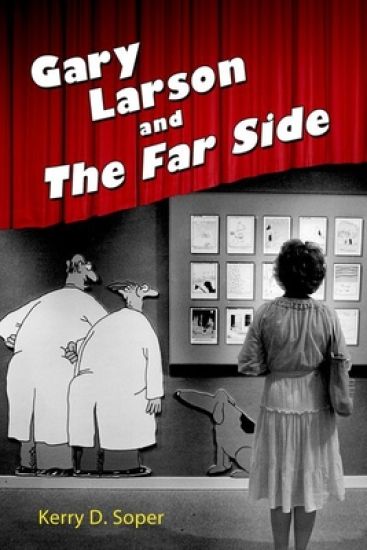
Gary Larson and the Far Side

Gary Larson and the Far Side

Kerry D. Soper

University Press of Mississippi
2018
sidottu
Kerry D. Soper reminds us of The Far Side's groundbreaking qualities and cultural significance in Gary Larson and ""The Far Side."" In the 1980s, Gary Larson (b. 1950) shook up a staid comics page by introducing a set of aesthetic devices, comedic tones, and philosophical frames that challenged and delighted many readers, even while upsetting and confusing others. His irreverent, single panels served as an alternative reality to the tame comedy of the family-friendly newspaper comics page, as well as the pervasive, button-down consumerism and conformity of the Reagan era.In this first full study of Larson's art, Soper follows the arc of the cartoonist's life and career, describing the aesthetic and comedic qualities of his work, probing the business side of his success, and exploring how The Far Side brand as a whole--with its iconic characters and accompanying set of comedic and philosophical frames--connected with its core readers. In effect, Larson reinvented his medium by creatively working within, pushing against, and often breaking past institutional, aesthetic, comedic, and philosophical parameters.Due to the comic's great success, it opened the door for additional alternative voices in comics and other popular mediums. With its intentionally awkward, minimalistic lines and its morbid humor, The Far Side expanded Americans' comedic palette and inspired up-and-coming cartoonists, comedians, and filmmakers. Soper re-creates the cultural climate and media landscape in which The Far Side first appeared and thrived, then assesses how it impacted worldviews and shaped the comedic sensibilities of a generation of cartoonists, comedy writers, and everyday fans.
Gary Larson and The Far Side

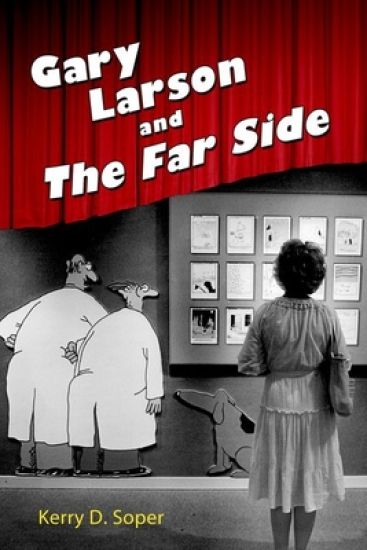
Gary Larson and The Far Side

Kerry D. Soper

University Press of Mississippi
2018
nidottu
Kerry D. Soper reminds us of The Far Side's groundbreaking qualities and cultural significance in Gary Larson and ""The Far Side."" In the 1980s, Gary Larson (b. 1950) shook up a staid comics page by introducing a set of aesthetic devices, comedic tones, and philosophical frames that challenged and delighted many readers, even while upsetting and confusing others. His irreverent, single panels served as an alternative reality to the tame comedy of the family-friendly newspaper comics page, as well as the pervasive, button-down consumerism and conformity of the Reagan era.In this first full study of Larson's art, Soper follows the arc of the cartoonist's life and career, describing the aesthetic and comedic qualities of his work, probing the business side of his success, and exploring how The Far Side brand as a whole--with its iconic characters and accompanying set of comedic and philosophical frames--connected with its core readers. In effect, Larson reinvented his medium by creatively working within, pushing against, and often breaking past institutional, aesthetic, comedic, and philosophical parameters.Due to the comic's great success, it opened the door for additional alternative voices in comics and other popular mediums. With its intentionally awkward, minimalistic lines and its morbid humor, The Far Side expanded Americans' comedic palette and inspired up-and-coming cartoonists, comedians, and filmmakers. Soper re-creates the cultural climate and media landscape in which The Far Side first appeared and thrived, then assesses how it impacted worldviews and shaped the comedic sensibilities of a generation of cartoonists, comedy writers, and everyday fans.
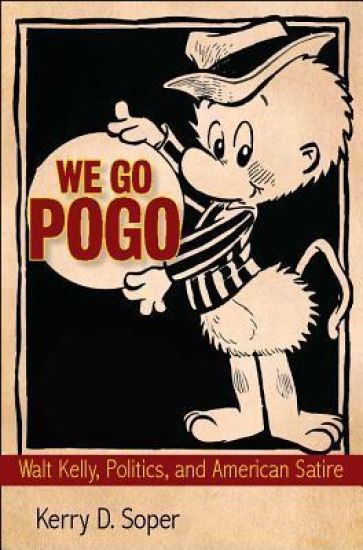
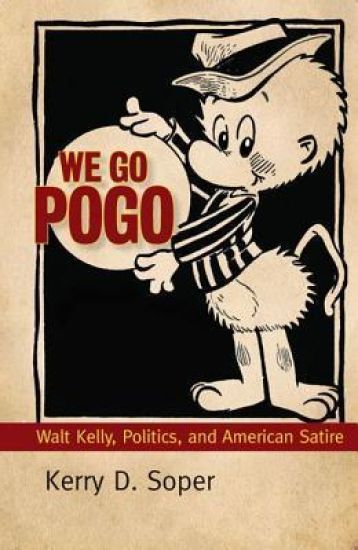
We Go Pogo

We Go Pogo

Kerry D. Soper

University Press of Mississippi
2012
sidottu
Walt Kelly (1913-1973) is one of the most respected and innovative American cartoonists of the twentieth century. His long-running Pogo newspaper strip has been cited by modern comics artists and scholars as one of the best ever. Cartoonists Bill Watterson (Calvin and Hobbes), Jeff Smith (Bone), and Frank Cho (Liberty Meadows) have all cited Kelly as a major influence on their work. Alongside Uncle Scrooge's Carl Barks and Krazy Kat's George Herriman, Kelly is recognized as a genius of ""funny animal"" comics.We Go Pogo is the first comprehensive study of Kelly's cartoon art and his larger career in the comics business. Author Kerry D. Soper examines all aspects of Kelly's career---from his high school drawings; his work on such animated Disney movies as Dumbo, Pinocchio, and Fantasia; and his 1930s editorial cartoons for Life, and the New York Herald Tribune. Soper taps Kelly's extensive personal and professional correspondence and interivews with family members, friends, and cartoonists to create a complex portrait of one of the art form's true geniuses.From Pogo's inception in 1948 until Kelly's death, the artist combined remarkable draftsmanship, slapstick humor, fierce social satire, and inventive dialogue and dialects. He used the adventures of his animals--all denizens of the Okefenokee Swamp--as a means to comment on American and international politics and cultural mores. The strip lampooned Senator Joseph McCarthy during the height of McCarthyism, the John Birch Society during the 1960s, Fidel Castro during the Bay of Pigs fiasco, and many others.
We Go Pogo

We Go Pogo

Kerry D. Soper

University Press of Mississippi
2012
nidottu
Walt Kelly (1913-1973) is one of the most respected and innovative American cartoonists of the twentieth century. His long-running Pogo newspaper strip has been cited by modern comics artists and scholars as one of the best ever. Cartoonists Bill Watterson (Calvin and Hobbes), Jeff Smith (Bone), and Frank Cho (Liberty Meadows) have all cited Kelly as a major influence on their work. Alongside Uncle Scrooge's Carl Barks and Krazy Kat's George Herriman, Kelly is recognized as a genius of ""funny animal"" comics.We Go Pogo is the first comprehensive study of Kelly's cartoon art and his larger career in the comics business. Author Kerry D. Soper examines all aspects of Kelly's career---from his high school drawings; his work on such animated Disney movies as Dumbo, Pinocchio, and Fantasia; and his 1930s editorial cartoons for Life, and the New York Herald Tribune. Soper taps Kelly's extensive personal and professional correspondence and interivews with family members, friends, and cartoonists to create a complex portrait of one of the art form's true geniuses.From Pogo's inception in 1948 until Kelly's death, the artist combined remarkable draftsmanship, slapstick humor, fierce social satire, and inventive dialogue and dialects. He used the adventures of his animals--all denizens of the Okefenokee Swamp--as a means to comment on American and international politics and cultural mores. The strip lampooned Senator Joseph McCarthy during the height of McCarthyism, the John Birch Society during the 1960s, Fidel Castro during the Bay of Pigs fiasco, and many others.
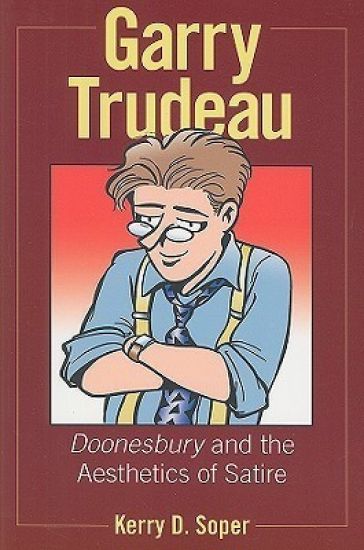
Garry Trudeau

Garry Trudeau

Kerry D. Soper

University Press of Mississippi
2008
nidottu
Since 1968, Garry Trudeau (b. 1948) has brought his brand of political satire to bear on public figures, movie stars, heads of state, and even on himself. Trudeau has also advocated for artists' rights and challenged industry norms while keeping a decidedly low profile. In Garry Trudeau: ""Doonesbury"" and the Aesthetics of Satire, Kerry D. Soper traces the contribution of this groundbreaking artist.Trudeau is arguably the premier American political and social satirist of the last forty years. Amazingly, he achieved this on the comics page, rather than the editorial page. By defying convention, Trudeau has established a hybrid form of popular satire that capitalizes on the narrative continuity and broad reach of the comic strip form, while operating according to the rules of combative political commentary.Garry Trudeau: ""Doonesbury"" and the Aesthetics of Satire is divided into chapters that offer a history of Doonesbury; an analysis of Trudeau's effective satiric methods; a discussion of the methods whereby he challenged the business practices of the comic strip industry; an examination of the aesthetics of Doonesbury; and a consideration of Trudeau's significance as a social chronicler through an analysis of his character construction, narrative practices, and documentation of the American zeitgeist. Garry Trudeau is a thorough assessment of one of America's most popular and controversial cartoonists.
The What, The Why, The How - Mergers and Acquisitions
THE SIZE, SCOPE OF IMPACT, AND GROWING FREQUENCY of these transactions, combined with the high failure rate of mergers and acquisitions are strong motives for today's business and political leaders to gain a better understanding of these transactions. Today's political leaders, business executives, Boards and business students need to understand when a merger or acquisition is appropriate and under what circumstances they are likely to be successful in achieving their goals and increasing shareholder value. Beyond shareholder value it is important that leaders understand the risks along with the impacts on communities, regions and society as a whole. Finally understanding these transactions in today's environment is necessary as you never know when you might be looking for potential targets or if/when your organization is in fact becoming the target. Kerry D. Gray CPA (CMA), MBA has enjoyed a successful career in both financial services and government administration. During this time he survived four significant merger transactions and it was apparent to him that there is a huge gap in the knowledge of leaders when it comes to mergers and acquisitions. Given the impact these transactions have on shareholders, employees, suppliers and communities I felt it was important to gather and provide the information required to use this strategy appropriately and implement or integrate it successfully.
The What, The Why, The How of Corporate Governance
If you're reading this introduction, I can only assume you're thinking of joining the world of corporate governance or wondering if your organization's governance practices are providing maximum value.Perhaps you've been asked to join a board on one of the over two million non-profit organizations. Perhaps you're considering letting your name stand for election to a cooperative or a publicly traded for-profit corporation. Alternatively, you've worked hard and climbed the corporate ladder and are moving into a position that involves the executive suite, with governance responsibilities and direct contact with a board of directors. Regardless of how you arrived at this junction, it's flattering, exciting and an opportunity to make a positive impact or a significant difference, but it's also a serious responsibility. Some issues to consider include: understanding the purpose and importance of corporate governance, your role, responsibilities, and legal obligations. In addition, you're likely asking yourself, "Do I have the knowledge or experience in the skills needed, such as strategic planning, budgeting, financial and management accounting, internal controls, performance management, organizational culture and general management knowledge or business acumen?" In today's environment, the position of a board member or member of the executive suite requires knowledge in multiple disciplines. The information provided here will provide a solid base on which your organization can gauge their current Corporate Governance practices, or if you're just beginning your excursion into this world it will get you off to a great start and allow you to hit the ground running with confidence.
The Art of Uplifting Volume I

The Art of Uplifting Volume I

Kerry D Smith I

Art of Uplifting Volume I
2019
pokkari
POSITIVITY CAN BREED OUT OF ANYTHING. YOU JUST HAVE TO FIND IT. A LESSON IN UPLIFTING IS A BOOK THAT WILL ENCOURAGE YOU TO LOOK AT YOURSELF IN A POSITIVE LIGHT. I HOPE THAT THIS ENCOURAGES YOU TO SEE YOURSELF IN A WAY THAT PROMOTES A SENSE OF PURPOSE SEEKING ACCOUNTABILITY. AFTER READING THIS BOOK, NOT ONLY WILL YOU BE PROUDER OF WHO YOU ARE, BUT YOU WILL SEEK TO DO MORE AND FULFILL YOUR LIFE'S TRUE MEANING. MAY YOU BE UPLIFTED AND ENCOURAGED.
Following Jesus to Burning Man

Following Jesus to Burning Man

Kerry D. McRoberts

Hamilton Books
2011
nidottu
Following Jesus to Burning Man: Recovering the Church's Vocation places the author, a Pentecostal/evangelical minister, in a thoroughly pagan context in the Nevada desert where he discovered the presence of God in a way that transformed his understanding of ministry in the twenty-first century context. This book is about our culture's recovery and transformation by means of the church's Spirit-empowered application of Kingdom politics. More specifically, this book is an exhortation for the church in North America to be E-P-I-C: by (1) discovering and Experiencing the presence of Jesus Christ in every corner of the postmodern culture; (2) by Participating in missional ministry with him, wherever he is present; (3) by reading the cultural Images, signs and symbols and effectively incarnating the gospel, especially in the culture's most hurting places; and (4) by practicing the politics of re-form, re-connection, and re-creation, a Spirit empowered, covenant Community can transform our culture.
A Letter from Christ

A Letter from Christ

Kerry D. McRoberts

University Press of America
2011
nidottu
Our nation is politically, ideologically, and socially polarized to the point of breaking; confusion dominates every layer of our culture. The church in America is “a letter from Christ” (2 Cor. 3:3), written to our politically cynical, socially insecure, and spiritually skeptical culture. Before the Gospel may become clear in our “post-everything” culture, we must make truth real in our hearts. The purpose of this book is to (1) redefine dualistic frames in the minds of contemporary Christians that separate the “saved” from the advent of God’s healing reign on Earth; (2) relate Christian compassion to a post-secular America; and (3) propose a redefinition of the Christian controlling narrative. Such a revised narrative will light the way for our “restless hearts” so that we, as a nation, may return from exile to restoration and rejoice in the sovereign reign of God in Christ.
Defective Bosses

Defective Bosses

Kerry D Carson; Paula P Carson

Routledge Member of the Taylor and Francis Group
1998
sidottu
If you're one of the billions of people in the world who work for someone else, you'll definitely want to see what's inside Defective Bosses: Working for the “Dysfunctional Dozen.” This how-to, how-not-to, why, and why-not tour guide is packed to the hilt with a bevy of tested and proven survival skills and coping techniques for those of you who are trapped in that daily labyrinth of mind games and self-defeating work rituals--and all because of that slightly off-center superior you have to answer to every day. You'll find twelve of the most common defects presented to you in clear and understandable terms so you can detect the defect, protect state of mind, and correct the problem before your life at the office becomes a complete wreck.Firmly grounded in psychiatric literature, Defective Bosses takes you to levels of workplace happiness that other similar publications fail to reach. In contrast to other books that lack a solid theoretical base, this comprehensive, systematic look at dysfunctional bosses takes an in-depth look at twelve of the most prevalent disorders managers and superiors inflict on their employees in the workplace, giving equal treatment to each category and providing you with equal strategies for each situation you might encounter. These and other areas will help you turn your dead-end job into a dream occupation:an overview of why we have defective bosses dealing with self-centered bosses (narcissistic, sociopathic, paranoid, and histrionic) handling controlling bosses (authoritarian, obsessive-compulsive, explosive, and passive-aggressive) living with neurotic bosses (masochistic, dependent, depressive, anxious) end-of-the-chapter quizzes to help you diagnose your own boss “I need it yesterday!” “Can you handle this for me? I've got the company lunch.” “If you don't get this in, it's your job!” If these are all-too-common phrases in your workplace, then you need to make a memo to yourself to order Defective Bosses. Its thorough psychological base and examples gleaned from real-life scenarios will give you so much guidance, advice, and direction for positive change, you'll find that you're the boss when it comes to good departmental relationships and a more mutually enjoyable work environment.
Defective Bosses

Defective Bosses

Kerry D Carson; Paula P Carson

Routledge Member of the Taylor and Francis Group
1998
nidottu
If you're one of the billions of people in the world who work for someone else, you'll definitely want to see what's inside Defective Bosses: Working for the “Dysfunctional Dozen.” This how-to, how-not-to, why, and why-not tour guide is packed to the hilt with a bevy of tested and proven survival skills and coping techniques for those of you who are trapped in that daily labyrinth of mind games and self-defeating work rituals--and all because of that slightly off-center superior you have to answer to every day. You'll find twelve of the most common defects presented to you in clear and understandable terms so you can detect the defect, protect state of mind, and correct the problem before your life at the office becomes a complete wreck.Firmly grounded in psychiatric literature, Defective Bosses takes you to levels of workplace happiness that other similar publications fail to reach. In contrast to other books that lack a solid theoretical base, this comprehensive, systematic look at dysfunctional bosses takes an in-depth look at twelve of the most prevalent disorders managers and superiors inflict on their employees in the workplace, giving equal treatment to each category and providing you with equal strategies for each situation you might encounter. These and other areas will help you turn your dead-end job into a dream occupation:an overview of why we have defective bosses dealing with self-centered bosses (narcissistic, sociopathic, paranoid, and histrionic) handling controlling bosses (authoritarian, obsessive-compulsive, explosive, and passive-aggressive) living with neurotic bosses (masochistic, dependent, depressive, anxious) end-of-the-chapter quizzes to help you diagnose your own boss “I need it yesterday!” “Can you handle this for me? I've got the company lunch.” “If you don't get this in, it's your job!” If these are all-too-common phrases in your workplace, then you need to make a memo to yourself to order Defective Bosses. Its thorough psychological base and examples gleaned from real-life scenarios will give you so much guidance, advice, and direction for positive change, you'll find that you're the boss when it comes to good departmental relationships and a more mutually enjoyable work environment.
We Three

We Three

Kerry D Ames

IngramSpark
2023
pokkari
There is a star, a remarkable and unusual star, captivating men from the East who believe there is order in the heavens that can be studied for messages and meaning. The star's unprecedented appearance demands investigation, so they plan a journey, confident their efforts will be rewarded. King Xaratuk presumes the star is evidence of an essential martial ally. King Mithrias is content to use the exploration as a diversion from personal grief. The kings depart on a dangerous, inspiring mission, emboldened only by their confidence, not knowing where the star's light might terminate.What or who could be of such magnitude as to alter the heavens? Lacking knowledge, they indulge in speculation. They wish. They hope. But their speculation is personal, without basis, and has nothing whatsoever to do with validating Jewish prophecy. Speculation carries the possibility of being disastrously incorrect.The expedition has journeyed farther than anticipated. A guide would be beneficial. Topur is a diaspora Jew, a merchant, and a seasoned traveler. The kings invite him to join their quest and reap the benefits. Topur is reluctant, unpersuaded that starlight reveals anything meaningful. In addition, the star beckons them toward the menacing Roman Empire. The kings see opportunity; Topur sees doom. Only at his wife's urging does Topur concede to cooperate. With his slave companion, Najiir, he joins a mission that he feels has little chance of success. Topur and Najiir attempt to guide their notable charges past a chaotic Jerusalem while confronting an erratic and sinister King Herod, a scheming royal court, obstinate clerics, and potentially deadly Roman interference. When they reach the starlight's conclusion, they find a wholly unimpressive Bethlehem and a baby with his impoverished parents. This is not the fulfillment anyone expected.