

Kirjahaku
Etsi kirjoja tekijän nimen, kirjan nimen tai ISBN:n perusteella.
1000 tulosta hakusanalla Kerry Douglas Dye
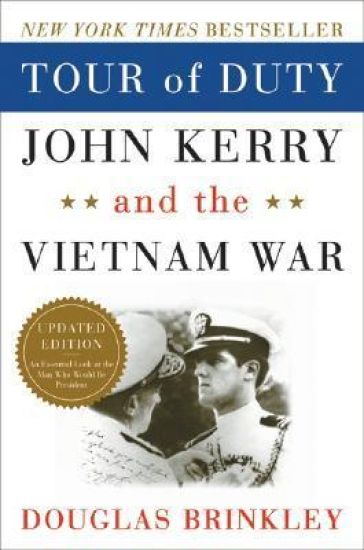
One of our most acclaimed historians explores the decorated military service of one of America's most intriguing politicians--the leading Democratic presidential candidate for 2004--and its profound effects on his career and life In Tour of Duty, Brinkley explores Senator John Kerry's career and deftly deals with such explosive issues as U.S. atrocities in Vietnam and the bombing of Cambodia. Using new information acquired from the recently released Nixon tapes, Brinkley reveals how White House aides Charles Colson and H.R. Haldeman tried to discredit Kerry. Refusing to be intimidated, Kerry started running for public office, eventually becoming a U.S. Senator from Massachusetts. Covering more than four decades, this is the first full-scale definitive account of Kerry's journey from war to peace. In writing this riveting, action-packed narrative, Brinkley has drawn on extensive interviews with virtually everyone who knew Kerry well in Vietnam. Kerry also relegated to Brinkley his letters home from Vietnam and his voluminous “war notes” journals, notebooks, and personal reminiscences written during and shortly after the war. This material was provided without restriction, to be used at Brinkley's discretion, and has never before been published.
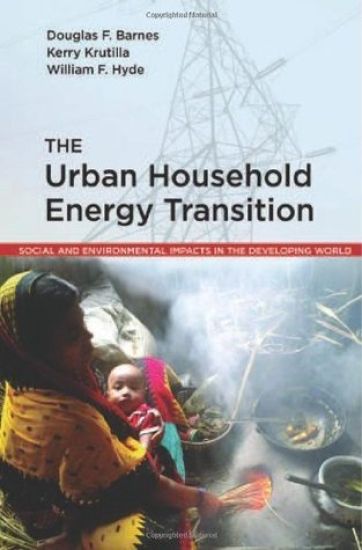
The Urban Household Energy Transition
Barnes Douglas F.; Krutilla Kerry; Hyde William F.
Resources for the Future Press (RFF Press)
2005
nidottu
As cities in developing countries grow and become more prosperous, energy use shifts from fuelwood to fuels like charcoal, kerosene, and coal, and, ultimately, to fuels such as liquid petroleum gas, and electricity. Energy use is not usually considered as a social issue. Yet, as this book demonstrates, the movement away from traditional fuels has a strong socio-economic dimension, as poor people are the last to attain the benefits of using modern energy. The result is that health risks from the continued use of wood fuel fall most heavily on the poor, and indoor pollution from wood stoves has its greatest effect on women and children who cook and spend much more of their time indoors. Barnes, Krutilla, and Hyde provide the first worldwide assessment of the energy transition as it occurs in urban households, drawing upon data collected by the World Bank Energy Sector Management Assistance Programme (ESMAP). From 1984-2000, the program conducted over 25,000 household energy surveys in 45 cities spanning 12 countries and 3 continents. Additionally, GIS mapping software was used to compile a biomass database of vegetation patterns surrounding 34 cities. Using this rich set of geographic, biological, and socioeconomic data, the authors describe problems and policy options associated with each stage in the energy transition. The authors show how the poorest are most vulnerable to changes in energy markets and demonstrate how the collection of biomass fuel contributes to deforestation. Their book serves as an important contribution to development studies, and as a guide for policymakers hoping to encourage sustainable energy markets and an improved quality of life for growing urban populations.

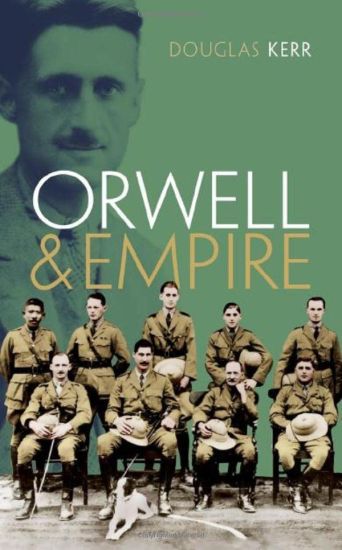
Considers George Orwell's writing about the East, and the presence of the East in his writing. George Orwell was born in India and served in the Imperial Police in Burma as a young man. Orwell and Empire is a study of his writing about the East and the East in his writing. It argues that empire was central to his cultural identity and that his experience of colonial life was a crucial factor, in ways that have not been recognized, in shaping the writer he became. Orwell and Empire is about all his writings, fictional and non-fictional. It pays particular attention to work that derives directly from his Burmese years including the well-known narratives 'A Hanging' and 'Shooting an Elephant' and his first novel Burmese Days. It goes on to explore the theme of empire throughout his work, through to Nineteen Eighty-Four and beyond, and charts the way his evolving views on class, race, gender, and authority were shaped by his experience in the East and the Anglo-Indian attitudes he had inherited. Orwell's socialism and his hatred of authoritarianism grew out of his anti-imperialism as The Road to Wigan Pier makes explicit. But this was not a straightforward repudiation or a painless process. He understood that, 'it is very difficult to escape, culturally, from the class into which you have been born.' His whole career was a creative quarrel with himself and with his Anglo-Indian patrimony. In a way that anticipates current debates about the imperial legacy, he struggled to come to terms with his own history.

In this perceptive and original study of one of the most popular of English poets, Douglas Kerr has written the life of Wilfred Owen's language. The book explores the meaning in Owen's life of the family, the Church, the army, and English poets of the past. It examines the language of these four communities, and shows how their discourses helped to mould the poet's own. The language in which Owen's extraordinary poems and letters are written was learned in and from these communities which shaped his short career. But there were times too when he hated each of them. As Douglas Kerr shows, much of the power of Owen's writing derives from his desire to transform the communities which formed him. Accessible and lucid, and informed by the insights of recent theory, Wilfred Owen's Voices throws important new light on the best-known of the English war poets, and on both the cultural history and intense personal drama to be read in his work.

From the early stories, to the great popular triumphs of the Sherlock Holmes tales and the Professor Challenger adventures, the ambitious historical fiction, the campaigns against injustice, and the Spiritualist writings of his later years, Conan Doyle produced a wealth of narratives. He had a worldwide reputation and was one of the most popular authors of the age. A critical study of the writings of Arthur Conan Doyle and a cultural biography, this is a book for students of literary and cultural history, and Conan Doyle enthusiasts. It is a full account of all of his writing, and an investigation of the role of the author as he practised it, as witness, critic, and interpreter of his times. His work was widely read and enjoyed, but it is far from being a simple endorsement of the masculine, imperialist, bourgeois, scientific world he so often portrayed. The subject of this study is what Conan Doyle knew--the knowledge of his own culture, its institutions and values and ways of life, its beliefs and anxieties, which is created and shared by his writing. The book is organized according to a number of cultural domains--sport, medicine, science, law and order, army and empire, and the spiritual life. At a time when literature had become a profession, in a society where literacy was more widespread than ever before or since, Conan Doyle emerges as a maker of culture, offering his readers an image of themselves, their past and their future.
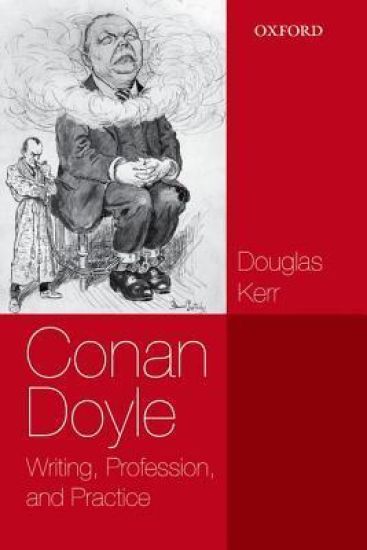
From the early stories, to the great popular triumphs of the Sherlock Holmes tales and the Professor Challenger adventures, the ambitious historical fiction, the campaigns against injustice, and the Spiritualist writings of his later years, Conan Doyle produced a wealth of narratives. He had a worldwide reputation and was one of the most popular authors of the age. A critical study of the writings of Arthur Conan Doyle and a cultural biography, this is a book for students of literary and cultural history, and Conan Doyle enthusiasts. It is a full account of all of his writing, and an investigation of the role of the author as he practised it, as witness, critic, and interpreter of his times. His work was widely read and enjoyed, but it is far from being a simple endorsement of the masculine, imperialist, bourgeois, scientific world he so often portrayed. The subject of this study is what Conan Doyle knew - the knowledge of his own culture, its institutions and values and ways of life, its beliefs and anxieties, which is created and shared by his writing. The book is organized according to a number of cultural domains - sport, medicine, science, law and order, army and empire, and the spiritual life. At a time when literature had become a profession, in a society where literacy was more widespread than ever before or since, Conan Doyle emerges as a maker of culture, offering his readers an image of themselves, their past and their future.
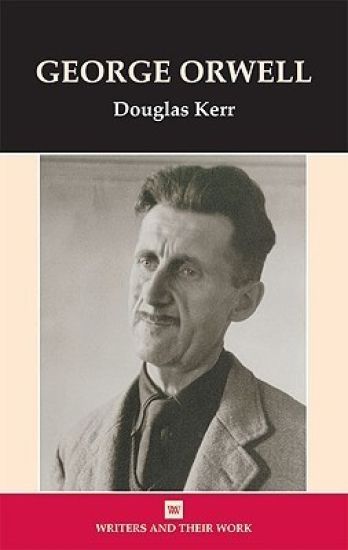
A fresh account of the development and achievement of the novelist and essayist who became Britain's greatest political writer of modern times. George Orwell (1903-1950) is one of the most important, admired, and controversial British writers of modern times. This new study examines his writing - the novels, journalism, essays and polemics - by looking at the context and development of his passionately held views, and at the genres, representations and narratives in which they found expression. Douglas Kerr gives an account of Orwell's whole writing career, from its awkward beginnings in Down and Out in Paris and London to the ambiguous triumphs of Animal Farm and Nineteen Eighty-Four, tracing its relation to four contexts - the East, England, Europe, and the nightmare police-state of Oceania. In particular he argues for the importance of Orwell's youthful service in the colonial police in Burma, and for the way his experience of the East and of what he called 'the dirty work of empire' shaped the writer's emerging understanding of oppression and freedom, inequality and justice.
A fresh account of the development and achievement of the novelist and essayist who became Britain's greatest political writer of modern times. George Orwell (1903-1950) is one of the most important, admired, and controversial British writers of modern times. This new study examines his writing - the novels, journalism, essays and polemics - by looking at the context and development of his passionately held views, and at the genres, representations and narratives in which they found expression. Douglas Kerr gives an account of Orwell's whole writing career, from its awkward beginnings in Down and Out in Paris and London to the ambiguous triumphs of Animal Farm and Nineteen Eighty-Four, tracing its relation to four contexts - the East, England, Europe, and the nightmare police-state of Oceania. In particular he argues for the importance of Orwell's youthful service in the colonial police in Burma, and for the way his experience of the East and of what he called 'the dirty work of empire' shaped the writer's emerging understanding of oppression and freedom, inequality and justice.

Critical Zone 3 – A Forum of Chinese and Western Knowledge
Douglas Kerr; Q. S. Tong; Shouren Wang
Hong Kong University Press
2009
nidottu
Critical Zone is an established series in cultural and literary studies jointly published by the Hong Kong University Press and Nanjing University Press. This is the third number. Based in Hong Kong and mainland China, Critical Zone aims to bring together scholars around the world and to improve cross-cultural and cross-regional understanding.

Eastern Figures – Orient and Empire in British Writing
Douglas Kerr
Hong Kong University Press
2008
sidottu
Eastern Figures is a literary history with a difference. It examines British writing about the East - centred on India but radiating as far as Egypt and the Pacific - in the colonial and postcolonial period.

Hailed by Mark Hyman, MD, as “a ray of light and hope” for autoimmune sufferers, this groundbreaking book provides research and solutions for those affected by autoimmune disorders including Crohn’s disease, type 1 diabetes, rheumatoid arthritis, and more.In the first book of its kind, journalist Donna Jackson Nakazawa examines nearly 100 debilitating autoimmune diseases—such as multiple sclerosis, lupus, Crohn’s disease, type 1 diabetes, and rheumatoid arthritis—that cause the body to destroy itself, mistakenly attacking healthy cells as the immune system fights off bacteria, viruses, and other invaders. As Nakazawa share the vivid, heartbreaking stories, including her own, of people living with these mysterious, chronic, and often hard-to-diagnose illnesses, she explores the alarming and unexpected connection between this deadly crisis and the countless environmental triggers we’re exposed to every day: heavy metals, toxins, pesticides, viruses, chemicals in the foods we eat, and more. With the help of leading experts, Nakazawa explores revolutionary preventions, treatments, and cures emerging around the world and offers practical advice for protecting your immune system and reducing your risk of autoimmune disease in the future.

Critical Zone 2 – A Forum of Chinese and Western Knowledge
Q. S. Tong; Shouren Wang; Douglas Kerr
Hong Kong University Press
2007
nidottu
The series aims to improve understanding across cultures, traditions, discourses, and disciplines, and to produce international critical knowledge.

Domestic Violence
Frances T Pilch; Janet L Kerr; Patricia L Lostroh; Dave McCone; Howard Black; Douglas J Miles; Erika Vida
Robert D. Reed Publishers
2021
nidottu
WALK A MILE IN HER SHOES: Beginning with a discussion of the magnitude of the problem of domestic violence, the authors present a fictional narrative of "Suzanne," whose relationship with her intimate partner dissolves into abuse and violence, both physical and emotional. What follows is expert commentary on her story by law enforcement, a judge and former district attorney, victim advocate, therapist, and survivor, which provide a unique exploration of the tragedy of abuse and potential means by which it can be addressed. The main theme of the book is the tendency to "blame the victim" for staying in an abusive relationship and the need to understand why leaving can be so difficult and dangerous.
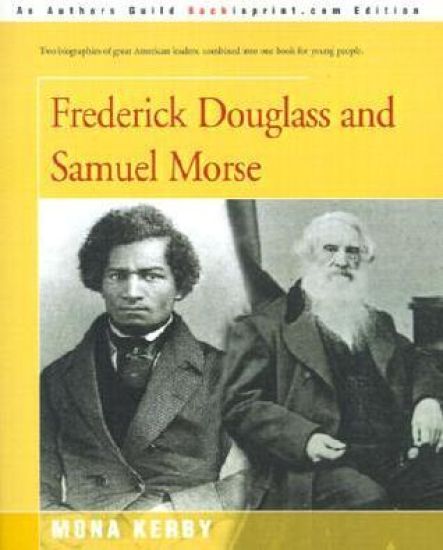

Born a slave in Talbot County, Maryland, Frederick Douglass never planned to be the most famous black man in the world. He just wanted to be free. "Once you learn to read," he wrote, "you will be forever free." By telling his story, Frederick helped change the history of the world. "Written with dramatic immediacy." Booklist
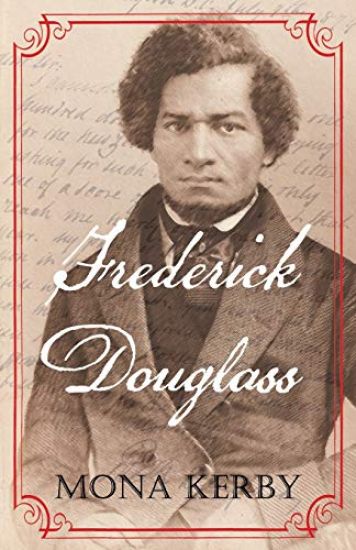
Born a slave in Talbot County, Maryland, Frederick Douglass never planned to be the most famous black man in the world. He just wanted to be free. "Once you learn to read," he wrote, "you will be forever free." By telling his story, Frederick helped change the history of the world. This narrative nonfiction biography is perfect for third through sixth graders and has been revised with historical photographs. "Written with dramatic immediacy . . . this biography] brings a strong sense of the great abolitionist and writer . . . As a slave, Douglass secretly learned to read and the power of literacy underlies this biography: Kerby shows how, in writing his story, Douglass affected the lives of untold numbers of Americans." Booklist