

Kirjahaku
Etsi kirjoja tekijän nimen, kirjan nimen tai ISBN:n perusteella.
1000 tulosta hakusanalla Kevin B Smith

Public Administration: Power and Politics in the Fourth Branch of Government
Kevin B. Smith; Michael J. Licari
Oxford University Press
2006
nidottu
Public Administration: Power and Politics in the Fourth Branch of Government presents public administration through the lens of politics and the policy-making power of the bureaucracy. By showing how the bureaucracy influences daily life, Smith and Licari bring the field of public administration alive for students. This text dispels the myth that the study of public administration is boring or irrelevant to students' lives by demonstrating just how deeply it pervades our lives. The authors focus on the bureaucracy--"the fourth branch of government"--as a key ingredient in politics and policy-making. This approach is novel, but it accurately reflects the true nature of public administration in America. This book examines our bureaucracy's considerable political power, where it comes from, how it is used, and how it can be controlled. Major Features: * Unique focus on political and policy-making power. This is the first public administration textbook to focus on the political and policy-making power of the bureaucracy. Without abandoning coverage of more traditional topics, this approach is more compelling to students because it demonstrates just how much influence the bureaucracy wields in our daily lives. * Highlights the tension between democracy and bureaucracy. A central paradox at the heart of the political system is democracy's reliance on the very undemocratic bureaucratic institutions that characterize the administrative branch of government. This text seeks to explain why and lay out the implications of that dependency. * Details the role and legitimacy of public administration in a democracy. There is an uneasy and fascinating relationship between the democratically elected leadership in government and the bureaucracies needed to carry out their decisions. This tension forms a running theme throughout the book. * Solid multidisciplinary foundation. This book draws on literature by the most important academics in the fields of both public administration and political science. * Readability. Smith and Licari write in an engaging, informal style that is rich in lively examples and free of academic jargon. Key terms are included in a glossary.
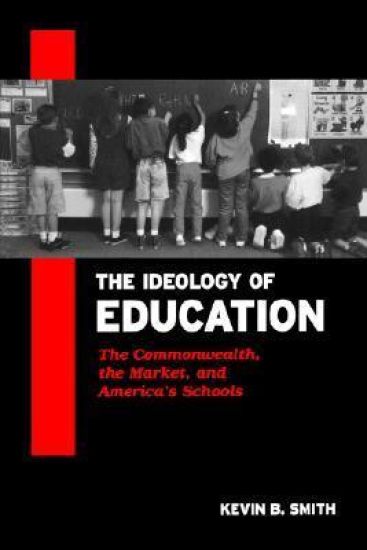
Explores the ideological underpinnings of school choice and other market-based education reforms.Advocates of market-based education reforms (including such policies as choice, charters, vouchers, and outright privatization) argue that they represent ready solutions to clearly defined problems. Critics of market models, on the other hand, argue that these reforms misperceive the purposes of public education and threaten its democratic ethos. This book explores both the promises and pitfalls of market forces-their potential to improve the quality of public education and their compatibility with its republican justifications. Smith argues that although market models of education are not without utilitarian merit, their potential to alter the social-democratic purposes of education is seriously underestimated. He supports this claim with a series of sophisticated analyses of the key assumptions underlying these models, and by examining the normative elements of theory and methodology that can-and often do-skew empirical policy analysis toward market preferences. He concludes that market reforms are not just a ready means to effectively address the problems of public schooling but rather represent a clear attempt to ideologically redefine its ends.
Public policy is a broad and interdisciplinary area of study and research in the field tends to reflect this. Yet for those teaching and studying public policy, the disjointed nature of the field can be confusing and cumbersome. This text provides a consistent and coherent framework for uniting the field of public policy. Authors Kevin B. Smith and Christopher W. Larimer offer an organized and comprehensive overview of the core questions and concepts, major theoretical frameworks, primary methodological approaches, and key controversies and debates in each subfield of policy studies from the policy process and policy analysis to program evaluation and policy implementation. The third edition has been updated throughout to include the latest scholarship and approaches in the field, including new and expanded coverage of behavioral economics, the narrative policy framework, Fourth Generation implementation studies, the policy regime approach, field experiments, and the debate of program versus policy implementation studies. Now with an appendix of sample comprehensive exam questions, The Public Policy Theory Primer remains an indispensable text for the systematic study of public policy.
The field of public policy is so broad, diffuse, and balkanized that imposing order on it from an instructor’s perspective—let alone from a student’s perspective—can be a difficult and frustrating undertaking. The Public Policy Theory Primer, 4th Edition is designed to provide a firm grounding in public policy, while also offering an introduction to the research agendas that are rising fastest from its foundations. Authors Kevin B. Smith and Christopher W. Larimer utilize a unique approach: they define the key research questions in the field and then organize policy studies into coherent subfields that address those questions. In delving into newly published research and rapidly developing literatures, the book continues to ask a fundamental question in the field of public policy studies: Does such a field really exist? This substantially revised new edition draws clear connections between theory and practice, examines whether policy process models can help illuminate program adoption and outcomes, explores the Narrative Policy Framework’s commonalities with rationalist and post-positivist policy analysis camps, investigates the “deservingness heuristic” and the notion of the “public” in policy design, and makes a stronger case for the role that human psychology plays in policy choices. The authors do not simply report on these sorts of changes and updates, instead meticulously integrating them into their coherent framework of public policy studies. This novel structure, along with an appendix of sample discussion and exam questions, makes The Public Policy Theory Primer, 4th Edition a clear, organized, and thought-provoking introduction to the field, indispensable for any public policy course.

The field of public policy is so broad, diffuse, and balkanized that imposing order on it from an instructor’s perspective—let alone from a student’s perspective—can be a difficult and frustrating undertaking. The Public Policy Theory Primer, 4th Edition is designed to provide a firm grounding in public policy, while also offering an introduction to the research agendas that are rising fastest from its foundations. Authors Kevin B. Smith and Christopher W. Larimer utilize a unique approach: they define the key research questions in the field and then organize policy studies into coherent subfields that address those questions. In delving into newly published research and rapidly developing literatures, the book continues to ask a fundamental question in the field of public policy studies: Does such a field really exist? This substantially revised new edition draws clear connections between theory and practice, examines whether policy process models can help illuminate program adoption and outcomes, explores the Narrative Policy Framework’s commonalities with rationalist and post-positivist policy analysis camps, investigates the “deservingness heuristic” and the notion of the “public” in policy design, and makes a stronger case for the role that human psychology plays in policy choices. The authors do not simply report on these sorts of changes and updates, instead meticulously integrating them into their coherent framework of public policy studies. This novel structure, along with an appendix of sample discussion and exam questions, makes The Public Policy Theory Primer, 4th Edition a clear, organized, and thought-provoking introduction to the field, indispensable for any public policy course.
Public policy is a broad and interdisciplinary area of study and research in the field tends to reflect this. Yet for those teaching and studying public policy, the disjointed nature of the field can be confusing and cumbersome. This text provides a consistent and coherent framework for uniting the field of public policy. Authors Kevin B. Smith and Christopher W. Larimer offer an organized and comprehensive overview of the core questions and concepts, major theoretical frameworks, primary methodological approaches, and key controversies and debates in each subfield of policy studies from the policy process and policy analysis to program evaluation and policy implementation. The third edition has been updated throughout to include the latest scholarship and approaches in the field, including new and expanded coverage of behavioral economics, the narrative policy framework, Fourth Generation implementation studies, the policy regime approach, field experiments, and the debate of program versus policy implementation studies. Now with an appendix of sample comprehensive exam questions, The Public Policy Theory Primer remains an indispensable text for the systematic study of public policy.

Governing States and Localities
Kevin B. Smith; Alan H. Greenblatt
SAGE Publications Inc
2014
nidottu
In this Essentials Edition of Governing States and Localities, authors Kevin Smith and Alan Greenblatt retain the hallmarks of their bestselling introductory text by blending the latest scholarship with engaging journalistic writing, crisp storytelling, and class-tested pedagogy. Based on market feedback, the authors distilled core topics and cut out policy coverage some instructors do not have time to cover, but kept the ever-important finance chapter and a beautiful full-color interior design. This value-priced, ten-chapter text utilizes the comparative approach to ensure that students walk away from the course understanding how and why states and localities are both similar and different in institutional structure, culture, history, geography, economy, and demographics.

Governing States and Localities Electronic Version
Kevin B. Smith; Alan H. Greenblatt
SAGE PUBLICATIONS INC
2014
lisenssiavain

Governing States and Localities Resource Center
Kevin B. Smith; Alan H. Greenblatt
Cq Pr
2015
sidottu

Tackles the debate of what is driving mass incarceration in America and assesses the political, social, and economic impact across the 50 states.The U.S. incarcerates four times more people per capita than Australia, five times more than the United Kingdom, six times more than Canada, and eight times more than Germany. The United States contains more ex-prisoners than the entire population of Ireland, and more people with a felony record than the populations of Denmark, Norway, New Zealand and Liberia combined. Why did the United States become the world’s biggest jailer? And, just as importantly, what has it done to us? How has having the world’s biggest population of ex-prisoners shaped us socially, economically, and politically? In this landmark book, Kevin B. Smith explains that the United States became the world’s biggest jailer because politicians wanted to do something about a very real problem with violent crime. That effort was accelerated by a variety of partisan and socio-demographic trends that started to significantly reshape state political environments in the 1980s and 1990s. The force of those trends varied from state to state, but ultimately led to not just historically unprecedented levels of incarceration, but equally unprecedented numbers of ex-prisoners. Serving time behind bars is now a normalized social experience—it affects a majority of Americans directly or indirectly. There is a clear price, a jailer’s reckoning, to be paid for this. As this book shows, it is a society with declining levels of civic cohesion, reduced economic prospects, and less political engagement. Mass incarceration turns out to be something of a hidden bomb, a social explosion that inflicts enormous civic collateral damage.

"Compelling arguments, supported by both anecdotal and empirical evidence to convince readers that school choice does nothing to improve the quality of education. ... Solidly researched and written, Smith's and Meier's effort should sway those still undecided on the issue". -- Publishers Weekly

"Compelling arguments, supported by both anecdotal and empirical evidence to convince readers that school choice does nothing to improve the quality of education. ... Solidly researched and written, Smith's and Meier's effort should sway those still undecided on the issue". -- Publishers Weekly

Buried in many people and operating largely outside the realm of conscious thought are forces inclining us toward liberal or conservative political convictions. Our biology predisposes us to see and understand the world in different ways, not always reason and the careful consideration of facts. These predispositions are in turn responsible for a significant portion of the political and ideological conflict that marks human history.With verve and wit, renowned social scientists John Hibbing, Kevin Smith, and John Alford—pioneers in the field of biopolitics—present overwhelming evidence that people differ politically not just because they grew up in different cultures or were presented with different information. Despite the oft-heard longing for consensus, unity, and peace, the universal rift between conservatives and liberals endures because people have diverse psychological, physiological, and genetic traits. These biological differences influence much of what makes people who they are, including their orientations to politics.Political disputes typically spring from the assumption that those who do not agree with us are shallow, misguided, uninformed, and ignorant. Predisposed suggests instead that political opponents simply experience, process, and respond to the world differently. It follows, then, that the key to getting along politically is not the ability of one side to persuade the other side to see the error of its ways but rather the ability of each side to see that the other is different, not just politically, but physically. Predisposed will change the way you think about politics and partisan conflict.As a bonus, the book includes a "Left/Right 20 Questions" game to test whether your predispositions lean liberal or conservative.

The Public Administration Theory Primer
H. George Frederickson; Kevin B. Smith; Christopher Larimer; Michael J. Licari
Westview Press Inc
2015
nidottu
The Public Administration Theory Primer explores how the science and art of public administration is definable, describable, replicable, and cumulative. The authors survey a broad range of theories and analytical approaches—from public institutional theory to theories of governance—and consider which are the most promising, influential, and important for the field. This book paints a full picture of how these theories contribute to, and explain, what we know about public administration today.The third edition is fully revised and updated to reflect the latest developments and research in the field including more coverage of governments and governance, feminist theory, emotional labor theory, and grounded research methodology. Expanded chapter conclusions and a brand-new online supplement with sample comprehensive exam questions and summary tables make this an even more valuable resource for all public administration students.

This thoughtfully updated revision of a classic text sheds new light on the potential sociological and biological differences that result in deep, seemingly unbridgeable political divisions.Renowned social scientists and experts in biopolitics, John R. Hibbing, Kevin B. Smith, and John R. Alford present overwhelming evidence that political opinion is shaped not just by cultural background or information bias but is rather the result of diverse psychological, physiological, and genetic traits. This new edition shifts the emphasis from differences between the political left and the right (liberals and conservatives) as they have traditionally been understood and explores specific brands of liberalism and conservatism such as ardent supporters of politicians such as Donald Trump.An essential read for students and scholars of political psychology and party politics, this book invites the reader to reconsider their perspectives on public opinion and partisan conflict.

This thoughtfully updated revision of a classic text sheds new light on the potential sociological and biological differences that result in deep, seemingly unbridgeable political divisions.Renowned social scientists and experts in biopolitics, John R. Hibbing, Kevin B. Smith, and John R. Alford present overwhelming evidence that political opinion is shaped not just by cultural background or information bias but is rather the result of diverse psychological, physiological, and genetic traits. This new edition shifts the emphasis from differences between the political left and the right (liberals and conservatives) as they have traditionally been understood and explores specific brands of liberalism and conservatism such as ardent supporters of politicians such as Donald Trump.An essential read for students and scholars of political psychology and party politics, this book invites the reader to reconsider their perspectives on public opinion and partisan conflict.
The Public Administration Theory Primer
H. George Frederickson; Kevin B. Smith; Christopher Larimer; Michael J. Licari
Routledge
2018
sidottu
The Public Administration Theory Primer explores how the science and art of public administration is definable, describable, replicable, and cumulative. The authors survey a broad range of theories and analytical approaches—from public institutional theory to theories of governance—and consider which are the most promising, influential, and important for the field. This book paints a full picture of how these theories contribute to, and explain, what we know about public administration today.The third edition is fully revised and updated to reflect the latest developments and research in the field including more coverage of governments and governance, feminist theory, emotional labor theory, and grounded research methodology. Expanded chapter conclusions and a brand-new online supplement with sample comprehensive exam questions and summary tables make this an even more valuable resource for all public administration students.

Stop the Violence and Welcome to the New B.A.N.G.: A Model Program and Curriculum to Help Transform At-Risk Youth and Gang Members
Kevin Smith; Michael Edward Cooper
Createspace Independent Publishing Platform
2014
nidottu
Set out on a remarkable odyssey of self-exploration and profound change as you delve into the pages of "Stop the Violence and Welcome to the New B.A.N.G. : A Model Program and Curriculum to Help Transform At-Risk Youth and Gang Members." This extraordinary book seamlessly integrates the foundational principles of the power of habit, positive thinking, and the essential practice of self-love, creating a guiding light for at-risk youth, troubled teens, and even gang members, leading them toward a path of redemption and profound healing.Beyond its pages lies a revelation of the latent potential concealed within life's adversities, offering a comprehensive curriculum designed to nurture crucial life skills, ignite emotional growth, and develop effective problem-solving strategies. With an unwavering commitment to compassion and a committed approach, the book presents invaluable teachings on the significance of nurturing robust and healthy boundaries, while fostering self-acceptance.This is more than just a book, it's an invitation to be part of a movement that champions soul transformation. In this book, you'll find the guide to building character and a future illuminated by hope. As you absorb the wisdom and guidance it imparts, you'll propel forward on a path of self-realization, armed with the tools to cultivate a life brimming with positivity and potential."Stop the Violence and Welcome to the New B.A.N.G. " stands as a testament to the remarkable power of human resilience and the ability to change, offering a beacon of light to those who seek a fresh start. As you absorb its wisdom and embrace its teachings, you'll find yourself not only transformed but also equipped to shape a future of positivity, resilience, and unyielding self-acceptance. Join this movement towards self-empowerment, embrace the art of radical transformation, and take the first steps towards a brighter, more promising future.

In Marx at the Margins, Kevin Anderson uncovers a variety of extensive but neglected texts by Marx that cast what we thought we knew about his work in a startlingly different light. Analyzing a variety of Marx’s writings, including journalistic work written for the New York Tribune, Anderson presents us with a Marx quite at odds with conventional interpretations. Rather than providing us with an account of Marx as an exclusively class-based thinker, Anderson here offers a portrait of Marx for the twenty-first century: a global theorist whose social critique was sensitive to the varieties of human social and historical development, including not just class, but nationalism, race, and ethnicity, as well. Through highly informed readings of work ranging from Marx’s unpublished 1879–82 notebooks to his passionate writings about the antislavery cause in the United States, this volume delivers a groundbreaking and canon-changing vision of Karl Marx that is sure to provoke lively debate in Marxist scholarship and beyond. For this expanded edition, Anderson has written a new preface that discusses the additional 1879–82 notebook material, as well as the influence of the Russian-American philosopher Raya Dunayevskaya on his thinking.