Kirjojen hintavertailu. Mukana 11 244 527 kirjaa ja 12 kauppaa.

Kirjahaku

Etsi kirjoja tekijän nimen, kirjan nimen tai ISBN:n perusteella.

1000 tulosta hakusanalla Kevin C. Fitzpatrick; Allen Katz

Under the Table

Under the Table

Kevin C. Fitzpatrick; Allen Katz

The Lyons Press
2014
sidottu
"I love a martini—But two at the most.Three, I'm under the table;Four, I'm under the host."Raise a glass to Dorothy Parker's wit and wisdom. Kevin C. Fitzpatrick, founder and president of the Dorothy Parker Society, gives us an intoxicating new look at the doyenne of the ripping riposte through the lens she most preferred: the bottom of a glass. A bar book for Parker enthusiasts and literary tipplers alike, Under the Table offers a unique take on Mrs. Parker, the Algonquin Round Table, and the Jazz Age by celebrating the cocktails that she, her bitter friends, and sweetest enemies enjoyed. Each entry of this delicious compendium offers a fascinating and lively history of a period cocktail, a complete recipe, and the characters associated with it. The book also features a special selection of twenty first–century speakeasy-style recipes from the country's top mixologists. Topping it off are excerpts from Parker's poems, stories, and other writings that will allow you to enjoy her world from the speakeasies of New York City to the watering holes of Hollywood.
Governors Island Explorer's Guide

Governors Island Explorer's Guide

Kevin C. Fitzpatrick

Globe Pequot Press
2016
pokkari
Governors Island is a 172-acre park just 800 yards from Manhattan. It was a military base for 200 years and only opened to the public in 2004. Today it draws 500,000 visitors a season. This insightful guidebook is for any visitor to the island: a bicyclist who just wants to enjoy five miles of car-free biking, the Civil War enthusiast that wants to visit Castle Williams and see where 1,000 Confederate soldiers were imprisoned, or families on a picnic. The author explores the history of the island, its place in New York and American government, and its long and distinguished military past. More than 80 locations are featured that visitors can explore—from forts to officers housing and much more.
World War I New York

World War I New York

Kevin C. Fitzpatrick

Globe Pequot Press
2017
pokkari
American involvement in World War I started and ended in New York Harbor. In 1917 many troops departed from the city which would be an important hub throughout the war as recruiting and patriotic efforts continued. Following the Armistice in 1918, more memorials were erected to World War I veterans than for any other event. Now on the centennial, explore more than 50 locations in New York that have ties to The Great War and tell the stories behind each.
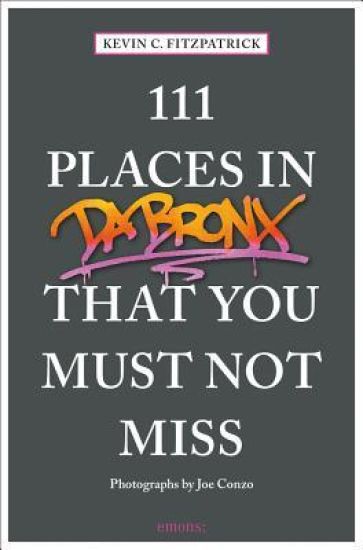
111 Places in the Bronx That You Must Not Miss

111 Places in the Bronx That You Must Not Miss

Kevin C. Fitzpatrick

Emons Verlag GmbH
2019
nidottu
New York City's borough of the Bronx draws millions of people annually to visit the largest zoological park in the United States, or to catch a baseball game at Yankee Stadium. Beyond the animal cages (and batting cages) is a section of the city filled with art, food, music, and unusual sites that can only be found in one place: Da Bronx. The Bronx offers some of the most amazing experiences for visitors to New York City because it is so unexplored. You can take a canoe down a river, or take a course in pole dancing school. The Bronx has a rich history, which includes the American Revolution, that has given way to today's rebels in street fashion. Sit down and feast on dishes from Ghana and Italy. Learn to roll cigars. Pay homage to the founders of rap music and hip hop culture. And explore quiet cemeteries' stunning architecture. The borough is home the largest park in New York City, waterfront vistas that are unparalleled, and access to riverfronts and bays. Whether you are a first time visitor, longtime resident, or a native, you will find 111 hidden gems in the Bronx. The most unexplored borough of New York City is yours to discover with 111 Places in the Bronx That You Must Not Miss.
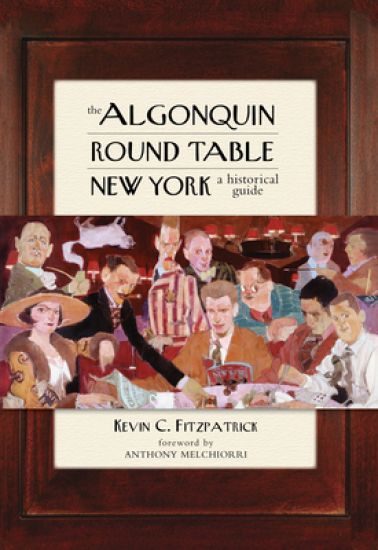
The Algonquin Round Table New York

The Algonquin Round Table New York

Kevin C. Fitzpatrick; Anthony Melchiorri

The Lyons Press
2020
pokkari
"That is the thing about New York," wrote Dorothy Parker in 1928. "It is always a little more than you had hoped for. Each day, there, is so definitely a new day." Now you can journey back there, in time, to a grand city teeming with hidden bars, luxurious movie palaces, and dazzling skyscrapers. In these places, Dorothy Parker and her cohorts in the Vicious Circle at the infamous Algonquin Round Table sharpened their wit, polished their writing, and captured the energy and elegance of the time. Robert Benchley, Parker's best friend, became the first managing editor of Vanity Fair before Irving Berlin spotted him onstage in a Vicious Circle revue and helped launch his acting career. Edna Ferber, an occasional member of the group, wrote the Pulitzer-winning bestseller So Big as well as Show Boat and Cimarron. Jane Grant pressed her first husband, Harold Ross, into starting The New Yorker. Neysa McMein, reputedly "rode elephants in circus parades and dashed from her studio to follow passing fire engines." Dorothy Parker wrote for Vanity Fair and Vogue before ascending the throne as queen of the Round Table, earning everlasting fame (but rather less fortune) for her award-winning short stories and unforgettable poems. Alexander Woollcott, the centerpiece of the group, worked as drama critic for the Times and the World, wrote profiles of his friends for The New Yorker, and lives on today as Sheridan Whiteside in The Man Who Came to Dinner. Explore their favorite salons and saloons, their homes and offices (most still standing), while learning about their colorful careers and private lives. Packed with archival photos, drawings, and other images--including never-before-published material--this illustrated historical guide includes current information on all locations. Use it to retrace the footsteps of the Algonquin Round Table, and you'll discover that the golden age of Gotham still surrounds us.
Call Me Kev

Call Me Kev

Kevin C

Lulu.com
2017
nidottu
Chihuahua Kev was rescued from unknown circumstances and adopted into what he hopes will be his 'forever home'. Since moving in he has come to realise that much could depend on his behaviour and therefore has set out to analyse his own conduct to help learn how to avoid offending. Sharing a home with another dog has in itself produced problems that have had to be neutralised for the sake of apparent harmonious living. His ultimate aim is to be top dog in the pack, being his current family, but he knows this must be achieved without the others being aware of what is happening. Kevin wants to share his life and experiences and has, with help, assembled this, his autobiography. In the hope it will serve to enlighten and entertain its readers and, maybe, their canine companions.
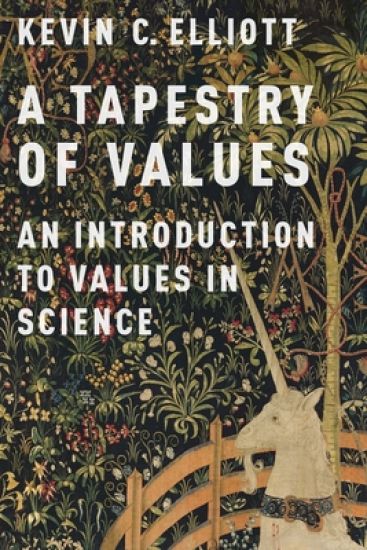
A Tapestry of Values

A Tapestry of Values

Kevin C. Elliott

Oxford University Press Inc
2017
sidottu
The role of values in scientific research has become an important topic of discussion in both scholarly and popular debates. Pundits across the political spectrum worry that research on topics like climate change, evolutionary theory, vaccine safety, and genetically modified foods has become overly politicized. At the same time, it is clear that values play an important role in science by limiting unethical forms of research and by deciding what areas of research have the greatest relevance for society. Deciding how to distinguish legitimate and illegitimate influences of values in scientific research is a matter of vital importance. Recently, philosophers of science have written a great deal on this topic, but most of their work has been directed toward a scholarly audience. This book makes the contemporary philosophical literature on science and values accessible to a wide readership. It examines case studies from a variety of research areas, including climate science, anthropology, chemical risk assessment, ecology, neurobiology, biomedical research, and agriculture. These cases show that values have necessary roles to play in identifying research topics, choosing research questions, determining the aims of inquiry, responding to uncertainty, and deciding how to communicate information. Kevin Elliott focuses not just on describing roles for values but also on determining when their influences are actually appropriate. He emphasizes several conditions for incorporating values in a legitimate fashion, and highlights multiple strategies for fostering engagement between stakeholders so that value influences can be subjected to careful and critical scrutiny.
A Tapestry of Values

A Tapestry of Values

Kevin C. Elliott

Oxford University Press Inc
2017
nidottu
The role of values in scientific research has become an important topic of discussion in both scholarly and popular debates. Pundits across the political spectrum worry that research on topics like climate change, evolutionary theory, vaccine safety, and genetically modified foods has become overly politicized. At the same time, it is clear that values play an important role in science by limiting unethical forms of research and by deciding what areas of research have the greatest relevance for society. Deciding how to distinguish legitimate and illegitimate influences of values in scientific research is a matter of vital importance. Recently, philosophers of science have written a great deal on this topic, but most of their work has been directed toward a scholarly audience. This book makes the contemporary philosophical literature on science and values accessible to a wide readership. It examines case studies from a variety of research areas, including climate science, anthropology, chemical risk assessment, ecology, neurobiology, biomedical research, and agriculture. These cases show that values have necessary roles to play in identifying research topics, choosing research questions, determining the aims of inquiry, responding to uncertainty, and deciding how to communicate information. Kevin Elliott focuses not just on describing roles for values but also on determining when their influences are actually appropriate. He emphasizes several conditions for incorporating values in a legitimate fashion, and highlights multiple strategies for fostering engagement between stakeholders so that value influences can be subjected to careful and critical scrutiny.
Is a Little Pollution Good for You?

Is a Little Pollution Good for You?

Kevin C. Elliott

Oxford University Press Inc
2014
nidottu
Could low-level exposure to polluting chemicals be analogous to exercise -- a beneficial source of stress that strengthens the body? Some scientists studying the phenomenon of hormesis (beneficial or stimulatory effects caused by low-dose exposure to toxic substances) claim that that this may be the case. Is A Little Pollution Good For You? critically examines the current evidence for hormesis. In the process, it highlights the range of methodological and interpretive judgments involved in environmental research: choices about what questions to ask and how to study them, decisions about how to categorize and describe new information, judgments about how to interpret and evaluate ambiguous evidence, and questions about how to formulate public policy in response to debated scientific findings. The book also uncovers the ways that interest groups with deep pockets attempt to influence these scientific judgments for their benefit. Several chapters suggest ways to counter these influences and incorporate a broader array of societal values in environmental research: (1) moving beyond conflict-of-interest policies to develop new ways of safeguarding academic research from potential biases; (2) creating deliberative forums in which multiple stakeholders can discuss the judgments involved in policy-relevant research; and (3) developing ethical guidelines that can assist scientific experts in disseminating debated and controversial phenomena to the public. Kevin C. Elliott illustrates these strategies in the hormesis case, as well as in two additional case studies involving contemporary environmental research: endocrine disruption and multiple chemical sensitivity. This book should be of interest to a wide variety of readers, including scientists, philosophers, policy makers, environmental ethicists and activists, research ethicists, industry leaders, and concerned citizens.
Is a Little Pollution Good for You?

Is a Little Pollution Good for You?

Kevin C. Elliott

Oxford University Press Inc
2011
sidottu
Could low-level exposure to polluting chemicals be analogous to exercise-a beneficial source of stress that strengthens the body? Some scientists studying the phenomenon of hormesis (beneficial or stimulatory effects caused by low-dose exposure to toxic substances) claim that that this may be the case. Is A Little Pollution Good For You? critically examines the current evidence for hormesis. In the process, it highlights the range of methodological and interpretive judgments involved in environmental research: choices about what questions to ask and how to study them, decisions about how to categorize and describe new information, judgments about how to interpret and evaluate ambiguous evidence, and questions about how to formulate public policy in response to debated scientific findings. The book also uncovers the ways that interest groups with deep pockets attempt to influence these scientific judgments for their benefit. Several chapters suggest ways to counter these influences and incorporate a broader array of societal values in environmental research: (1) moving beyond conflict-of-interest policies to develop new ways of safeguarding academic research from potential biases; (2) creating deliberative forums in which multiple stakeholders can discuss the judgments involved in policy-relevant research; and (3) developing ethical guidelines that can assist scientific experts in disseminating debated and controversial phenomena to the public. Kevin C. Elliott illustrates these strategies in the hormesis case, as well as in two additional case studies involving contemporary environmental research: endocrine disruption and multiple chemical sensitivity. This book should be of interest to a wide variety of readers, including scientists, philosophers, policy makers, environmental ethicists and activists, research ethicists, industry leaders, and concerned citizens. "This is a timely, well-researched and compelling book .Elliott admirably combines insights and strategies from philosophy of science with those of applied ethics to carefully analyze contemporary science and science policy around pollutants and human health. There is a growing interest in the philosophy of science community in bringing the work of philosophers to bear on contemporary social issues. This book stands out as a model for how to do just that." - Sandra D. Mitchell, Philosophy, University of Pittsburgh Is A Little Pollution Good For You? is a wonderfully clear and insightful book dealing with the interplay between social values and economic and political interests in scientific research. He articulates an account of how societal values should and should not enter into science and illustrates his views with an extended discussion of research on hormesis-the hypothesis that chemicals that are toxic at high doses may be benign or even beneficial at low doses. The chemical industry has a strong financial interest in promoting scientific acceptance of hormesis, as this could convince regulatory agencies to loosen up restrictions on allowable exposures to pesticides and other chemicals. Elliott argues that because scientists have an obligation to minimize the harmful effects of their research, they must be mindful of the social context of their work and how it may be interpreted and applied by private companies or interest groups, to the potential detriment of public and environmental health. Elliott's book is a must read for researchers, scholars, and students who are interested in the relationship between science, industry, and society." - David B. Resnik, National Institute of Environmental Health Sciences, National Institutes of Health, author of Playing Politics With Science: Balancing Scientific Independence And Government
Sounds Beyond

Sounds Beyond

Kevin C. Karnes

University of Chicago Press
2021
sidottu
Sounds Beyond charts the origins of Arvo Pärt’s most famous music, which was created in dialogue with underground creative circles in the USSR. In Sounds Beyond, Kevin C. Karnes studies the interconnected alternative music and art scenes in the USSR during the second half of the 1970s, revealing the audacious origins of some of Estonian composer Arvo Pärt’s most famous music. Karnes shows how Pärt’s work was created within a vital yet forgotten culture of collective experimentation, the Soviet underground. Mining archives and oral history from across the former USSR, Sounds Beyond carefully situates modes of creative experimentation within their late socialist contexts. In documenting Pärt’s work, Karnes reveals the rich creative culture that thrived covertly in the USSR and the network of figures that made underground performances possible: students, audio engineers, sympathetic administrators, star performers, and aspiring DJs. Sounds Beyond advances a new understanding of Pärt’s music as an expression of the aesthetic and religious commitments shared, nurtured, and celebrated by many in Soviet underground circles. At the same time, this story attests to the lasting power of Pärt’s music. Dislodging the mythology of the solitary creative genius, Karnes shows that Pärt’s work would be impossible without community.
Culture and Customs of the Baltic States

Culture and Customs of the Baltic States

Kevin C. O'Connor

Greenwood Press
2006
sidottu
The Baltic States of Estonia, Latvia, and Lithuania are thriving after hundreds of years of German colonization, numerous wars of conquest, and demographic Russification. Their cultures have survived, perhaps through a conscious effort to sustain many of their most ancient customs and traditions. Though the Baltic States are responding to modern and postmodern international trends, contemporary developments in the region's cultural life are part of an ongoing conversation about the way in which the Balts understand their histories, destinies, and national identities. This timely overview of the reemerging states portrays the Estonians, Latvians, and Lithuanians as they see themselves—through a historical lens.The Baltic States of Estonia, Latvia, and Lithuania are thriving after hundreds of years of German colonization, numerous wars of conquest, and demographic Russification. Their cultures have survived, perhaps through a conscious effort to sustain many of their most ancient customs and traditions. Though the Baltic States are responding to modern and postmodern international trends, contemporary developments in the region's cultural life are part of an ongoing conversation about the way in which the Balts understand their own histories, destines, and national identities. This timely overview of the reemerging states portrays the Estonians, Latvians, and Lithuanians as they see themselves—through a historical lens.The approach in each of the topical chapters is to generalize what is common among the three states and then to focus on each country in turn. Chapters on the land, people, and history; religion; marriage, family, gender, and education; holidays, cuisine, and leisure activities; language, folklore, and literature; media and cinema; performing arts; and art are a superb introduction to the Baltics and to the unique aspects of the countries. Lithuania's culture has been heavily influenced by Poland, and the capital, Vilnius, was a thriving center of Jewish learning until the Nazi years. Latvia is the most ethnically diverse and Russian-influenced. Estonia sees itself as a European country, indeed, Scandinavian.
Flap Reconstruction of the Traumatized Upper Extremity, An Issue of Hand Clinics
This issue of Hand Clinics will focus on flap reconstruction. Flap reconstruction is a very large part of upper extremity surgery following a traumatic injury. This issue will cover the entire process including anatomy, decision-making strategies on where to source/harvest flaps, and a large number of papers tailored to specific surgical procedures: different parts of the hand and upper extremity, pediatric reconstruction, and aesthetics.
Optimizing the Treatment of Upper Extremity Injuries in Athletes, An Issue of Hand Clinics
This volume on athletic injury is timely because it addresses many types of sports injuries and focuses not only on the treatments of these injuries, but also their prevention. The first paper was written after an extensive interview with the coaches of one of the most recognized football programs in the country. Dr. Kevin Chung's interviews with the Head and Assistant Coaches at the University of Michigan, Jim Harbaugh and Jedd Fisch, provided thoughtful insight on preventing sports injuries in the professional and college athletics.
Current Concepts in the Management of Proximal Interphalangeal Joint Disorders, An Issue of Hand Clinics
This issue of Hand Clinics, guest edited by series consulting editor Dr. Kevin Chung, will cover Current Concepts in the Management of Proximal Interphalangeal Joint Disorders. Topics discussed in the volume include: Anatomy and biomechanics of the finger proximal interphalangeal joint; Surgical exposure of the proximal interphalangeal joint; Treating proximal interphalangeal joint dislocations; Management of proximal interphalangeal joint fracture dislocations; Proximal interphalangeal joint fusion: indications and techniques; Implant arthroplasty: selection of exposure and implant; Salvaging a failed proximal interphalangeal joint implant; Treatment of proximal interphalangeal joint contracture; Treating congenital proximal interphalangeal joint contracture; Complications of proximal interphalangeal joint injuries: prevention and treatment; and Therapy concepts for the proximal interphalangeal joint, among others.
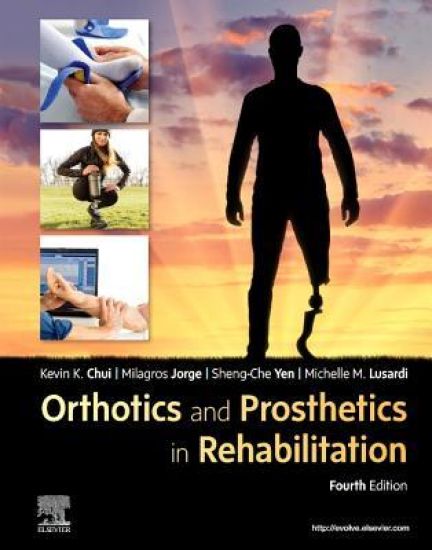
Orthotics and Prosthetics in Rehabilitation
Gain a strong foundation in the field of orthotics and prosthetics! Orthotics and Prosthetics in Rehabilitation, 4th Edition is a clear, comprehensive, one-stop resource for clinically relevant rehabilitation information and application. Divided into three sections, this text gives you a foundation in orthotics and prosthetics, clinical applications when working with typical and special populations, and an overview of amputation and prosthetic limbs. This edition has been updated with coverage of the latest technology and materials in the field, new evidence on effectiveness and efficacy of interventions and cognitive workload associated usage along with enhanced color photographs and case studies - it's a great resource for students and rehabilitation professionals alike.Comprehensive coverage addresses rehabilitation in a variety of environments, including acute care, long-term care and home health care, and outpatient settings.Book organized into three parts corresponding with typical patient problems and clinical decision-making. The latest evidence-based research throughout text help you learn clinical-decision making skills. Case studies present real-life scenarios that demonstrate how key concepts apply to clinical decision-making and evidence-based practice.World Health Organization disablement model (ICF) incorporated to help you learn how to match patient's limitations with the best clinical treatment. Multidisciplinary approach in a variety of settings demonstrates how physical therapists can work with the rest of the healthcare team to provide high quality care in orthotic/prosthetic rehabilitation. The latest equipment and technology throughout text addresses the latest options in prosthetics and orthotics rehabilitationAuthoritative information from the Guide to Physical Therapist Practice, 2nd Edition is incorporated throughout. A wealth of tables and boxes highlight vital information for quick reference and ease of use.NEW! Color photographs improve visual appeal and facilitates learning.NEW! Increased evidence-based content includes updated citations; coverage of new technology such as microprocessors, microcontrollers, and integrated load cells; new evidence on the effectiveness and efficacy of interventions; and new evidence on cognitive workload usage. NEW! Authors Kevin K Chui, PT, DPT, PhD, GCS, OCS, CEEAA, FAAOMPT and Sheng-Che (Steven) Yen, PT, PhD add their expertise to an already impressive list of contributors.