Kirjojen hintavertailu. Mukana 11 244 527 kirjaa ja 12 kauppaa.

Kirjahaku

Etsi kirjoja tekijän nimen, kirjan nimen tai ISBN:n perusteella.

1000 tulosta hakusanalla Kevin Francke

Der Begriff der Macht bei Hannah Arendt, analysiert von Jürgen Habermas
Studienarbeit aus dem Jahr 2004 im Fachbereich Politik - Internationale Politik - Allgemeines und Theorien, Note: 2,0, Carl von Ossietzky Universit t Oldenburg, Veranstaltung: Grundbegriffe der Politikwissenschaft, 10 Quellen im Literaturverzeichnis, Sprache: Deutsch, Abstract: Der Begriff der Macht ist ein nicht leicht zu fassender. Nach Hannah Arendt vermischen viele gro e Denker den Begriff der Macht mit dem der Gewalt1. Die weithin anerkannte Definition von Macht bei Max Weber sieht diese als "Chance, innerhalb einer sozialen Beziehung den eigenen Willen auch gegen Widerstreben durchzusetzen, gleichviel worauf diese Chance beruht "2. Weber setzt schon ein Ziel, das es zu erreichen g be voraus und argumentiert in eine andere Richtung als Arendt. Zudem bleibt er so ungenau, dass diese Definition ebenso dem Gewaltbegriff Arendt entsprechen k nnte. Neben Max Weber zitiert Hannah Arendt zur Veranschaulichung C. W. Mills, der Gewalt als "aufs h chste gesteigerte Macht" bezeichne 3. Wie wir sehen werden, funktioniert diese Verbindung nach Arendts Definitionen nicht. Und Jouvenel rechne zum Wesen des Staates den Krieg; bei Arendt sei Staat aber der blo e berbau aus Gesetzen und Institutionen, welche durch legitime Machtverh ltnisse entstanden seien, und daher Gewalt als Wesenseigenschaft von vornherein ausgeschlossen4. J rgen Habermas hat Arendts Begriff von Macht grundlegender analysiert und kommt zu dem Schluss, dass dieser vor allem normativ gedacht werden muss. Daher kann er nicht empirisch an bestehenden Machtsystemen gepr ft werden. Ein Ph nomen wie strukturelle Gewalt kann daher in ihrem Verst ndnis nicht existieren. Es soll mit dieser Arbeit unter Zuhilfenahme einer Abhandlung zu Macht von J rgen Habermas Hannah Arendts Begriff der Macht - auch in Abgrenzung zu dem der Gewalt - dargestellt werden. In der Realit t wird dieser wohl in der Reinheit nicht anzutreffen sein, was Arendt auch selber zugibt5. Doch mit einer Begriffsdefinition, die das eigentlich Wesen

Der Zweck in der Kritik der teleologischen Urteilskraft
Studienarbeit aus dem Jahr 2009 im Fachbereich Philosophie - Theoretische (Erkenntnis, Wissenschaft, Logik, Sprache), Note: 1,0, Universit t Potsdam (Institut f r Philosophie), Veranstaltung: Der Lebensbegriff im deutschen Idealismus, Sprache: Deutsch, Abstract: Immanuel Kant legte 1790 mit seiner Kritik der Urteilskraft (KdU) eine philosophische Betrachtung vor, auf welche Weise der Mensch f hig ist, die Natur und ihre Gesetze zu kategorisieren und somit sich in ihr zurechtzufinden. Indem f r die Objekte eine Kausalit t nach Zwecken, gleichsam eine R ckf hrbarkeit auf Ursachen, angenommen wird, reflektiert der Mensch ber Dinge au er ihm und erh lt damit erst die M glichkeit, diese als Objekte zu erkennen. Die umgangssprachliche Bedeutung von Zweckm igkeit bezieht sich auf die N tzlichkeit, die ein Gegenstand oder eine Handlung f r etwas hat. Bezogen auf einen Zielzustand wird etwas als zweckdienlich betrachtet. Kant bezeichnet etwas als relative Zweckm igkeit, "als Mittel zum zweckm igen Gebrauch" ( 63, 279), wenn es nutzbar oder zutr glich f r andere ist. Da "die relative Zweckm igkeit (...) dennoch zu keinem absoluten teleologischen Urteile berechtige" ( 63, 283), wird sie von Kant nur nebenbei behandelt. Zweckm igkeit bei Kant bezieht sich auf eine Annahme ber die Beschaffenheit des Objekts selbst. Wenn etwas existiert, muss diesem Etwas ein Zweck zugrunde liegen, dass ihm zuvor eine Zweckm igkeit verlieh. Dabei spielt es keine Rolle, ob dem in der Tat so ist oder nicht. Denn die Annahme, einem Objekt m sse zwangsl ufig ein Zweck zugrunde liegen, damit er existiere, ist f r Kant nichts als eine Hilfsannahme, die es dem Menschen erst erm glicht, das Objekt als solches zu erkennen. Wie bei k nstlich hergestellten Gegenst nden, Artefakten, ergibt sich bei der Betrachtung von Naturprodukten umgehend die Frage nach ihrem Sch pfer. Bei Gegenst nden wie Uhren oder H usern ist dies beispielsweise ein Uhrmacher, Handwerker oder Architekt. Bezogen auf Organismen s
The Momentum Effect

The Momentum Effect

Kevin France

Momentum Consulting Group Inc
2018
pokkari
The Momentum Effect is a business book that describes one man's journey through various corporate America positions and includes key learnings and strategic thinking at the end of each chapter. The Momentum Effect is an exceptional example of how anyone can become who they aspire to be. As in the case of the author, Kevin France, who began in a sales position and steadily grew his career until finally venturing off on his own and founding a wildly successful global consulting firm that builds multi-national businesses worldwide.
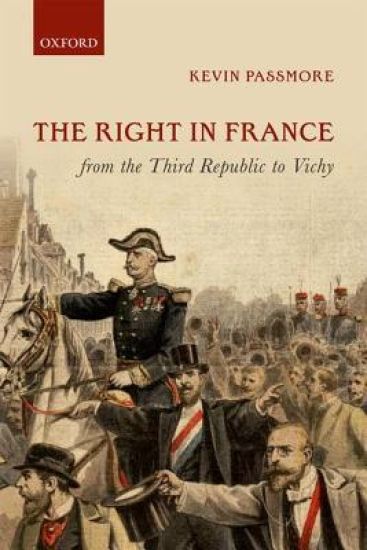
The Right in France from the Third Republic to Vichy

The Right in France from the Third Republic to Vichy

Kevin Passmore

Oxford University Press
2012
sidottu
The Right in France from the Third Republic to Vichy provides a new history of parliamentary conservatism and the extreme right in France during the successive crises of the years from 1870 to 1945. In it, Kevin Passmore charts royalist opposition to the newly established Republic, the emergence of the nationalist extreme right in the 1890s, and the parallel development of republican conservatism. He moves on to the hitherto unstudied story of conservatism in during the Great War, and then to the Right's victory in the 1919 elections. Passmore charts the crisis of parliamentary conservatism in the interwar years, and explores the Right's response to the rise of Fascism and Communism. He concludes by placing the Vichy regime, which governed France under the German Occupation, in the context of the history of conservative politics. This history is related to the struggle of those who saw themselves as 'elites' to preserve their leadership in the 'age of the masses'. Passmore shows that conservatives of all stripes shared a common culture (notably including organicism and crowd theory), but that different factions used these ideas in different ways, for different purposes. Whereas previous studies have been primarily concerned to 'categorize' conservatives groups, for example as 'fascist',' liberal', or 'modern', this study examines the way in which competing groups used such terms in complex struggles amongst themselves and with the left. The study is based on considerable archival research, as well as on knowledge of the vast body of recently published research in English and French.
Catholic Activism in South-West France, 1540–1570

Catholic Activism in South-West France, 1540–1570

Kevin Gould

Ashgate Publishing Limited
2006
sidottu
Examining Catholic activism in the south-west of France during the middle decades of the sixteenth century, this book argues - contrary to prevailing views - that the phenomenon was both widespread and militant even before the formation of the Catholic League in 1576. Whilst recent research has provided a far greater understanding of the Huguenot struggle for security and legitimacy, there has not been a correspondingly thorough investigation into the grass-roots Catholic reaction to this, and by dismissing episodes of pre-League Catholic militancy as limited and ephemeral, a distorted picture of French confessional conflict and rivalry is painted. Utilizing surviving material from the provincial archives at Bordeaux, Toulouse, Agen, and at the Bibliothèque Nationale in Paris, this book provides ample evidence for placing the birth of Catholic activism in the period preceding the Wars of Religion, highlighting the confessional tensions that exploded throughout the 1540s and 1550s. As competing bands of religious enthusiasts, and municipal and court officials, fought first with words, then with weapons, for supremacy of the community in the towns of the south-west, a steady escalation of confrontation can be traced. Within this atmosphere of rising tension, it is shown how Catholic militancy mirrored the organizational and fund-raising capacity of their Protestant rivals, and how the local military elite rose to support their co-religionists at the outbreak of formal hostilities in 1562. The ascendancy of Catholic militants in key urban centres by 1570 would deal a fatal blow to Protestant plans for supremacy of the south-west.
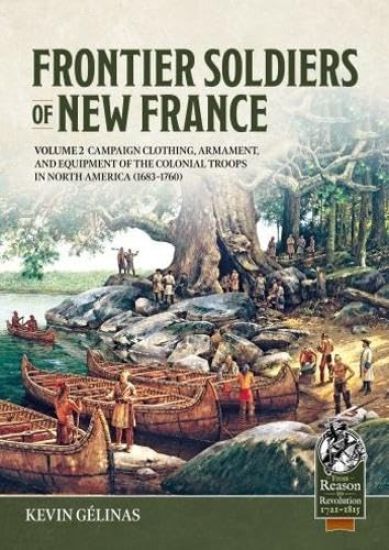
Frontier Soldiers of New France Volume 2

Frontier Soldiers of New France Volume 2

Kevin Gelinas

HELION COMPANY
2025
nidottu
Frontier Soldiers of New France Volume 2 explores the evolution of the French colonial troops' campaign attire and equipment adapted for North America's demanding climate and terrain, integrating European military methods with practical adjustments for wilderness warfare. It focuses on the material culture of the Compagnies franches de la Marine in New France from 1683 to 1760, examining their specific campaign clothing, arms, and equipment. The study highlights their adaptation to the local environment and interactions with Native American cultures, including the adoption of items such as breechcloths, leggings, toboggans, snowshoes, moccasins, scalping knives and tomahawks.The survival of New France owed much to a strategic doctrine of raiding warfare developed by Canadian colonial officers in collaboration with allied Native American tribes and the colonial militia. This groundbreaking study provides the first comprehensive survey detailing the clothing, weaponry, and equipment used by the stationed troops from 1683 to 1760 to maintain defensive pressure on New Englanders and engage hostile Native American tribes in warfare. Drawing from pioneering research based on archeology, extant pieces and newly discovered records, it illuminates their remarkable adaptability to North American conditions, encompassing both winter and summer wilderness campaigns.
Why Neo-Liberalism Failed in France

Why Neo-Liberalism Failed in France

Kevin Brookes

Springer Nature Switzerland AG
2021
sidottu
This book fills a gap in the literature on economic liberalism in France as it strives to resolve a paradox. How do we reconcile the fact that while France has been among the most fertile of soils for the liberal intellectual tradition, the theoretical ideas it has produced has little impact on its own public debate and public policies? Using a wide range of data on public policies, it demonstrates that neo-liberal thought has had far less influence in France than in other European nations during the period from 1974 to 2012. The failure of neo-liberalism to propagate in public policies France is shown to be mainly due to the strong resistance of public opinion towards it. In addition, the structure of French institutions has reinforced the effect of "path dependence" in the making of public policy by valuing state expertise above that of actors likely to question the post-war consensus, such as academics and think tanks. Finally, the book identifies other more incidental factors which contributed to neo-liberalism marginality: the fragmentation and radicalism of neo-liberal advocates, as well as the absence of charismatic political actors to effectively embody these ideas. This book is a useful educational tool for students of economics, sociology, political science, and of French political history. This book is also of interest for journalists, think tank researchers and professionals of politics and administration.
Why Neo-Liberalism Failed in France

Why Neo-Liberalism Failed in France

Kevin Brookes

Springer Nature Switzerland AG
2022
nidottu
This book fills a gap in the literature on economic liberalism in France as it strives to resolve a paradox. How do we reconcile the fact that while France has been among the most fertile of soils for the liberal intellectual tradition, the theoretical ideas it has produced has little impact on its own public debate and public policies? Using a wide range of data on public policies, it demonstrates that neo-liberal thought has had far less influence in France than in other European nations during the period from 1974 to 2012. The failure of neo-liberalism to propagate in public policies France is shown to be mainly due to the strong resistance of public opinion towards it. In addition, the structure of French institutions has reinforced the effect of "path dependence" in the making of public policy by valuing state expertise above that of actors likely to question the post-war consensus, such as academics and think tanks. Finally, the book identifies other more incidental factors which contributed to neo-liberalism marginality: the fragmentation and radicalism of neo-liberal advocates, as well as the absence of charismatic political actors to effectively embody these ideas. This book is a useful educational tool for students of economics, sociology, political science, and of French political history. This book is also of interest for journalists, think tank researchers and professionals of politics and administration.
Regional Problems and Policies in Italy and France

Regional Problems and Policies in Italy and France

Kevin Allen; M. C. MacLennan

TAYLOR FRANCIS LTD
2024
sidottu
First published in 1970, Regional Problems and Policies in Italy and France examines the problem of regional imbalance in two important countries of Western Europe and emphasizes that policies aimed at promoting regional development must form an integral part of national economic policies.The book is divided into three parts—Part I: Regional Problems and Policies in Italy; part II: Regional Problems and Policies in France; and part III: Regional Policy: Three Issues. Part I and II analyze how regional policy in France and Italy has moved away from the public assistance type of intervention into new, broader approaches which require reorganization of traditional procedures, change in economic structures, introduction of new products and methods of production, movement of workers between areas and occupations, and shifts in geographical distribution of population and employment. Part III explores regional planning and growth centres or growth areas in the light of Fench and Italian experiences. It further analyses the regional effects of the EEC and gives a brief account of how British regional problems and policies would be affected by the membership of Community. This volume is an essential reading for students of Western European governmental policy and the European Economic Community.
Regional Problems and Policies in Italy and France

Regional Problems and Policies in Italy and France

Kevin Allen; M. C. MacLennan

TAYLOR FRANCIS LTD
2026
nidottu
First published in 1970, Regional Problems and Policies in Italy and France examines the problem of regional imbalance in two important countries of Western Europe and emphasizes that policies aimed at promoting regional development must form an integral part of national economic policies. The book is divided into three parts—Part I: Regional Problems and Policies in Italy; part II: Regional Problems and Policies in France; and part III: Regional Policy: Three Issues. Part I and II analyze how regional policy in France and Italy has moved away from the public assistance type of intervention into new, broader approaches which require reorganization of traditional procedures, change in economic structures, introduction of new products and methods of production, movement of workers between areas and occupations, and shifts in geographical distribution of population and employment. Part III explores regional planning and growth centres or growth areas in the light of Fench and Italian experiences. It further analyses the regional effects of the EEC and gives a brief account of how British regional problems and policies would be affected by the membership of Community. This volume is an essential reading for students of Western European governmental policy and the European Economic Community.
Frontier Soldiers of New France Volume 1

Frontier Soldiers of New France Volume 1

Rene Chartrand; Kevin Gelinas

HELION COMPANY
2024
nidottu
Frontier Soldiers of New France examines the official and regulation dress, weapons and equipment of the regular colonial troops maintained by the French government in North America from 1683 to 1760, including unpublished information with a focus on new illustrations, line drawings, and photos of rare portraits and surviving artefacts from public and private collections.This volume is the first of a series of three that will present all the regular forces that served in New France from 1683, when the first permanent garrisons of royal troops arrived, to September 1760. Many North American military campaigns of that era have been, and continue to be, covered in countless history books. The purpose of this work is, however, to be the first to present in detail the organisation and especially the material culture of all military participants, be they generals or private soldiers. There have been some sections of books, usually brief, and articles devoted to organisation, armament, dress, and equipment previously published. The aim of this work is to present a complete record of these aspects.To achieve this goal, three veteran researchers have consulted primary documents preserved in archives and collections on both sides of the Atlantic during the last half century and have united their efforts to produce a wide-ranging and as accurate as possible record. The result is often intriguing and attractive, both in the regulation uniforms worn by officers and soldiers that might be seen by onlookers at frontier forts as far as the known world (to Europeans) or at fortresses such as Qu bec and Louisbourg. The weapons and equipment were usually somewhat distinctive. They had weapons, clothing and equipment that became specially adapted to North America's wilderness, thanks to their First Nations allies, be it in the primaeval forests crisscrossed by great rivers and lakes or at the great central plains, which will be covered in volume 2. Volume 3 will be devoted to the battalions detached from the French regular metropolitan army commanded, from 1756, by Montcalm who led an arguably heroic resistance against overwhelming British and American forces. They, too, had surprising aspects of material culture; for instance, the battalions that came in 1755 had different uniforms in Canada than their regulation dress in France.The work is illustrated with period paintings and prints, as well as museum-quality artwork by internationally acclaimed military artists lauded for accuracy combined with fine art. Indeed, some works have already graced academic publications and displays in museums and historic sites.
The Special Needs Coordinator as Teacher and Manager

The Special Needs Coordinator as Teacher and Manager

Frances Jones; Kevin Jones; Christine Szwed

CRC Press
2017
sidottu
This text reflects the shift in the SENCO's role from SEN teacher to manager. Written within the context of the most recent government initiatives, it can be used by both special-needs coordinators and by special-educational-needs trainers and advisory staff. In two parts, it explores the range of skills required for the role of special needs coordinator and offers information and advice to develop those skills. Practical activities enable the user to monitor and evaluate special-needs provision in their own school and to implement a structured process of change in partnership with all those involved in meeting special educational needs.