

Kirjahaku
Etsi kirjoja tekijän nimen, kirjan nimen tai ISBN:n perusteella.
1000 tulosta hakusanalla Kevin G. Morgan

Quality Assisted Living
Leslie A. Morgan; Ann Christine Frankowski; Erin G. Roth; Lynn Keimig; Sheryl Zimmerman; J. Kevin Eckert
Springer Publishing Co Inc
2011
nidottu
Named a 2013 Doody's Core Title! Doody's Medical Reviews Score: 92, 4 Stars! [This book] is well written and achieves its aim of exploring the meaning of quality from a range of perspectives. It has a welcome focus on the views of residents, and the authors are to be congratulated for the efforts they have made to capture these views...This book will be of interest to a broad audience in relation to AL and other residential care settings, including managers, commissioners, care staff, researchers, students and also the wider public."--Ageing & Society Considering that seventy-four million baby boomers will be the next generation of assisted living residents, there is a great need to create, sustain, and evaluate quality in these settings. Whereas most books focus on quality of care, this is the only volume to explicitly delve into the lives of those who inhabit assisted living facilities, seeking to understand and evaluate their perceived ideas of what constitutes quality of life. Quality Assisted Living provides results from a National Institute on Aging-funded study that gathered information from not only residents, but also staff and family members, who are considered experts who can better help us to understand how quality should be conceived and evaluated. The volume addresses the complexities underlying seemingly clear cut issues and provides concrete suggestions for reframing problems in order to find better solutions. Plentiful stories and quotations are used to identity those elements of assisted living that are most conducive to a satisfying quality of life, and address how this research has led to a consideration of quality as a process rather than as a single condition. Key Features Employs the views and voices of research participants Provides down-to-earth and directly applicable results Written in a language that is accessible to a wide readership Describes complex social situation within the wall of AL Examines issues arising from collective living such as regulations, financing and diverse resident needs Uses real life stories to illustrate key points of the narrative
Inside Assisted Living
J. Kevin Eckert; Paula C. Carder; Leslie A. Morgan; Ann Christine Frankowski; Erin G. Roth; Bill Thomas
Johns Hopkins University Press
2009
pokkari
Assisted living is the fastest-growing alternative to skilled nursing care for frail older persons in the United States. The expectations, settings, and missions of these residences are varied, making it difficult for prospective residents and their families to anticipate what it would be like to live in them. This book is a unique portal into the real world of assisted living and the key issues facing consumers, providers, and policy makers. Drawing on in-depth interviews with residents, their family members, staffers, and administrators, Inside Assisted Living opens the window on day-to-day life in six different types of assisted living residence. From "Miss Helen at Valley Glen Home" to "Mr. Sidney at Laurel Ridge," the detailed profiles of individuals show the commonalities among the residences while highlighting the positive and negative aspects of each. The voices of those living, visiting, and working in the homes clarify the important local (social relations, staff dynamics, leadership) and national (funding, regulation, aging-in-place) challenges presented by assisted living. Introductory and concluding chapters synthesize new findings that cross the six settings and reflect issues vital to all participants. The book also features an appendix detailing the research process involved in creating the profiles.
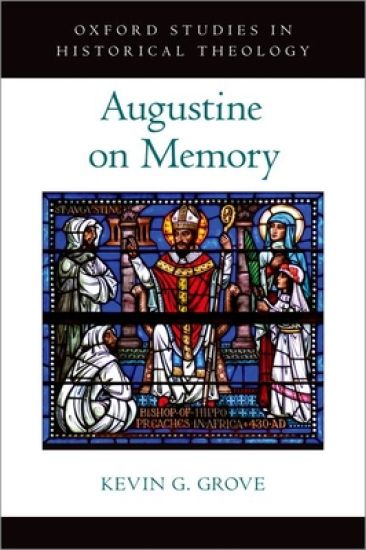
Augustine of Hippo, indisputably one of the most important figures for the study of memory, is credited with establishing memory as the inner source of selfhood and locus of the search for God. Yet, those who study memory in Augustine have never before taken into account his preaching. His sermons are the sources of memory's greatest development for Augustine. In Augustine's preaching, especially on the Psalms, the interior gives way to communal exterior. Both the self and search for God are re-established in a shared Christological identity and the communal labors of remembering and forgetting. This book opens with Augustine's early works and Confessions as the beginning of memory and concludes with Augustine's Trinity and preaching on Psalm 50 as the end of memory. The heart of the book, the work of memory, sets forth how ongoing remembering and forgetting in Christ are for Augustine are foundational to the life of grace. To that end, Augustine and his congregants go leaping in memory together, keep festival with abiding traces, and become forgetful runners like St. Paul. Remembering and forgetting in Christ, the ongoing work of memory, prove for Augustine to be actions of reconciliation of the distended experiences of human life-of praising and groaning, labouring and resting, solitude and communion. Augustine on Memory presents this new communal and Christological paradigm not only for Augustinian studies, but also for theologians, philosophers, ethicists, and interdisciplinary scholars of memory.

A spidery network of mobile online media has supposedly changed people, places, time, and their meanings. A prime case is the news. Digital webs seem to have trapped "legacy media," killing off newspapers and journalists' jobs. Did news businesses and careers fall prey to the digital "Spider"? To solve the mystery, Kevin Barnhurst spent thirty years studying news going back to the realism of the 1800s. The usual suspects--technology, business competition, and the pursuit of scoops--are only partly to blame for the fate of news. The main culprit is modernism from the "Mister Pulitzer" era, which transformed news into an ideology called "journalism." News is no longer what audiences or experts imagine. Stories have grown much longer over the past century and now include fewer events, locations, and human beings. Background and context rule instead. News producers adopted modernism to explain the world without recognizing how modernist ideas influence the knowledge they produce. When webs of networked connectivity sparked a resurgence in realist stories, legacy news stuck to big-picture analysis that can alienate audience members accustomed to digital briefs.

A spidery network of mobile online media has supposedly changed people, places, time, and their meanings. A prime case is the news. Digital webs seem to have trapped "legacy media," killing off newspapers and journalists' jobs. Did news businesses and careers fall prey to the digital "Spider"? To solve the mystery, Kevin Barnhurst spent thirty years studying news going back to the realism of the 1800s. The usual suspects--technology, business competition, and the pursuit of scoops--are only partly to blame for the fate of news. The main culprit is modernism from the "Mister Pulitzer" era, which transformed news into an ideology called "journalism." News is no longer what audiences or experts imagine. Stories have grown much longer over the past century and now include fewer events, locations, and human beings. Background and context rule instead. News producers adopted modernism to explain the world without recognizing how modernist ideas influence the knowledge they produce. When webs of networked connectivity sparked a resurgence in realist stories, legacy news stuck to big-picture analysis that can alienate audience members accustomed to digital briefs.

The power of transformative design, multidisciplinary leaps, and diversity: lessons from a Black professional’s journey through corporate America.Design offers so much more than an aesthetically pleasing logo or banner, a beautification add-on after the heavy lifting. In Reimagining Design, Kevin Bethune shows how design provides a unique angle on problem-solving—how it can be leveraged strategically to cultivate innovation and anchor multidisciplinary teamwork. As he does so, he describes his journey as a Black professional through corporate America, revealing the power of transformative design, multidisciplinary leaps, and diversity. Bethune, who began as an engineer at Westinghouse, moved on to Nike (where he designed Air Jordans), and now works as a sought-after consultant on design and innovation, shows how design can transform both individual lives and organizations. In Bethune’s account, diversity, equity, and inclusion emerge as a recurring theme. He shows how, as we leverage design for innovation, we also need to consider the broader ecological implications of our decisions and acknowledge the threads of systemic injustice in order to realize positive change. His book is for anyone who has felt like the “other”—and also for allies who want to encourage anti-racist, anti-sexist, and anti-ageist behaviors in the workplace. Design transformation takes leadership—leaders who do not act as gatekeepers but, with agility and nimbleness, build teams that mirror the marketplace. Design in harmony with other disciplines can be incredibly powerful; multidisciplinary team collaboration is the foundation of future innovation. With insight and compassion, Bethune provides a framework for bringing this about.
From the acclaimed designer and bestselling author of Reimagining Design, a nonlinear approach to navigating design’s nuances in pursuit of meaningful innovation.In Nonlinear, Kevin Bethune shows us that we can reject trodden paths of digital or physical product creation by taking advantage of a nonlinear approach. To unlock meaningful innovation that breeds new and novel outcomes, he writes, teams need to embark on a journey into the proverbial forest of ambiguity, the result of a rapidly converging, dynamic, and exponentially changing landscape. The journey is less about getting it right or wrong, and more about using the information we have at our disposal to understand our choices and take steps to unlock new learning. Nonlinear begins by taking the reader through Bethune’s professional “zigs and zags.” The author explains that while his interdisciplinary leaps were rare at the time he took them, these varied experiences unlocked perspectives about design and innovation that uniquely prepared him for our present moment and for the future. He then showcases the role of quantitative information to strategically frame and set boundary conditions for our creative exploration, and the role of qualitative insights to provide the substance necessary to begin crafting solutions that address unmet needs. The book also identifies accelerants (or flywheels) that will help readers as they reflect on their journey navigating the forest of ambiguity, with a specific emphasis on diversity, a key theme for Bethune, a Black man who has navigated new horizons. Readers will enjoy having the chance to customize the author’s perspectives and make them their own at both an individual and team level.
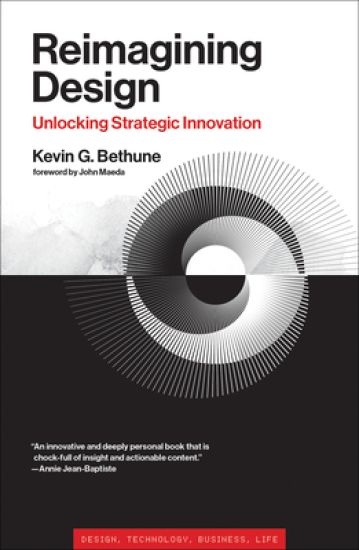
The power of transformative design, multidisciplinary leaps, and diversity: lessons from a Black professional’s journey through corporate America.Design offers so much more than an aesthetically pleasing logo or banner, a beautification add-on after the heavy lifting. In Reimagining Design, Kevin Bethune shows how design provides a unique angle on problem-solving—how it can be leveraged strategically to cultivate innovation and anchor multidisciplinary teamwork. As he does so, he describes his journey as a Black professional through corporate America, revealing the power of transformative design, multidisciplinary leaps, and diversity. Bethune, who began as an engineer at Westinghouse, moved on to Nike (where he designed Air Jordans), and now works as a sought-after consultant on design and innovation, shows how design can transform both individual lives and organizations.In Bethune’s account, diversity, equity, and inclusion emerge as a recurring theme. He shows how, as we leverage design for innovation, we also need to consider the broader ecological implications of our decisions and acknowledge the threads of systemic injustice in order to realize positive change. His book is for anyone who has felt like the “other”—and also for allies who want to encourage anti-racist, anti-sexist, and anti-ageist behaviors in the workplace. Design transformation takes leadership—leaders who do not act as gatekeepers but, with agility and nimbleness, build teams that mirror the marketplace.Design in harmony with other disciplines can be incredibly powerful; multidisciplinary team collaboration is the foundation of future innovation. With insight and compassion, Bethune provides a framework for bringing this about.

Could sharing your faith be the secret to developing your spiritual maturity?For many followers of Jesus, discipleship means doing certain things to deepen our connection with Jesus Christ. But our spiritual growth checklists are often disconnected from the mission of reaching a lost world with the gospel message.Taking a holistic approach that unites evangelism and discipleship, Kevin and Sherry Harney demonstrate how God's plan for our spiritual growth is intimately connected to his mission to the world.In Organic Disciples, the couple lead ordinary followers of Jesus through seven markers of spiritual maturity, showing how simple shifts in our Bible reading, prayer, community life, giving, service, and other biblical practices can connect us with God's work of reaching people with his love. You'll learn:Why true spiritual maturity will always lead believers outward to engage the world with the good news and truth of Jesus.How to overcome the common roadblocks and false narratives that stand in the way of spiritual maturity.How to design a personal pathway of growth to be more like Jesus in character and mission. Along with the Organic Disciples book, churches and individuals can utilize a free, self-directed online tool at OrganicOutreach.com to help each person identify where they are in their growth journey.Also look for eight-session small group curriculum—Organic Disciples Study Guide (9780310139089)—to take congregations and Christians deeper on this journey.
Connect your journey of discipleship with a passion for the world to meet Jesus Christ. For many followers of Jesus, discipleship means doing certain things to deepen our connection with Jesus Christ. But our spiritual growth checklists are often disconnected from the mission of reaching a lost world with the gospel message.Taking a holistic approach that unites evangelism and discipleship, Kevin and Sherry Harney demonstrate how God's plan for our spiritual growth is intimately connected to his mission to the world.Based on the teachings and reflection of their book, Organic Disciples, Kevin and Sherry will lead you and your group through the seven markers of spiritual maturity and how these biblical practices can connect us with God's work of reaching people with his love:Bible EngagementPassionate PrayerWholehearted WorshipHumble ServiceJoyful GenerosityConsistent CommunityOrganic Outreach True spiritual maturity will always lead believers outward to engage the world with the good news and truth of Jesus. You'll learn how to overcome the common roadblocks and false narratives that stand in the way of spiritual maturity and how to design a personal pathway of growth to be more like Jesus in character and mission.Used together with the Organic Disciples book and the free video study and online assessment available at OrganicOutreach.com, churches and individuals can better identify where they are in their growth journey and what the next steps are in becoming more like Jesus.

Knowing Our Faith in Jesus Is TrueMark wrote his account of the life and ministry of Jesus during the time that first-century Christians were facing intense persecution because of their faith. The timing is important. Mark, in penning his Gospel, was proclaiming without apology that Jesus was indeed the Messiah and the Son of God—the fulfillment of Israel's hopes who had indeed ushered in God's reign. Although things looked bleak for Christ followers, they could be sure the foundation of their faith was secure. They would receive an eternal reward if they remained faithful to their Lord.Just like Mark's readers, you need to know that your faith is built on a solid foundation. In this twelve-lesson study, you will explore the context of Mark's Gospel and examine what you can glean from what he wrote and—just as importantly—what he didn't write. This is an invitation for you to learn more about Jesus and life in his kingdom as you examine this unique Gospel from the perspectives of a first-century Christian and a twenty-first century Christian.Each study in the NIV Application Commentary series employs a three-step process to help you understand both the historical meaning of a biblical text and its relevance in modern times. The original meaning section reveals the questions and concerns the author was addressing. The past to present section then explains what significance the original audience would have found in the passage and what significance you can find in it today. Finally, the questions that accompany each section will help you apply the author's words and teachings to your own life and find meaning in them for what you are facing.

Christians in the first century lived in a world ruled by Rome. The vast size of the Roman Empire meant that it incorporated many different people groups who followed many different religions. Christians were thus often confronted with practices mandated by the local authorities where they lived that went against their faith in Jesus. But even more problematic, they were also often confronted with worldviews and systems of belief that went against their faith.This was especially true of the believers who lived in the capital city of Rome. So it was that when Paul decided to visit the city, he first sent them a letter outlining the key principles and "doctrines" of the Christian faith. Paul explained what humans are really like (sinful), what God has done to provide an escape from the consequences of humanity's sin, and what a lifestyle that goes out of a Christian worldview looks like. Today, we need to know the same! We need to have a deep understanding of what we believe so we know how to respond when faced with other beliefs that go against Christ.Each study in the NIV Application Commentary Resources series employs a three-step process to help you understand both the historical meaning of a biblical text and its relevance in modern times. The original meaning section reveals the questions and concerns the author was addressing. The past to present section then explains what significance the original audience would have found in the passage and what significance you can find in it today. Finally, the questions that accompany each section will help you specifically apply the author's words and teachings and find meaning in them for what you are facing in your life.Lessons:The Gospel of Righteousness by Faith (Romans 1–32; 3:21–26)Addicted to Sin (Romans 2:1–3:20)The Righteousness of God (Romans 3:21–4:25)Peace and Hope (Romans 5:1–21)Freedom from Sin (Romans 6:1–23)Freedom from the Law (Romans 7:1–25)Life in the Spirit (Romans 8:1–39)The Problem of Israel (Romans 9:1–10:21)Israel's Future (Romans 11:1–36)The Transformed Life (Romans 12:1–21)Love and Law (Romans 13:1–14)Life Together (Romans 14:1–16:27)
No book in the Bible has been interpreted as widely as Revelation. Many have found the visions that John depicts to be especially fertile ground for speculation and spiritualization. However, if we want to truly understand this fascinating book, we have to focus on what it meant to its original readers. In doing this, we do not deny its genre (apocalyptic), its purpose (prophecy), its methods (use of symbols), or its message for readers today. Rather, we seek the timeless truths the book relates to believers in Christ both past and present.While many details in Revelation are debated, the central message of the book is not. God has summoned us from our preoccupation with the world to recognize, in light of his ultimate plan for history, what really matters and what really does not. He has called us, a community called the "church," to live differently from the world and worship differently than the world. The choices we make about whom we serve—Jesus or the world—matter and carry consequences. Revelation was never meant for "casual" reading, either in the first century or today. Those who truly grasp its meaning recognize that God will ultimately extend his judgment on a world that exists in a state of perpetual rebellion against him.Each study in the NIV Application Commentary Resources series employs a three-step process to help you understand both the historical meaning of a biblical text and its relevance in modern times. The original meaning section reveals the questions and concerns the author was addressing. The past to present section then explains what significance the original audience would have found in the passage and what significance you can find in it today. Finally, the questions that accompany each section will help you specifically apply the author's words and teachings and find meaning in them for what you are facing in your life.Lessons:From God with Love (Revelation 1:1–20)Whoever Has Ears, Let Them Hear (Revelation 2:1–3:22)Catching the Vision (Revelation 4:1–5:14)Who Can Stand? (Revelation 6:1–17)Saints on Earth and in Heaven (Revelation 7:1–1:17)Last Call—Repent! (Revelation 8:2–11:19)A Battle for Souls (Revelation 12:1–14:20)Come Down, Angels (Revelation 15:1–16:21)A Need for Wisdom (Revelation 17:1–18:20)The Last Battle (Revelation 19:1–20:15)The Hope of the Saints (Revelation 21:1–27)God with Us (Revelation 22:1–21)
In many ways, John's Gospel functions as both a Gospel and a letter. As a Gospel, it tells the story of Jesus and his role as revealer of God the Father and provider of redemption to all humanity. As a letter, it encouraged first-century Christians in the life they had chosen, revealed how life in Christ was different from Judaism, and corrected false teachings (like those of the Gnostics). But fundamentally, John's Gospel narrates the life of Jesus and reveals that he was truly the Son of God.Jesus had lived in the flesh among the people. John, being one of Jesus' closest disciples, had witnessed Jesus teaching those who followed him, seen the miracles that he had performed, and was there when he was crucified and then raised from the dead. Yet in spite of all the miraculous signs, pointed teachings, and resurrection, there were still questions about Jesus' divinity. So John sought, through his own personal testimony, to reveal why Jesus was fully divine while also being fully human. John made it clear that Jesus would be filled with power from the Holy Spirit and that when Christ left the earth, he made that same power available to all his followers—both in the first century and for followers today.Each study in the NIV Application Bible Study series employs a three-step process to help you understand both the historical meaning of a biblical text and its relevance in modern times. The original meaning section reveals the questions and concerns the author was addressing. The past to present section then explains what significance the original audience would have found in the passage and what significance you can find in it today. Finally, the questions that accompany each section will help you specifically apply the author's words and teachings and find meaning in them for what you are facing in your life.Lessons:The Word Becomes Flesh (John 1:1–18)A Rabbi Meets the Teacher (John 3:1–21)A Thirsty Woman Finds Water (John 4:1–42)The Hungry Struggle with the Bread of Life (John 6:1–71)The Crowd Debates the Source of Living Water (John 7:1–52)The Blind Confront the Light of the World (John 8:12–9:41)A Family Experiences Resurrection (John 11:1–57)The Master Serves (John 13:1–38)The Son Promises the Spirit (John 14:1–31)The Vine Prepares the Branches for Fruitfulness (John 15:1–16:4)The Light Plunges into Darkness (John 18:1–19:42)The Lord of Life Returns (John 20:1–29)
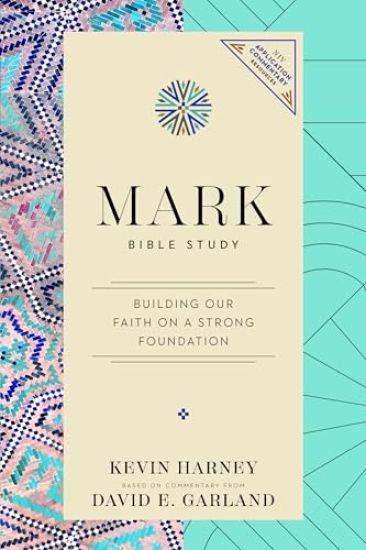
Mark Bible Study: Building Our Faith on a Strong Foundation
Kevin G. Harney; David E. Garland
HarperChristian Resources
2025
nidottu
Knowing Our Faith in Jesus Is TrueMark wrote his account of the life and ministry of Jesus during the time that first-century Christians were facing intense persecution because of their faith. The timing is important. Mark, in penning his Gospel, was proclaiming without apology that Jesus was indeed the Messiah and the Son of God--the fulfillment of Israel's hopes who had indeed ushered in God's reign. Although things looked bleak for Christ followers, they could be sure the foundation of their faith was secure. They would receive an eternal reward if they remained faithful to their Lord.Just like Mark's readers, you need to know that your faith is built on a solid foundation. In this twelve-lesson study, you will explore the context of Mark's Gospel and examine what you can glean from what he wrote and--just as importantly--what he didn't write. This is an invitation for you to learn more about Jesus and life in his kingdom as you examine this unique Gospel from the perspectives of a first-century Christian and a twenty-first century Christian.This Bible study employs a three-step process to help you understand the historical meaning of a biblical text and its relevance in modern times.The original meaning section reveals the questions and concerns the author was addressing.The past to present section then explains what significance the original audience would have found in the passage and what significance you can find in it today.Finally, the questions that accompany each section will help you apply the author's words and teachings to your own life and find meaning in them for what you are facing.

Genesis Bible Study: Knowing Who God Is and What God Did
Kevin G. Harney; John H. Walton
HarperChristian Resources
2026
nidottu

Finding a Church You Can Love and Loving the Church You've Found
Kevin G. Harney; Sherry Harney
Zondervan
2003
nidottu
How to Find Your Best FitWhether you grew up going to church twice on Sundays or never set foot in a church at all, finding and sinking your roots into a church community is crucial to your spiritual well-being. Finding the right church home can be a huge challenge, and also a lot of fun.Kevin and Sherry Harney point out that, while no church is perfect, some will fit you better than others. They show what a healthy church looks like, how to handle hot issues facing churches today, and how to determine whether a church's unique worship style will inspire or distract you. Even better, the Harneys help you discover how to plug into a church and experience the joy of giving back. In the words of the authors, "Church can be one of the most joy-filled, life-giving experiences you will ever have."Practical, encouraging, and true to the Bible, this book is your road map to finding a spiritual community you can really love.

You can serve God and his people for a lifetime and do it with passion and joy. You do not have to become another casualty in the growing number of leaders who have compromised their integrity, character, and ministry because they failed to lead an examined and accountable life. The road forward is clearly marked. Leaders must make a decision to humbly and consistently examine their inner lives and identify areas of needed change and growth. Also, wise leaders commit to listen to the voices of those who will love them enough to speak the truth and point out problems and potential pitfalls. Kevin Harney writes, “The vision of this book is to assist leaders as they discover the health, wisdom, and joy of living an examined life. It is also to give practical tools for self-examination.” Sharing stories and wisdom from his years in ministry, Harney shows you how to maintain the most powerful tool in your leadership toolbox: YOU. Your heart, so you can love well. Your mind, so you can continue to learn and grow. Your ears, your eyes, your mouth … consider this your essential guide to conducting your own complete interior health exam, so you can spot and fix any problems, preserve the things that matter most, and grow as a source of vision, strength, and hope to others.