Kirjojen hintavertailu. Mukana 11 244 527 kirjaa ja 12 kauppaa.

Kirjahaku

Etsi kirjoja tekijän nimen, kirjan nimen tai ISBN:n perusteella.

1000 tulosta hakusanalla Kevin G. Welner

NeoVouchers

NeoVouchers

Kevin G. Welner

Rowman Littlefield Publishers
2008
sidottu
While school vouchers have captured the headlines, a different policy has captured the students. Tuition tax credit laws are now entrenched in Arizona, Florida, Pennsylvania, Rhode Island, Iowa, and Georgia, and they affect far more students. Yet few people understand the nature of these policies or the political and legal issues surrounding them. This book provides a comprehensive analysis of the structure, legality, and policy implications of tuition tax credits, which have garnered only scant attention even while expanding to cover more students than the voucher policies they're designed to emulate. At a time when tax credit policies are becoming a major form of American school choice, this book offers insights into both the strengths and weakness of the approach.
NeoVouchers

NeoVouchers

Kevin G. Welner

Rowman Littlefield Publishers
2008
nidottu
While school vouchers have captured the headlines, a different policy has captured the students. Tuition tax credit laws are now entrenched in Arizona, Florida, Pennsylvania, Rhode Island, Iowa, and Georgia, and they affect far more students. Yet few people understand the nature of these policies or the political and legal issues surrounding them. This book provides a comprehensive analysis of the structure, legality, and policy implications of tuition tax credits, which have garnered only scant attention even while expanding to cover more students than the voucher policies they're designed to emulate. At a time when tax credit policies are becoming a major form of American school choice, this book offers insights into both the strengths and weakness of the approach.
Potential Grizzlies

Potential Grizzlies

Kevin G. Welner

Information Age Publishing
2020
nidottu
If all humor does indeed come from pain, then American educational policymaking has been a petri dish brimming with hilarity. Even before Betsy DeVos ascended to her perch atop the U.S. Department of Education, her predecessors had offered up an excruciating decade of fodder for satire. Ably assisted by a bevy of billionaires, foundations, and advocacy think tanks, these policymakers unleashed a torrent of rhetorical gibberish and evidence-free “innovations” on the nation’s children and their schools.Potential Grizzlies: Making the Nonsense Bearable is one researcher’s attempt to laugh instead of cry. The book will bring back memories of policymakers from more innocent times, from Michelle Rhee to Arne Duncan to Chris Christie. Sit back and relax with fond thoughts of your favorite policies, from testing to school choice to “parent trigger.” Or maybe just smile and imagine a day when policymakers turn to research evidence and knowledgeable educators to build a sound future for our children.
Potential Grizzlies

Potential Grizzlies

Kevin G. Welner

Information Age Publishing
2020
sidottu
If all humor does indeed come from pain, then American educational policymaking has been a petri dish brimming with hilarity. Even before Betsy DeVos ascended to her perch atop the U.S. Department of Education, her predecessors had offered up an excruciating decade of fodder for satire. Ably assisted by a bevy of billionaires, foundations, and advocacy think tanks, these policymakers unleashed a torrent of rhetorical gibberish and evidence-free “innovations” on the nation’s children and their schools.Potential Grizzlies: Making the Nonsense Bearable is one researcher’s attempt to laugh instead of cry. The book will bring back memories of policymakers from more innocent times, from Michelle Rhee to Arne Duncan to Chris Christie. Sit back and relax with fond thoughts of your favorite policies, from testing to school choice to “parent trigger.” Or maybe just smile and imagine a day when policymakers turn to research evidence and knowledgeable educators to build a sound future for our children.
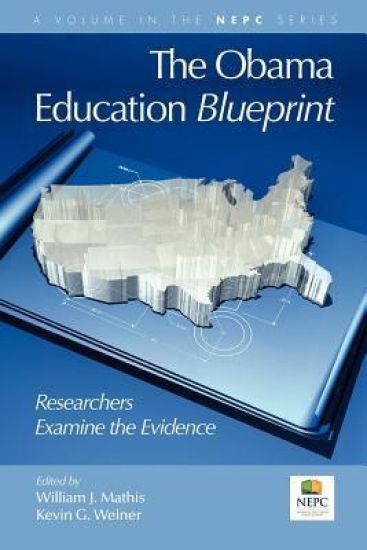
The Obama Education Blueprint

The Obama Education Blueprint

William J. Mathis; Kevin G. Welner

Information Age Publishing
2010
nidottu
In March 2010, the Obama administration released A Blueprint for Reform, setting forth its proposed revisions of the Elementary and Secondary Education Act. If enacted, the Blueprint will shape the curriculum, standards, assessments, and accountability systems of schools throughout the nation. It will also determine how and where federal education funds will be targeted, further increase federal control over K-12 education, and increase the private-sector role in the operation of public schools.In advancing this agenda, President Obama and education secretary Arne Duncan have maintained that their Blueprint recommendations are grounded in research, and in May the U.S. Department of Education issued a set of six documents presented as summaries of the research supporting their plan.As an extension of the ongoing Think Tank Review Project, the staff and Fellows of the National Education Policy Center examine these research summaries and assess how well they represent the full body of knowledge in each of the reform areas. In The Obama Education Blueprint, prominent education policy experts from across the nation offer a comprehensive analysis of the research support for the U.S. Department of Education’s plan for the reauthorization of the Elementary and Secondary Education Act.This volume is designed to provide policymakers, the media, and interested citizens with what the research actually says about the administration’s proposals.
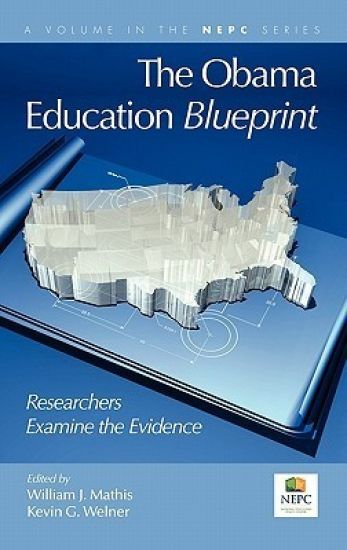
The Obama Education Blueprint

The Obama Education Blueprint

William J. Mathis; Kevin G. Welner

Information Age Publishing
2010
sidottu
In March 2010, the Obama administration released A Blueprint for Reform, setting forth its proposed revisions of the Elementary and Secondary Education Act. If enacted, the Blueprint will shape the curriculum, standards, assessments, and accountability systems of schools throughout the nation. It will also determine how and where federal education funds will be targeted, further increase federal control over K-12 education, and increase the private-sector role in the operation of public schools.In advancing this agenda, President Obama and education secretary Arne Duncan have maintained that their Blueprint recommendations are grounded in research, and in May the U.S. Department of Education issued a set of six documents presented as summaries of the research supporting their plan.As an extension of the ongoing Think Tank Review Project, the staff and Fellows of the National Education Policy Center examine these research summaries and assess how well they represent the full body of knowledge in each of the reform areas. In The Obama Education Blueprint, prominent education policy experts from across the nation offer a comprehensive analysis of the research support for the U.S. Department of Education’s plan for the reauthorization of the Elementary and Secondary Education Act.This volume is designed to provide policymakers, the media, and interested citizens with what the research actually says about the administration’s proposals.
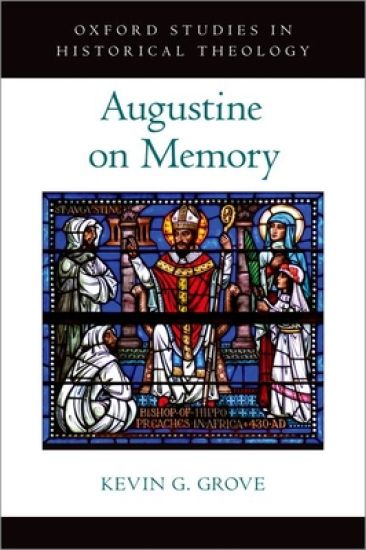
Augustine on Memory

Augustine on Memory

Kevin G. Grove

OXFORD UNIVERSITY PRESS INC
2021
sidottu
Augustine of Hippo, indisputably one of the most important figures for the study of memory, is credited with establishing memory as the inner source of selfhood and locus of the search for God. Yet, those who study memory in Augustine have never before taken into account his preaching. His sermons are the sources of memory's greatest development for Augustine. In Augustine's preaching, especially on the Psalms, the interior gives way to communal exterior. Both the self and search for God are re-established in a shared Christological identity and the communal labors of remembering and forgetting. This book opens with Augustine's early works and Confessions as the beginning of memory and concludes with Augustine's Trinity and preaching on Psalm 50 as the end of memory. The heart of the book, the work of memory, sets forth how ongoing remembering and forgetting in Christ are for Augustine are foundational to the life of grace. To that end, Augustine and his congregants go leaping in memory together, keep festival with abiding traces, and become forgetful runners like St. Paul. Remembering and forgetting in Christ, the ongoing work of memory, prove for Augustine to be actions of reconciliation of the distended experiences of human life-of praising and groaning, labouring and resting, solitude and communion. Augustine on Memory presents this new communal and Christological paradigm not only for Augustinian studies, but also for theologians, philosophers, ethicists, and interdisciplinary scholars of memory.
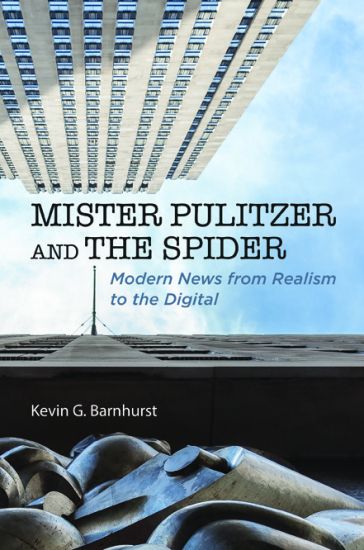
Mister Pulitzer and the Spider

Mister Pulitzer and the Spider

Kevin G Barnhurst

University of Illinois Press
2016
sidottu
A spidery network of mobile online media has supposedly changed people, places, time, and their meanings. A prime case is the news. Digital webs seem to have trapped "legacy media," killing off newspapers and journalists' jobs. Did news businesses and careers fall prey to the digital "Spider"? To solve the mystery, Kevin Barnhurst spent thirty years studying news going back to the realism of the 1800s. The usual suspects--technology, business competition, and the pursuit of scoops--are only partly to blame for the fate of news. The main culprit is modernism from the "Mister Pulitzer" era, which transformed news into an ideology called "journalism." News is no longer what audiences or experts imagine. Stories have grown much longer over the past century and now include fewer events, locations, and human beings. Background and context rule instead. News producers adopted modernism to explain the world without recognizing how modernist ideas influence the knowledge they produce. When webs of networked connectivity sparked a resurgence in realist stories, legacy news stuck to big-picture analysis that can alienate audience members accustomed to digital briefs.
Mister Pulitzer and the Spider

Mister Pulitzer and the Spider

Kevin G Barnhurst

University of Illinois Press
2018
nidottu
A spidery network of mobile online media has supposedly changed people, places, time, and their meanings. A prime case is the news. Digital webs seem to have trapped "legacy media," killing off newspapers and journalists' jobs. Did news businesses and careers fall prey to the digital "Spider"? To solve the mystery, Kevin Barnhurst spent thirty years studying news going back to the realism of the 1800s. The usual suspects--technology, business competition, and the pursuit of scoops--are only partly to blame for the fate of news. The main culprit is modernism from the "Mister Pulitzer" era, which transformed news into an ideology called "journalism." News is no longer what audiences or experts imagine. Stories have grown much longer over the past century and now include fewer events, locations, and human beings. Background and context rule instead. News producers adopted modernism to explain the world without recognizing how modernist ideas influence the knowledge they produce. When webs of networked connectivity sparked a resurgence in realist stories, legacy news stuck to big-picture analysis that can alienate audience members accustomed to digital briefs.
Reimagining Design

Reimagining Design

Kevin G. Bethune

MIT PRESS LTD
2022
sidottu
The power of transformative design, multidisciplinary leaps, and diversity: lessons from a Black professional’s journey through corporate America.Design offers so much more than an aesthetically pleasing logo or banner, a beautification add-on after the heavy lifting. In Reimagining Design, Kevin Bethune shows how design provides a unique angle on problem-solving—how it can be leveraged strategically to cultivate innovation and anchor multidisciplinary teamwork. As he does so, he describes his journey as a Black professional through corporate America, revealing the power of transformative design, multidisciplinary leaps, and diversity. Bethune, who began as an engineer at Westinghouse, moved on to Nike (where he designed Air Jordans), and now works as a sought-after consultant on design and innovation, shows how design can transform both individual lives and organizations. In Bethune’s account, diversity, equity, and inclusion emerge as a recurring theme. He shows how, as we leverage design for innovation, we also need to consider the broader ecological implications of our decisions and acknowledge the threads of systemic injustice in order to realize positive change. His book is for anyone who has felt like the “other”—and also for allies who want to encourage anti-racist, anti-sexist, and anti-ageist behaviors in the workplace. Design transformation takes leadership—leaders who do not act as gatekeepers but, with agility and nimbleness, build teams that mirror the marketplace. Design in harmony with other disciplines can be incredibly powerful; multidisciplinary team collaboration is the foundation of future innovation. With insight and compassion, Bethune provides a framework for bringing this about.
Nonlinear

Nonlinear

Kevin G. Bethune; John Maeda

MIT PRESS LTD
2025
sidottu
From the acclaimed designer and bestselling author of Reimagining Design, a nonlinear approach to navigating design’s nuances in pursuit of meaningful innovation.In Nonlinear, Kevin Bethune shows us that we can reject trodden paths of digital or physical product creation by taking advantage of a nonlinear approach. To unlock meaningful innovation that breeds new and novel outcomes, he writes, teams need to embark on a journey into the proverbial forest of ambiguity, the result of a rapidly converging, dynamic, and exponentially changing landscape. The journey is less about getting it right or wrong, and more about using the information we have at our disposal to understand our choices and take steps to unlock new learning. Nonlinear begins by taking the reader through Bethune’s professional “zigs and zags.” The author explains that while his interdisciplinary leaps were rare at the time he took them, these varied experiences unlocked perspectives about design and innovation that uniquely prepared him for our present moment and for the future. He then showcases the role of quantitative information to strategically frame and set boundary conditions for our creative exploration, and the role of qualitative insights to provide the substance necessary to begin crafting solutions that address unmet needs. The book also identifies accelerants (or flywheels) that will help readers as they reflect on their journey navigating the forest of ambiguity, with a specific emphasis on diversity, a key theme for Bethune, a Black man who has navigated new horizons. Readers will enjoy having the chance to customize the author’s perspectives and make them their own at both an individual and team level.
Reimagining Design

Reimagining Design

Kevin G. Bethune

MIT PRESS LTD
2024
nidottu
The power of transformative design, multidisciplinary leaps, and diversity: lessons from a Black professional’s journey through corporate America.Design offers so much more than an aesthetically pleasing logo or banner, a beautification add-on after the heavy lifting. In Reimagining Design, Kevin Bethune shows how design provides a unique angle on problem-solving—how it can be leveraged strategically to cultivate innovation and anchor multidisciplinary teamwork. As he does so, he describes his journey as a Black professional through corporate America, revealing the power of transformative design, multidisciplinary leaps, and diversity. Bethune, who began as an engineer at Westinghouse, moved on to Nike (where he designed Air Jordans), and now works as a sought-after consultant on design and innovation, shows how design can transform both individual lives and organizations.In Bethune’s account, diversity, equity, and inclusion emerge as a recurring theme. He shows how, as we leverage design for innovation, we also need to consider the broader ecological implications of our decisions and acknowledge the threads of systemic injustice in order to realize positive change. His book is for anyone who has felt like the “other”—and also for allies who want to encourage anti-racist, anti-sexist, and anti-ageist behaviors in the workplace. Design transformation takes leadership—leaders who do not act as gatekeepers but, with agility and nimbleness, build teams that mirror the marketplace.Design in harmony with other disciplines can be incredibly powerful; multidisciplinary team collaboration is the foundation of future innovation. With insight and compassion, Bethune provides a framework for bringing this about.

Organic Disciples

Organic Disciples

Kevin G. Harney; Sherry Harney

ZONDERVAN
2022
nidottu
Could sharing your faith be the secret to developing your spiritual maturity?For many followers of Jesus, discipleship means doing certain things to deepen our connection with Jesus Christ. But our spiritual growth checklists are often disconnected from the mission of reaching a lost world with the gospel message.Taking a holistic approach that unites evangelism and discipleship, Kevin and Sherry Harney demonstrate how God's plan for our spiritual growth is intimately connected to his mission to the world.In Organic Disciples, the couple lead ordinary followers of Jesus through seven markers of spiritual maturity, showing how simple shifts in our Bible reading, prayer, community life, giving, service, and other biblical practices can connect us with God's work of reaching people with his love. You'll learn:Why true spiritual maturity will always lead believers outward to engage the world with the good news and truth of Jesus.How to overcome the common roadblocks and false narratives that stand in the way of spiritual maturity.How to design a personal pathway of growth to be more like Jesus in character and mission. Along with the Organic Disciples book, churches and individuals can utilize a free, self-directed online tool at OrganicOutreach.com to help each person identify where they are in their growth journey.Also look for eight-session small group curriculum—Organic Disciples Study Guide (9780310139089)—to take congregations and Christians deeper on this journey.
Organic Disciples Study Guide

Organic Disciples Study Guide

Kevin G. Harney; Sherry Harney

ZONDERVAN
2022
nidottu
Connect your journey of discipleship with a passion for the world to meet Jesus Christ. For many followers of Jesus, discipleship means doing certain things to deepen our connection with Jesus Christ. But our spiritual growth checklists are often disconnected from the mission of reaching a lost world with the gospel message.Taking a holistic approach that unites evangelism and discipleship, Kevin and Sherry Harney demonstrate how God's plan for our spiritual growth is intimately connected to his mission to the world.Based on the teachings and reflection of their book, Organic Disciples, Kevin and Sherry will lead you and your group through the seven markers of spiritual maturity and how these biblical practices can connect us with God's work of reaching people with his love:Bible EngagementPassionate PrayerWholehearted WorshipHumble ServiceJoyful GenerosityConsistent CommunityOrganic Outreach True spiritual maturity will always lead believers outward to engage the world with the good news and truth of Jesus. You'll learn how to overcome the common roadblocks and false narratives that stand in the way of spiritual maturity and how to design a personal pathway of growth to be more like Jesus in character and mission.Used together with the Organic Disciples book and the free video study and online assessment available at OrganicOutreach.com, churches and individuals can better identify where they are in their growth journey and what the next steps are in becoming more like Jesus.
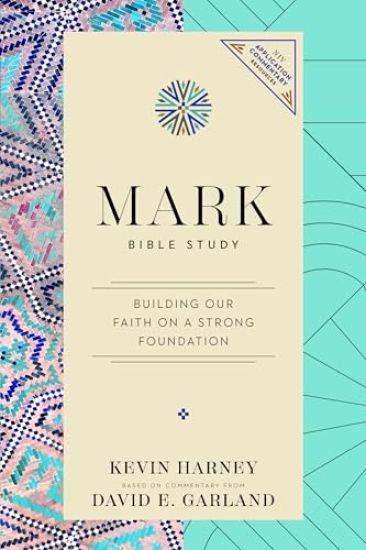
Mark Bible Study

Mark Bible Study

Kevin G. Harney; David E. Garland

HarperChristian Resources
2025
nidottu
Knowing Our Faith in Jesus Is TrueMark wrote his account of the life and ministry of Jesus during the time that first-century Christians were facing intense persecution because of their faith. The timing is important. Mark, in penning his Gospel, was proclaiming without apology that Jesus was indeed the Messiah and the Son of God—the fulfillment of Israel's hopes who had indeed ushered in God's reign. Although things looked bleak for Christ followers, they could be sure the foundation of their faith was secure. They would receive an eternal reward if they remained faithful to their Lord.Just like Mark's readers, you need to know that your faith is built on a solid foundation. In this twelve-lesson study, you will explore the context of Mark's Gospel and examine what you can glean from what he wrote and—just as importantly—what he didn't write. This is an invitation for you to learn more about Jesus and life in his kingdom as you examine this unique Gospel from the perspectives of a first-century Christian and a twenty-first century Christian.Each study in the NIV Application Commentary series employs a three-step process to help you understand both the historical meaning of a biblical text and its relevance in modern times. The original meaning section reveals the questions and concerns the author was addressing. The past to present section then explains what significance the original audience would have found in the passage and what significance you can find in it today. Finally, the questions that accompany each section will help you apply the author's words and teachings to your own life and find meaning in them for what you are facing.
Romans Bible Study

Romans Bible Study

Kevin G. Harney; Douglas J. Moo

HarperChristian Resources
2025
nidottu
Christians in the first century lived in a world ruled by Rome. The vast size of the Roman Empire meant that it incorporated many different people groups who followed many different religions. Christians were thus often confronted with practices mandated by the local authorities where they lived that went against their faith in Jesus. But even more problematic, they were also often confronted with worldviews and systems of belief that went against their faith.This was especially true of the believers who lived in the capital city of Rome. So it was that when Paul decided to visit the city, he first sent them a letter outlining the key principles and "doctrines" of the Christian faith. Paul explained what humans are really like (sinful), what God has done to provide an escape from the consequences of humanity's sin, and what a lifestyle that goes out of a Christian worldview looks like. Today, we need to know the same! We need to have a deep understanding of what we believe so we know how to respond when faced with other beliefs that go against Christ.Each study in the NIV Application Commentary Resources series employs a three-step process to help you understand both the historical meaning of a biblical text and its relevance in modern times. The original meaning section reveals the questions and concerns the author was addressing. The past to present section then explains what significance the original audience would have found in the passage and what significance you can find in it today. Finally, the questions that accompany each section will help you specifically apply the author's words and teachings and find meaning in them for what you are facing in your life.Lessons:The Gospel of Righteousness by Faith (Romans 1–32; 3:21–26)Addicted to Sin (Romans 2:1–3:20)The Righteousness of God (Romans 3:21–4:25)Peace and Hope (Romans 5:1–21)Freedom from Sin (Romans 6:1–23)Freedom from the Law (Romans 7:1–25)Life in the Spirit (Romans 8:1–39)The Problem of Israel (Romans 9:1–10:21)Israel's Future (Romans 11:1–36)The Transformed Life (Romans 12:1–21)Love and Law (Romans 13:1–14)Life Together (Romans 14:1–16:27)
Revelation Bible Study

Revelation Bible Study

Kevin G. Harney; Craig S. Keener

HarperChristian Resources
2026
nidottu
No book in the Bible has been interpreted as widely as Revelation. Many have found the visions that John depicts to be especially fertile ground for speculation and spiritualization. However, if we want to truly understand this fascinating book, we have to focus on what it meant to its original readers. In doing this, we do not deny its genre (apocalyptic), its purpose (prophecy), its methods (use of symbols), or its message for readers today. Rather, we seek the timeless truths the book relates to believers in Christ both past and present.While many details in Revelation are debated, the central message of the book is not. God has summoned us from our preoccupation with the world to recognize, in light of his ultimate plan for history, what really matters and what really does not. He has called us, a community called the "church," to live differently from the world and worship differently than the world. The choices we make about whom we serve—Jesus or the world—matter and carry consequences. Revelation was never meant for "casual" reading, either in the first century or today. Those who truly grasp its meaning recognize that God will ultimately extend his judgment on a world that exists in a state of perpetual rebellion against him.Each study in the NIV Application Commentary Resources series employs a three-step process to help you understand both the historical meaning of a biblical text and its relevance in modern times. The original meaning section reveals the questions and concerns the author was addressing. The past to present section then explains what significance the original audience would have found in the passage and what significance you can find in it today. Finally, the questions that accompany each section will help you specifically apply the author's words and teachings and find meaning in them for what you are facing in your life.Lessons:From God with Love (Revelation 1:1–20)Whoever Has Ears, Let Them Hear (Revelation 2:1–3:22)Catching the Vision (Revelation 4:1–5:14)Who Can Stand? (Revelation 6:1–17)Saints on Earth and in Heaven (Revelation 7:1–1:17)Last Call—Repent! (Revelation 8:2–11:19)A Battle for Souls (Revelation 12:1–14:20)Come Down, Angels (Revelation 15:1–16:21)A Need for Wisdom (Revelation 17:1–18:20)The Last Battle (Revelation 19:1–20:15)The Hope of the Saints (Revelation 21:1–27)God with Us (Revelation 22:1–21)
John Bible Study

John Bible Study

Kevin G. Harney; Gary M. Burge

HarperChristian Resources
2026
nidottu
In many ways, John's Gospel functions as both a Gospel and a letter. As a Gospel, it tells the story of Jesus and his role as revealer of God the Father and provider of redemption to all humanity. As a letter, it encouraged first-century Christians in the life they had chosen, revealed how life in Christ was different from Judaism, and corrected false teachings (like those of the Gnostics). But fundamentally, John's Gospel narrates the life of Jesus and reveals that he was truly the Son of God.Jesus had lived in the flesh among the people. John, being one of Jesus' closest disciples, had witnessed Jesus teaching those who followed him, seen the miracles that he had performed, and was there when he was crucified and then raised from the dead. Yet in spite of all the miraculous signs, pointed teachings, and resurrection, there were still questions about Jesus' divinity. So John sought, through his own personal testimony, to reveal why Jesus was fully divine while also being fully human. John made it clear that Jesus would be filled with power from the Holy Spirit and that when Christ left the earth, he made that same power available to all his followers—both in the first century and for followers today.Each study in the NIV Application Bible Study series employs a three-step process to help you understand both the historical meaning of a biblical text and its relevance in modern times. The original meaning section reveals the questions and concerns the author was addressing. The past to present section then explains what significance the original audience would have found in the passage and what significance you can find in it today. Finally, the questions that accompany each section will help you specifically apply the author's words and teachings and find meaning in them for what you are facing in your life.Lessons:The Word Becomes Flesh (John 1:1–18)A Rabbi Meets the Teacher (John 3:1–21)A Thirsty Woman Finds Water (John 4:1–42)The Hungry Struggle with the Bread of Life (John 6:1–71)The Crowd Debates the Source of Living Water (John 7:1–52)The Blind Confront the Light of the World (John 8:12–9:41)A Family Experiences Resurrection (John 11:1–57)The Master Serves (John 13:1–38)The Son Promises the Spirit (John 14:1–31)The Vine Prepares the Branches for Fruitfulness (John 15:1–16:4)The Light Plunges into Darkness (John 18:1–19:42)The Lord of Life Returns (John 20:1–29)
Mark Bible Study: Building Our Faith on a Strong Foundation

Mark Bible Study: Building Our Faith on a Strong Foundation

Kevin G. Harney; David E. Garland

HarperChristian Resources
2025
nidottu
Knowing Our Faith in Jesus Is TrueMark wrote his account of the life and ministry of Jesus during the time that first-century Christians were facing intense persecution because of their faith. The timing is important. Mark, in penning his Gospel, was proclaiming without apology that Jesus was indeed the Messiah and the Son of God--the fulfillment of Israel's hopes who had indeed ushered in God's reign. Although things looked bleak for Christ followers, they could be sure the foundation of their faith was secure. They would receive an eternal reward if they remained faithful to their Lord.Just like Mark's readers, you need to know that your faith is built on a solid foundation. In this twelve-lesson study, you will explore the context of Mark's Gospel and examine what you can glean from what he wrote and--just as importantly--what he didn't write. This is an invitation for you to learn more about Jesus and life in his kingdom as you examine this unique Gospel from the perspectives of a first-century Christian and a twenty-first century Christian.This Bible study employs a three-step process to help you understand the historical meaning of a biblical text and its relevance in modern times.The original meaning section reveals the questions and concerns the author was addressing.The past to present section then explains what significance the original audience would have found in the passage and what significance you can find in it today.Finally, the questions that accompany each section will help you apply the author's words and teachings to your own life and find meaning in them for what you are facing.