Kirjahaku
Etsi kirjoja tekijän nimen, kirjan nimen tai ISBN:n perusteella.
1000 tulosta hakusanalla Kevin J O'Brien


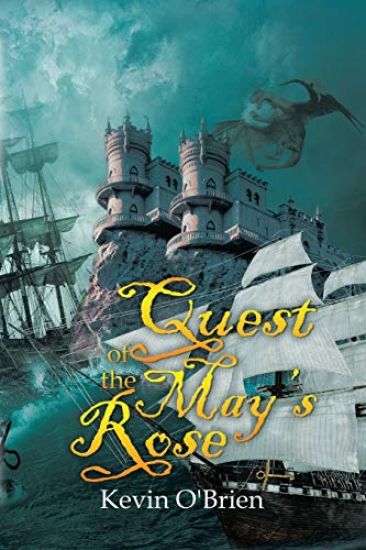
On the planet Talamh, in the year 1310 of the second Common Era a young woman, who just lost her father, started a long and dangerous journey of her life. She and a newly formed adventuring company's made an attempt by sail west to open a new Sea trade route to ports of the kingdoms of the East, from the port city of Fair Haven in the kingdom of West Thorne.
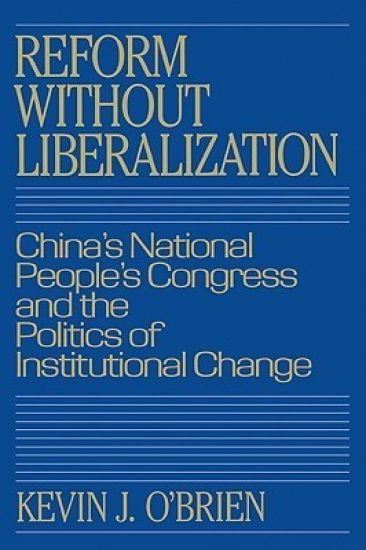
Since its founding in 1954, the National People's Congress of China (NPC) has followed a difficult course of development, a course which has been characterized by periods of limited progress intermingled with periods of stagnation and regression. Political campaigns from the Anti-Rightist Movement (1957–1958) to the Great Leap Forward (1958–1960) to the Cultural Revolution (1966–1976) frustrated the establishment of any consistent policy concerning the appropriate role of the legislature within the one-party, Maoist regime. Mao's death in 1976, however, ushered in a new era of political reform which has included the strengthening of the NPC. In this detailed study of the NPC, Kevin O'Brien examines how the NPC has changed from its founding under Mao through the regime of Deng Xiaoping. He describes the various functions it has served, from the management of intra-elite relations; to the incorporation, and co-optation, of criticisms of regime policies into regime debates; to legislation and supervision of government agencies.

Since its founding in 1954, the National People’s Congress of China (NPC) has followed a difficult course of development, a course which has been characterized by periods of limited progress intermingled with periods of stagnation and regression. Political campaigns from the Anti-Rightist Movement (1957–1958) to the Great Leap Forward (1958–1960) to the Cultural Revolution (1966–1976) frustrated the establishment of any consistent policy concerning the appropriate role of the legislature within the one-party, Maoist regime. Mao’s death in 1976, however, ushered in a new era of political reform which has included the strengthening of the NPC. In this first detailed study of the NPC, Kevin O'Brien examines how the NPC has changed from its founding under Mao through the regime of Deng Xiaoping. He describes the various functions it has served, from the management of intra-elite relations; to the incorporation, and co-optation, of criticisms of regime policies into regime debates; to legislation and supervision of government agencies. The author concludes that although the NPC has not moved toward liberalization, meaning movement toward political autonomy and direct representationof citizen interests, increased legislative involvement in lawmaking, oversight and regime support indicates that the NPC is developing an expanded, more powerful role in the political system.

Rightful Resistance in Rural China
Kevin J. O'Brien; Lianjiang Li
Cambridge University Press
2006
pokkari
How can the poor and weak 'work' a political system to their advantage? Drawing mainly on interviews and surveys in rural China, Kevin O'Brien and Lianjiang Li show that popular action often hinges on locating and exploiting divisions within the state. Otherwise powerless people use the rhetoric and commitments of the central government to try to fight misconduct by local officials, open up clogged channels of participation, and push back the frontiers of the permissible. This 'rightful resistance' has far-reaching implications for our understanding of contentious politics. As O'Brien and Li explore the origins, dynamics, and consequences of rightful resistance, they highlight similarities between collective action in places as varied as China, the former East Germany, and the United States, while suggesting how Chinese experiences speak to issues such as opportunities to protest, claims radicalization, tactical innovation, and the outcomes of contention.

Rightful Resistance in Rural China
Kevin J. O'Brien; Lianjiang Li
Cambridge University Press
2006
sidottu
How can the poor and weak 'work' a political system to their advantage? Drawing mainly on interviews and surveys in rural China, Kevin O'Brien and Lianjiang Li show that popular action often hinges on locating and exploiting divisions within the state. Otherwise powerless people use the rhetoric and commitments of the central government to try to fight misconduct by local officials, open up clogged channels of participation, and push back the frontiers of the permissible. This 'rightful resistance' has far-reaching implications for our understanding of contentious politics. As O'Brien and Li explore the origins, dynamics, and consequences of rightful resistance, they highlight similarities between collective action in places as varied as China, the former East Germany, and the United States, while suggesting how Chinese experiences speak to issues such as opportunities to protest, claims radicalization, tactical innovation, and the outcomes of contention.

The Proximate Aim of Education: A Study of the Proper and Immediate End of Education
Kevin J. O'Brien
Literary Licensing, LLC
2013
nidottu
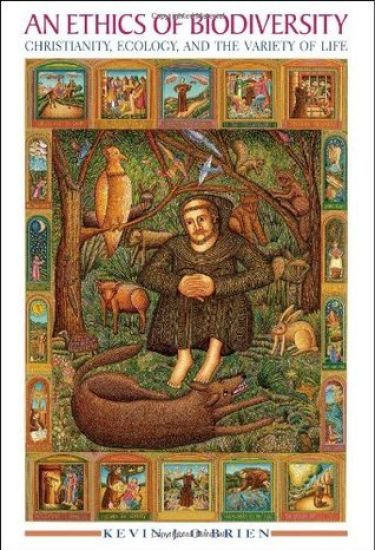
Life on earth is wildly diverse, but the future of that diversity is now in question. Through environmentally destructive farming practices, ever-expanding energy use, and the development and homogenization of land, human beings are responsible for unprecedented reductions in the variety of life forms around us. Estimates suggest that species extinctions caused by humans occur at up to 1,000 times the natural rate, and that one of every twenty species on the planet could be eradicated by 2060. "An Ethics of Biodiversity" argues that these facts should inspire careful reflection and action in Christian churches, which must learn from earth's vast diversity in order to help conserve the natural and social diversity of our planet. Bringing scientific data into conversation with theological tradition, the book shows that biodiversity is a point of intersection between faith and ethics, social justice and environmentalism, science and politics, global problems and local solutions. "An Ethics of Biodiversity" offers a set of tools for students, environmentalists, and people of faith to think critically about how human beings can live with and as part of the variety of life in God's creation.
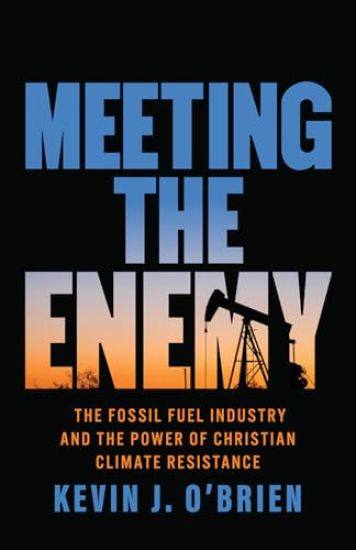
Climate change is viewed as a primarily scientific, economic, or political issue. While acknowledging the legitimacy of these perspectives, Kevin J. O'Brien argues that we should respond to climate change first and foremost as a case of systematic and structural violence. Global warming is largely caused by the carbon emissions of the affluent, emissions that harm the poor first and worst. Climate change is violence because it divides human beings from one another and from the earth. O'Brien offers a constructive and creative response to this violence through practical examples of activism and nonviolent peacemaking, providing brief biographies of five Christians in the United States-John Woolman, Jane Addams, Dorothy Day, Martin Luther King Jr., and Cesar Chavez. These activists' idealism, social commitment, and political savvy offer lessons of resistance applicable to the struggle against climate change and for social justice.
Climate change is viewed as a primarily scientific, economic, or political issue. While acknowledging the legitimacy of these perspectives, Kevin J. O'Brien argues that we should respond to climate change first and foremost as a case of systematic and structural violence. Global warming is largely caused by the carbon emissions of the affluent, emissions that harm the poor first and worst. Climate change is violence because it divides human beings from one another and from the earth. O'Brien offers a constructive and creative response to this violence through practical examples of activism and nonviolent peacemaking, providing brief biographies of five Christians in the United States-John Woolman, Jane Addams, Dorothy Day, Martin Luther King Jr., and Cesar Chavez. These activists' idealism, social commitment, and political savvy offer lessons of resistance applicable to the struggle against climate change and for social justice.
An Introduction to Christian Environmentalism
Kathryn D. Blanchard; Kevin J. O'Brien
Baylor University Press
2014
nidottu
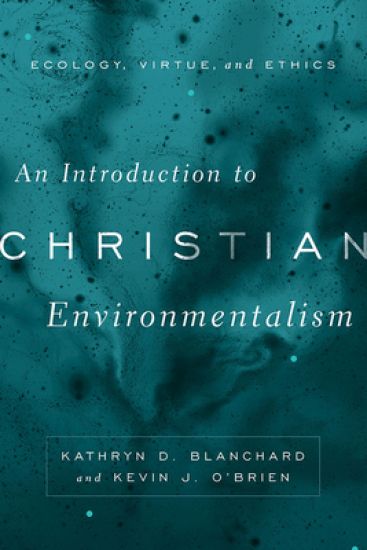
Christians share a common concern for the earth. Evangelicals emphasize creation care; mainline Protestants embrace the green movement; the Catholic Church lists ""10 deadly environmental sins;"" and the Eastern Orthodox Patriarch has declared climate change an urgent issue of social and economic justice.This textbook examines seven contemporary environmental challenges through the lens of classical Christian virtues. Authors Kathryn Blanchard and Kevin O'Brien use these classical Christian virtues to seek a ""golden mean"" between extreme positions by pairing each virtue with a pernicious environmental problem.Students are thus led past political pitfalls and encouraged to care for other creatures prudently, to develop new energy sources courageously, to choose our food temperately, to manage toxic pollution justly, to respond to climate change faithfully, to consider humanity's future hopefully, and to engage lovingly in advocacy for God's earth. Readers will emerge from this text with a deeper understanding of contemporary environmental problems and the fundamentals of Christian virtue ethics.
An Introduction to Christian Environmentalism
Kathryn D. Blanchard; Kevin J. O'Brien
Baylor University Press
2020
sidottu
Christians share a common concern for the earth. Evangelicals emphasize creation care; mainline Protestants embrace the green movement; the Catholic Church lists "10 deadly environmental sins;" and the Eastern Orthodox Patriarch has declared climate change an urgent issue of social and economic justice.This textbook examines seven contemporary environmental challenges through the lens of classical Christian virtues. Authors Kathryn Blanchard and Kevin O'Brien use these classical Christian virtues to seek a "golden mean" between extreme positions by pairing each virtue with a pernicious environmental problem.Students are thus led past political pitfalls and encouraged to care for other creatures prudently, to develop new energy sources courageously, to choose our food temperately, to manage toxic pollution justly, to respond to climate change faithfully, to consider humanity's future hopefully, and to engage lovingly in advocacy for God's earth. Readers will emerge from this text with a deeper understanding of contemporary environmental problems and the fundamentals of Christian virtue ethics.
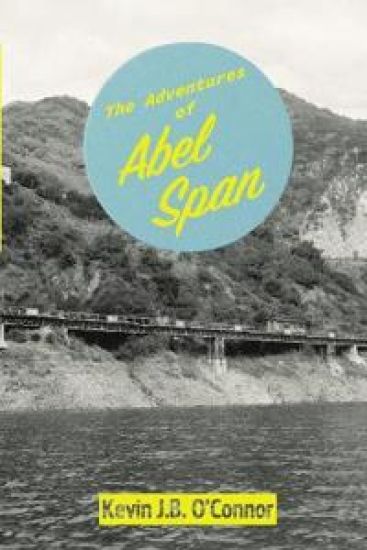
A bridge collapses under mysterious circumstances just outside of Shakesville, California, and Abel Span and Maria Leah-two young, aspiring engineers, and partners in Professor Zoomer's Great Bridges class at Shakesville High-embark on a journey of danger and discovery to find out what caused it. After tracing the source to a small border town in New Mexico-close to the infamous No Fences bridge, a failed structure that had once been lauded as a beacon of U.S.-Mexican technical collaboration-the two become enmeshed in the investigation of a nefarious secret society that has been causing earthquakes and other catastrophes across the country.

The Theodotionic Revision of the Book of Exodus
Kevin G S J O'Connell
Harvard University Press
1972
sidottu