Kirjojen hintavertailu. Mukana 11 342 296 kirjaa ja 12 kauppaa.

Kirjahaku

Etsi kirjoja tekijän nimen, kirjan nimen tai ISBN:n perusteella.

1000 tulosta hakusanalla Kevin J. Bozant

Rev. G. J. Wegener: His Life and Ministry in New Orleans

Rev. G. J. Wegener: His Life and Ministry in New Orleans

Kevin J. Bozant

Createspace Independent Publishing Platform
2018
nidottu
Recently discovered photographs, private letters, and various official documents, capture the fascinating and intricate details of life in New Orleans at the corner of Port and Burgundy Streets in Faubourg Marigny between 1887 and 1947. In "Rev. G. J. Wegener: His Life and Ministry in New Orleans," the personal recollections of Pastor Wegener, his two wives, fifteen children, and the members of St. Paul Lutheran Church, come together to create an intimate portrait of the Wegener family. Sixty years of reminiscences from the stoop of their two-story parsonage on Port Street reveal how one New Orleans family - in the face of floods, fires, yellow fever, financial hardship, the 1915 hurricane, the Great Depression, prohibition, and two world wars - is sustained by the bonds of love and faith.
The Bozant Family

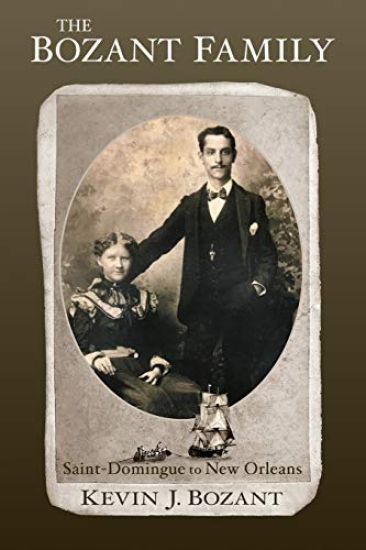
The Bozant Family

Kevin J Bozant

Independently Published
2019
pokkari
The island of Saint-Domingue in the sunlit Caribbean erupts into chaos. A slave revolt forces thousands of French colonists, free people of color, and their slaves to take to sea in crowded sailing vessels enduring starvation and disease in an attempt to escape economic upheaval and burning plantations. The Creole City experiences an influx of French refugees forever altering the cultural landscape of New Orleans. Among the Creole immigrants are members of the Bozant family. Having lost everything in Saint-Domingue, Jean Bozant and his siblings attempt to rebuild their lives. They eventually find a place for themselves with the help of the welcoming Creoles of New Orleans. Mayor James Mather said, "... they appear to be active, industrious people. They evince ... on every occasion their respect for our laws and their confidence in our government." By 1815, they gained enough confidence with the military to form their own battalion in the Battle of New Orleans.Welcome to the saga of the The Bozant Family: Saint-Domingue to New Orleans. The Haitian Revolution, Exile from Cuba, Saint-Domingue Refugees, The Battle of New Orleans, St. Louis Hotel and Slave Exchange, Cholera Epidemic, The Battalion d'Orleans, Baptized by Pere Antoine, The Correjolles Family, The Mexican War, Creoles and Placage, The Company of Carabiniers, The Baratarians, Andrew Jackson, Sibling Lawsuits, The Civil War, Crescent Regiment, Gottschalk, Neighborhood Conflagrations, Gens de Couleur Libres, Slavery, Barrels of Sour Pork, Confederate Soldiers, Treme, Union Prisoner at Point Lookout, Military Parade, Marye's Heights, Captured at Fredericksburg, Battalion Washington Artillery, Col. J. B. Walton, Louisiana Legion Funeral Honors, Unmarked Tombs, The Siege of Petersburg, Suicide in the New Basin Canal, Tax Issues and Property Seizures, Reconstruction and the White League, Train Accident at the Rigolets, Charged with Perjury, Dismounted Dragoons, Battle of Liberty Place, Succession and Opposition, New Orleans Street Battles, Francis T. Nicholls, Coup d'État in the French Quarter, The Cult of the Lost Cause, Election Fraud ... and let's not forget... the early days of baseball in New Orleans
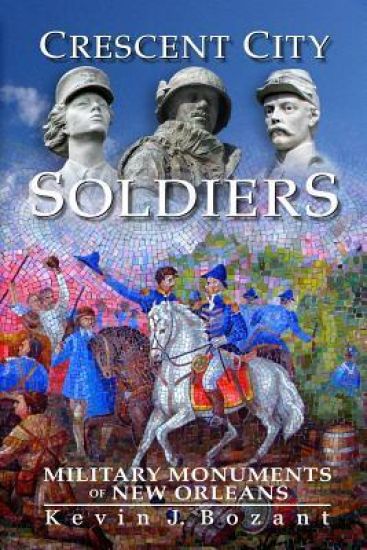
Crescent City Soldiers: Military Monuments of New Orleans

Crescent City Soldiers: Military Monuments of New Orleans

Kevin J. Bozant

Createspace Independent Publishing Platform
2013
nidottu
In Crescent City Soldiers, author Kevin J. Bozant surveys over 125 military monuments, memorials, and markers located throughout the greater New Orleans area. This issue includes photographs and background information concerning the four controversial confederate monuments removed from public display in 2017. This 156-page volume is generously illustrated with 200 photographs and includes the Central Business District, Lakeview Chalmette, Vieux Carr , Metairie, Ninth Ward, Mid-City, Faubourg Trem , and the entire Uptown District.The neighborhood parks, neutral grounds, and historic cemeteries of New Orleans reveal an impressive collection of enduring tributes to local, national, and international military heroes honoring their service and courage in the name of peace and liberty.Each monument is accompanied by brief, informative text describing its meaning and military significance. In addition, neighborhood and street addresses are provided which can be easily located via your smart phone map application.You will also find information on military museums, forts, and various insignia of veterans organizations such as the Veterans of Foreign Wars, Grand Army of the Republic, Daughters of the American Revolution, United Daughters of the Confederacy, Sons of the American Revolution, as well as the United States Daughters 1776-1812.This book includes some of the earliest memorials honoring soldiers who served during the American Revolution up to the recent unveiling of the Louisiana Submariner Memorial.An informative index organizes the various monuments and memorials into a chronological list of engagements beginning with the Revolutionary War and leading up to recent actions in the Middle East.Join this patriotic excursion exploring our military monuments and memorials which pay silent testimony to the valiant men and women who so courageously defended our nation.
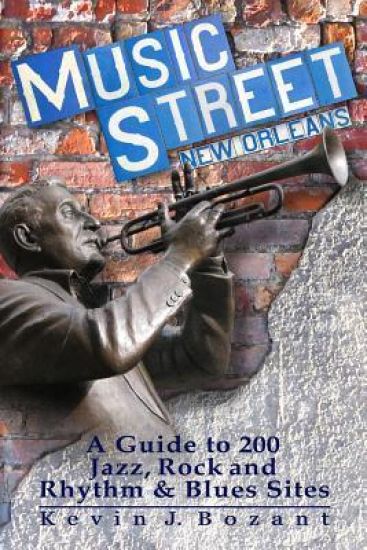
Music Street New Orleans: A Guide to 200 Jazz, Rock and Rhythm & Blues Sites

Music Street New Orleans: A Guide to 200 Jazz, Rock and Rhythm & Blues Sites

Kevin J. Bozant

Createspace Independent Publishing Platform
2013
nidottu
Join the "second line" with local author Kevin J. Bozant as he takes you on a neighborhood tour of over 200 music sculptures, markers, parks, murals, historic sites, statues, museums, festivals, plaques and cultural references celebrating the Jazz, Rock and Rhythm & Blues heritage of New Orleans.At any moment in time, a musician in the Crescent City is rehearsing with the Marching 100 in the 7th Ward, playing the B-3 in Gert Town, harmonizing in Zion City, practicing piano at SUNO, jazzing it up at Preservation Hall, glorifying in a Mid-City choir, blowing a horn on Bourbon Street, marching in a Trem brass band, second lining in a jazz funeral, conducting an orchestra for Broadway South or jamming on Frenchmen Street.Music isn't just a way of life in New Orleans.Music IS life in New Orleans.In 1987, the United States Congress designated jazz "a rare and valuable national American treasure to which we should devote our attention, support and resources to make certain it is preserved, understood and promulgated." On October 31, 1994, The National Park Service (NPS) established the New Orleans Jazz National Historical Park focused on the early culture of traditional jazz. Together with the New Orleans Jazz Commission, the NPS created a series of tour maps of historic sites relating to the early history of jazz in the Crescent City. Over 60 of these sites are included here.In 2002, The Preservation Resource Center (PRC) and the New Orleans Jazz Commission, launched the Jazz Plaque Program in an effort to identify and preserve many of the residences of local musicians associated with jazz. More than 35 of these sites are included in this book.In New Orleans ...Every street is Music Street.
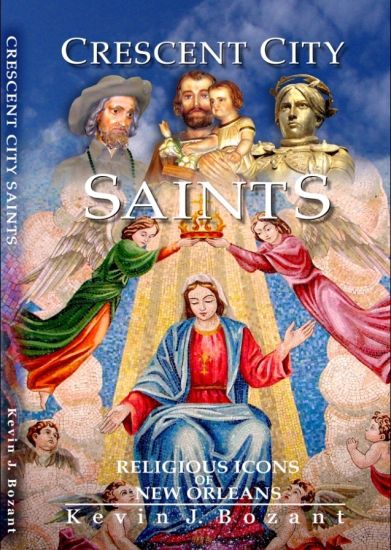
Crescent City Saints: Religious Icons of New Orleans

Crescent City Saints: Religious Icons of New Orleans

Kevin J. Bozant

Createspace Independent Publishing Platform
2014
nidottu
"Oh, When The Saints Go Marching In."You will want to be "in that number" when local author Kevin J. Bozant takes you on a spiritual journey to the glorious houses of worship, historic cemeteries and sacred national votive shrines located throughout various neighborhoods of New Orleans. With the help of over 225 photographs, you will discover the local saints and symbols which give rise to the city's celebrated street names and sanctuaries. St. Roch, St. Anthony, St. Ann, Hope, Piety, Grand Route St. John, Annunciation, Ursulines and many others are brought to life in the form of mosaics, paintings, statuary and stained glass. Explore the intricacies of the city's religious traditions including All Saints' Day, St. Joseph's Altars, "making" the nine churches, the living Stations of the Cross and Voodoo rituals along Bayou St. John. On this pilgrimage you will visit the National Shrines of St. Ann, St. Roch, Blessed Francis Xavier Seelos, Our Lady of Prompt Succor, The International Shrine of St. Jude, The Grotto and Shrine of St. Frances Cabrini and the Henriette Delille Prayer Room. Discover why New Orleans is an international destination for travelers seeking spiritual awakening. A brief discussion of ecclesiastical heraldry reveals the secrets of the Pope's and Archbishop's personal coats of arms as well as the symbolism associated with the Dominicans, Franciscans, Jesuits and Redemptorists. This volume also depicts a series of artworks illustrating the life of Jesus Christ as well as a section exploring various manifestations of Our Holy Mother. Throughout this spiritual pilgrimage, you can meditate on each Station of the Cross with examples from 14 prominent New Orleans houses of worship.
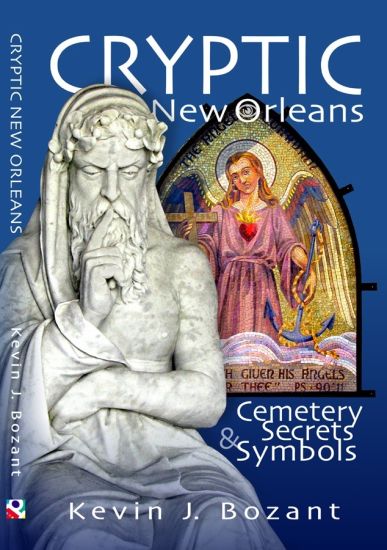
Cryptic New Orleans: Cemetery Secrets and Symbols

Cryptic New Orleans: Cemetery Secrets and Symbols

Kevin J. Bozant

Createspace Independent Publishing Platform
2015
nidottu
Writer and photographer Kevin J. Bozant takes you on a haunting expedition to unearth the secrets of Cryptic New Orleans. Explore 30 above-ground cemeteries and discover a mysterious world of personal, religious, cultural, and fraternal symbolism. Memorial art is celebrated in New Orleans with as much passion as it is neglected. Architecture and archeology converge within these tattered brick walls creating enigmatic landscapes filled with imposing family tombs and the abandoned mausolea of ancient societies. From Good Friday to All Saints' Day, these cities of the dead are forever alive with genealogists, photographers, writers, and tourists. This book will awaken the taphophile lurking within you and become a valuable cemetery field guide. Cryptic New Orleans: Cemetery Secrets and Symbols is generously illustrated with over 400 photographs, biblical and literary references, poignant epitaphs and the glorious art work of some of the most talented 19th century marble cutters in the world. The author identifies and describes each symbol and provides additional information regarding family names, dates, and cemetery locations. Kevin has explored, studied, and photographed every cemetery in the city of New Orleans for over 40 years. He knows where the bodies are buried.A companion volume, New Orleans Engraved: Cemetery Elegies and Epitaphs, is also available from Po-Boy Press - New Orleans.
St. Paul Lutheran Church of New Orleans: The First 80 Years 1840-1920
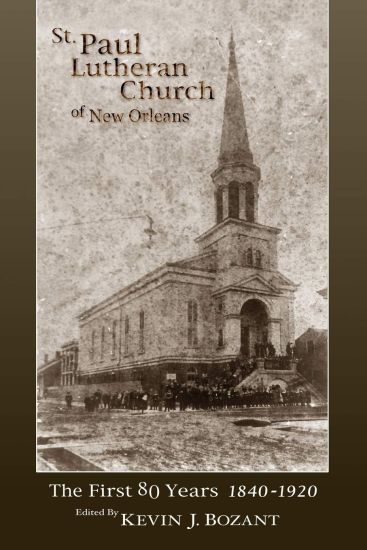
This publication revisits the first 80 years of St. Paul Lutheran Church, exploring the congregation's formative years in Faubourg Marigny, New Orleans. Between 1840 and 1920, the members of St. Paul endured a turbulent history of fires, language disputes, epidemics, Civil War, hurricanes, doctrinal confusion, and World War I. Yet, 80 years after its founding by German immigrants, St. Paul continued to display the energy and vitality that would distinguish it for another century. Hundreds were baptized at the ancient German-era font still in use today. Celebrating thousands of baptisms, confirmations, and marriages, their lives remained focused on the religious values and social responsibilities of this remarkable church family. St. Paul survives to this day at the corner of Port and Burgundy Streets, having found sustenance for 180 years through capable leadership, inclusive fellowship, and the inestimable bonds of love and faith. The first 50 years, 1840-1890, are recorded here by republishing Rev. G. J. Wegener's history of the congregation, Geschichte der St. Paulus Gemeinde, with its original illustrations, published in 1890. Wegener's original work is further illustrated with additional archival documents and photographs. The years 1890 through 1920, capture St. Paul's emergence into the 20th century. This period is explored through the subsequent writings and recollections of Pastor Wegener and his family, with additional details gleaned from the archives of St. Paul. The memoirs of fellow clergy, school teachers, and congregational members, create a multifaceted portrait of a congregation as a work in progress. There are also parallel historical accounts written by various church historians in order to bring a more balanced perspective to the narrative. This book reveals details about St. Paul's early pastors and teachers by way of synodical sources, family photographs, personal memoirs, and private letters, creating brief biographical portraits of the pioneering German theologians and educators who introduced Evangelical Protestantism, as well as the beginnings of Lutheranism, to New Orleans. The St. Paul archives include a vintage collection of individual confirmation portraits featuring the ancestors of many current and former St. Paul families. Their inclusion here places a human face on the historical record. They have not been seen in decades and many of them are published here for the first time. This is the beginning; an exploration of the human drama and doctrinal confusion, so evident during St. Paul's emergence in the mid-19th century. Here is also an encouraging portrait of a Lutheran congregation, blessed with steadfast leadership, determined to navigate its way into the 20th century and beyond. Kevin J. Bozant has revisited the historical writings and archives of his great-grandfather, Rev. G. J. Wegener, resulting in the following publications: Rev. G. J. Wegener: His Life and Ministry in New Orleans, St. Paul Lutheran Church of New Orleans: The First 80 Years 1840-1920, and Bethlehem Orphan Home: New Orleans Refuge.
New Orleans Engraved: Cemetery Elegies and Epitaphs

New Orleans Engraved: Cemetery Elegies and Epitaphs

Kevin J. Bozant

Createspace Independent Publishing Platform
2018
nidottu
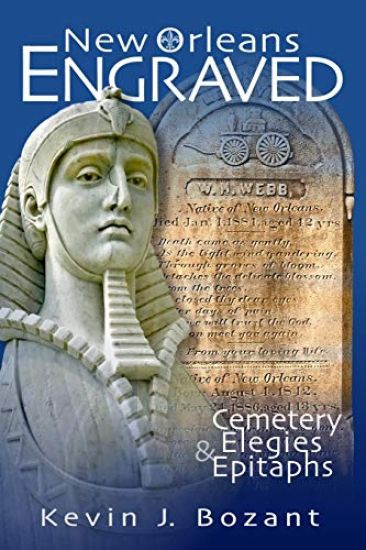
Writer and photographer, Kevin J. Bozant, takes you on an emotional journey to explore the poignant cemetery elegies and epitaphs in New Orleans Engraved. Visit thirty above-ground cemeteries and discover a passionate world of personal, religious, cultural, and fraternal memories. Memorial art is celebrated in New Orleans with as much passion as it is neglected. Architecture and archeology converge within these tattered brick walls creating enigmatic landscapes filled with imposing family tombs and the abandoned mausolea of ancient societies. From Good Friday to All Saints' Day, these cities of the dead are forever alive with genealogists, photographers, writers, and tourists. This book will awaken the taphophile lurking within you and become a valuable cemetery field guide.New Orleans Engraved: Cemetery Elegies and Epitaphs is generously illustrated with over 200 photographs, biblical and literary references, touching epitaphs, and the glorious art work of some of the most talented 19th century marble cutters and monument builders in the world. The author identifies and explores each memorial and provides additional information regarding family names, dates, and cemetery locations.Kevin has explored and photographed every cemetery in the city of New Orleans for over 40 years. He knows where the bodies are buried.A companion volume, Cryptic New Orleans: Cemetery Secrets and Symbols, is also available from Po-Boy Press - New Orleans.
African American New Orleans

African American New Orleans

Kevin J Bozant

Createspace Independent Publishing Platform
2012
pokkari
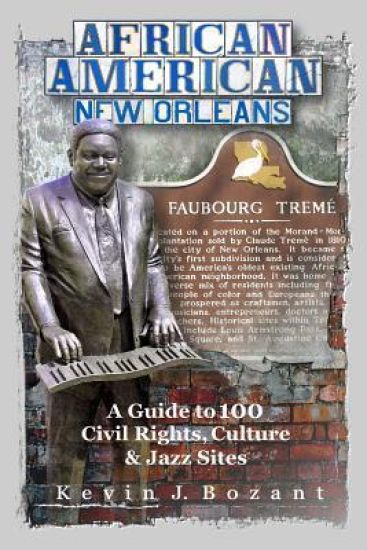
No other city in America appreciates and celebrates the African American cultural landscape as does New Orleans. There are seventy-three distinct neighborhoods in the Crescent City. In three adjacent neighborhoods - Faubourg Trem , Faubourg St. Mary, and the French Quarter - there are more than fifty statues and historic sites honoring African American contributions to the cultural and civil rights history of New Orleans. In the fifteen neighborhoods mentioned in this book, there are well over one hundred. African American New Orleans is an essential and valuable reference for everyone visiting New Orleans; especially during Mardi Gras, Audubon Zoo Soul Fest, New Orleans Jazz & Heritage Festival, The Essence Music Festival, Juneteenth, Satchmo Summerfest, The New Orleans Blues & BBQ Festival, The Bayou Classic, and Kwanzaa. It is also a guide for residents of the New Orleans area who may not be aware of the history surrounding them. Volumes have been written about New Orleans civil rights history. Library shelves overflow with extensive works about the origins of jazz and the unique culture of the Crescent City. This book, however, is written with the visitor in mind by providing over one hundred photographs accompanied by concise, informative text describing the significance of each site. In addition, neighborhood and street addresses are provided which can be quickly located via your smart phone map application. There is also a convenient neighborhood index on page 128 to help you find sites close to your current location.This book also serves as a helpful study guide for New Orleans school students and teachers; providing a framework for discussion and further research into the fascinating social and multi-cultural fabric of African American New Orleans.
Walking Through New Orleans

Walking Through New Orleans

Kevin J Bozant

Createspace Independent Publishing Platform
2018
pokkari
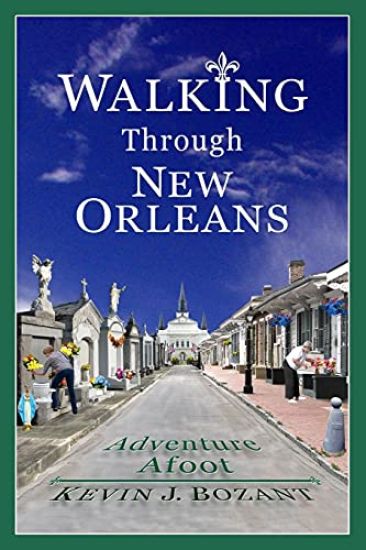
Mute your phone and experience the old-fashioned anticipation of a new book, while enjoying a low-tech, natural walk through the green spaces, neighborhoods, and cemeteries of the most interesting city in America - New Orleans Antique postcards, vintage advertisements, and location photography all come together to create three enchanting journeys through time and place. During this trilogy of leisurely walks, you will find yourself surrounded by the city's unique cultural history and astounded by its physical beauty. Allow me to escort you throughout your exploration of the most popular locations and landmarks of the Crescent City. Let me guide you on three fascinating walking tours through the historic byways, quiet pathways, and mysterious alleyways of New Orleans by walking a mile - or two - in my shoes.One thing is certain - there is Adventure Afoot
Climbing Olympus

Climbing Olympus

Kevin J. Anderson

HARPERCOLLINS PUBLISHERS
2016
pokkari
They were prisoners, exiles, pawns of a corrupt government. Now they are Dr. Rachel Dycek's adin: surgically transformed beings who can survive new lives on the surface of Mars. But they are still exiles, unable ever again to breath Earth's air . . . And they are still pawns.
Enemies & Allies

Enemies & Allies

Kevin J. Anderson

It Books
2012
nidottu
" A] fun read....Batman and Superman meet in this retro-flavored novel set amid the Cold War sensibilities of the 1950s."--USA TodayThe Dark Knight meets the Man of Steel in Enemies & Allies--the thrilling story of the first-ever meeting between Batman and Superman, brilliantly imagined by New York Times bestselling author Kevin J. Anderson. One of today's most popular writers pits the iconic superheroes against Lex Luthor and the Soviets--and each other--in a spellbinding story of destiny and duty set against the backdrop of America's Cold War era.
Managing Ocean Environments in a Changing Climate

Managing Ocean Environments in a Changing Climate

Kevin J. Noone; Ussif Rashid Sumaila; Robert J. Diaz

Elsevier Science Publishing Co Inc
2013
sidottu
Managing Ocean Environments in a Changing Climate summarizes the current state of several threats to the global oceans. What distinguishes this book most from previous works is that this book begins with a holistic, global-scale focus for the first several chapters and then provides an example of how this approach can be applied on a regional scale, for the Pacific region. Previous works usually have compiled local studies, which are essentially impossible to properly integrate to the global scale. The editors have engaged leading scientists in a number of areas, such as fisheries and marine ecosystems, ocean chemistry, marine biogeochemical cycling, oceans and climate change, and economics, to examine the threats to the oceans both individually and collectively, provide gross estimates of the economic and societal impacts of these threats, and deliver high-level recommendations.
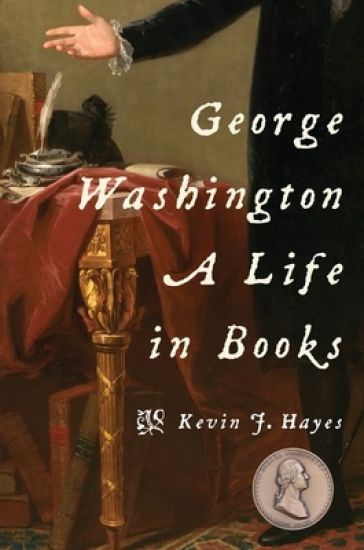
George Washington: A Life in Books

George Washington: A Life in Books

Kevin J. Hayes

Oxford University Press Inc
2017
sidottu
When it comes to the Founding Fathers, Thomas Jefferson, Ben Franklin, and Alexander Hamilton are generally singled out as the great minds of early America. Up until the present day, George Washington has never been taken seriously as an intellectual. Indeed, John Adams once snobbishly dismissed him as "too illiterate, unlearned, unread for his station and reputation." Yet Adams and most of the men who knew Washington were unaware of his regular devotion to reading as a program of self-improvement. Based on an exhaustive amount of research at the Library of Congress, the collections at Mount Vernon, and rare book archives scattered across the country, Kevin J. Hayes draws on juvenilia, letters, diaries, pamphlets, and the close to 1,000 books owned by Washington to reconstruct the active intellectual life that has gone largely unnoticed in conventional narratives of the first US president. Despite being a lifelong reader, Washington felt a sense of acute embarrassment about his relative lack of formal education and cultural sophistication, and in this lively literary biography, Hayes reconstructs how Washington worked tirelessly to improve his mind. Beginning with the primers, forgotten periodicals, conduct books, and classic eighteenth-century novels such as Tom Jones that shaped Washington's early life, Hayes engages with Washington's letters and journals, charting the many ways the books of his upbringing affected decisions before and during the Revolutionary War. The final section of the book covers the voluminous reading that occurred during Washington's presidency and his retirement at Mount Vernon. Throughout, Hayes also engages with Washington's writings as well as his readings, starting with The Journal of Major George Washington and going through his Farewell Address. The sheer breadth of titles under review here allow readers to glimpse Washington's views on foreign policy, economics, the law, art, slavery, marriage, and religion. Ultimately, The Books of George Washington's Life offers a startling new perspective on the mind of America's Father, uncovering the ideas that shaped his intellectual journey and, subsequently, the development of young America.
George Washington

George Washington

Kevin J. Hayes

Oxford University Press Inc
2020
nidottu
When it comes to the Founding Fathers, Thomas Jefferson, Benjamin Franklin, and Alexander Hamilton are generally considered the great minds of early America. George Washington, instead, is toasted with accolades regarding his solid common sense and strength in battle. Indeed, John Adams once snobbishly dismissed him as "too illiterate, unlearned, unread for his station and reputation." Yet Adams, as well as the majority of the men who knew Washington in his life, were unaware of his singular devotion to self-improvement. Based on a comprehensive amount of research at the Library of Congress, the collections at Mount Vernon, and rare book archives scattered across the country, Kevin J. Hayes corrects this misconception and reconstructs in vivid detail the active intellectual life that has gone largely unnoticed in conventional narratives of Washington. Despite being a lifelong reader, Washington felt an acute sense of embarrassment about his relative lack of formal education and cultural sophistication, and in this sparkling literary biography, Hayes illustrates just how tirelessly Washington worked to improve. Beginning with the primers, forgotten periodicals, conduct books, and classic eighteenth-century novels such as Tom Jones that shaped Washington's early life, Hayes studies Washington's letters and journals, charting the many ways the books of his upbringing affected decisions before and during the Revolutionary War. The final section of the book covers the voluminous reading that occurred during Washington's presidency and his retirement at Mount Vernon. Throughout, Hayes examines Washington's writing as well as his reading, from The Journal of Major George Washington through his Farewell Address. The sheer breadth of titles under review here allow readers to glimpse Washington's views on foreign policy, economics, the law, art, slavery, marriage, and religion-and how those views shaped the young nation.. Ultimately, this sharply written biography offers a fresh perspective on America's Father, uncovering the ideas that shaped his intellectual journey and, subsequently, the development of America.
The Future of the Book

The Future of the Book

Kevin J. Hayes

Oxford University Press
2022
sidottu
The Future of the Book: Images of Reading in the American Utopian Novel looks at how turn-of-the-century utopian novelists imagined what the book would be like in the ideal future. This works examines many different aspects of book culture. One chapter looks at the utopian residential library, both its contents and its personal and social functions. In the ideal future, everyone has books in their home. Another chapter discusses the public library in utopia. Many of the innovations the utopian novelists imagined correct problems that real public libraries faced in late nineteenth-century America. In utopia, everyone knows how to use the public library. A third chapter shifts the discussion of books and reading from the place of consumption to the place of production, looking at the role of the author in utopia. This chapter also attempts to answer a vexing question: Can an ideal world produce great literature? The utopian novelists said yes, but the novels they imagined in the future make their conclusions more circumspect. A parallel chapter studies what the utopian newspaper would be like. Some utopian novelists projected alternative news media, foreseeing technology that anticipated television and the internet. The final chapter examines what printed books would look like in the ideal future, looking at graphic design, universal languages, and methods to assure that the books would be printed without censorship or editorial intrusion.
The Road to Monticello

The Road to Monticello

Kevin J. Hayes

Oxford University Press Inc
2008
sidottu
The sheer variety of Jefferson's many pursuits-he was an inventor, horticulturist, statesman, architect, and philosopher, among many other things-almost mask the singularity of his genius. But there is little doubt that our third president was also one of America's greatest intellectuals. This superb new biography focuses on Jefferson's intellectual and literary life. It follows Jefferson's education from adolescence to adulthood, examines his interests, and gives new interpretations of his writings. Early writings, including A Summary View of the Rights of British America, the Declaration of Independence, and Notes on the State of Virginia are analyzed in depth. Hayes also provides substantial coverage of Jefferson's professional, social, and literary activities in Paris and his travels through Europe. He devotes a chapter to the time he served as secretary of state and his publication, The Anas, an extraordinary behind-the-scenes look at George Washington's presidency. His tenure as vice-president and president is considered in light of the ideas and relationships that were most salient for him during those crucial years. Separate chapters treat his correspondence with John Adams, the formation of the Library of Congress and his retirement library, The Life and Morals of Jesus of Nazareth, The Autobiography, and the founding of the University of Virginia. Overall, the biography offers an intimate portrait of the life of the mind that Jefferson cultivated and dreamed of one day developing to its full potential while in retirement at Monticello.