Kirjojen hintavertailu. Mukana 11 244 527 kirjaa ja 12 kauppaa.

Kirjahaku

Etsi kirjoja tekijän nimen, kirjan nimen tai ISBN:n perusteella.

1000 tulosta hakusanalla Kevin J. Keyes DC; Michelle L. Keyes

Your Holiday Table: eat better. look better. feel better.

Your Holiday Table: eat better. look better. feel better.

Kevin J. Keyes DC; Michelle L. Keyes

Createspace Independent Publishing Platform
2015
nidottu
Welcome to our table We're so glad you've joined us. Often times, I'm asked by the generations before me what the importance of organic ingredients is.The food that they ate was not labeled organic, non-GMO, or pesticide and antibiotic free, it just was. The foods eaten by generations before ours were made up of properly raised animals and crops grown in fertile soil. Food was made in the kitchen from those ingredients with love, not in a lab by food engineers. Our generation still has access to the food of our ancestors. Thanks to farmers, ranchers and fisherman with integrity, we are still able to feed our children the quality food that their grandparents ate when they were children. Better ingredients make better food, it can be proven in mineral and vitamin studies and with the taste buds of everyone around your table.Food brings us together. As you gather around Your Holiday Table reflecting on the past year, you may laugh, you may cry, you may laugh until you cry or all of the above. As you join hands with family, friends and loved ones to give thanks, you will have the peace of mind to know that the food on your table will nourish your guests, heal the body and keep people coming back for seconds.These recipes are crafted with medicinal properties and proper balance in mind. They are formulated to reduce inflammation, balance blood sugar and with anti-cancer properties.As you raise your glass to celebrate life and the year that you've lived, have the confidence to know that you can change the way that your family is fed. The choices you make in the traditions that you keep will nourish your family for generations to come
Rev. G. J. Wegener: His Life and Ministry in New Orleans

Rev. G. J. Wegener: His Life and Ministry in New Orleans

Kevin J. Bozant

Createspace Independent Publishing Platform
2018
nidottu
Recently discovered photographs, private letters, and various official documents, capture the fascinating and intricate details of life in New Orleans at the corner of Port and Burgundy Streets in Faubourg Marigny between 1887 and 1947. In "Rev. G. J. Wegener: His Life and Ministry in New Orleans," the personal recollections of Pastor Wegener, his two wives, fifteen children, and the members of St. Paul Lutheran Church, come together to create an intimate portrait of the Wegener family. Sixty years of reminiscences from the stoop of their two-story parsonage on Port Street reveal how one New Orleans family - in the face of floods, fires, yellow fever, financial hardship, the 1915 hurricane, the Great Depression, prohibition, and two world wars - is sustained by the bonds of love and faith.
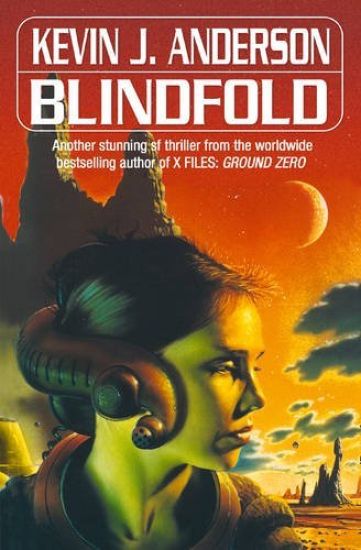
Climbing Olympus

Climbing Olympus

Kevin J. Anderson

HARPERCOLLINS PUBLISHERS
2016
pokkari
They were prisoners, exiles, pawns of a corrupt government. Now they are Dr. Rachel Dycek's adin: surgically transformed beings who can survive new lives on the surface of Mars. But they are still exiles, unable ever again to breath Earth's air . . . And they are still pawns.
Enemies & Allies

Enemies & Allies

Kevin J. Anderson

It Books
2012
nidottu
" A] fun read....Batman and Superman meet in this retro-flavored novel set amid the Cold War sensibilities of the 1950s."--USA TodayThe Dark Knight meets the Man of Steel in Enemies & Allies--the thrilling story of the first-ever meeting between Batman and Superman, brilliantly imagined by New York Times bestselling author Kevin J. Anderson. One of today's most popular writers pits the iconic superheroes against Lex Luthor and the Soviets--and each other--in a spellbinding story of destiny and duty set against the backdrop of America's Cold War era.
Managing Ocean Environments in a Changing Climate

Managing Ocean Environments in a Changing Climate

Kevin J. Noone; Ussif Rashid Sumaila; Robert J. Diaz

Elsevier Science Publishing Co Inc
2013
sidottu
Managing Ocean Environments in a Changing Climate summarizes the current state of several threats to the global oceans. What distinguishes this book most from previous works is that this book begins with a holistic, global-scale focus for the first several chapters and then provides an example of how this approach can be applied on a regional scale, for the Pacific region. Previous works usually have compiled local studies, which are essentially impossible to properly integrate to the global scale. The editors have engaged leading scientists in a number of areas, such as fisheries and marine ecosystems, ocean chemistry, marine biogeochemical cycling, oceans and climate change, and economics, to examine the threats to the oceans both individually and collectively, provide gross estimates of the economic and societal impacts of these threats, and deliver high-level recommendations.
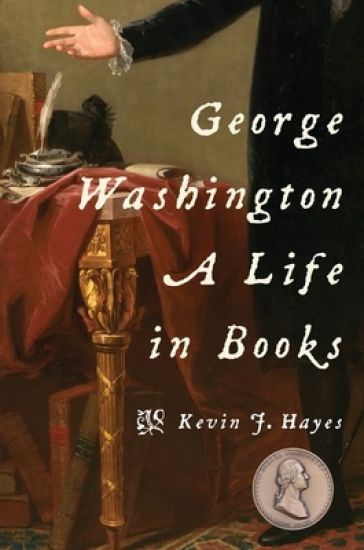
George Washington: A Life in Books

George Washington: A Life in Books

Kevin J. Hayes

Oxford University Press Inc
2017
sidottu
When it comes to the Founding Fathers, Thomas Jefferson, Ben Franklin, and Alexander Hamilton are generally singled out as the great minds of early America. Up until the present day, George Washington has never been taken seriously as an intellectual. Indeed, John Adams once snobbishly dismissed him as "too illiterate, unlearned, unread for his station and reputation." Yet Adams and most of the men who knew Washington were unaware of his regular devotion to reading as a program of self-improvement. Based on an exhaustive amount of research at the Library of Congress, the collections at Mount Vernon, and rare book archives scattered across the country, Kevin J. Hayes draws on juvenilia, letters, diaries, pamphlets, and the close to 1,000 books owned by Washington to reconstruct the active intellectual life that has gone largely unnoticed in conventional narratives of the first US president. Despite being a lifelong reader, Washington felt a sense of acute embarrassment about his relative lack of formal education and cultural sophistication, and in this lively literary biography, Hayes reconstructs how Washington worked tirelessly to improve his mind. Beginning with the primers, forgotten periodicals, conduct books, and classic eighteenth-century novels such as Tom Jones that shaped Washington's early life, Hayes engages with Washington's letters and journals, charting the many ways the books of his upbringing affected decisions before and during the Revolutionary War. The final section of the book covers the voluminous reading that occurred during Washington's presidency and his retirement at Mount Vernon. Throughout, Hayes also engages with Washington's writings as well as his readings, starting with The Journal of Major George Washington and going through his Farewell Address. The sheer breadth of titles under review here allow readers to glimpse Washington's views on foreign policy, economics, the law, art, slavery, marriage, and religion. Ultimately, The Books of George Washington's Life offers a startling new perspective on the mind of America's Father, uncovering the ideas that shaped his intellectual journey and, subsequently, the development of young America.
George Washington

George Washington

Kevin J. Hayes

Oxford University Press Inc
2020
nidottu
When it comes to the Founding Fathers, Thomas Jefferson, Benjamin Franklin, and Alexander Hamilton are generally considered the great minds of early America. George Washington, instead, is toasted with accolades regarding his solid common sense and strength in battle. Indeed, John Adams once snobbishly dismissed him as "too illiterate, unlearned, unread for his station and reputation." Yet Adams, as well as the majority of the men who knew Washington in his life, were unaware of his singular devotion to self-improvement. Based on a comprehensive amount of research at the Library of Congress, the collections at Mount Vernon, and rare book archives scattered across the country, Kevin J. Hayes corrects this misconception and reconstructs in vivid detail the active intellectual life that has gone largely unnoticed in conventional narratives of Washington. Despite being a lifelong reader, Washington felt an acute sense of embarrassment about his relative lack of formal education and cultural sophistication, and in this sparkling literary biography, Hayes illustrates just how tirelessly Washington worked to improve. Beginning with the primers, forgotten periodicals, conduct books, and classic eighteenth-century novels such as Tom Jones that shaped Washington's early life, Hayes studies Washington's letters and journals, charting the many ways the books of his upbringing affected decisions before and during the Revolutionary War. The final section of the book covers the voluminous reading that occurred during Washington's presidency and his retirement at Mount Vernon. Throughout, Hayes examines Washington's writing as well as his reading, from The Journal of Major George Washington through his Farewell Address. The sheer breadth of titles under review here allow readers to glimpse Washington's views on foreign policy, economics, the law, art, slavery, marriage, and religion-and how those views shaped the young nation.. Ultimately, this sharply written biography offers a fresh perspective on America's Father, uncovering the ideas that shaped his intellectual journey and, subsequently, the development of America.
The Future of the Book

The Future of the Book

Kevin J. Hayes

Oxford University Press
2022
sidottu
The Future of the Book: Images of Reading in the American Utopian Novel looks at how turn-of-the-century utopian novelists imagined what the book would be like in the ideal future. This works examines many different aspects of book culture. One chapter looks at the utopian residential library, both its contents and its personal and social functions. In the ideal future, everyone has books in their home. Another chapter discusses the public library in utopia. Many of the innovations the utopian novelists imagined correct problems that real public libraries faced in late nineteenth-century America. In utopia, everyone knows how to use the public library. A third chapter shifts the discussion of books and reading from the place of consumption to the place of production, looking at the role of the author in utopia. This chapter also attempts to answer a vexing question: Can an ideal world produce great literature? The utopian novelists said yes, but the novels they imagined in the future make their conclusions more circumspect. A parallel chapter studies what the utopian newspaper would be like. Some utopian novelists projected alternative news media, foreseeing technology that anticipated television and the internet. The final chapter examines what printed books would look like in the ideal future, looking at graphic design, universal languages, and methods to assure that the books would be printed without censorship or editorial intrusion.
The Road to Monticello

The Road to Monticello

Kevin J. Hayes

Oxford University Press Inc
2008
sidottu
The sheer variety of Jefferson's many pursuits-he was an inventor, horticulturist, statesman, architect, and philosopher, among many other things-almost mask the singularity of his genius. But there is little doubt that our third president was also one of America's greatest intellectuals. This superb new biography focuses on Jefferson's intellectual and literary life. It follows Jefferson's education from adolescence to adulthood, examines his interests, and gives new interpretations of his writings. Early writings, including A Summary View of the Rights of British America, the Declaration of Independence, and Notes on the State of Virginia are analyzed in depth. Hayes also provides substantial coverage of Jefferson's professional, social, and literary activities in Paris and his travels through Europe. He devotes a chapter to the time he served as secretary of state and his publication, The Anas, an extraordinary behind-the-scenes look at George Washington's presidency. His tenure as vice-president and president is considered in light of the ideas and relationships that were most salient for him during those crucial years. Separate chapters treat his correspondence with John Adams, the formation of the Library of Congress and his retirement library, The Life and Morals of Jesus of Nazareth, The Autobiography, and the founding of the University of Virginia. Overall, the biography offers an intimate portrait of the life of the mind that Jefferson cultivated and dreamed of one day developing to its full potential while in retirement at Monticello.
The Compleat Victory

The Compleat Victory

Kevin J. Weddle

Oxford University Press Inc
2021
sidottu
Winner of the Gilder Lehrman Military History Prize, Winner of the Fraunces Tavern Museum Book Award, Winner of The Society of the Cincinnati Prize & Winner of the National Society Daughters of the American Revolution 2024 NASDR Excellence in American History Book Award. In the late summer and fall of 1777, after two years of indecisive fighting on both sides, the outcome of the American War of Independence hung in the balance. Having successfully expelled the Americans from Canada in 1776, the British were determined to end the rebellion the following year and devised what they believed a war-winning strategy, sending General John Burgoyne south to rout the Americans and take Albany. When British forces captured Fort Ticonderoga with unexpected ease in July of 1777, it looked as if it was a matter of time before they would break the rebellion in the North. Less than three and a half months later, however, a combination of the Continental Army and Militia forces, commanded by Major General Horatio Gates and inspired by the heroics of Benedict Arnold, forced Burgoyne to surrender his entire army. The American victory stunned the world and changed the course of the war. Kevin J. Weddle offers the most authoritative history of the Battle of Saratoga to date, explaining with verve and clarity why events unfolded the way they did. In the end, British plans were undone by a combination of distance, geography, logistics, and an underestimation of American leadership and fighting ability. Taking Ticonderoga had misled Burgoyne and his army into thinking victory was assured. Saratoga, which began as a British foraging expedition, turned into a rout. The outcome forced the British to rethink their strategy, inflamed public opinion in England against the war, boosted Patriot morale, and, perhaps most critical of all, led directly to the Franco-American alliance. Weddle unravels the web of contingencies and the play of personalities that ultimately led to what one American general called "the Compleat Victory."
Undaunted Mind

Undaunted Mind

Kevin J. Hayes

OXFORD UNIVERSITY PRESS INC
2025
sidottu
An exploration of the mind of one of America's most beloved Founding Fathers and most brilliant minds, through the books he read and his social circles in the United States and Europe. Arguably the most intellectual, creative, cosmopolitan, and curious of the Founding Fathers, Benjamin Franklin is the only top-tier Founder not to have served as president. Despite not becoming the Chief Executive, Franklin played an active role in American politics and served the aspiring and young United States in the key European capitals. His prodigious reading and appetite for learning are epic. As he did in works about Thomas Jefferson and George Washington, Kevin J. Hayes interprets the life and mind of Franklin through what he read. Undaunted Mind tells the story of the development of Franklin's intellect, starting with the earliest books he read as a child before examining his formal schooling and his independent study after his father pulled him from school. As an apprentice in his brother's printing house, Franklin's intellectual life developed through his contact with the Couranteers, the group of his brother's friends who contributed to his newspaper, and through his attention to his brother's excellent office library. After Franklin ran away to Philadelphia, he developed a new group of friends, all of whom loved reading. In many ways, the story of Franklin's intellectual odyssey is the story of the friends he made along the way. His time in London in his late teens introduced him to several important intellectuals who encouraged him to develop his mind. After returning to Philadelphia from London, he and some friends formed the Junto, a club for mutual improvement that made reading and writing important activities. With other members of the Junto, he formed the Library Company of Philadelphia, the first subscription library in colonial America. His role as a printer put him in contact with the best eighteenth-century American writing and kept a steady flow of imported books coming from Britain. He became a scientist, assembling a great scientific library, which helped his electrical research. An educational reformer, Franklin founded the Philadelphia Academy, which would become the University of Pennsylvania. As agent for the Pennsylvania Assembly, Franklin lived in London for many years, where he befriended some of Britain's greatest minds. Different concentrations of books in his library reveal Franklin's interests in travel and exploration, warfare, and slavery. His time in Paris toward the end of his life gave Franklin another great intellectual experience, but he ultimately returned home to live the last five years of his life in Philadelphia, where he imparted his knowledge and experience to a new generation of Americans. In this gripping work, Benjamin Franklin is given a biography as rich and complex as his own intellectual life by master literary historian Kevin J. Hayes.
The Compleat Victory

The Compleat Victory

Kevin J. Weddle

OXFORD UNIVERSITY PRESS INC
2024
nidottu
Winner of the Gilder Lehrman Military History Prize, Winner of the Fraunces Tavern Museum Book Award, Winner of The Society of the Cincinnati Prize & Winner of the National Society Daughters of the American Revolution 2024 NASDR Excellence in American History Book Award In The Compleat Victory, award-winning military historian Kevin J. Weddle traces an epic panorama of strategy and chance--from London, to Quebec, to Philadelphia, to New York--that ultimately led to the decisive conclusion at Saratoga. In the late summer and fall of 1777, after two years of indecisive fighting on both sides, the outcome of the American War of Independence hung in the balance. Having successfully expelled the Americans from Canada in 1776, the British were determined to end the rebellion the following year and devised what they believed a war-winning strategy, sending General John Burgoyne south to rout the Americans and take Albany. When British forces captured Fort Ticonderoga with unexpected ease in July of 1777, it looked as if it was a matter of time before they would break the rebellion in the North. Less than three and a half months later, however, a combination of the Continental Army and Militia forces, commanded by Major General Horatio Gates and inspired by the heroics of Benedict Arnold, forced Burgoyne to surrender his entire army. The American victory stunned the world and changed the course of the war. Kevin J. Weddle offers the most authoritative history of the Battle of Saratoga to date, explaining with verve and clarity why events unfolded the way they did. In the end, British plans were undone by a combination of distance, geography, logistics, and an underestimation of American leadership and fighting ability. Taking Ticonderoga had misled Burgoyne and his army into thinking victory was assured. Saratoga, which began as a British foraging expedition, turned into a rout. The outcome forced the British to rethink their strategy, inflamed public opinion in England against the war, boosted Patriot morale, and, perhaps most critical of all, led directly to the Franco-American alliance. Weddle unravels the web of contingencies and the play of personalities that ultimately led to what one American general called "the Compleat Victory."
Functional Behavior Assessment

Functional Behavior Assessment

Kevin J. Filter; Michelle E. Alvarez

Oxford University Press Inc
2011
nidottu
Functional behavioral assessment (FBA) is an important element in developing effective behavior interventions in schools. By understanding how the environment predicts and maintains problem behavior, school social workers can change those environmental conditions and facilitate positive behavior. Although FBA is traditionally applied within the context of special education, it is relevant to supporting behavior of all students in a school. In this book, the authors explore how FBA can be applied in a three-tiered model of prevention and provide tools and case examples to facilitate application. This process is described as occurring within a team context wherein the school social worker serves as a facilitator and contributor with behavioral expertise. In Tier 1, FBA is applied to the behavior of all students in a school and leads to the development of school-wide behavior interventions that are intended to prevent students from developing more serious patterns of problem behavior. In Tier-2 FBAs, the behavior of at-risk students is assessed in an efficient manner to determine which available evidence-based interventions will be effective in improving their behavior. In Tier 3, FBAs involve extensive individual assessments of the conditions that maintain the problem behavior students with significant behavior problems. This book provides detailed information about conducting FBAs at each tier of prevention and reviews the process of developing interventions from the FBA information at each tier. As initiatives encouraging positive behavior support in schools proliferate, this book will help school social workers develop the skill set necessary to maintain their role as important contributors to student outcomes.
A Journey Through American Literature

A Journey Through American Literature

Kevin J. Hayes

Oxford University Press Inc
2012
nidottu
A vivid snapshot of America's kaleidoscopic literary tradition, A Journey Through American Literature illuminates the authors, works, and events that have shaped our cultural heritage. Kevin J. Hayes charts this history through a series of approachable thematic chapters--Narrative Voice and the Short Story, the Drama of the Everyday, the Great American Novel--that reveal the richness of our literature while providing a compelling set of footholds with which to engage it. Among the topics covered are the role of travel and the symbolism of geography, characters and the importance of voice and dialect, self-definition and the American dream, new beginnings, and the role of memory. Hayes not only discusses the main canonical genres like poetry, drama, and the novel, but also looks at travel writing, autobiography, and frame tales. Key writers like Mark Twain, Ralph Ellison, Emily Dickinson, and Harriet Jacobs are central players in the drama while dozens more create a backdrop that gives this history depth. The book also features over 20 illustrations, a bibliography, and a chronology listing the key events and work in America's literary history.
A Journey Through American Literature

A Journey Through American Literature

Kevin J. Hayes

Oxford University Press Inc
2012
sidottu
A vivid snapshot of America's kaleidoscopic literary tradition, A Journey Through American Literature illuminates the authors, works, and events that have shaped our cultural heritage. Kevin J. Hayes charts this history through a series of approachable thematic chapters--Narrative Voice and the Short Story, the Drama of the Everyday, the Great American Novel--that reveal the richness of our literature while providing a compelling set of footholds with which to engage it. Among the topics covered are the role of travel and the symbolism of geography, characters and the importance of voice and dialect, self-definition and the American dream, new beginnings, and the role of memory. Hayes not only discusses the main canonical genres like poetry, drama, and the novel, but also looks at travel writing, autobiography, and frame tales. Key writers like Mark Twain, Ralph Ellison, Emily Dickinson, and Harriet Jacobs are central players in the drama while dozens more create a backdrop that gives this history depth. The book also features over 20 illustrations, a bibliography, and a chronology listing the key events and work in America's literary history.
The Road to Monticello

The Road to Monticello

Kevin J. Hayes

Oxford University Press Inc
2012
nidottu
Thomas Jefferson was an avid book-collector, a voracious reader, and a gifted writer, a man who prided himself on his knowledge of classical and modern languages and whose marginal annotations include quotations from Euripides, Herodotus, and Milton. And yet there has never been a literary life of our most literary president. In The Road to Monticello, Kevin J. Hayes fills this important gap by offering a lively account of Jefferson's intellectual development, focusing on the books that exerted the most profound influence on his writing and thinking. Moving chronologically through Jefferson's life, Hayes reveals the full range and depth of Jefferson's literary passions, from the popular "small books" sold by traveling chapmen, such as The History of Fortunatas and The History of Tom Thumb that enthralled him as a child, to his lifelong love of Aesop's Fables and Robinson Crusoe, his engagement with Horace, Ovid, Virgil and other writers of classical antiquity, and his deep affinity with the melancholy verse of Ossian, the legendary third-century Gaelic warrior-poet. Drawing on Jefferson's letters, journals, and commonplace books, Hayes offers a wealth of new scholarship on the literary culture of colonial America, identifies previously unknown books held in Jefferson's libraries, reconstructs Jefferson's investigations of such different fields of knowledge as law, history, philosophy, and natural science and, most importantly, lays bare the ideas which informed the thinking of America's first great intellectual. "The world's leading expert on the book culture of early America, Kevin J. Hayes brings an unsurpassed knowledge and sensitivity to the story of Thomas Jefferson's life of the mind.... The Road to Monticello is intellectual biography in the grand manner." --Leo Lemay, Henry Francis du Pont Winterthur Professor, University of Delaware "In what will surely be the definitive work on the subject, Hayes presents a scrupulously researched examination of the reading habits and thinking of our third President, effectively a biography of Thomas Jefferson's intellect over the course of his life." --Library Journal
Reconsidering Roosevelt on Race

Reconsidering Roosevelt on Race

Kevin J. McMahon

University of Chicago Press
2003
nidottu
Many have questioned FDR's record on race, suggesting that he had the opportunity but not the will to advance the civil rights of African Americans. Kevin J. McMahon challenges this view, arguing instead that Roosevelt's administration played a crucial role in the Supreme Court's increasing commitment to racial equality—which culminated in its landmark decision in Brown v. Board of Education.McMahon shows how FDR's attempt to strengthen the presidency and undermine the power of conservative Southern Democrats dovetailed with his efforts to seek racial equality through the federal courts. By appointing a majority of rights-based liberals deferential to presidential power, Roosevelt ensured that the Supreme Court would be receptive to civil rights claims, especially when those claims had the support of the executive branch.