

Kirjahaku
Etsi kirjoja tekijän nimen, kirjan nimen tai ISBN:n perusteella.
1000 tulosta hakusanalla Kevin M Mullen


The Autobiography of Kevin M. McCarthy
Kevin M. McCarthy
Createspace Independent Publishing Platform
2015
nidottu

ALL THE GHOSTS IN MY HOUSE THINK I'M STRANGE is a culmination over nearly a decade of poems, short stories and strange ramblings from a former musician, dreamer and drifter. A self-proclaimed gypsy, this work is the journey of anyone who has lost their soul and how they triumphed in getting it back.

"Kevin and the Smiling Dog" is based upon a true childhood story. It tells the tale of a young boy and and his chance misadventure with a dog he met on his way to the grocer. Nothing he had learned before would prepare him for this amazing day! Author's Note: Kevin and the Smiling Dog is based upon a true story from my childhood and most of the details and characters are real. The book depicts a young boy named Kevin and is, in a sense, also autobiographical, in that the Kevin in the book is me. An important part of the book is also about being a young person and understanding how the world works. Without divulging the entire contents of the book, it is also a way to teach children about the animal world, and why and how pets do what they do. A parent can read this book with their child and talk about it, as well as having fun colouring and discovering life through Kevin's amazing journey that day.
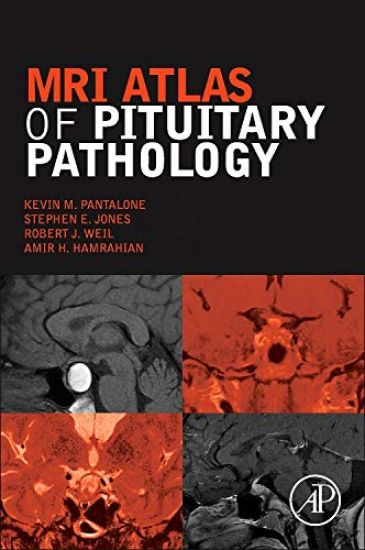
MRI Atlas of Pituitary Pathology
Kevin M. Pantalone; Stephen E. Jones; Robert J. Weil; Amir H. Hamrahian
Academic Press Inc
2015
sidottu
MRI Atlas of Pituitary Imaging focuses on magnetic resonance imaging (MRI), the imaging modality of choice for the evaluation of pituitary disorders, since it provides a detailed anatomy of the pituitary gland and surrounding structures, particularly the soft tissues. A basic understanding and interpretation of MRI is important for many clinicians outside of the field of radiology, especially endocrinologists who may receive limited formal training in such areas. This concise Atlas includes a brief review of the principles of magnetic resonance imaging and then reinforces these principles by utilizing a case-based approach to review various pituitary pathologies. The Atlas serves as a strong clinical teaching aid for endocrinologists, radiologists, and neurosurgeons in training. It also serves as a great reference for physicians who are currently in practice.
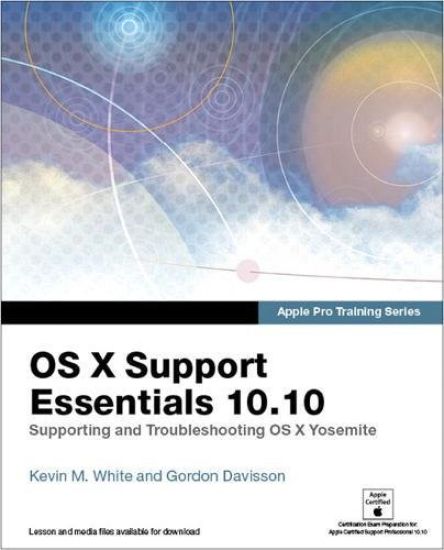
Apple Pro Training Series: OS X Support Essentials 10.10: Supporting and Troubleshooting OS X Yosemite, Print + Digital Bundle, 1/e
Kevin M. White
Peachpit Press Publications
2015
muu
This is the official curriculum of the Apple Yosemite 101: OS X Support Essentials 10.10 course and preparation for Apple Certified Support Professional (ACSP) 10.10 certification-as well as a top-notch primer for anyone who needs to support, troubleshoot, or optimise OS X Yosemite.This guide provides comprehensive coverage of Yosemite and is part of the Apple Pro Training series-the only Apple-certified books the market. Designed for support technicians, help desk specialists, and ardent Mac users, this guide takes you deep inside the Yosemite operating system. Readers will find in-depth, step-by-step instruction on everything from installing and configuring Yosemite to managing networks and system administration. Whether you run a computer lab or an IT department, you'll learn to set up users, configure system preferences, manage security and permissions, use diagnostic and repair tools, troubleshoot peripheral devices, and more-all on your way to preparing for the industry-standard ACSP certification. Covers updated system utilities and new features of OS X Yosemite. Features authoritative explanations of underlying technologies, troubleshooting, system administration, and much more. Focused lessons take you step by step through practical, real-world tasks. Lesson files and bonus material available for download-including lesson review questions summarising what you've learned to prepare you for the Apple certification exam.

In the early twentieth century, many Americans were troubled by the way agriculture was becoming increasingly industrial and corporate. Mainline Protestant churches and cooperative organizations began to come together to promote agrarianism: the belief that the health of the nation depended on small rural communities and family farms. In Baptized with the Soil Kevin M. Lowe offers for the first time a comprehensive history of the Protestant commitment to rural America. Christian agrarians believed that farming was the most moral way of life and a means for people to serve God by taking care of the earth that they believed God created. When the Great Depression hit, Christian agrarians worked harder to keep small farmers on the land. They formed alliances with state universities, cooperative extension services, and each other's denominations. They experimented with ways of revitalizing rural church life-including new worship services like Rural Life Sunday, and new strategies for raising financial support like the Lord's Acre. Because they believed that the earth was holy, Christian agrarians also became leaders in promoting soil conservation. Decades before the environmental movement, they inspired in their congregations an ethic of environmental stewardship. They may not have been able to prevent industrial agribusiness, but their ideas have helped define significant and long-lasting currents in American culture.

Kevin M. Watson offers the first in-depth examination of an essential early Methodist tradition: the band meeting, a small group of five to seven people who focused on the confession of sin in order to grow in holiness. Watson shows how the band meeting, which figured significantly in John Wesley's theology of discipleship, united Wesley's emphasis on the importance of holiness with his conviction that Christians are most likely to make progress in the Christian life together, rather than in isolation. Demonstrating that neither John Wesley's theology nor popular Methodism can be understood independent of each other, Watson explores how Wesley synthesized important aspects of Anglican piety (an emphasis on a disciplined practice of the means of grace) and Moravian piety (an emphasis on an experience of justification by faith and the witness of the Spirit) in his own version of the band meeting. Pursuing Social Holiness is an essential contribution to understanding the critical role of the band meeting in the development of British Methodism and shifting concepts of community in eighteenth-century British society.
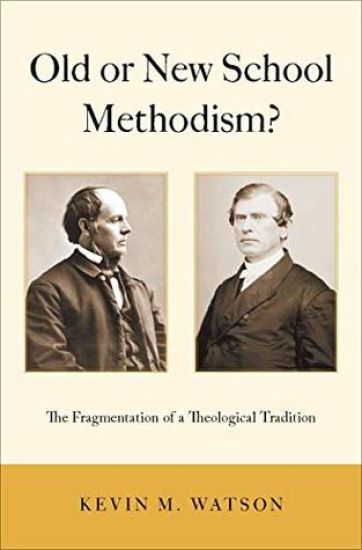
On September 7, 1881, Matthew Simpson, Bishop in the Methodist Episcopal Church, in a London sermon asserted that: "As to the divisions in the Methodist family, there is little to mar the family likeness." Nearly a quarter-century earlier, Benjamin Titus (B.T.) Roberts, a minister in the same branch of Methodism as Simpson, had published an article in the Northern Independent in which he argued that Methodism had split into an "Old School" and "New School." He warned that if the new school were to "generally prevail," then "the glory will depart from Methodism." As a result of this article, Roberts was charged with "unchristian and immoral conduct" and expelled from the Genesee Conference of the Methodist Episcopal Church (MEC). Old or New School Methodism? examines how less than three decades later Matthew Simpson could claim that the basic beliefs and practices that Roberts had seen as threatened were in fact a source of persisting unity across all branches of Methodism. Kevin Watson argues that B. T. Roberts's expulsion from the MEC and the subsequent formation of his Free Methodist Church represent a crucial moment of transition in American Methodism. This book challenges understandings of American Methodism that emphasize its breadth and openness to a variety of theological commitments and underemphasize the particular theological commitments that have made it distinctive and have been the cause of divisions over the past century and a half. Old or New School Methodism? fills a major gap in the study of American Methodism from the 1850s to 1950s through a detailed study of two of the key figures of the period and their influence on the denomination.
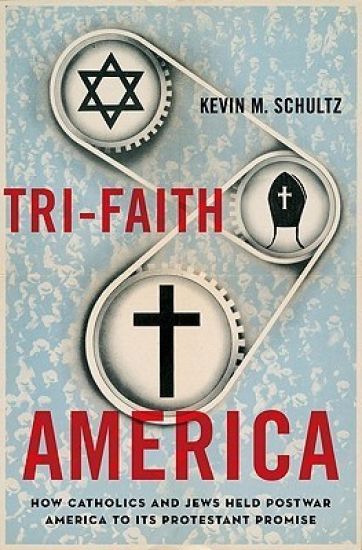
President Franklin D. Roosevelt put it bluntly, if privately, in 1942--the United States was "a Protestant country," he said, "and the Catholics and Jews are here under sufferance." In Tri-Faith America, Kevin Schultz explains how the United States left behind this idea that it was "a Protestant nation" and embraced the notion that Protestants, Catholics, and Jews were "Americans all." Schultz describes how the tri-faith idea surfaced after World War I, promoted by public relations campaigns, interfaith organizations, and the government to the extent that by the end of World War II, the idea was becoming widely accepted--particularly in the armed forces, fraternities, neighborhoods, social organizations, and schools. During the Cold War, the public religiosity spurred by the fight against godless communism led to widespread embrace of tri-faith America. Equally important, Schultz shows how Catholics and Jews in the post-World War II era used tri-faith rhetoric to challenge the nation's established moral authority. Indeed, as Americans began vigorously debating the merits of pluralism, they initiated a social and political climate that would pave the way toward the civil rights movement.
The Romans provides an accessible introduction to the history, society, and scholarship of one of the most captivating and enduring civilizations in human history. From the establishment of the monarchy and the Republican era to the decline of the Empire, this comprehensive volume examines every aspect of Roman culture from both historical and archaeological perspectives. In addition to surveying the well-estbalished subjects of Roman history, author Kevin McGeough discusses the latest events in the archaeological investigation of Rome, such as the recent excavations at the Temple of Castor and Pollux in the Roman Forum and the controversial identification of an ossuary thought by some to hold the body of James, the brother of Jesus. The text is accompanied by carefully chosen illustrations, maps, a glossary, and chronology. Throughout, general readers and students will gain a vivid understanding of Roman civilization and of why it still captures our imagination today.
This collection is a timely reconsideration of the intersection between two of the dominant events of twentieth-century American history, the upheaval wrought by the Second World War and the social revolution brought about by the African American struggle for equality. Scholars from a wide range of fields explore the impact of war on the longer history of African American protest from many angles: from black veterans to white segregationists, from the rural South to northern cities, from popular culture to federal politics, and from the American confrontations to international connections. It is well known that World War II gave rise to human rights rhetoric, discredited a racist regime abroad, and provided new opportunities for African Americans to fight, work, and demand equality at home. It would be all too easy to assume that the war was a key stepping stone to the modern civil rights movement. But the authors show that in reality the momentum for civil rights was not so clear cut, with activists facing setbacks as well as successes and their opponents finding ways to establish more rigid defenses for segregation. While the war set the scene for a mass movement, it also narrowed some of the options for black activists.

This collection is a timely reconsideration of the intersection between two of the dominant events of twentieth-century American history, the upheaval wrought by the Second World War and the social revolution brought about by the African American struggle for equality. Scholars from a wide range of fields explore the impact of war on the longer history of African American protest from many angles: from black veterans to white segregationists, from the rural South to northern cities, from popular culture to federal politics, and from the American confrontations to international connections. It is well known that World War II gave rise to human rights rhetoric, discredited a racist regime abroad, and provided new opportunities for African Americans to fight, work, and demand equality at home. It would be all too easy to assume that the war was a key stepping stone to the modern civil rights movement. But the authors show that in reality the momentum for civil rights was not so clear cut, with activists facing setbacks as well as successes and their opponents finding ways to establish more rigid defenses for segregation. While the war set the scene for a mass movement, it also narrowed some of the options for black activists.
Dispatches from the AIDS Pandemic
Kevin M. De Cock; Harold W. Jaffe; James W. Curran
OXFORD UNIVERSITY PRESS INC
2023
sidottu
Dispatches from the AIDS Pandemic is a unique firsthand account from three public health leaders of CDC's early response to AIDS. Drawing in part on interviews from the CDC's AIDS oral history project, the authors trace the evolution of AIDS from newly recognized disease to pandemic. The first section outlines the earliest days of the epidemic within the United States and the initial prevention strategies. The second section expands the borders of the response to Africa and Thailand, where CDC conducted its first international work on AIDS. The final section closes with an overview of the scientific and public health advancements that followed and the historic community activism that spurred essential funding and partnerships for the development of life-saving interventions. Authentic and insightful, Dispatches from the AIDS Pandemic provides an authoritative account of an epidemic and its central role in the expansion of global public health.
The sacred chest said to have been built by the Israelites to house the stone tablets on which the Ten Commandments were written, the Ark of the Covenant has long captured the popular imagination. According to the Bible, the Israelites carried it with them as they wandered in the wilderness and entered the promised land. After the Temple of Solomon was built, the Ark was kept in an inner sanctum where God made his divine presence felt to the Israelites. The Hebrew Bible is unclear about what happened to the Ark after the destruction of the temple and offers vague accounts of its function. Despite (or because of) this ambiguity, the Ark continues to hold an important place in Jewish and Christian tradition, even in its absence, and has led to much popular speculation. Widely imagined and re-imagined, it is perhaps today best known in popular culture as the object sought by Indiana Jones in the 1981 film Raiders of the Lost Ark. In Readers of the Lost Ark Kevin McGeough explores the different ways people have interpreted and made sense of the Ark from ancient times to the present, in biblical literature, theological discourse, art, popular film, travel souvenirs, toys, faith-healing events, and alternative histories. The book recounts stories of people who have sought to find the Ark of the Covenant and examines how the Ark takes on new meanings in Europe, North America, East Asia, Ethiopia, and the modern Middle East.

This volume provides the most comprehensive treatment of phonological weight to date, bringing together traditional notions of categorical, rime-based weight and new developments in statistical prosodic phonology. The book demonstrates that while some systems treat weight as a simple (heavy vs. light) distinction, others treat it as a rich continuum of heaviness. Following an introduction to weight-sensitive systems in phonology, Kevin Ryan explores the range of phenomena that interact with prosodic weight. Chapters examine the analysis of scales in terms of prominence rather than moraic coercion; prosodic minimality in the context of larger prosodic constituents; syllable weight in metrics; and the relationship between prosodic end-weight and stress. Throughout, the analysis is based on a survey of weight systems both within and across the world's languages, which yields a number of valuable generalizations and points towards a universal theory of weight in human language.
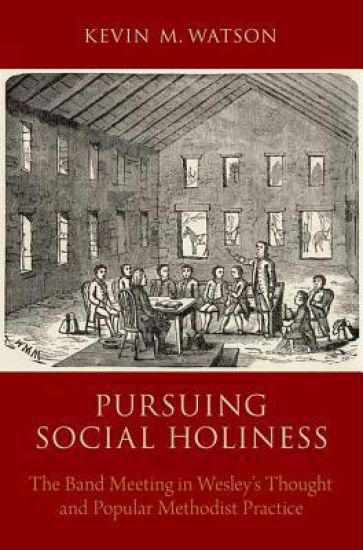
Kevin M. Watson offers the first in-depth examination of the early Methodist band meeting: a small group of five to seven people focusing on the confession of sin in order to grow in holiness. The ''social holiness'' of the band meeting figures significantly both in the development of eighteenth-century British Methodism and in understanding shifting forms of community in the context of rapidly changing British society. Arguing that neither John Wesley's theology nor popular Methodism can be understood independent of each other, Watson shows how Wesley synthesized important aspects of Anglican (an emphasis on a disciplined practice of the means of grace) and Moravian (an emphasis on an experience of justification by faith and the witness of the Spirit) piety in his own version of the band meeting. The small groups were of particular significance in John Wesley's theology of discipleship because the bands united his emphasis on the importance of holiness with his conviction that Christians are most likely to make progress in the Christian life together, rather than in isolation.

President Franklin D. Roosevelt put it bluntly, if privately, in 1942-the United States was "a Protestant country," he said, "and the Catholics and Jews are here under sufferance." In Tri-Faith America, Kevin Schultz explains how the United States left behind this idea that it was "a Protestant nation" and replaced it with a new national image, one premised on the notion that the country was composed of three separate, equally American faiths-Protestants, Catholics, and Jews. Tracing the origins of the tri-faith idea to the early twentieth century, when Catholic and Jewish immigration forced Protestant Social Gospelers to combine forces with Catholic and Jewish relief agencies, Tri-Faith America shows how the tri-faith idea gathered momentum after World War I, promoted by public relations campaigns, interfaith organizations, and the government, to the point where, by the end of World War II and into the early years of the Cold War, the idea was becoming widely accepted, particularly in the armed forces, fraternities, neighborhoods, social organizations, and schools. Tri-Faith America also shows how postwar Catholics and Jews used the new image to force the country to confront the challenges of pluralism. Should Protestant bibles be allowed on public school grounds? Should Catholic and Jewish fraternities be allowed to exclude Protestants? Should the government be allowed to count Americans by religion? Challenging the image of the conformist 1950s, Schultz describes how Americans were vigorously debating the merits of recognizing pluralism, paving the way for the civil rights movement and leaving an enduring mark on American culture.

Alaska pollock is everywhere. If you're eating fish but you don't know what kind it is, it's almost certainly pollock. Prized for its generic fish taste, pollock masquerades as crab meat in California rolls and seafood salads, and it feeds millions as fish sticks in school cafeterias and Filet-O-Fish sandwiches at McDonald's. That ubiquity has made pollock the most lucrative fish harvest in America-the fishery in the United States alone has an annual value of over one billion dollars. But even as the money rolls in, pollock is in trouble: in the last few years, the pollock population has declined by more than half, and some scientists are predicting the fishery's eventual collapse. In "Billion-Dollar Fish", Kevin M. Bailey combines his years of first-hand pollock research with a remarkable talent for storytelling to offer the first natural history of Alaska pollock. Crucial to understanding the pollock fishery, he shows, is recognizing what aspects of its natural history make pollock so very desirable to fish, while at the same time making it resilient, yet highly vulnerable to overfishing. Bailey delves into the science, politics, and economics surrounding Alaska pollock in the Bering Sea, detailing the development of the fishery, the various political machinations that have led to its current management, and, perhaps most important, its impending demise. He approaches his subject from multiple angles, bringing in the perspectives of fishermen, politicians, environmentalists, and biologists, and drawing on revealing interviews with players who range from Greenpeace activists to fishing industry lawyers. Seamlessly weaving the biology and ecology of pollock with the history and politics of the fishery, as well as Bailey's own often raucous tales about life at sea, "Billion-Dollar Fish" is a book for every person interested in the troubled relationship between fish and humans, from the depths of the sea to the dinner plate.