Kirjahaku
Etsi kirjoja tekijän nimen, kirjan nimen tai ISBN:n perusteella.
1000 tulosta hakusanalla Kevin P. Murphy
In a 1907 lecture to Harvard undergraduates, Theodore Roosevelt warned against becoming "too fastidious, too sensitive to take part in the rough hurly-burly of the actual work of the world." Roosevelt asserted that colleges should never "turn out mollycoddles instead of vigorous men," and cautioned that "the weakling and the coward are out of place in a strong and free community." A paradigm of ineffectuality and weakness, the mollycoddle was "all inner life," whereas his opposite, the "red blood," was a man of action. Kevin P. Murphy reveals how the popular ideals of American masculinity coalesced around these two distinct categories. Because of its similarity to the emergent "homosexual" type, the mollycoddle became a powerful rhetorical figure, often used to marginalize and stigmatize certain political actors. Issues of masculinity not only penetrated the realm of the elite, however. Murphy's history follows the redefinition of manhood across a variety of classes, especially in the work of late nineteenth-century reformers, who trumpeted the virility of the laboring classes. By highlighting this cross-class appropriation, Murphy challenges the oppositional model commonly used to characterize the relationship between political "machines" and social and municipal reformers at the turn of the twentieth century. He also revolutionizes our understanding of the gendered and sexual meanings attached to political and ideological positions of the Progressive Era.
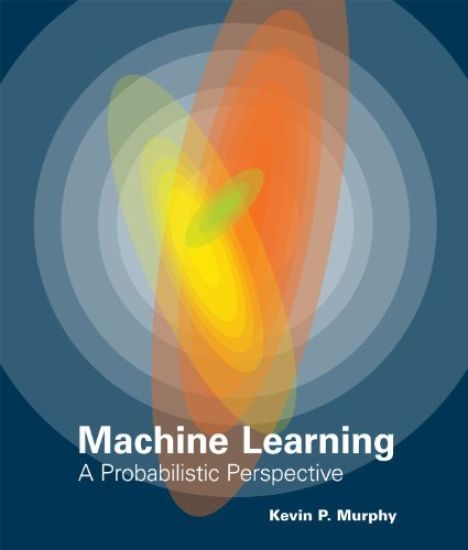
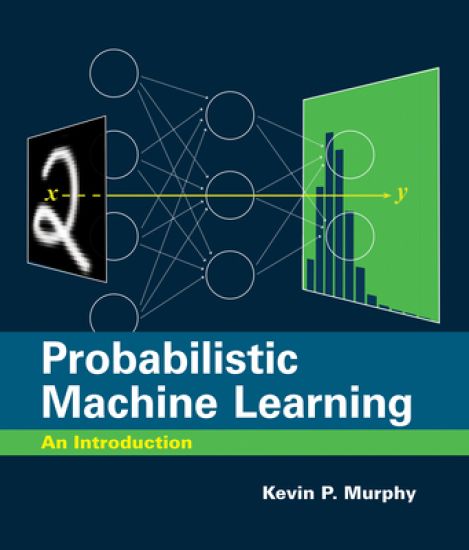
A comprehensive introduction to machine learning that uses probabilistic models and inference as a unifying approach.Today's Web-enabled deluge of electronic data calls for automated methods of data analysis. Machine learning provides these, developing methods that can automatically detect patterns in data and then use the uncovered patterns to predict future data. This textbook offers a comprehensive and self-contained introduction to the field of machine learning, based on a unified, probabilistic approach.The coverage combines breadth and depth, offering necessary background material on such topics as probability, optimization, and linear algebra as well as discussion of recent developments in the field, including conditional random fields, L1 regularization, and deep learning. The book is written in an informal, accessible style, complete with pseudo-code for the most important algorithms. All topics are copiously illustrated with color images and worked examples drawn from such application domains as biology, text processing, computer vision, and robotics. Rather than providing a cookbook of different heuristic methods, the book stresses a principled model-based approach, often using the language of graphical models to specify models in a concise and intuitive way. Almost all the models described have been implemented in a MATLAB software package-PMTK (probabilistic modeling toolkit)-that is freely available online. The book is suitable for upper-level undergraduates with an introductory-level college math background and beginning graduate students.
A detailed and up-to-date introduction to machine learning, presented through the unifying lens of probabilistic modeling and Bayesian decision theory. This book offers a detailed and up-to-date introduction to machine learning (including deep learning) through the unifying lens of probabilistic modeling and Bayesian decision theory. The book covers mathematical background (including linear algebra and optimization), basic supervised learning (including linear and logistic regression and deep neural networks), as well as more advanced topics (including transfer learning and unsupervised learning). End-of-chapter exercises allow students to apply what they have learned, and an appendix covers notation. Probabilistic Machine Learning grew out of the author's 2012 book, Machine Learning: A Probabilistic Perspective. More than just a simple update, this is a completely new book that reflects the dramatic developments in the field since 2012, most notably deep learning. In addition, the new book is accompanied by online Python code, using libraries such as scikit-learn, JAX, PyTorch, and Tensorflow, which can be used to reproduce nearly all the figures; this code can be run inside a web browser using cloud-based notebooks, and provides a practical complement to the theoretical topics discussed in the book. This introductory text will be followed by a sequel that covers more advanced topics, taking the same probabilistic approach.
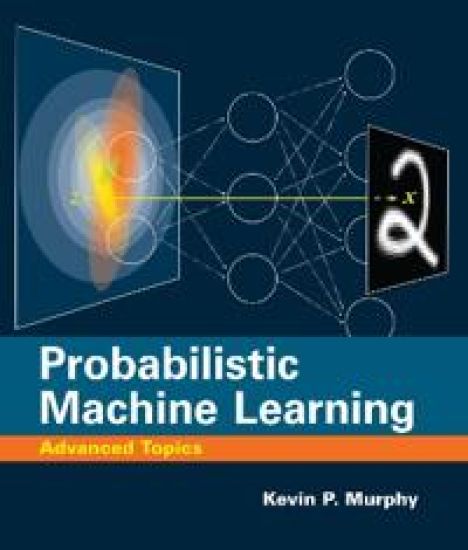
An advanced book for researchers and graduate students working in machine learning and statistics who want to learn about deep learning, Bayesian inference, generative models, and decision making under uncertainty. An advanced counterpart to Probabilistic Machine Learning: An Introduction, this high-level textbook provides researchers and graduate students detailed coverage of cutting-edge topics in machine learning, including deep generative modeling, graphical models, Bayesian inference, reinforcement learning, and causality. This volume puts deep learning into a larger statistical context and unifies approaches based on deep learning with ones based on probabilistic modeling and inference. With contributions from top scientists and domain experts from places such as Google, DeepMind, Amazon, Purdue University, NYU, and the University of Washington, this rigorous book is essential to understanding the vital issues in machine learning. Covers generation of high dimensional outputs, such as images, text, and graphs Discusses methods for discovering insights about data, based on latent variable models Considers training and testing under different distributionsExplores how to use probabilistic models and inference for causal inference and decision makingFeatures online Python code accompaniment
Queering Archives
Kevin P. (EDT) Murphy; Zeb (EDT) Tortorici; Daniel (EDT) Marshall
Duke University Press
2015
pokkari
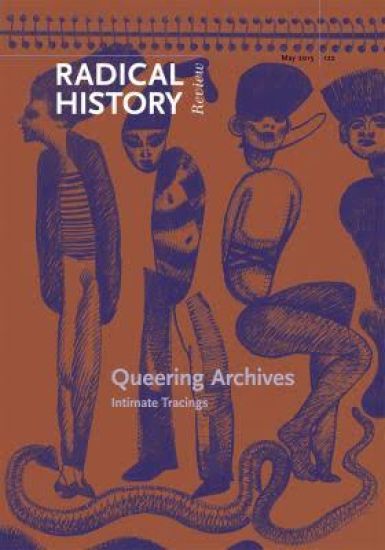
"Queering Archives: Intimate Tracings" is the second of two themed issues from Radical History Review (numbers 120 and 122) that explore the ways in which the notion of the "queer archive" is increasingly crucial for scholars working at the intersection of history, sexuality, and gender. Efforts to record and preserve queer experiences determine how scholars account for the past and provide a framework for understanding contemporary queer life. Essays in these issues consider historical materials from queer archives around the world as well as the recent critical practice of "queering" the archive by looking at historical collections for queer content (and its absence). This issue considers how archives allow historical traces of sexuality and gender to be sought, identified, recorded, and assembled into accumulations of meaning. Contributors explore conundrums in contemporary queer archival methods, probing some of them in essays on the Catholic Church and the Church of Jesus Christ of Latter-Day Saints.This issue also includes a series of intergenerational interviews reflecting on histories of LGBT archives, a roundtable discussion about legacies of queer studies of the archive, and a closing reflection by Joan Nestle, a founding figure in the practice of international queer archiving. Daniel Marshall is Senior Lecturer in the Faculty of Arts and Education at Deakin University, Melbourne. Kevin P. Murphy is Associate Professor of History at the University of Minnesota and a member of the Radical History Review editorial collective. Zeb Tortorici is Assistant Professor of Spanish and Portuguese Languages and Literatures at New York University. Contributors: Rustem Ertug Altinay, Anjali Arondekar, Elspeth H. Brown, Elise Chenier, Howard Chiang, Ben Cowan, Ann Cvetkovich, Sara Davidmann, Leah DeVun, Peter Edelberg, Licia Fiol-Matta, Jack Jen Gieseking, Christina Hanhardt, Robb Hernandez, Kwame Holmes, Regina Kunzel, A. J. Lewis, Martin F. Manalansan IV, Maria Elena Martinez, Michael Jay McClure, Caitlin McKinney, Katherine Mohrman, Joan Nestle, Mimi Thi Nguyen, Tavia Nyong'o, Anthony M. Petro, K. J.Rawson, Barry Reay, Juana Maria Rodriguez, Don Romesburg, Rebecka Sheffield, Marc Stein, Margaret Stone, Susan Stryker, Robert Summers, Jeanne Vaccaro, Dale Washkansky, Melissa White
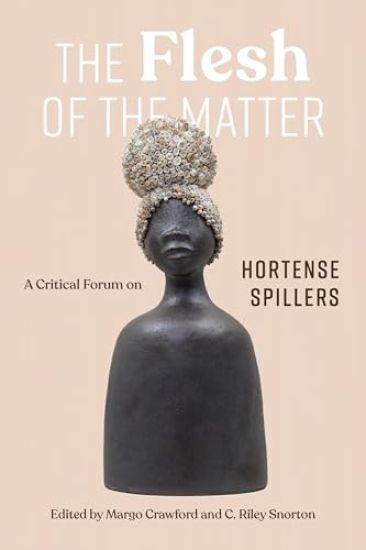
The Flesh of the Matter
Amaris Brown; Thadious M. Davis; Alexis Pauline Gumbs; Sharon P. Holland; Ra Malika Imhotep; Deborah McDowell; Fred Moten; Kiana T. Murphy; Kevin Quashie; Anthony Reed; Shoniqua Roach; Nicole Adeyinka Spigner
VANDERBILT UNIVERSITY PRESS
2024
nidottu
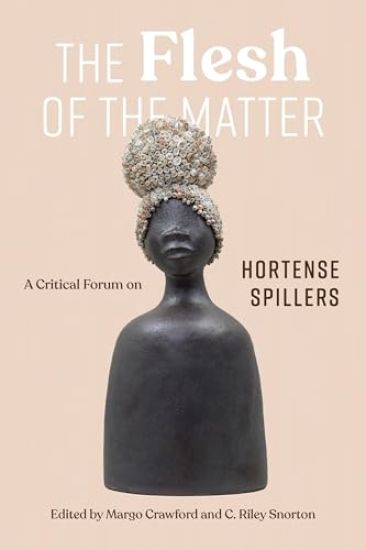
Hortense Spillers is one of the most important literary critics and Black feminist scholars of the last fifty years. Her 1987 scholarly article “Mama’s Baby, Papa’s Maybe: An American Grammar Book” is one of the most-cited essays in African American literary studies. Edited by Margo Natalie Crawford and C. Riley Snorton, The Flesh of the Matter: A Critical Forum on Hortense Spillers is the first collection to take up directly how Spillers’s writing on literature, culture, and theory have been signal posts to the varied and universal threads of Black thought, as well as countless other areas of the academy. Interspersed with archival fragments from Spillers’s papers kept at the Pembroke Center for Feminist Thought at Brown University, the fourteen essays in this collection demonstrate a fidelity to the ways of reading Spillers has taught us, the nomenclature of enslavement keyed into the American lexicon, and the ways that history permeates our cultural boundaries today.
The Flesh of the Matter
Amaris Brown; Thadious M. Davis; Alexis Pauline Gumbs; Sharon P. Holland; Ra Malika Imhotep; Deborah McDowell; Fred Moten; Kiana T. Murphy; Kevin Quashie; Anthony Reed; Shoniqua Roach; Nicole Adeyinka Spigner
VANDERBILT UNIVERSITY PRESS
2024
sidottu
Hortense Spillers is one of the most important literary critics and Black feminist scholars of the last fifty years. Her 1987 scholarly article “Mama’s Baby, Papa’s Maybe: An American Grammar Book” is one of the most-cited essays in African American literary studies. Edited by Margo Natalie Crawford and C. Riley Snorton, The Flesh of the Matter: A Critical Forum on Hortense Spillers is the first collection to take up directly how Spillers’s writing on literature, culture, and theory have been signal posts to the varied and universal threads of Black thought, as well as countless other areas of the academy. Interspersed with archival fragments from Spillers’s papers kept at the Pembroke Center for Feminist Thought at Brown University, the fourteen essays in this collection demonstrate a fidelity to the ways of reading Spillers has taught us, the nomenclature of enslavement keyed into the American lexicon, and the ways that history permeates our cultural boundaries today.
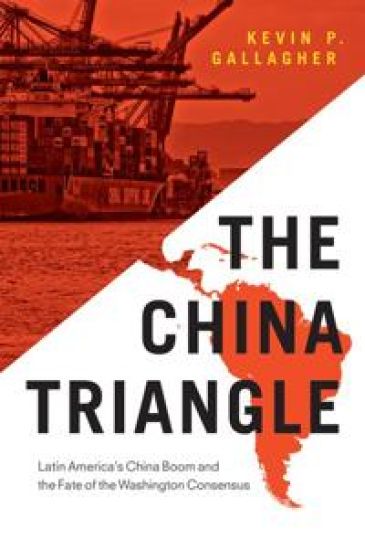
In less than a quarter century, China has gone from one of the poorest to one of the largest economies in the world. As China grew from a rural economy to the largest industrial powerhouse since the Industrial Revolution, it demanded more and more steel for factories and new cities, copper for electronic wires, petroleum for cars and manufacturing plants, and soybeans to feed people and cattle in a country with an increasing standard of living and diversified diet. Many Latin American countries rode China's coattails and prospered. From the turn of the century when China entered the World Trade Organization until 2013, Latin America served as a strategic location that supplied China with these primary commodities and more, allowing it to log one of the region's most impressive periods of economic growth in a fifty years. In The China Triangle, Boston University political economist Kevin P. Gallagher argues that Latin American nations have little to show for riding the coattails of the "China Boom" and now face significant challenges for the next decades as China's economy slows down and transforms itself in a variety of ways. While the region saw significant economic growth due to China's rise over the past decades, Latin Americans saved very little of the windfall profits it earned while the region saw a significant hollowing of its industrial base. What is more, commodity-led growth during the China boom reignited social and environmental conflicts across the region. Scholars and reporters have covered the Chinese expansion into East Asia, Southeast Asia, Australasia, Africa, the US, and Europe. Yet China's penetration Latin America is as little understood as it is significant. Gallagher provides a clear overview of China's growing economic ties with Latin America and points to ways that Latin American nations, China, and even the United States can act in order to make the next decades of China-Latin America economic activity more prosperous for all involved.
This book began when Kevin Timoney noticed a suspicious pattern in data reported by the Alberta Energy Regulator. For tens of thousands of spills, recovery volumes exactly matched the reported spill volumes. In short, the data were too good to be true. And so began a search for the scientific truth about spills. In western North America crude oil and saline water spills – both small and large – occur daily and cause permanent damage to ecosystems that remains largely hidden from public view.Hidden Scourge takes the reader on a journey into a covert world of energy industry spills with environmental incident data from over 100,000 spills in Alberta, Saskatchewan, North Dakota, Montana, and the Northwest Territories. Timoney evaluates the truthfulness of regulatory reporting in light of evidence from peer-reviewed scientific data, original field observations, industrial and government reports, interviews, and documents obtained under freedom of information. In stark contrast to a halcyon picture of prosperity and "world-class" environmental management, the reality is rampant destruction of biodiversity, persistent soil contamination, failed reclamation, and thousands of undocumented spills.Hidden Scourge grounds existential debates about climate and ecological crises in evidence of how hydrocarbon-based economies change the ecosystems where fossil fuels are extracted. The science is clear: the industry consistently damages ecosystems wherever it operates. If energy-industry regulators cannot act independently, honestly, and in the public interest, they profoundly undermine democratic institutions. The result is a legacy of contaminated sites that will burden future generations with great uncertainty and cost.
This book is a poetic journey of my own deepening awareness. Life is about relationships...with ourselves, our family, our friends, our colleagues, our adversaries and with our Higher Power as we understand it. Some poems are lighthearted and some go much deeper. I invite you to journey with this warrior poet down a path that questions life and death, faith and failure and love and loss. See if we don't have more in common than you think.
Kevin Lane discusses the tension existed between China's traditional claim to sovereignty over Hong Kong. He believes that on historical track record China has the capacity for flexibility on Hong Kong that would enable arrangements about its future to work successfully.
Pirates, Merchants, Settlers, and Slaves
Kevin P. McDonald
University of California Press
2015
sidottu
In the late seventeenth and early eighteenth centuries, more than a thousand pirates poured from the Atlantic into the Indian Ocean. There, according to Kevin P. McDonald, they helped launch an informal trade network that spanned the Atlantic and Indian Ocean worlds, connecting the North American colonies with the rich markets of the East Indies. Rather than conducting their commerce through chartered companies based in London or Lisbon, colonial merchants in New York entered into an alliance with Euro-American pirates based in Madagascar. Pirates, Merchants, Settlers, and Slaves explores the resulting global trade network located on the peripheries of world empires and shows the illicit ways American colonists met the consumer demand for slaves and East India goods. The book reveals that pirates played a significant yet misunderstood role in this period and that seafaring slaves were both commodities and essential components in the Indo-Atlantic maritime networks. Enlivened by stories of Indo-Atlantic sailors and cargoes that included textiles, spices, jewels and precious metals, chinaware, alcohol, and drugs, this book links previously isolated themes of piracy, colonialism, slavery, transoceanic networks, and cross-cultural interactions and extends the boundaries of traditional Atlantic, national, world, and colonial histories.
The Railroad Photography of J. Parker Lamb
Kevin P. Keefe
Center for Railroad Photography and Art
2019
sidottu
The Railroad Photography of J. Parker Lamb showcases the black-and-white imagery of a master of the craft. Parker Lamb came of age in the South and the Midwest during a time of great transition on railroads in the United States. New technology was replacing the steam locomotives and labor-intensive practices that had dominating railroading for more than a century. Cameras in hand, Lamb bore witness to the end of that era and continued to vividly portray all that followed. His lyrical photographs depict new diesels, waning passenger trains, blossoming freight business, and many of the people who worked in, and were captivated by, the great American institution of the railroad. A biographical essay by noted transportation journalist Fred W. Frailey explores Lamb's life and photographic contributions, while captions by former Trainsmagazine editor Kevin P. Keefe add context to Lamb's imagery.
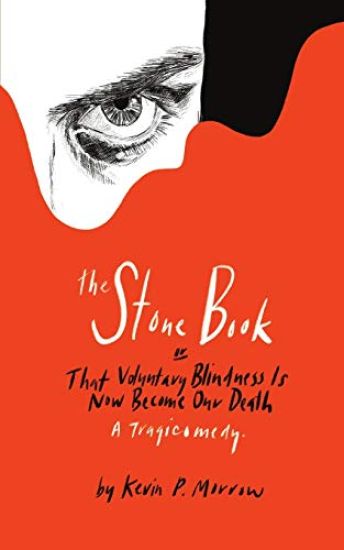
Everyone there is, receives a text message. And that is all that it took, to bring our world to the brink of nuclear conflict. The global public, succumbing to their own irrational conclusions about two esoteric text messages, begin for the first time in their lives, to actually live. The global politic, see this as their new path; an opportunity to carve from a new stone the world they always wanted. The President, crippled with fear, becomes open to the insane doctrines proposed by war-hungry generals. Knowing however, that there must be another path, he seeks the counsel and wisdom of three great minds from long ago. In dream, or reality, over dinner with Thucydides, Democritus, and Zeno, he realizes that it was the fever of fear which dictated his decision-making. Now he must stop a war, that may erase history itself.
Everyone there is, receives a text message. And that is all that it took, to bring our world to the brink of nuclear conflict. The global public, succumbing to their own irrational conclusions about two esoteric text messages, begin for the first time in their lives, to actually live. The global politic, see this as their new path; an opportunity to carve from a new stone, the world they always wanted. The President, crippled with fear, becomes open to the insane doctrines proposed by war-hungry generals. Knowing however, that there must be another path, he seeks the counsel and wisdom of three great minds from long ago. In dream, or reality, over dinner with Thucydides, Democritus, and Zeno, he realizes that it was only the fever of fear, and voluntary blindness towards our collective histories, that dictated his decision-making. Now he must stop a war, that may erase history itself.