Kirjojen hintavertailu. Mukana 11 717 486 kirjaa ja 12 kauppaa.

Kirjahaku

Etsi kirjoja tekijän nimen, kirjan nimen tai ISBN:n perusteella.

1000 tulosta hakusanalla Kieran Egan

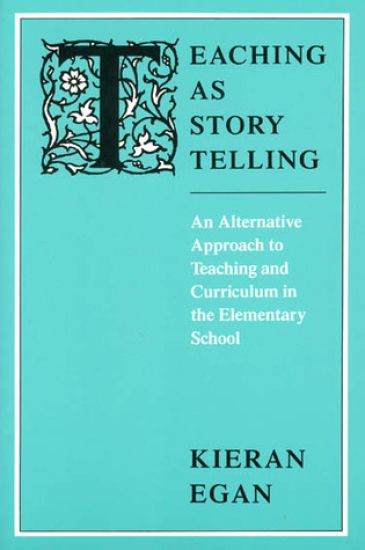
Teaching as Story Telling

Teaching as Story Telling

Kieran Egan

University of Chicago Press
1989
nidottu
"I am very impressed by the practicality of [Egan's] introduction of the use of story-forms in curriculum for young children. His model is fascinating, and its various possibilities in a range of fields makes it worth a good look by many kinds of teachers."—Maxine Greene, Teachers College, Columbia
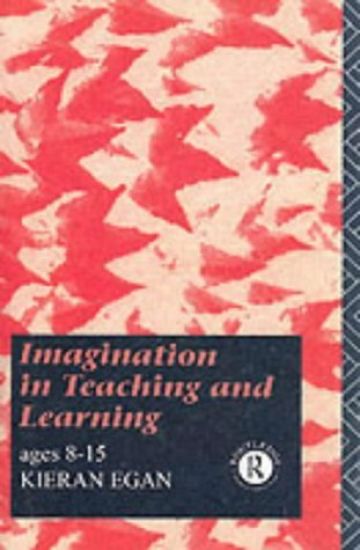
Imagination in Teaching and Learning

Imagination in Teaching and Learning

Kieran Egan

University of Chicago Press
1992
pokkari
It is widely believed that a child's imagination ought to bestimulated and developed in education. Yet, few teachersunderstand what imagination is or how it lends itself topractical methods and techniques that can be used easily inclassroom instruction. In this book, Kieran Egan winner ofthe prestigious Grawemeyer Award for his work onimagination takes up where his "Teaching as Story Telling"left off, offering practical help for teachers who want toengage, stimulate, and develop the imaginative and learningprocesses of children between the ages of eight to fifteen. This book is not about unusually imaginative students andteachers. Rather, it is about the typical student'simaginative life and how it can be stimulated in learning, how the average teacher can plan to achieve this aim, and howthe curriculum can be structured to help achieve this aim.Slim and determinedly practical, this book contains a wealthof concrete examples of curriculum design and teachingtechniques structured to appeal specifically to children intheir middle school years."
The Educated Mind

The Educated Mind

Kieran Egan

University of Chicago Press
1998
nidottu
The ills of education are caused, this text argues, by the fact that we have inherited three major educational ideas, each of which is incompatible with the other two. These mutual incompatibilities, it continues, bring about clashes at every level of the educational process, from curriculum decisions to teaching methods. The text presents an alternative. It concludes with practical proposals for how teaching and curriculum should be changed to reflect this new conception and fit in with how we actually learn.
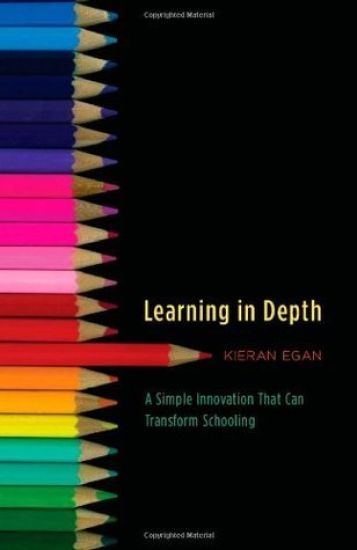
Learning in Depth

Learning in Depth

Kieran Egan

University of Chicago Press
2011
sidottu
For generations, schools have aimed to introduce students to a broad range of topics through curricula that ensure that they will at least have some acquaintance with most areas of human knowledge by the time they graduate. Yet such broad knowledge can't help but be somewhat superficial - and, as Kieran Egan argues, it omits a crucial aspect of true education: deep knowledge. Real education, Egan explains, consists of both general knowledge and detailed understanding, and in "Learning in Depth" he outlines an ambitious yet practical plan to incorporate deep knowledge into basic education. Under Egan's program, students will follow the usual curriculum, but with one crucial addition: beginning with their first days of school and continuing until graduation, they will each also study one topic - such as apples, birds, sacred buildings, mollusks, circuses, or stars - in depth. Over the years, with the help and guidance of their supervising teacher, students will expand their understanding of their one topic and build portfolios of knowledge that grow and change along with them.By the time they graduate each student will know as much about his or her topic as almost anyone on earth - and in the process will have learned important, even life-changing lessons about the meaning of expertise, the value of dedication, and the delight of knowing something in depth. Though Egan's program may be radical in its effects, it is strikingly simple to implement - as a number of schools have already discovered - and with "Learning in Depth" as a blueprint, parents, educators, and administrators can instantly begin taking the first steps toward transforming our schools and fundamentally deepening their students' minds.
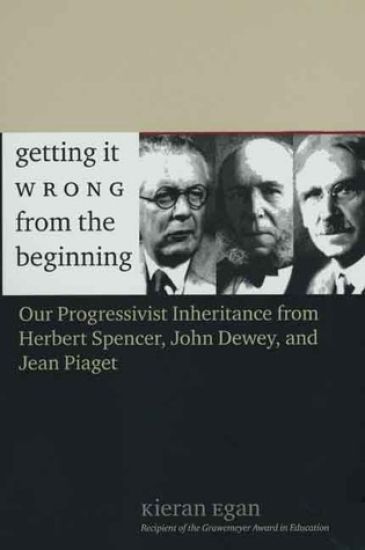
Getting It Wrong from the Beginning

Getting It Wrong from the Beginning

Kieran Egan

Yale University Press
2004
pokkari
The ideas upon which public education was founded in the last half of the nineteenth century were wrong. And despite their continued dominance in educational thinking for a century and a half, these ideas are no more right today. So argues one of the most original and highly regarded educational theorists of our time in Getting It Wrong from the Beginning. Kieran Egan explains how we have come to take mistaken concepts about education for granted and why this dooms our attempts at educational reform. Egan traces the nineteenth-century sources of Progressive thinking about education and their persistence even now. He diagnoses the problem with our schools in a radically different way, and likewise prescribes novel alternatives to present educational practice. His book is both persuasive and full of promise—a book that belongs on the must-read list for anyone who cares about the success of our schools.
Imagination in Teaching and Learning
Young people learn most readily when their imaginations are engaged and teachers teach most successfully when they are able to see their subject matter from their pupils' point of view. It is, however, difficult to define imagination in practice and even more difficult to make full use of its potential.In this original and stimulating book, Kieran Egan, winner of the prestigous Grawemeyer award for education in 1991, discusses what imagination really means for children and young people in the middle years and what its place should be in the midst of the normal demands of classroom teaching and learning. Egan uses a bright and witty style to move from a brief history of the ways in which imagination has been regarded over the years, through a general discussion of the links between learning and imagination. A selection of sample lesson plans show teachers how they can encourage effective learning through stimulating pupils' imaginations in a variety of curriculum areas, including maths, science, social studies and language work.
Individual Development and the Curriculum
This book describes four ‘layers’ or stages of education – Mythic, Romantic, Philosophic and Ironic and shows how children at each stage most effectively learn, and how they can be helped towards educational maturity. While drawing on a wide range of philosophical and psychological literature, this new theory is primarily constructed from close observation of children in their common and intense imaginative engagements, and in everyday educational practice.
Primary Understanding

Primary Understanding

Kieran Egan

Routledge
2011
sidottu
Beginning with descriptions of the ways in which children make sense of their experience and the world, such as fantasy, stories and games, Egan constructs his argument that constituting this foundational layer are sets of cultural sense-making capacities, reflected in oral cultures throughout the world. Egan sees education as the acquisition of these sets of sense-making capacities, available in our culture, and his goal is to conceptualize primary education in a way that over comes the dichotomy between progressivisim and traditionalism, attending both the needs of the individual child and the accumulation of knowledge.
Individual Development and the Curriculum
This book describes four ‘layers’ or stages of education – Mythic, Romantic, Philosophic and Ironic and shows how children at each stage most effectively learn, and how they can be helped towards educational maturity. While drawing on a wide range of philosophical and psychological literature, this new theory is primarily constructed from close observation of children in their common and intense imaginative engagements, and in everyday educational practice.
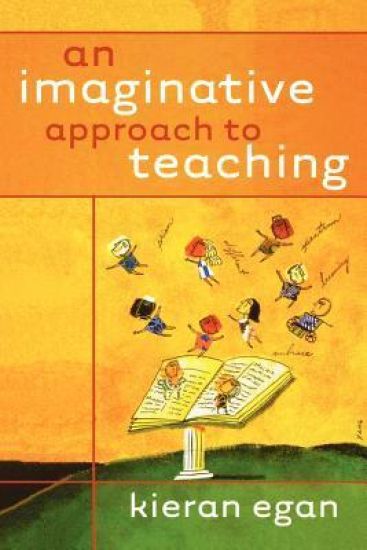
An Imaginative Approach to Teaching

An Imaginative Approach to Teaching

Kieran Egan

John Wiley Sons Inc
2010
nidottu
In this book, award-winning educator Kieran Egan shows how we can transform the experience of K-12 students and help them become more knowledgeable and more creative in their thinking. At the core of this transformative process is imagination which can become the heart of effective learning if it is tied to education's central tasks. An Imaginative Approach to Teaching is a groundbreaking book that offers an understanding of how students' imaginations work in learning and shows how the acquisition of cognitive tools drives students' educational development. This approach is unique in that it engages both the imagination and emotions. The author clearly demonstrates how knowledge comes to life in students' minds if it is introduced in the context of human hopes, fears, and passions. To facilitate this new educational approach, the book includes a wide variety of effective teaching tools - such as story, rhythm, play, opposition, agency, and meta-narrative understanding - that value and build upon the way children understand their experiences. Most important, Egan provides frameworks for lesson planning and more than a dozen sample lessons to show how teachers can use these tools to awaken intelligence and imagination in the classroom.
Whole School Projects

Whole School Projects

Kieran Egan

Teachers' College Press
2014
nidottu
In this new and practical contribution to the importance of imagination in learning, Kieran Egan and his colleagues demonstrate how individual contributions to a coherent large-scale project can produce enormous results of great educational value. Helping all participants to feel pride for more than just their own individual work, such Whole School Projects (WSPs) encourage appreciation for the abilities of others and enable everyone involved to recognize that all kinds of learning styles, intelligences, and ability levels play an important part in constructing the whole. Most important, WSPs invigorate student engagement and build community within a school. The authors describes a program for engaging a whole school in a particular project over a three-year period and outline the educational principles and benefits. Providing examples of schools successfully using WSPs, they examine the detailed practices needed to get such a project up and running in a typical school. While the Whole School Project is distinct from the regular curriculum, it can help achieve many of the year’s curriculum objectives in mathematics, literacy, science and technology, social studies, art, and history. Finally, teachers can choose to incorporate their curriculum aims into the project study, even when those aims include meeting externally mandated achievement standards.
Whole School Projects

Whole School Projects

Kieran Egan

Teachers' College Press
2014
sidottu
In this new and practical contribution to the importance of imagination in learning, Kieran Egan and his colleagues demonstrate how individual contributions to a coherent large-scale project can produce enormous results of great educational value. Helping all participants to feel pride for more than just their own individual work, such Whole School Projects (WSPs) encourage appreciation for the abilities of others and enable everyone involved to recognize that all kinds of learning styles, intelligences, and ability levels play an important part in constructing the whole. Most important, WSPs invigorate student engagement and build community within a school. The authors describes a program for engaging a whole school in a particular project over a three-year period and outline the educational principles and benefits. Providing examples of schools successfully using WSPs, they examine the detailed practices needed to get such a project up and running in a typical school. While the Whole School Project is distinct from the regular curriculum, it can help achieve many of the year’s curriculum objectives in mathematics, literacy, science and technology, social studies, art, and history. Finally, teachers can choose to incorporate their curriculum aims into the project study, even when those aims include meeting externally mandated achievement standards.
Primary Understanding

Primary Understanding

Kieran Egan

Routledge
2014
nidottu
Beginning with descriptions of the ways in which children make sense of their experience and the world, such as fantasy, stories and games, Egan constructs his argument that constituting this foundational layer are sets of cultural sense-making capacities, reflected in oral cultures throughout the world. Egan sees education as the acquisition of these sets of sense-making capacities, available in our culture, and his goal is to conceptualize primary education in a way that over comes the dichotomy between progressivisim and traditionalism, attending both the needs of the individual child and the accumulation of knowledge.
Imagination in Teaching and Learning
Young people learn most readily when their imaginations are engaged and teachers teach most successfully when they are able to see their subject matter from their pupils' point of view. It is, however, difficult to define imagination in practice and even more difficult to make full use of its potential.In this original and stimulating book, Kieran Egan, winner of the prestigous Grawemeyer award for education in 1991, discusses what imagination really means for children and young people in the middle years and what its place should be in the midst of the normal demands of classroom teaching and learning. Egan uses a bright and witty style to move from a brief history of the ways in which imagination has been regarded over the years, through a general discussion of the links between learning and imagination. A selection of sample lesson plans show teachers how they can encourage effective learning through stimulating pupils' imaginations in a variety of curriculum areas, including maths, science, social studies and language work.
Amplified Silence

Amplified Silence

Kieran Egan

Silver Bow Publishing
2021
pokkari
Amplified Silence is a mellow offering of poetry surveying a variety of natural and human landscapes both domestic and international. Egan explores life and the living in expansive depth, with vivid insight and the gentle brush of humour. In these poems, In these poems the volume-level of silence evolves to speak through life's hazy shadows with the clear-eyed awareness of a sparkling magnifying glass. Kieran Egan excels at exploring the pleasures of memory as well as the sorrows of aging, There are many diverse journeys encompassed in this book enhanced with flashes of grace and the gratitude felt by the author for a life well-lived. These poignant poems will long linger in the mind of the reader and continue to draw the reader back to open the book yet again, as time passes ... then passes again.
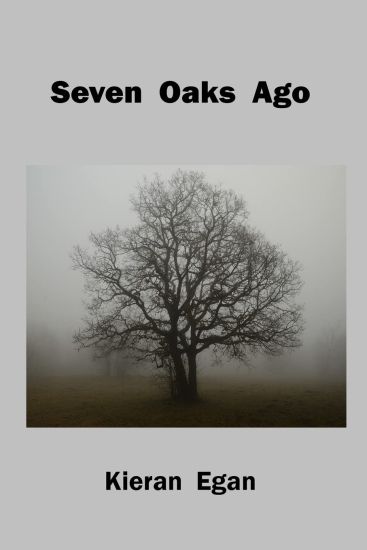
Seven Oaks Ago

Seven Oaks Ago

Kieran Egan

Silver Bow Publishing
2022
pokkari
"The past reaches forward" was an alternative title for this book. It catches the sense of past, present, and future being bound together in ways not always evident to creatures attached somewhere in the line of events through which we daily live. T.S. Eliot puts it better in the opening lines of 'Burnt Norton': "Time present and time past/ Are both perhaps present in time future/ And time future contained in time past." Well, this is a heavyweight and somewhat pretentious way to describe an intended feature of many of these poems in which the sequences of time are prominent. This book is divided into five sections: 'Times recently past'; 'Times further past'; 'Journeys, Travels, Travails'; 'Trees, Birds, Fish, and Things'; 'Conflicts'. While these sections bring together poems that share themes, the prevailing concern with our sense of time and its bewilderments is present throughout. The first set of poems gives a context for my own sense of the 'now' I have been living in, but this is unreliable, and there is a shifting sense of the author. Poetry, in short, is as often a sub-branch of fiction as it is of auto/biography-reader beware. The topics for the next section may seem further in the past, but I hope are also just as present as in the first section. And while the remaining three sections open out more to the world and its particularities, an undercurrent remains of the temporal mysteries that are touched on throughout and in which, willy-nilly, we are caught.
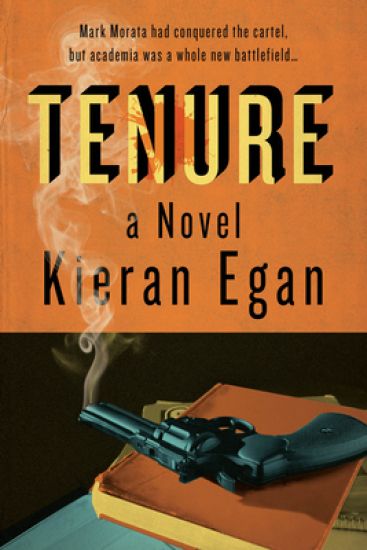
Tenure

Tenure

Kieran Egan

NeWest Press
2021
pokkari
Saved from certain death on the Whistler-Vancouver highway after his luxury car malfunctions, Mark Morata feels honour-bound to reward his rescuer, Geoff Pybus, with a token of his undying gratitude. Geoff, a frustratingly humble university professor, happy with his family's lot in life, only wants the impossible: for his modest, straightforward wife to get tenure at her university.Luckily, Mark is a man for whom impossible is just another word. As a sophisticated importer-exporter of certain recreational substances (drug lord is such a clich ), Mark gets to work on the academic world with the same relentless nature that helped him climb to the top of the cartel. However, the hallowed campus halls reveal an environment that is vicious and corrupt beyond anything he has ever encountered in the drug business...Kieran Egan's Tenure is a wildly entertaining satire mash-up, where campus culture collides with crime.
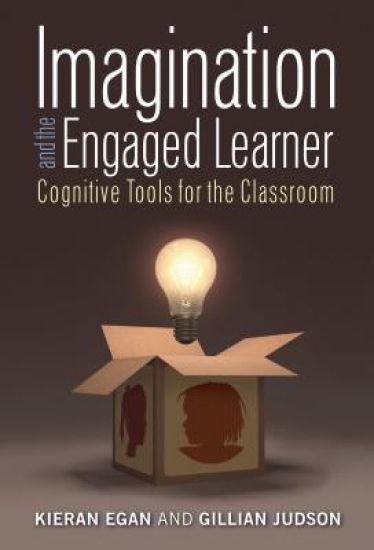
Imagination and the Engaged Learner

Imagination and the Engaged Learner

Kieran Egan; Gillian Judson

Teachers' College Press
2015
nidottu
Students’ imaginations are often considered as something that might be engaged after the hard work of learning has been done. Countering such beliefs, Egan and Judson show that the imagination—one of the great workhorses of learning—can be used to make all learning and all teaching more effective.Through techniques that any teacher can learn and easily apply in any classroom, they demonstrate how and why imagination can be used across the curriculum and grade levels to make teaching and learning more interesting, engaging, and pleasurable for all. Teachers who use these techniques will discover the emotions, images, stories, metaphors, sense of wonder, heroic narratives, and other cognitive tools that can bring life and energy to their classroom. This practical handbook will help teachers learn how to use these enlivening techniques in their daily practice to stimulate students’ intellectual activity and growth.
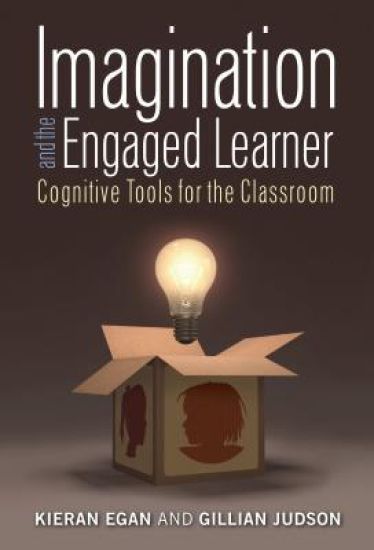
Imagination and the Engaged Learner

Imagination and the Engaged Learner

Kieran Egan; Gillian Judson

Teachers' College Press
2015
sidottu
Students’ imaginations are often considered as something that might be engaged after the hard work of learning has been done. Countering such beliefs, Egan and Judson show that the imagination—one of the great workhorses of learning—can be used to make all learning and all teaching more effective.Through techniques that any teacher can learn and easily apply in any classroom, they demonstrate how and why imagination can be used across the curriculum and grade levels to make teaching and learning more interesting, engaging, and pleasurable for all. Teachers who use these techniques will discover the emotions, images, stories, metaphors, sense of wonder, heroic narratives, and other cognitive tools that can bring life and energy to their classroom. This practical handbook will help teachers learn how to use these enlivening techniques in their daily practice to stimulate students’ intellectual activity and growth.
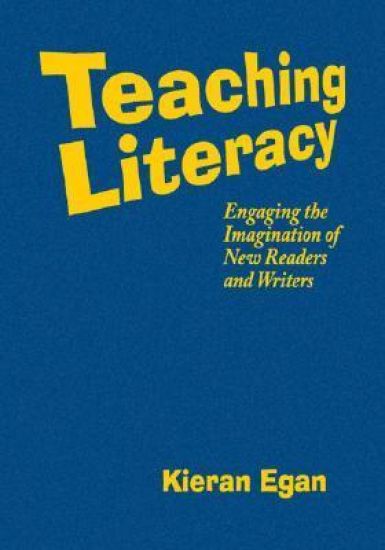
Teaching Literacy

Teaching Literacy

Egan Kieran

SAGE Publications Inc
2006
sidottu
'A fascinating piece of writing, presenting ideas that are fresh and exciting' - Katherine Taddie Kelly, Literacy Coach and Reading Interventionist, Waco Independent School District, TX 'Focuses on enhancing students' metalinguistic awareness and not just their intuitive use of words, fostering the development of higher mental functions' - Elena Bodrova, Senior Researcher, McREL For teachers charged with the great responsibility of helping students achieve basic literacy, delivering instruction in stimulating and engaging ways is not an ideal - it's a necessity. Recognizing this, award-winning author and teacher Kieran Egan puts the fun in fundamentals of literacy by helping teachers stir students' imagination and emotions. In Teaching Literacy, Egan rejects the notion that familiar ideas and experiences are the best vehicles for effective instruction. Instead, he champions a new approach that focuses on teaching core literacy skills using concepts ranging from fascinating to exotic to magnificent to weird. By framing the elements of literacy in the unforgettable, students more readily retain material, not only preparing them for tests, but also instilling a lifelong love of reading and writing. This innovative resource supplies answers to the question, "But how do I do it?" by offering: o Tried-and-tested activities from practising classroom teachers o "Teachers, Try It Out" features with teaching challenges (and an appendix of possible responses) for everyday classroom practice o Step-by-step planning frameworks for designing and delivering engaging literacy instruction Combining playfulness with practicality and creativity with common sense, Egan's strategies apply to beginning readers at any age, bringing about authentic, enjoyable learning experiences.