Kirjojen hintavertailu. Mukana 11 244 527 kirjaa ja 12 kauppaa.

Kirjahaku

Etsi kirjoja tekijän nimen, kirjan nimen tai ISBN:n perusteella.

1000 tulosta hakusanalla Kimberly M. Blaeser

Gerald Vizenor

Gerald Vizenor

Kimberly M. Blaeser

University of Oklahoma Press
2012
nidottu
Gerald Vizenor, the most prolific Native American writer of this century, has produced more than twenty-five books in genres as varied as fiction, journalism, haiku, and literary theory. The first book-length study devoted to this important author, Gerald Vizenor: Writing in the Oral Tradition lays the groundwork essential for understanding his complex work.Kimberly M. Blaeser begins with an examination of Vizenor's concept of Native American oral culture and his unique incorporation of oral tradition in the written word. She then explicates Vizenor's method of linking the traditional oral aesthetic with reader-response theories and details Vizenor's efforts to produce a form of writing that resists static meaning, involves the writer in the creation of the literary moment, and invites political action. She also explores the place of Vizenor's work within the larger contexts of contemporary tribal literature, Native American scholarship, and critical theory.Individual chapters examine Vizenor's renditions of the Native American trickster figure in his fiction; analyze his employment of a network of critical, social, and literary subtexts within the larger text; and explain the sometimes difficult ""Vizenorese,"" a complex of terms that characterize people and ideas. Blaeser offers explanations of the origins, meanings, and dialogic purposes of a variety of terms, such as manifest manners, dead voices, word cinemas, terminal creeds, and socioacupuncture.Blaeser's is the first study to reveal the full importance of haiku in Vizenor's work. His poetry, which draws equally from Zen aesthetics and Ojibway dream songs, contains concise, economical descriptions, made up equally of absence and presence-a style characterictic of Vizenor's writing in other genres as well.Based upon scholarship, close reading, and interviews with Vizenor himself, and written by a Native scholar of Vizenor's own tribe, this book explicates Vizenor's ideas, methods, and forms, making even his most sophisticated arguments accessible to the general reader.
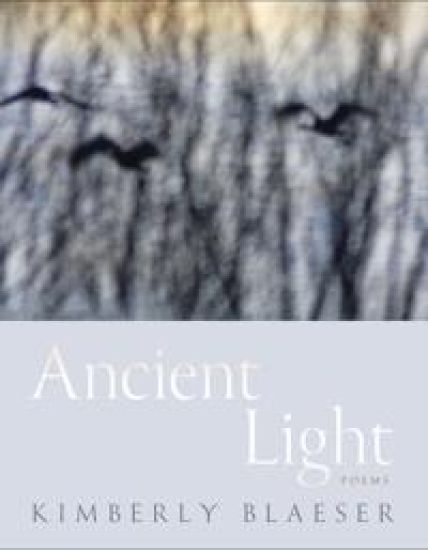
Ancient Light

Ancient Light

Kimberly Blaeser

University of Arizona Press
2024
nidottu
Elegiac and powerful, Ancient Light uses lyric, narrative, and concrete poems to give voice to some of the most pressing ecological and social issues of our time. With vision and resilience, Kimberly Blaeser’s poetry layers together past, present, and futures. Against a backdrop of pandemic loss and injustice, MMIW (Missing and Murdered Indigenous Women), hidden graves at Native American boarding schools, and destructive environmental practices, Blaeser’s innovative poems trace pathways of kinship, healing, and renewal. They celebrate the solace of natural spaces through sense-laden geo-poetry and picto-poems. With an Anishinaabe sensibility, her words and images invoke an ancient belonging and voice the deep relatedness she experiences in her familiar watery regions of Minnesota. The collection invites readers to see with a new intimacy the worlds they inhabit. Blaeser brings readers to the brink, immerses them in the darkest regions of the Anthropocene, in the dangerous fallacies of capitalism, and then seeds hope. Ultimately, as the poems enact survivance, they reclaim Indigenous stories and lifeways.
Copper Yearning

Copper Yearning

Kimberly Blaeser

Holy Cow Press
2019
nidottu
Copper Yearning invests itself in a compassionate dual vision--bearing witness to the lush beauty of our intricately woven environments and to the historical and contemporary perils that threaten them. Kimberly Blaeser's fourth collection of poetry deftly reflects her Indigenous perspective and a global awareness. Through vividly rendered images, the poems dwell among watery geographies, alive to each natural nuance, alive also to the uncanny. Set in fishing boats, in dreams, in prisons, in memory, or in far flung countries like Bahrain, the pieces sing of mythic truths and of the poignant everyday injustices. But, whether resisting threats to effigy mounds or inhabiting the otherness of river otter, ultimately they voice a universal longing for a place of balance, a way of being in the world--for the ineffable.
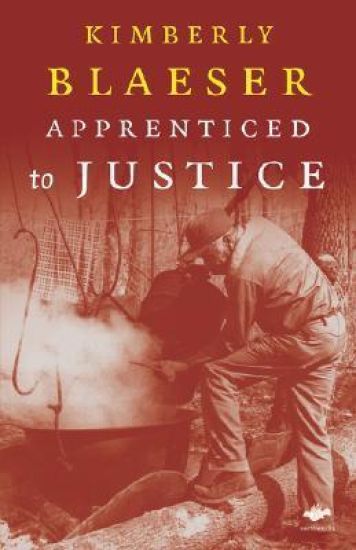
Apprenticed to Justice

Apprenticed to Justice

Kimberly Blaeser

Salt Publishing
2007
nidottu
Apprenticed to Justice is a collection of vividly rendered lyrical and narrative poems that trace the complex inheritances of Indigenous America, this “strange map drawn of blood and history.” It opens with intriguing glimpses of individuals—a mother “born of dawn / in a reckless moon of miscegenation,” cousins “who rotated authority / on marbles sex and skunk etiquette,” women “planting dreams with dank names like rutabaga and kohlrabi”—and it turns on the notion of legacy. From what dark turmoil of earth do we emerge? How and what do we inherit? To what mesh of tangled origins do we live apprenticed? These are the literal and the metaphorical questions Anishinaabe author Kimberly Blaeser asks in this, her third collection of poetry. Grounded in rich details of places from the Boundary Waters Canoe Area Wilderness to the arctic region of Kirkenes, Norway, the poems link the people and the landscapes through storytelling. Narratives range from the comedy of a missing outhouse floor to the longing for the return of an MIA. The storied landscapes of the poems, the “Rocky bottom allotted land(s) / twenty-eight slow horse miles / from the village store,” also become intertwined with tribal history. And the remembered tribal accounts of scorched earth campaigns or the Trail of Tears in their turn become enmeshed with contemporary justice issues including Potlatch’s relentless clear cutting of forest lands and the strange cannibalism inherent in Sr. Inez Hilger’s study of “other” cultures like that at Blaeser’s home, White Earth Reservation. Ultimately, attention to these justice issues invoke the lives of tribal elders whose figurative “fragile houses / pegged at the corners with only hope” somehow represent and teach survival. Finally, each movement in the book connects back to the act of writing, to the poems themselves as both remembrance and a kind of revolution—“these fingers / drumming on keys.”
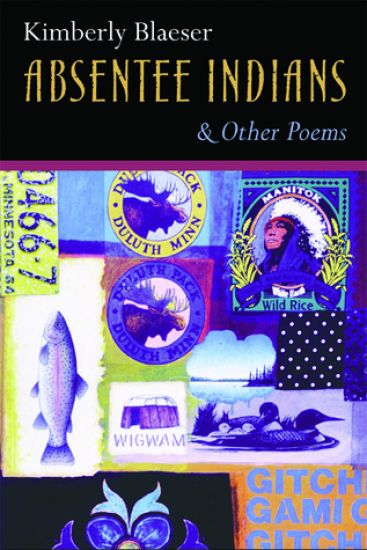
Absentee Indians and Other Poems

Absentee Indians and Other Poems

Blaeser Kimberly

Michigan State University Press
2002
nidottu
This book evokes personal yet universal experiences of the places that Native Americans call home, their family and national histories, and the emotional forces that help forge Native American identities. These are poems of exile, loss, and the celebration of that which remains. Anchored in the physical landscape, Blaeser's poetry finds the sacred in those ordinary actions that bind a community together. As Blaeser turns to the mysterious passage from sleeping to wakefulness, or from nature to spirit, she reveals not merely the movement from one age or place to another, but the movement from experience to vision.
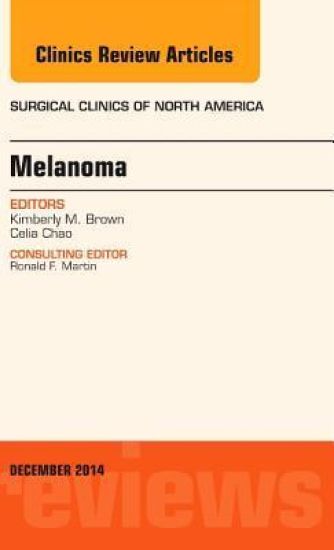
Melanoma, An Issue of Surgical Clinics

Melanoma, An Issue of Surgical Clinics

Kimberly M. Brown

Elsevier - Health Sciences Division
2014
sidottu
Editors Kimberly Brown and Celia Chao and authors review the latest in Melanoma. Articles will include Epidemiology, Risk Factors, Prevention, and Early Detection; Work-up and Staging of Malignant Melanoma; Principles of Surgical Treatment of Malignant Melanoma; Surviving Cutaneous Melanoma; Locoregional Therapies; Melanoma Vaccines; The Role of Radiation Therapy in Melanoma; Systemic Therapy in Melanoma; Unusual Presentations of Melanoma; Surgical Treatment Options for Stage IV Melanoma; Head and Neck Melanoma; Melanoma in Non-Caucasian Populations and more!
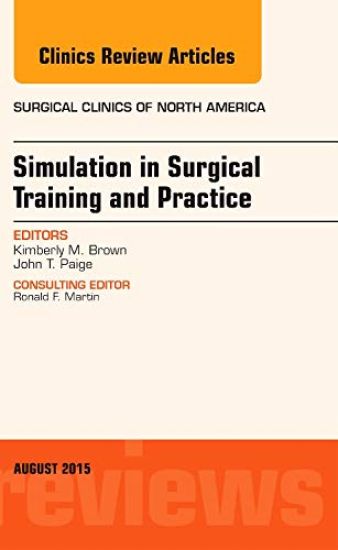
Simulation in Surgical Training and Practice, An Issue of Surgical Clinics

Simulation in Surgical Training and Practice, An Issue of Surgical Clinics

Kimberly M. Brown

Elsevier - Health Sciences Division
2015
sidottu
Simulation in Surgical Training and Practice is reviewed extensively in this important Surgical Clinics of North America issue. Articles include: Applying Educational Theory to Simulation Based Training and Assessment in Surgery; Figuring out Team Simulation Training; Faculty Development for Simulation Training; The Evolving Role of Simulation in Teaching Surgery in Undergraduate Medical Education; Using Simulation in Inter-Professional Education; Current Status of Simulation Based Training in Graduate Medical Education; National Simulation-based Training of Fellows: The Vascular Surgery Example; Paying For it: Funding Models for Simulation Centers; Surgical Simulation Centers as Educational Homes for Practicing Surgeons; Better Assessment: Advanced Engineering Technology for Measuring Performance In and Out of the Simulation Lab; Moving the Needle - Simulation's Impact on Patient Outcomes; Human Factors Engineering and Effective Simulation - Partners for Improved Patient Safety; Simulation for the Assessment and Improvement of Teamwork and Communication in the Operating Room; Using Simulation to Improve Systems; Simulation for Maintenance of Certification; and more!
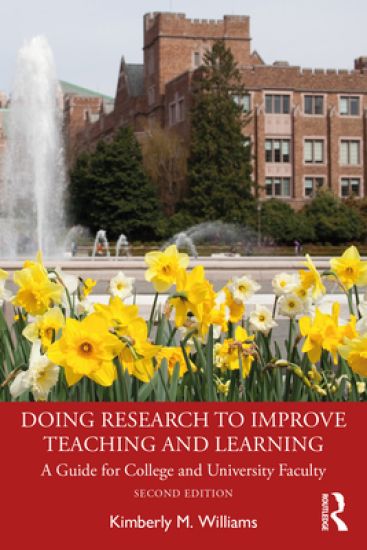
Doing Research to Improve Teaching and Learning
In this rapidly changing teaching and learning environment, one of the most promising ways for faculty at institutions of higher education to improve their teaching is to capitalize upon their skills as researchers. This book is a step-by-step guide for doing research to inform and improve teaching and learning.With background and instruction about how to engage in these methodologies—including historical analyses, qualitative, quantitative and mixed methods—the second edition of Doing Research to Improve Teaching and Learning discusses a process of working collaboratively and reflectively to improve one’s teaching craft. Full of updated, authentic examples from research studies, student work and instructor reflections, this valuable resource equips faculty with the skills to collect and use data and evidence-based instructional methods in any college and university classroom.
Doing Research to Improve Teaching and Learning
In this rapidly changing teaching and learning environment, one of the most promising ways for faculty at institutions of higher education to improve their teaching is to capitalize upon their skills as researchers. This book is a step-by-step guide for doing research to inform and improve teaching and learning.With background and instruction about how to engage in these methodologies—including historical analyses, qualitative, quantitative and mixed methods—the second edition of Doing Research to Improve Teaching and Learning discusses a process of working collaboratively and reflectively to improve one’s teaching craft. Full of updated, authentic examples from research studies, student work and instructor reflections, this valuable resource equips faculty with the skills to collect and use data and evidence-based instructional methods in any college and university classroom.
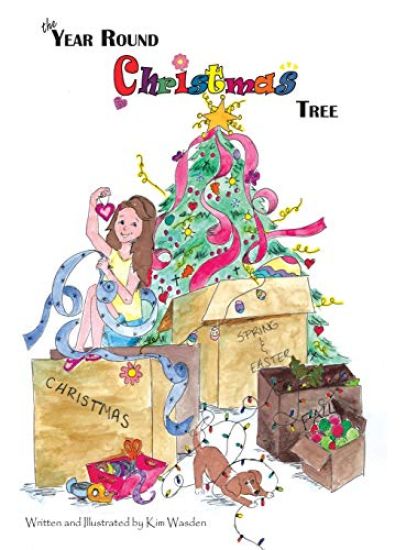
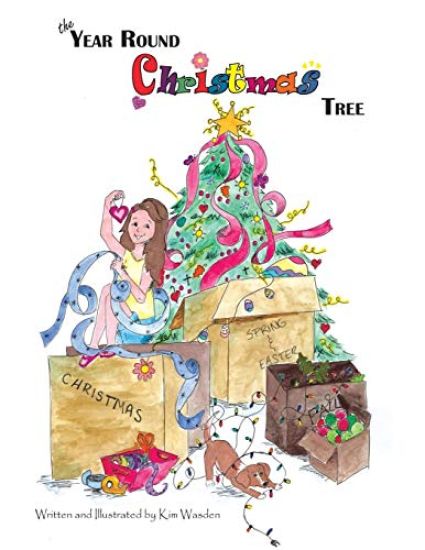
The Year Round Christmas Tree

The Year Round Christmas Tree

Kimberly M Wasden

Kimberly Wasden
2020
sidottu
Join Paige, as she discovers one hot summer day a family tradition that will keep her interested and busy for three-hundred-sixty-five days After Paige helps her mom get a large box down from the attic, she is told a story about her grandmother that she has never heard before. As Paige and her mom stay busy being creative, this story sweetly leads Paige through the four seasons as Paige finds appreciation of family and life around her. As the story progresses, Paige hears the most important story we can all know: the story of the Gospel. The reader is invited to join in the creativity as the instructions for the ornaments and decorations are included in the back of the book.
The Year Round Christmas Tree

The Year Round Christmas Tree

Kimberly M Wasden

Kimberly Wasden
2020
pokkari
Join Paige, as she discovers one hot summer day a family tradition that will keep her interested and busy for three-hundred-sixty-five days After Paige helps her mom get a large box down from the attic, she is told a story about her grandmother that she has never heard before. As Paige and her mom stay busy being creative, this story sweetly leads Paige through the four seasons as Paige finds appreciation of family and life around her. As the story progresses, Paige hears the most important story we can all know: the story of the Gospel. The reader is invited to join in the creativity as the instructions for the ornaments and decorations are included in the back of the book.
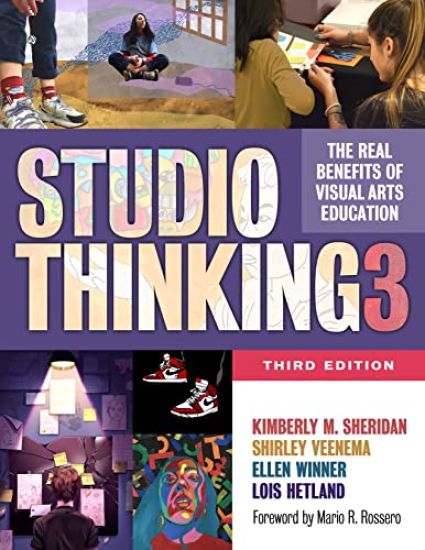
Studio Thinking 3

Studio Thinking 3

Kimberly M. Sheridan; Shirley Veenema; Ellen Winner; Lois Hetland; Mario R. Rossero

TEACHERS' COLLEGE PRESS
2022
nidottu
Studio Thinking 3 is a new edition of a now-classic text, a research-based account of teaching and learning in high school studio arts classes. It poses a framework that identifies eight habits of mind taught in visual arts and four studio structures by which they are taught. This edition includes new material about how the framework has been used since the original study, with new perspectives from artist-teachers who currently apply the Studio Thinking Framework in their own practice. It also reviews how contemporary organizations, educators, and researchers outside the arts have utilized the framework, highlighting its flexibility to inform teaching and learning. The authors have added a new chapter on assessment to introduce the practical and thoughtful ways that teachers are using Studio Thinking to assess and evaluate students' work, working processes, and thinking in the arts.The first edition of this bestseller was featured in The New York Times and The Boston Globe for its groundbreaking research on the positive effects of art education on student learning across the curriculum. Studio Thinking 3 will help advocates explain arts education to policymakers, support art teachers in developing and refining their teaching and assessment practices, and assist educators in other disciplines to learn from existing practices in arts education.Book Features:An explanation of "art as thinking" that unpacks and clarifies how teaching art is the process of teaching thinking.An account of what Studio Thinking looks like in diverse contemporary settings.Models of studio arts instruction that illuminate what educators are doing to support students' learning in the arts and why they are doing it that way. A new chapter with rich examples of approaches to assessment.New analyses on how studio art teachers support learner agency. Updated examples from practice showing how artist-teachers are using the Studio Thinking Framework.Full-color images with examples of student art.
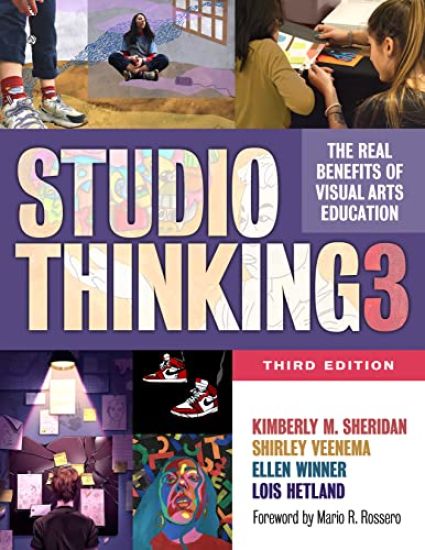
Studio Thinking 3

Studio Thinking 3

Kimberly M. Sheridan; Shirley Veenema; Ellen Winner; Lois Hetland; Mario R. Rossero

TEACHERS' COLLEGE PRESS
2022
sidottu
Studio Thinking 3 is a new edition of a now-classic text, a research-based account of teaching and learning in high school studio arts classes. It poses a framework that identifies eight habits of mind taught in visual arts and four studio structures by which they are taught. This edition includes new material about how the framework has been used since the original study, with new perspectives from artist-teachers who currently apply the Studio Thinking Framework in their own practice. It also reviews how contemporary organizations, educators, and researchers outside the arts have utilized the framework, highlighting its flexibility to inform teaching and learning. The authors have added a new chapter on assessment to introduce the practical and thoughtful ways that teachers are using Studio Thinking to assess and evaluate students' work, working processes, and thinking in the arts.The first edition of this bestseller was featured in The New York Times and The Boston Globe for its groundbreaking research on the positive effects of art education on student learning across the curriculum. Studio Thinking 3 will help advocates explain arts education to policymakers, support art teachers in developing and refining their teaching and assessment practices, and assist educators in other disciplines to learn from existing practices in arts education.Book Features:An explanation of "art as thinking" that unpacks and clarifies how teaching art is the process of teaching thinking.An account of what Studio Thinking looks like in diverse contemporary settings.Models of studio arts instruction that illuminate what educators are doing to support students' learning in the arts and why they are doing it that way. A new chapter with rich examples of approaches to assessment.New analyses on how studio art teachers support learner agency. Updated examples from practice showing how artist-teachers are using the Studio Thinking Framework.Full-color images with examples of student art.