Kirjojen hintavertailu. Mukana 11 342 296 kirjaa ja 12 kauppaa.

Kirjahaku

Etsi kirjoja tekijän nimen, kirjan nimen tai ISBN:n perusteella.

1000 tulosta hakusanalla Knut Alfsvåg

Christology as Critique

Christology as Critique

Knut Alfsvag

Pickwick Publications
2018
pokkari
If the origin of the world is not a part of the world, what are the implications for our understanding of ourselves, the world, and its origin? In antiquity, both gentile and Christian authors agreed that the significance of this question could only be maintained by accepting the unbridgeable difference between the world and God. Not even Christology as the most ambitious attempt at developing a model for divine-human communication was allowed to undermine the principle of absolute divine difference. This changed with the modern emphasis on univocity and measurability as the defining aspects of knowledge. From the point of view of a philosophy of absolute difference, this appears as an arbitrary loss of perspective. By focusing on four authors--Cusanus, Luther, Hamann, and Kierkegaard--who have explored how the Christian and paradoxical understanding of Christ as eternal God and true human subverts the modern emphasis on unambiguity and definability, the present investigation makes an attempt to retrieve what has been lost. Classical Christology as interpreted by these authors thus appears as an indispensable tool for receiving and appreciating the gift of the world in a way that is not unduly limited by anthropocentric prejudice. ""Alfsvag's work is a further contribution to the deconstruction of modernity. It draws on the critical and constructive potential of premodern insights deployed by Cusanus and Luther and retrieved by Hamann and Kierkegaard. These insights, in line with Scripture and Chalcedonian Christology, are then applied to key theological problems today. The book, which I highly recommend, is accessible to the general reader but written for the scholar."" --Jeffrey Silcock, Australian Lutheran College / University of Divinity ""In this volume Knut Alfsvag tests the relationship between Christianity, and more specifically Christology, and other modes of recent thought by a deep yet focused examination of the relevant positions of Nicolas of Cusa, Martin Luther, Johann Hamann, and Soren Kierkegaard . . . Ultimately, Alfsvag argues that we would do well to consider the ties to created realities that ground the arguments of the early church as well as these select theologians, as we consider our own scientific, philosophical, and theological positions."" --Tim Dost, Concordia Seminary, St. Louis, Missouri ""What is the relationship between the world and the human? Against the irrationality of modernism this study proffers a surprising answer: the indispensability of Christology. Drawing on a line of counter-cultural thinkers, Alfsvag draws out the implications for our time in stimulating fashion. This is a study of gravitas, with far-reaching significance."" --Gordon L. Isaac, Gordon Conwell Theological Seminary Knut Alfsvag is Professor of Systematic Theology at VID Specialized University, Stavanger, Norway. His research focuses on questions concerning the understanding of God and theological method, and the relation between the two. He is the author of the book What No Mind Has Conceived: On the Significance of Christological Apophaticism (2010).
Christology as Critique

Christology as Critique

Knut Alfsvag

Pickwick Publications
2018
sidottu
If the origin of the world is not a part of the world, what are the implications for our understanding of ourselves, the world, and its origin? In antiquity, both gentile and Christian authors agreed that the significance of this question could only be maintained by accepting the unbridgeable difference between the world and God. Not even Christology as the most ambitious attempt at developing a model for divine-human communication was allowed to undermine the principle of absolute divine difference. This changed with the modern emphasis on univocity and measurability as the defining aspects of knowledge. From the point of view of a philosophy of absolute difference, this appears as an arbitrary loss of perspective. By focusing on four authors--Cusanus, Luther, Hamann, and Kierkegaard--who have explored how the Christian and paradoxical understanding of Christ as eternal God and true human subverts the modern emphasis on unambiguity and definability, the present investigation makes an attempt to retrieve what has been lost. Classical Christology as interpreted by these authors thus appears as an indispensable tool for receiving and appreciating the gift of the world in a way that is not unduly limited by anthropocentric prejudice. ""Alfsvag's work is a further contribution to the deconstruction of modernity. It draws on the critical and constructive potential of premodern insights deployed by Cusanus and Luther and retrieved by Hamann and Kierkegaard. These insights, in line with Scripture and Chalcedonian Christology, are then applied to key theological problems today. The book, which I highly recommend, is accessible to the general reader but written for the scholar."" --Jeffrey Silcock, Australian Lutheran College / University of Divinity ""In this volume Knut Alfsvag tests the relationship between Christianity, and more specifically Christology, and other modes of recent thought by a deep yet focused examination of the relevant positions of Nicolas of Cusa, Martin Luther, Johann Hamann, and Soren Kierkegaard . . . Ultimately, Alfsvag argues that we would do well to consider the ties to created realities that ground the arguments of the early church as well as these select theologians, as we consider our own scientific, philosophical, and theological positions."" --Tim Dost, Concordia Seminary, St. Louis, Missouri ""What is the relationship between the world and the human? Against the irrationality of modernism this study proffers a surprising answer: the indispensability of Christology. Drawing on a line of counter-cultural thinkers, Alfsvag draws out the implications for our time in stimulating fashion. This is a study of gravitas, with far-reaching significance."" --Gordon L. Isaac, Gordon Conwell Theological Seminary Knut Alfsvag is Professor of Systematic Theology at VID Specialized University, Stavanger, Norway. His research focuses on questions concerning the understanding of God and theological method, and the relation between the two. He is the author of the book What No Mind Has Conceived: On the Significance of Christological Apophaticism (2010).
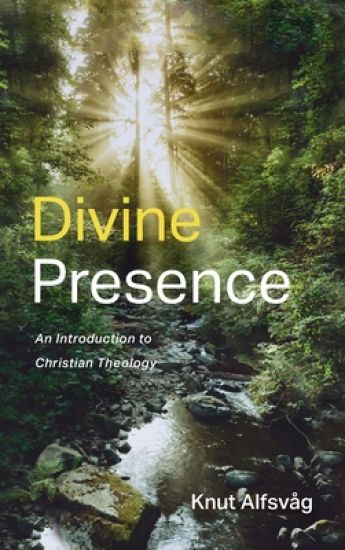
Divine Presence

Divine Presence

Knut Alfsvag

Wipf Stock Publishers
2021
pokkari
Theology should be at home both in the academy and in the church. This book takes such dual affiliation seriously and lets the two different contexts illuminate each other. It explores how we should understand theology within the context of the current debate on theory of science and discusses the methodological implications of belief in God as Creator and in the incarnation. The first part of the book concludes by examining the consequences of theology's dual affiliation for the self-understanding of believers in general and theologians in particular. The second part deals with four different sources of theological knowledge and their relation to each other: the Bible, the history of the church, experience, and reason. Among the central issues are the status of the Bible in contemporary theology, the unity of the church, and the relationship between theology and the natural sciences. The central question is: where do we experience divine presence?
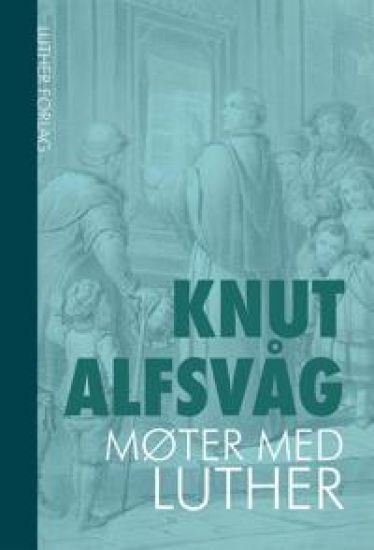
Møter med Luther

Møter med Luther

Knut Alfsvåg

Luther
2017
nidottu
Martin Luther er en av den europeiske historiens mest innflytelsesrike personer. Hva gjorde ham så viktig? Hva var det ved hans tro og tanke som gjorde at han fikk slik innflytelse? Kan hans måte å gripe an sin tids utfordringer på, ha noe å si oss i møte med vår tids utfordringer? Denne boken er et forsøk på å tenke gjennom disse spørsmålene på en måte som stimulerer og utfordrer til debatt.
Bibelen uten filter

Bibelen uten filter

Knut Alfsvåg

Efrem Forlag
2020
nidottu
Det er et grunnleggende trekk ved Bibelen at Gud framstilles som giver og mennesket som mottager. Guds ords forsvar for alle menneskers likeverd faller ikke uten videre sammen med vår tids likestillingsideologi. Å hengi seg til en bibelinspirert virkelighetsforståelse betyr derfor at en nærmer seg spørsmålet om alle menneskers likeverd fra en synsvinkel som ikke automatisk gir fortrinnsrett til moderne, liberal protestantisme. Denne boken er et forsøk på å tenke gjennom hva en slik tilnærming innebærer. Knut Alfsvåg er professor i systematisk teologi ved VID Misjonshøyskolen i Stavanger. Gud, modernitet og post-modernitet er noen av hans tema som forfatter og fore-dragsholder.
«Den tyske teologi»

«Den tyske teologi»

Joachim F. Grun; Knut Alfsvåg; Martin Luther

Efrem Forlag
2024
nidottu
Denne boken, som her utgis for første gang på norsk, kan takke Martin Luther for sin popularitet og berømmelse. Han kom nemlig over dette skriftet da han selv strevde med å finne fram i teologiens brokete verden – og ble meget begeistret. Her hadde han funnet en anonym forfatter som satte søkelys på det sentrale i troen og som gjorde det uten å bruke lærd, latinsk terminologi. Derfor kalte han boken «Den tyske teologi».Mange har siden tatt del i Luthers begeistring, så skriftet er blitt utgitt mange ganger og på mange språk. Bokens budskap er at virkeligheten er Guds virkelighet og at vi bare oppfatter virkeligheten rett om vi ser den slik. Derfor må egoisme og en selvsentrert livsholdning bekjempes. Dette leder imidlertid ikke til virkelighetsflukt, men til kjærlighetens tjeneste. Et mottagende liv i vår tid er en bevegelse henimot enhet over konfesjonsgrenser. I kampen for å realisere dette er Jesus vårt forbilde.Oversettelsen er gjort av Knut Alfsvåg, som er professor i teologi ved VID vitenskapelige høyskole i Stavanger. Han har også skrevet bokens innledning. I et etterord reflekterer Joachim Grun, som har arbeidet med retreater og åndelig veiledning i mange år, over bokens betydning for Kristusmystikken, og hvordan vi kan utfordres av den.
Knut

Knut

Michael Kubik

tredition GmbH
2025
pokkari
Es geht im KNUT um Knut und seinen Mitbewohnern. Knut ist ein pedantischer Sonderling, der mit der Genauigkeit seiner Sprache f r skurrile Situationen sorgt.
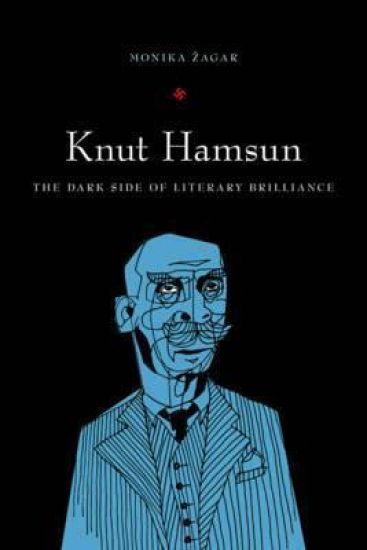
Knut Hamsun

Knut Hamsun

Monika Žagar

University of Washington Press
2009
sidottu
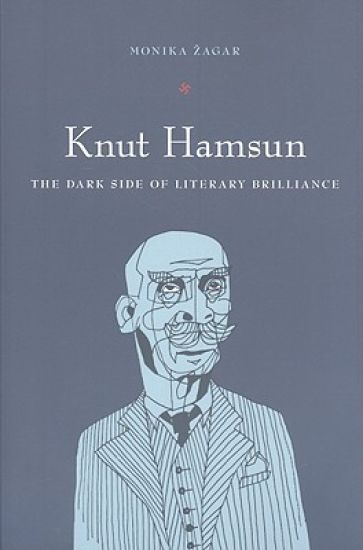
Awarded the Nobel Prize for Literature in 1920, Knut Hamsun (1859–1952) was a towering figure of Norwegian letters. He was also a Nazi sympathizer and supporter of the German occupation of Norway during the Second World War. In 1943, Hamsun sent his Nobel medal to Third-Reich propaganda minister Joseph Goebbels as a token of his admiration and authored a reverential obituary for Hitler in May 1945. For decades, scholars have wrestled with the dichotomy between Hamsun's merits as a writer and his infamous ties to Nazism.In her incisive study of Hamsun, Monika Zagar refuses to separate his political and cultural ideas from an analysis of his highly regarded writing. Her analysis reveals the ways in which messages of racism and sexism appear in plays, fiction, and none-too-subtle nonfiction produced by a prolific author over the course of his long career. In the process, Zagar illuminates Norway's changing social relations and long history of interaction with other peoples.Focusing on selected masterpieces as well as writings hitherto largely ignored, Zagar demonstrates that Hamsun did not arrive at his notions of race and gender late in life. Rather, his ideas were rooted in a mindset that idealized Norwegian rural life, embraced racial hierarchy, and tightly defined the acceptable notion of women in society. Making the case that Hamsun's support of Nazi political ideals was a natural outgrowth of his reactionary aversion to modernity, Knut Hamsun serves as a corrective to scholarship treating Hamsun's Nazi ties as unpleasant but peripheral details in a life of literary achievement.
Knut Hamsun

Knut Hamsun

Monika Žagar

University of Washington Press
2009
pokkari
Awarded the Nobel Prize for Literature in 1920, Knut Hamsun (1859–1952) was a towering figure of Norwegian letters. He was also a Nazi sympathizer and supporter of the German occupation of Norway during the Second World War. In 1943, Hamsun sent his Nobel medal to Third-Reich propaganda minister Joseph Goebbels as a token of his admiration and authored a reverential obituary for Hitler in May 1945. For decades, scholars have wrestled with the dichotomy between Hamsun's merits as a writer and his infamous ties to Nazism.In her incisive study of Hamsun, Monika Zagar refuses to separate his political and cultural ideas from an analysis of his highly regarded writing. Her analysis reveals the ways in which messages of racism and sexism appear in plays, fiction, and none-too-subtle nonfiction produced by a prolific author over the course of his long career. In the process, Zagar illuminates Norway's changing social relations and long history of interaction with other peoples.Focusing on selected masterpieces as well as writings hitherto largely ignored, Zagar demonstrates that Hamsun did not arrive at his notions of race and gender late in life. Rather, his ideas were rooted in a mindset that idealized Norwegian rural life, embraced racial hierarchy, and tightly defined the acceptable notion of women in society. Making the case that Hamsun's support of Nazi political ideals was a natural outgrowth of his reactionary aversion to modernity, Knut Hamsun serves as a corrective to scholarship treating Hamsun's Nazi ties as unpleasant but peripheral details in a life of literary achievement.
Knut Hamsun

Knut Hamsun

Ingar Sletten Kolloen

Yale University Press
2009
sidottu
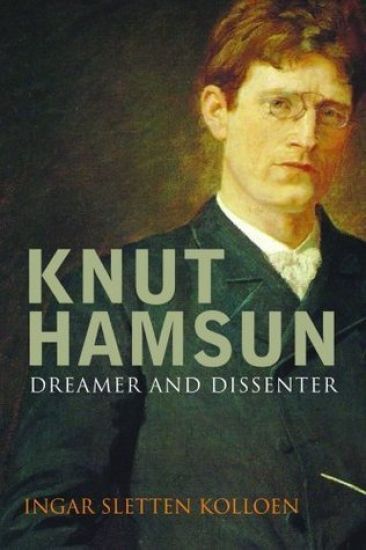
An absorbing biography of Nobel Prize–winning novelist Knut Hamsun, based on a wealth of previously unavailable sources Norwegian writer Knut Hamsun (1859–1952), winner of the Nobel Prize for Literature in 1920, was a man both brilliant and controversial. Lauded for his literary achievements by Hemingway, Gide, Hesse, and others, he also provoked outrage for his open collaboration with the Fascists during the German occupation of Norway and for his insistent refusal to renounce his Nazi sympathies.This gripping biography of Hamsun, now available for the first time in English, offers a nuanced account of this morally ambiguous man. Drawing on Hamsun’s extraordinary private archives and on his psychoanalyst’s notes, Ingar Sletten Kolloen delves deeply into Hamsun’s personal life and character. In vivid and telling detail, he describes Hamsun’s early years in a peasant farming family, his tempestuous and jealousy-racked second marriage, his erratic relationship with his children, and his infamous love affair with Nazi Germany, the roots of which Kolloen traces to Hamsun’s earliest days. Much like the characters he created in novels such as Hunger, Growth of the Soil, Mysteries, and Pan, Hamsun was irrational, eccentric, strange, and compelling—a man uncomfortable in his own time.
Knut Wicksell
This collection brings together the major secondary literature on this crucial figure. The range and quality of the articles collected indicates the richness of Wicksell's work and the importance of his legacy.
Knut Wicksell on the Causes of Poverty and its Remedy
Knut Wicksell is arguably the greatest Swedish social scientist of all time, and poverty was a theme that occupied him all his life. Indeed, it was probably Wicksell's interest in poverty that was the critical factor in drawing him away from his purely mathematical background towards a greater understanding of the social sciences as a whole.In this outstanding volume, Mats Lundahl, one of the world's leading development economists, examines Wicksell's thinking in the area of poverty, and shows the importance of his contributions to this field.
Knut Wicksell on the Causes of Poverty and its Remedy
Knut Wicksell is arguably the greatest Swedish social scientist of all time, and poverty was a theme that occupied him all his life. Indeed, it was probably Wicksell's interest in poverty that was the critical factor in drawing him away from his purely mathematical background towards a greater understanding of the social sciences as a whole.In this outstanding volume, Mats Lundahl, one of the world's leading development economists, examines Wicksell's thinking in the area of poverty, and shows the importance of his contributions to this field.
Knut Wicksell

Knut Wicksell

Bo Sandelin

Routledge
2011
sidottu
Knut Wicksell made enormous contributions to capital theory, monetary theory and fiscal policy. However whilst his books are widely available in English, few of his more than 800 articles have ever been translated. This volume, first published in 1997, includes new translations of Wicksell's contributions to marginalism and capital theory; public economics and unemployment.
Knut Wicksell

Knut Wicksell

Routledge
2011
sidottu
This book, along with its predecessor, makes most of Wicksell's most important contributions accessible to English speaking readers for the first time. The essays collected here, first published in 1999, focus on money and price theory and include Wicksell's book reviews of Leon Walrus, Ludwig von Mises and John Bates Clark.
Knut Wicksell: Selected Essays Volumes 1 & 2
Knut Wicksell was one of the most influential economists of the twentieth century, making major contributions to price theory, monetary theory and capital theory. A prolific and diverse thinker, his ideas were to inspire the Stockholm School, the Austrian School and mainstream neo-classical economics.Although most of his major books have now been translated into English, relatively few of his essays have. These two volumes, first published in 1997 and 1999, made many of Wicksell's most important contributions accessible to the English speaking reader for the first time and this reissue will be welcomed by economists at all levels.These volumes contain translations of articles originally written in Swedish and German which focus on:*marginalism and capital theory*public economics*unemployment*money and price theory* population* Wicksell's book reviews, including reviews of Leon Walras, Ludwig von Mises and John Bates Clark.
Knut Wicksell

Knut Wicksell

Bo Sandelin

Routledge
2012
nidottu
Knut Wicksell made enormous contributions to capital theory, monetary theory and fiscal policy. However whilst his books are widely available in English, few of his more than 800 articles have ever been translated. This volume, first published in 1997, includes new translations of Wicksell's contributions to marginalism and capital theory; public economics and unemployment.