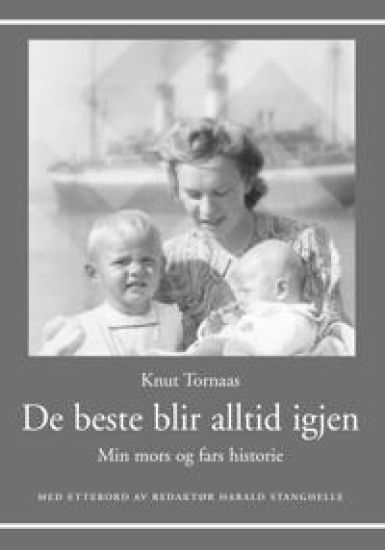
12. mars 1943 ble hjemmefrontmannen Knut Tornaas arrestert av tyskerne. Etter forhør og fengselsopphold på Møllergata 19 og Grini ble han sendt med troppetransportskipet "Monte Rosa" til Tyskland. Først til KZ-leiren Natzweiler og deretter til KZ-leiren Dachau. Her døde Knut Karstein Tornaas av tyfus 28. februar 1945. Forfatteren Knut Tornaas ble født 26. mai 1943, og har derfor aldri møtt sin far. I denne boka forteller han hvordan moren og faren hans møtte hverandre og om deres korte samliv. Fordi faren ikke overlevde oppholdet i konsentrasjonsleirene, må han bruke overlevende fangers beskrivelse av de umenneskelige lidelsene de ble utsatt for. Som lektor har Knut Tornaas reist med sine elever på besøk til konsentrasjonsleirene, og han anbefaler alle å ta turen med De hvite bussene eller Aktive Fredsreiser. Basert på egne erfaringer har han også laget arbeidsoppgaver for dem som vil arbeide videre med stoffet. Redaktør Harald Stanghelle har skrevet etterord til boka.
Es geht im KNUT um Knut und seinen Mitbewohnern. Knut ist ein pedantischer Sonderling, der mit der Genauigkeit seiner Sprache f r skurrile Situationen sorgt.
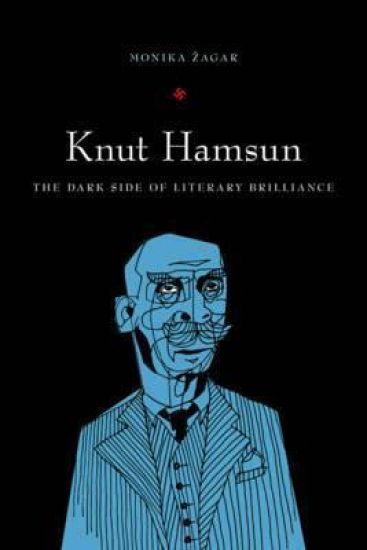
Awarded the Nobel Prize for Literature in 1920, Knut Hamsun (1859–1952) was a towering figure of Norwegian letters. He was also a Nazi sympathizer and supporter of the German occupation of Norway during the Second World War. In 1943, Hamsun sent his Nobel medal to Third-Reich propaganda minister Joseph Goebbels as a token of his admiration and authored a reverential obituary for Hitler in May 1945. For decades, scholars have wrestled with the dichotomy between Hamsun's merits as a writer and his infamous ties to Nazism.In her incisive study of Hamsun, Monika Zagar refuses to separate his political and cultural ideas from an analysis of his highly regarded writing. Her analysis reveals the ways in which messages of racism and sexism appear in plays, fiction, and none-too-subtle nonfiction produced by a prolific author over the course of his long career. In the process, Zagar illuminates Norway's changing social relations and long history of interaction with other peoples.Focusing on selected masterpieces as well as writings hitherto largely ignored, Zagar demonstrates that Hamsun did not arrive at his notions of race and gender late in life. Rather, his ideas were rooted in a mindset that idealized Norwegian rural life, embraced racial hierarchy, and tightly defined the acceptable notion of women in society. Making the case that Hamsun's support of Nazi political ideals was a natural outgrowth of his reactionary aversion to modernity, Knut Hamsun serves as a corrective to scholarship treating Hamsun's Nazi ties as unpleasant but peripheral details in a life of literary achievement.
Awarded the Nobel Prize for Literature in 1920, Knut Hamsun (1859–1952) was a towering figure of Norwegian letters. He was also a Nazi sympathizer and supporter of the German occupation of Norway during the Second World War. In 1943, Hamsun sent his Nobel medal to Third-Reich propaganda minister Joseph Goebbels as a token of his admiration and authored a reverential obituary for Hitler in May 1945. For decades, scholars have wrestled with the dichotomy between Hamsun's merits as a writer and his infamous ties to Nazism.In her incisive study of Hamsun, Monika Zagar refuses to separate his political and cultural ideas from an analysis of his highly regarded writing. Her analysis reveals the ways in which messages of racism and sexism appear in plays, fiction, and none-too-subtle nonfiction produced by a prolific author over the course of his long career. In the process, Zagar illuminates Norway's changing social relations and long history of interaction with other peoples.Focusing on selected masterpieces as well as writings hitherto largely ignored, Zagar demonstrates that Hamsun did not arrive at his notions of race and gender late in life. Rather, his ideas were rooted in a mindset that idealized Norwegian rural life, embraced racial hierarchy, and tightly defined the acceptable notion of women in society. Making the case that Hamsun's support of Nazi political ideals was a natural outgrowth of his reactionary aversion to modernity, Knut Hamsun serves as a corrective to scholarship treating Hamsun's Nazi ties as unpleasant but peripheral details in a life of literary achievement.
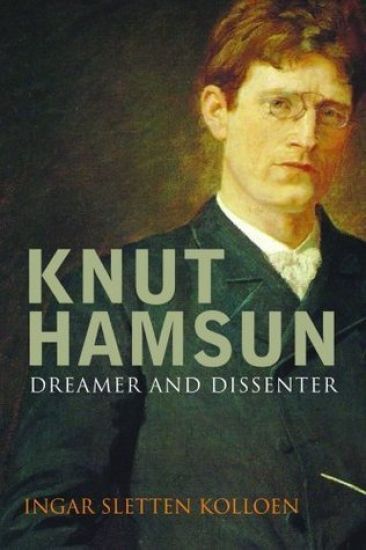
An absorbing biography of Nobel Prize–winning novelist Knut Hamsun, based on a wealth of previously unavailable sources Norwegian writer Knut Hamsun (1859–1952), winner of the Nobel Prize for Literature in 1920, was a man both brilliant and controversial. Lauded for his literary achievements by Hemingway, Gide, Hesse, and others, he also provoked outrage for his open collaboration with the Fascists during the German occupation of Norway and for his insistent refusal to renounce his Nazi sympathies.This gripping biography of Hamsun, now available for the first time in English, offers a nuanced account of this morally ambiguous man. Drawing on Hamsun’s extraordinary private archives and on his psychoanalyst’s notes, Ingar Sletten Kolloen delves deeply into Hamsun’s personal life and character. In vivid and telling detail, he describes Hamsun’s early years in a peasant farming family, his tempestuous and jealousy-racked second marriage, his erratic relationship with his children, and his infamous love affair with Nazi Germany, the roots of which Kolloen traces to Hamsun’s earliest days. Much like the characters he created in novels such as Hunger, Growth of the Soil, Mysteries, and Pan, Hamsun was irrational, eccentric, strange, and compelling—a man uncomfortable in his own time.
This collection brings together the major secondary literature on this crucial figure. The range and quality of the articles collected indicates the richness of Wicksell's work and the importance of his legacy.
Knut Wicksell is arguably the greatest Swedish social scientist of all time, and poverty was a theme that occupied him all his life. Indeed, it was probably Wicksell's interest in poverty that was the critical factor in drawing him away from his purely mathematical background towards a greater understanding of the social sciences as a whole.In this outstanding volume, Mats Lundahl, one of the world's leading development economists, examines Wicksell's thinking in the area of poverty, and shows the importance of his contributions to this field.
Knut Wicksell is arguably the greatest Swedish social scientist of all time, and poverty was a theme that occupied him all his life. Indeed, it was probably Wicksell's interest in poverty that was the critical factor in drawing him away from his purely mathematical background towards a greater understanding of the social sciences as a whole.In this outstanding volume, Mats Lundahl, one of the world's leading development economists, examines Wicksell's thinking in the area of poverty, and shows the importance of his contributions to this field.
Knut Wicksell made enormous contributions to capital theory, monetary theory and fiscal policy. However whilst his books are widely available in English, few of his more than 800 articles have ever been translated. This volume, first published in 1997, includes new translations of Wicksell's contributions to marginalism and capital theory; public economics and unemployment.
This book, along with its predecessor, makes most of Wicksell's most important contributions accessible to English speaking readers for the first time. The essays collected here, first published in 1999, focus on money and price theory and include Wicksell's book reviews of Leon Walrus, Ludwig von Mises and John Bates Clark.
Knut Wicksell was one of the most influential economists of the twentieth century, making major contributions to price theory, monetary theory and capital theory. A prolific and diverse thinker, his ideas were to inspire the Stockholm School, the Austrian School and mainstream neo-classical economics.Although most of his major books have now been translated into English, relatively few of his essays have. These two volumes, first published in 1997 and 1999, made many of Wicksell's most important contributions accessible to the English speaking reader for the first time and this reissue will be welcomed by economists at all levels.These volumes contain translations of articles originally written in Swedish and German which focus on:*marginalism and capital theory*public economics*unemployment*money and price theory* population* Wicksell's book reviews, including reviews of Leon Walras, Ludwig von Mises and John Bates Clark.
Knut Wicksell made enormous contributions to capital theory, monetary theory and fiscal policy. However whilst his books are widely available in English, few of his more than 800 articles have ever been translated. This volume, first published in 1997, includes new translations of Wicksell's contributions to marginalism and capital theory; public economics and unemployment.
This book, along with its predecessor, makes most of Wicksell's most important contributions accessible to English speaking readers for the first time. The essays collected here, first published in 1999, focus on money and price theory and include Wicksell's book reviews of Leon Walrus, Ludwig von Mises and John Bates Clark.
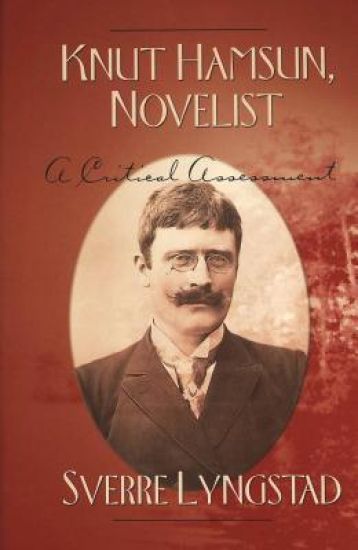
This is the first comprehensive study in English of the novels of Knut Hamsun, Nobel Laureate in literature for 1920, from the radically innovative Hunger (1890) to The Ring Is Closed (1936). The texts are discussed in depth, with analysis of recurrent themes, narrative modes, and generic idiosyncrasies, and are evaluated in terms of originality and artistic integrity. Reviews and other critical opinions are cited to broaden the evaluative spectrum and throw light on the novels' receptions. Although the book is scholarly, its blend of commentary and summarizing description - of settings, characters and story lines - will also interest the general reader.
Introducing Knut, a "feel-good" book about a small man destined to become a big folk hero. The reader looking for a tall, dark, and handsome hero might want to change their mind, after reading this book. Knut is sandy-haired and short, with a bit of a straggly handle-bar moustache, and his hair is just a bit thin on top, noticeable only if he removes his big white cowboy hat. Knut had always wanted to be a Policeman, but was three inches too short for regulations. This couldn't discourage a determined man, however. He believed he could whip guys six feet and over, if the need arose, so he decided to take fate into his own hands by forming his own one-man amateur police force. Now he patrols his small town in an old rusty station wagon, keeping everyone safe. Drop in and meet the gang at Lulu's Cafe, where most of the action begins. You'll love the characters. Many of them look like they just stepped off a Norman Rockwell cover painting. There's Mayor Gerkhen, as political as he is overweight, Otto Bersten, the deputy Sheriff, and his wife Verna (the prettiest biker-babe in town, who discovers the secret behind Cleopatra's beauty). Most of the town is populated with good folks, with just enough problems to keep Knut busy. Knut becomes the town's hero, after capturing three armed bank robbers single-handed. Lulu has a secret crush on him, and persuades him to place a sign on her cafe which reads "KNUT EATS HERE." This book is where the fun begins Knut is just plain good old fashioned comedy. Will the fire department chop down the Mayor's house by mistake? Can Heinie Gobel be reformed enough to get a date with his secret lifelong love, Daisy-May? Why does she always slam her door in his face? Who stole Flossie, the prize-winning pig? Here is a quote from the book: "Sweet Flossie," said Knut, "Nicest pig I ever met Ever been kissed by a pig, Mayor?" The Mayor looked at Knut questioningly, and shook his head. "You'd be surprised " said Knut. The reader will be surprised too, by this, and a lot more, in Knut (the Lone Vigilante). You are hereby invited to join the crowd and the excitement in Smalltown, U.S.A. A lot of new friends await you there. Let's hear three big cheers for "Knut." Rib-tickling, and heart-warming enjoyment. And to anyone who does cheer for him, we can probably predict Knut's reaction: He removes his hat, scratches his head, kicks a rock in the road, maybe blushes a little, and says, "Well, shucks, I'm just doin' my job." E.M. Delaney, Authonomy award-winning author wrote: "...a very talented writer. One who uses the old-fashioned basics. In our entertainment environment, we don't see good clean fun like Knut anymore. It's like, he represents something out of our past, a time when we didn't have to make sexual innuendo...a part of our agenda. We could take our Grandkids to a movie like Knut, and have a great time."
Durch den E-Commerce werden die Strukturen zwischen Handel & Hersteller kr ftig durchger ttelt. Beide Seiten sind zunehmend unzufriedener, weil sich Umsatzstr me schneller ver ndern, als die Vertriebsplanung rechnen kann. In diesem Buch werden deshalb aus Sicht der Hersteller die folgenden Fragen bearbeitet: 1. Direktvertrieb: Sollen wir unsere Produkte online verkaufen? 2. H ndlerbeziehungen: Kannibalisieren wir aber nicht unsere bestehenden Kan le, wenn wir online verkaufen? 3. Onlineshop-Aufbau: Wir haben uns entschieden, selbst E-Commerce zu betreiben. Sollen wir das an einen Dienstleister auslagern? 4. Online-H ndler: Sollten wir unseren Partnern erlauben, Produkte bei Amazon, eBay & Co. zu verkaufen? 5. E-Commerce Expertise: Sollen wir selbst E-Commerce-Kompetenz durch Testen, Fehlermachen, und Lernen aufbauen? 6. Budgetierung: Was kostet uns der Einstieg in den E-Commerce? 7. Personelles: Wie viele Mitarbeiter sollten f r das Projekt eingeplant werden? In den Interviews kommen u.a. BRITA, VITRA, Stabilo, Intersport und Decathlon zu Wort.