Kirjojen hintavertailu. Mukana 12 459 402 kirjaa ja 12 kauppaa.

Kirjahaku

Etsi kirjoja tekijän nimen, kirjan nimen tai ISBN:n perusteella.

1000 tulosta hakusanalla Kurt Gödel

Kurt Gödel: Collected Works: Volume I

Kurt Gödel: Collected Works: Volume I

Kurt Gödel

Oxford University Press Inc
1986
sidottu
Kurt Gödel (1906 - 1978) was the most outstanding logician of the twentieth century, famous for his hallmark works on the completeness of logic, the incompleteness of number theory, and the consistency of the axiom of choice and the continuum hypothesis. He is also noted for his work on constructivity, the decision problem, and the foundations of computability theory, as well as for the strong individuality of his writings on the philosophy of mathematics. He is less well known for his discovery of unusual cosmological models for Einstein's equations, in theory permitting time travel into the past. The Collected Works is a landmark resource that draws together a lifetime of creative thought and accomplishment. The first two volumes were devoted to Gödel's publications in full (both in original and translation), and the third volume featured a wide selection of unpublished articles and lecture texts found in Gödel's Nachlass. These long-awaited final two volumes contain Gödel's correspondence of logical, philosophical, and scientific interest. Volume IV covers A to G, with H to Z in volume V; in addition, Volume V contains a full inventory of Gödel's Nachlass. All volumes include introductory notes that provide extensive explanatory and historical commentary on each body of work, English translations of material originally written in German (some transcribed from the Gabelsberger shorthand), and a complete bibliography of all works cited. Kurt Gödel: Collected Works is designed to be useful and accessible to as wide an audience as possible without sacrificing scientific or historical accuracy. The only comprehensive edition of Gödel's work available, it will be an essential part of the working library of professionals and students in logic, mathematics, philosophy, history of science, and computer science and all others who wish to be acquainted with one of the great minds of the twentieth century.
Kurt Gödel: Collected Works: Volume II

Kurt Gödel: Collected Works: Volume II

Kurt Gödel

Oxford University Press Inc
1990
sidottu
Kurt Gödel (1906 - 1978) was the most outstanding logician of the twentieth century, famous for his hallmark works on the completeness of logic, the incompleteness of number theory, and the consistency of the axiom of choice and the continuum hypothesis. He is also noted for his work on constructivity, the decision problem, and the foundations of computability theory, as well as for the strong individuality of his writings on the philosophy of mathematics. He is less well known for his discovery of unusual cosmological models for Einstein's equations, in theory permitting time travel into the past. The Collected Works is a landmark resource that draws together a lifetime of creative thought and accomplishment. The first two volumes were devoted to Gödel's publications in full (both in original and translation), and the third volume featured a wide selection of unpublished articles and lecture texts found in Gödel's Nachlass. These long-awaited final two volumes contain Gödel's correspondence of logical, philosophical, and scientific interest. Volume IV covers A to G, with H to Z in volume V; in addition, Volume V contains a full inventory of Gödel's Nachlass. All volumes include introductory notes that provide extensive explanatory and historical commentary on each body of work, English translations of material originally written in German (some transcribed from the Gabelsberger shorthand), and a complete bibliography of all works cited. Kurt Gödel: Collected Works is designed to be useful and accessible to as wide an audience as possible without sacrificing scientific or historical accuracy. The only comprehensive edition of Gödel's work available, it will be an essential part of the working library of professionals and students in logic, mathematics, philosophy, history of science, and computer science and all others who wish to be acquainted with one of the great minds of the twentieth century.
Kurt Gödel: Collected Works: Volume III

Kurt Gödel: Collected Works: Volume III

Kurt Gödel

Oxford University Press Inc
1995
sidottu
Kurt Gödel (1906 - 1978) was the most outstanding logician of the twentieth century, famous for his hallmark works on the completeness of logic, the incompleteness of number theory, and the consistency of the axiom of choice and the continuum hypothesis. He is also noted for his work on constructivity, the decision problem, and the foundations of computability theory, as well as for the strong individuality of his writings on the philosophy of mathematics. He is less well known for his discovery of unusual cosmological models for Einstein's equations, in theory permitting time travel into the past. The Collected Works is a landmark resource that draws together a lifetime of creative thought and accomplishment. The first two volumes were devoted to Gödel's publications in full (both in original and translation), and the third volume featured a wide selection of unpublished articles and lecture texts found in Gödel's Nachlass. These long-awaited final two volumes contain Gödel's correspondence of logical, philosophical, and scientific interest. Volume IV covers A to G, with H to Z in volume V; in addition, Volume V contains a full inventory of Gödel's Nachlass. All volumes include introductory notes that provide extensive explanatory and historical commentary on each body of work, English translations of material originally written in German (some transcribed from the Gabelsberger shorthand), and a complete bibliography of all works cited. Kurt Gödel: Collected Works is designed to be useful and accessible to as wide an audience as possible without sacrificing scientific or historical accuracy. The only comprehensive edition of Gödel's work available, it will be an essential part of the working library of professionals and students in logic, mathematics, philosophy, history of science, and computer science and all others who wish to be acquainted with one of the great minds of the twentieth century.
Kurt Gödel: Collected Works

Kurt Gödel: Collected Works

Kurt Gödel

Oxford University Press Inc
2001
nidottu
Kurt Gödel (1906 - 1978) was the most outstanding logician of the twentieth century, famous for his hallmark works on the completeness of logic, the incompleteness of number theory, and the consistency of the axiom of choice and the continuum hypothesis. He is also noted for his work on constructivity, the decision problem, and the foundations of computability theory, as well as for the strong individuality of his writings on the philosophy of mathematics. He is less well known for his discovery of unusual cosmological models for Einstein's equations, in theory permitting time travel into the past. The Collected Works is a landmark resource that draws together a lifetime of creative thought and accomplishment. The first two volumes were devoted to Gödel's publications in full (both in original and translation), and the third volume featured a wide selection of unpublished articles and lecture texts found in Gödel's Nachlass. These long-awaited final two volumes contain Gödel's correspondence of logical, philosophical, and scientific interest. Volume IV covers A to G, with H to Z in volume V; in addition, Volume V contains a full inventory of Gödel's Nachlass. All volumes include introductory notes that provide extensive explanatory and historical commentary on each body of work, English translations of material originally written in German (some transcribed from the Gabelsberger shorthand), and a complete bibliography of all works cited. Kurt Gödel: Collected Works is designed to be useful and accessible to as wide an audience as possible without sacrificing scientific or historical accuracy. The only comprehensive edition of Gödel's work available, it will be an essential part of the working library of professionals and students in logic, mathematics, philosophy, history of science, and computer science and all others who wish to be acquainted with one of the great minds of the twentieth century.
Kurt Gödel: Collected Works: Volume II

Kurt Gödel: Collected Works: Volume II

Kurt Gödel

Oxford University Press Inc
2001
nidottu
Kurt Gödel (1906 - 1978) was the most outstanding logician of the twentieth century, famous for his hallmark works on the completeness of logic, the incompleteness of number theory, and the consistency of the axiom of choice and the continuum hypothesis. He is also noted for his work on constructivity, the decision problem, and the foundations of computability theory, as well as for the strong individuality of his writings on the philosophy of mathematics. He is less well known for his discovery of unusual cosmological models for Einstein's equations, in theory permitting time travel into the past. The Collected Works is a landmark resource that draws together a lifetime of creative thought and accomplishment. The first two volumes were devoted to Gödel's publications in full (both in original and translation), and the third volume featured a wide selection of unpublished articles and lecture texts found in Gödel's Nachlass. These long-awaited final two volumes contain Gödel's correspondence of logical, philosophical, and scientific interest. Volume IV covers A to G, with H to Z in volume V; in addition, Volume V contains a full inventory of Gödel's Nachlass. All volumes include introductory notes that provide extensive explanatory and historical commentary on each body of work, English translations of material originally written in German (some transcribed from the Gabelsberger shorthand), and a complete bibliography of all works cited. Kurt Gödel: Collected Works is designed to be useful and accessible to as wide an audience as possible without sacrificing scientific or historical accuracy. The only comprehensive edition of Gödel's work available, it will be an essential part of the working library of professionals and students in logic, mathematics, philosophy, history of science, and computer science and all others who wish to be acquainted with one of the great minds of the twentieth century.
Kurt Gödel: Collected Works: Volume III

Kurt Gödel: Collected Works: Volume III

Kurt Gödel

Oxford University Press Inc
2001
nidottu
Kurt Gödel (1906 - 1978) was the most outstanding logician of the twentieth century, famous for his hallmark works on the completeness of logic, the incompleteness of number theory, and the consistency of the axiom of choice and the continuum hypothesis. He is also noted for his work on constructivity, the decision problem, and the foundations of computability theory, as well as for the strong individuality of his writings on the philosophy of mathematics. He is less well known for his discovery of unusual cosmological models for Einstein's equations, in theory permitting time travel into the past. The Collected Works is a landmark resource that draws together a lifetime of creative thought and accomplishment. The first two volumes were devoted to Gödel's publications in full (both in original and translation), and the third volume featured a wide selection of unpublished articles and lecture texts found in Gödel's Nachlass. These long-awaited final two volumes contain Gödel's correspondence of logical, philosophical, and scientific interest. Volume IV covers A to G, with H to Z in volume V; in addition, Volume V contains a full inventory of Gödel's Nachlass. All volumes include introductory notes that provide extensive explanatory and historical commentary on each body of work, English translations of material originally written in German (some transcribed from the Gabelsberger shorthand), and a complete bibliography of all works cited. Kurt Gödel: Collected Works is designed to be useful and accessible to as wide an audience as possible without sacrificing scientific or historical accuracy. The only comprehensive edition of Gödel's work available, it will be an essential part of the working library of professionals and students in logic, mathematics, philosophy, history of science, and computer science and all others who wish to be acquainted with one of the great minds of the twentieth century.
Kurt Gödel: Collected Works: Volume IV

Kurt Gödel: Collected Works: Volume IV

Kurt Gödel

Clarendon Press
2003
sidottu
Kurt Gödel (1906 - 1978) was the most outstanding logician of the twentieth century, famous for his hallmark works on the completeness of logic, the incompleteness of number theory, and the consistency of the axiom of choice and the continuum hypothesis. He is also noted for his work on constructivity, the decision problem, and the foundations of computability theory, as well as for the strong individuality of his writings on the philosophy of mathematics. He is less well known for his discovery of unusual cosmological models for Einstein's equations, in theory permitting time travel into the past. The Collected Works is a landmark resource that draws together a lifetime of creative thought and accomplishment. The first two volumes were devoted to Gödel's publications in full (both in original and translation), and the third volume featured a wide selection of unpublished articles and lecture texts found in Gödel's Nachlass. These long-awaited final two volumes contain Gödel's correspondence of logical, philosophical, and scientific interest. Volume IV covers A to G, with H to Z in volume V; in addition, Volume V contains a full inventory of Gödel's Nachlass. All volumes include introductory notes that provide extensive explanatory and historical commentary on each body of work, English translations of material originally written in German (some transcribed from the Gabelsberger shorthand), and a complete bibliography of all works cited. Kurt Gödel: Collected Works is designed to be useful and accessible to as wide an audience as possible without sacrificing scientific or historical accuracy. The only comprehensive edition of Gödel's work available, it will be an essential part of the working library of professionals and students in logic, mathematics, philosophy, history of science, and computer science and all others who wish to be acquainted with one of the great minds of the twentieth century.
Kurt Gödel: Collected Works: Volume V

Kurt Gödel: Collected Works: Volume V

Kurt Gödel

Clarendon Press
2003
sidottu
Kurt Gödel (1906 - 1978) was the most outstanding logician of the twentieth century, famous for his hallmark works on the completeness of logic, the incompleteness of number theory, and the consistency of the axiom of choice and the continuum hypothesis. He is also noted for his work on constructivity, the decision problem, and the foundations of computability theory, as well as for the strong individuality of his writings on the philosophy of mathematics. He is less well known for his discovery of unusual cosmological models for Einstein's equations, in theory permitting time travel into the past. The Collected Works is a landmark resource that draws together a lifetime of creative thought and accomplishment. The first two volumes were devoted to Gödel's publications in full (both in original and translation), and the third volume featured a wide selection of unpublished articles and lecture texts found in Gödel's Nachlass. These long-awaited final two volumes contain Gödel's correspondence of logical, philosophical, and scientific interest. Volume IV covers A to G, with H to Z in volume V; in addition, Volume V contains a full inventory of Gödel's Nachlass. All volumes include introductory notes that provide extensive explanatory and historical commentary on each body of work, English translations of material originally written in German (some transcribed from the Gabelsberger shorthand), and a complete bibliography of all works cited. Kurt Gödel: Collected Works is designed to be useful and accessible to as wide an audience as possible without sacrificing scientific or historical accuracy. The only comprehensive edition of Gödel's work available, it will be an essential part of the working library of professionals and students in logic, mathematics, philosophy, history of science, and computer science and all others who wish to be acquainted with one of the great minds of the twentieth century.
Kurt Gödel: Collected Works: Volume IV

Kurt Gödel: Collected Works: Volume IV

Kurt Gödel

Oxford University Press
2014
nidottu
Kurt Gödel (1906 - 1978) was the most outstanding logician of the twentieth century, famous for his hallmark works on the completeness of logic, the incompleteness of number theory, and the consistency of the axiom of choice and the continuum hypothesis. He is also noted for his work on constructivity, the decision problem, and the foundations of computability theory, as well as for the strong individuality of his writings on the philosophy of mathematics. He is less well known for his discovery of unusual cosmological models for Einstein's equations, in theory permitting time travel into the past. The Collected Works is a landmark resource that draws together a lifetime of creative thought and accomplishment. The first two volumes were devoted to Gödel's publications in full (both in original and translation), and the third volume featured a wide selection of unpublished articles and lecture texts found in Gödel's Nachlass. The final two volumes contain Gödel's correspondence of logical, philosophical, and scientific interest. Volume IV, published for the first time in paperback, covers A to G, with H to Z in volume V; in addition, Volume V contains a full inventory of Gödel's Nachlass. All volumes include introductory notes that provide extensive explanatory and historical commentary on each body of work, English translations of material originally written in German (some transcribed from the Gabelsberger shorthand), and a complete bibliography of all works cited. Kurt Gödel: Collected Works is designed to be useful and accessible to as wide an audience as possible without sacrificing scientific or historical accuracy. The only comprehensive edition of Gödel's work available, it will be an essential part of the working library of professionals and students in logic, mathematics, philosophy, history of science, and computer science and all others who wish to be acquainted with one of the great minds of the twentieth century.
Kurt Gödel: Collected Works: Volume V

Kurt Gödel: Collected Works: Volume V

Kurt Gödel

Oxford University Press
2014
nidottu
Kurt Gödel (1906 - 1978) was the most outstanding logician of the twentieth century, famous for his hallmark works on the completeness of logic, the incompleteness of number theory, and the consistency of the axiom of choice and the continuum hypothesis. He is also noted for his work on constructivity, the decision problem, and the foundations of computability theory, as well as for the strong individuality of his writings on the philosophy of mathematics. He is less well known for his discovery of unusual cosmological models for Einstein's equations, in theory permitting time travel into the past. The Collected Works is a landmark resource that draws together a lifetime of creative thought and accomplishment. The first two volumes were devoted to Gödel's publications in full (both in original and translation), and the third volume featured a wide selection of unpublished articles and lecture texts found in Gödel's Nachlass. These long-awaited final two volumes contain Gödel's correspondence of logical, philosophical, and scientific interest. Volume V, published for the first time in paperback, includes H to Z as well as a full inventory of Gödel's Nachlass, while Volume IV covers A to G. All volumes include introductory notes that provide extensive explanatory and historical commentary on each body of work, English translations of material originally written in German (some transcribed from the Gabelsberger shorthand), and a complete bibliography of all works cited. Kurt Gödel: Collected Works is designed to be useful and accessible to as wide an audience as possible without sacrificing scientific or historical accuracy. The only comprehensive edition of Gödel's work available, it will be an essential part of the working library of professionals and students in logic, mathematics, philosophy, history of science, and computer science and all others who wish to be acquainted with one of the great minds of the twentieth century.
Kurt Gödel

Kurt Gödel

Cambridge University Press
2010
sidottu
Kurt Gödel (1906–1978) did groundbreaking work that transformed logic and other important aspects of our understanding of mathematics, especially his proof of the incompleteness of formalized arithmetic. This book on different aspects of his work and on subjects in which his ideas have contemporary resonance includes papers from a May 2006 symposium celebrating Gödel's centennial as well as papers from a 2004 symposium. Proof theory, set theory, philosophy of mathematics, and the editing of Gödel's writings are among the topics covered. Several chapters discuss his intellectual development and his relation to predecessors and contemporaries such as Hilbert, Carnap, and Herbrand. Others consider his views on justification in set theory in light of more recent work and contemporary echoes of his incompleteness theorems and the concept of constructible sets.
Kurt Gödel

Kurt Gödel

Cambridge University Press
2013
pokkari
Kurt Gödel (1906–1978) did groundbreaking work that transformed logic and other important aspects of our understanding of mathematics, especially his proof of the incompleteness of formalized arithmetic. This book on different aspects of his work and on subjects in which his ideas have contemporary resonance includes papers from a May 2006 symposium celebrating Gödel's centennial as well as papers from a 2004 symposium. Proof theory, set theory, philosophy of mathematics, and the editing of Gödel's writings are among the topics covered. Several chapters discuss his intellectual development and his relation to predecessors and contemporaries such as Hilbert, Carnap, and Herbrand. Others consider his views on justification in set theory in light of more recent work and contemporary echoes of his incompleteness theorems and the concept of constructible sets.
Kurt Gödel

Kurt Gödel

Springer Nature Switzerland AG
2021
sidottu
Paris of the year 1900 left two landmarks: the Tour Eiffel, and David Hilbert's celebrated list of twenty-four mathematical problems presented at a conference opening the new century. Kurt Gödel, a logical icon of that time, showed Hilbert's ideal of complete axiomatization of mathematics to be unattainable. The result, of 1931, is called Gödel's incompleteness theorem. Gödel then went on to attack Hilbert's first and second Paris problems, namely Cantor's continuum problem about the type of infinity of the real numbers, and the freedom from contradiction of the theory of real numbers. By 1963, it became clear that Hilbert's first question could not be answered by any known means, half of the credit of this seeming faux pas going to Gödel. The second is a problem still wide open. Gödel worked on it for years, with no definitive results; The best he could offer was a start with the arithmetic of the entire numbers. This book, Gödel's lectures at the famous Princeton Institute for Advanced Study in 1941, shows how far he had come with Hilbert's second problem, namely to a theory of computable functionals of finite type and a proof of the consistency of ordinary arithmetic. It offers indispensable reading for logicians, mathematicians, and computer scientists interested in foundational questions. It will form a basis for further investigations into Gödel's vast Nachlass of unpublished notes on how to extend the results of his lectures to the theory of real numbers. The book also gives insights into the conceptual and formal work that is needed for the solution of profound scientific questions, by one of the central figures of 20th century science and philosophy.
Kurt Gödel

Kurt Gödel

Springer Nature Switzerland AG
2022
nidottu
Paris of the year 1900 left two landmarks: the Tour Eiffel, and David Hilbert's celebrated list of twenty-four mathematical problems presented at a conference opening the new century. Kurt Gödel, a logical icon of that time, showed Hilbert's ideal of complete axiomatization of mathematics to be unattainable. The result, of 1931, is called Gödel's incompleteness theorem. Gödel then went on to attack Hilbert's first and second Paris problems, namely Cantor's continuum problem about the type of infinity of the real numbers, and the freedom from contradiction of the theory of real numbers. By 1963, it became clear that Hilbert's first question could not be answered by any known means, half of the credit of this seeming faux pas going to Gödel. The second is a problem still wide open. Gödel worked on it for years, with no definitive results; The best he could offer was a start with the arithmetic of the entire numbers. This book, Gödel's lectures at the famous Princeton Institute for Advanced Study in 1941, shows how far he had come with Hilbert's second problem, namely to a theory of computable functionals of finite type and a proof of the consistency of ordinary arithmetic. It offers indispensable reading for logicians, mathematicians, and computer scientists interested in foundational questions. It will form a basis for further investigations into Gödel's vast Nachlass of unpublished notes on how to extend the results of his lectures to the theory of real numbers. The book also gives insights into the conceptual and formal work that is needed for the solution of profound scientific questions, by one of the central figures of 20th century science and philosophy.
Kurt Gödel

Kurt Gödel

William D. Brewer

Springer International Publishing AG
2022
sidottu
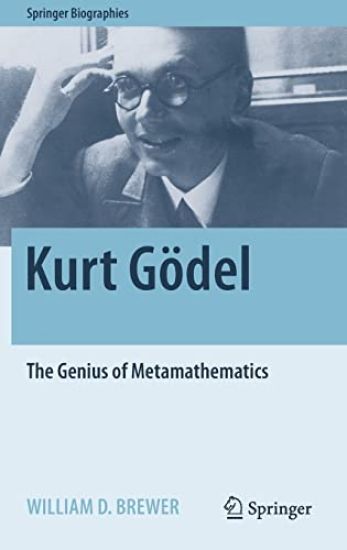
During his lifetime, Kurt Gödel was not well known outside the professional world of mathematicians, philosophers and theoretical physicists. Early in his career, for his doctoral thesis and then for his Habilitation (Dr.Sci.), he wrote earthshaking articles on the completeness and provability of mathematical-logical systems, upsetting the hypotheses of the most famous mathematicians/philosophers of the time. He later delved into theoretical physics, finding a unique solution to Einstein’s equations for gravity, the ‘Gödel Universe’, and made contributions to philosophy, the guiding theme of his life. This book includes more details about the context of Gödel’s life than are found in earlier biographies, while avoiding an elaborate treatment of his mathematical/scientific/philosophical works, which have been described in great detail in other books. In this way, it makes him and his times more accessible to general readers, and will allow them to appreciate the lasting effects of Gödel’s contributions (the latter in a more up-to-date context than in previous biographies, many of which were written 15–25 years ago). His work spans or is relevant to a wide spectrum of intellectual endeavor, and this is emphasized in the book, with recent examples. This biography also examines possible sources of his unusual personality, which combined mathematical genius with an almost childlike naiveté concerning everyday life, and striking scientific innovations with timidity and hesitancy in practical matters. How he nevertheless had a long and successful career, inspiring many younger scholars along the way, with the help of his loyal wife Adele and some of his friends, is a fascinating story in human nature.
Kurt Gödel

Kurt Gödel

William D. Brewer

Springer International Publishing AG
2023
nidottu
During his lifetime, Kurt Gödel was not well known outside the professional world of mathematicians, philosophers and theoretical physicists. Early in his career, for his doctoral thesis and then for his Habilitation (Dr.Sci.), he wrote earthshaking articles on the completeness and provability of mathematical-logical systems, upsetting the hypotheses of the most famous mathematicians/philosophers of the time. He later delved into theoretical physics, finding a unique solution to Einstein’s equations for gravity, the ‘Gödel Universe’, and made contributions to philosophy, the guiding theme of his life. This book includes more details about the context of Gödel’s life than are found in earlier biographies, while avoiding an elaborate treatment of his mathematical/scientific/philosophical works, which have been described in great detail in other books. In this way, it makes him and his times more accessible to general readers, and will allow them to appreciate the lasting effects of Gödel’s contributions (the latter in a more up-to-date context than in previous biographies, many of which were written 15–25 years ago). His work spans or is relevant to a wide spectrum of intellectual endeavor, and this is emphasized in the book, with recent examples. This biography also examines possible sources of his unusual personality, which combined mathematical genius with an almost childlike naiveté concerning everyday life, and striking scientific innovations with timidity and hesitancy in practical matters. How he nevertheless had a long and successful career, inspiring many younger scholars along the way, with the help of his loyal wife Adele and some of his friends, is a fascinating story in human nature.
Kurt Gödel

Kurt Gödel

William D. Brewer

Springer International Publishing AG
2024
sidottu
Zu seinen Lebzeiten war Kurt Gödel außerhalb der Fachwelt der Mathematiker, Philosophen und theoretischen Physiker kaum bekannt. Zu Beginn seiner Karriere schuf er beeindruckende Arbeiten zur Vollständigkeit und Beweisbarkeit formaler logischer Systeme, die zu seiner Dissertation und seiner Habilitations-schrift wurden und ihn unter Fachleuten weltberühmt machten. Seine Unvoll-ständigkeitssätze läuteten das Ende der formal-logischen Programme der Logizisten (Russell et al.) und der Formalisten (Hilbert et al.) ein. Später erzielte er auch signifikante Ergebnisse in der Mengenlehre. Nach seiner Emigration in die USA (Princeton), widmete er sich mehr der Philosophie, dem Leitmotiv seines Lebens, und er fand auch eine einzigartige Lösung zu Einsteins Feld-gleichungen der Gravitation, sein “Gödel-Universum“. Dieses Buch beschreibt sowohl den Gödel, der ein genialer Wissenschaftler war, und der gewagte und neuartige Hypothesen zu den Fundamenten der Mathe-matik und Physik hervorbrachte, - als auch den Gödel, der ein perfekter Rationalist war, aber sein Alltagsleben nur mit Mühe meistern konnte und zeitlebens unter Depressionen, Angstneurosen und Hypochondrie litt. Ein Leben voller Paradoxen, in dem er trotz all seiner psychischen Probleme Beachtliches leistete und zu einem Vorbild für viele jüngere Wissenschaftler wurde. Das Buch liefert den Kontext zu seinen Errungenschaften, die ein verblüffend breites Spektrum intellektueller Unternehmungen darstellen, und zu seiner zunehmenden Geisteskrankheit; und es zeigt, wie er eine lange und erfolgreiche Karriere mit Hilfe seiner loyalen Ehefrau Adele und einigen seiner Freunde durchlaufen konnte. Dies ist eine faszinierende Geschichte der wissen-schaftlichen Genialität und der menschlichen Natur.
Kurt Gödel

Kurt Gödel

Springer Basel
2011
nidottu
Kurt Gödel, together with Bertrand Russell, is the most important name in logic, and in the foundations and philosophy of mathematics of this century. However, unlike Russel, Gödel the mathematician published very little apart from his well-known writings in logic, metamathematics and set theory. Fortunately, Gödel the philosopher, who devoted more years of his life to philosophy than to technical investigation, wrote hundreds of pages on the philosophy of mathematics, as well as on other fields of philosophy. It was only possible to learn more about his philosophical works after the opening of his literary estate at Princeton a decade ago. The goal of this book is to make available to the scholarly public solid reconstructions and editions of two of the most important essays which Gödel wrote on the philosophy of mathematics. The book is divided into two parts. The first provides the reader with an incisive historico-philosophical introduction to Gödel's technical results and philosophical ideas. Written by the Editor, this introductory apparatus is not only devoted to the manuscripts themselves but also to the philosophical context in which they were written. The second contains two of Gödel's most important and fascinating unpublished essays: 1) the Gibbs Lecture ("Some basic theorems on the foundations of mathematics and their philosophical implications", 1951); and 2) two of the six versions of the essay which Gödel wrote for the Carnap volume of the Schilpp series The Library of Living Philosophers ("Is mathematics syntax of language?", 1953-1959).
Kurt Gödel

Kurt Gödel

Birkhauser Verlag AG
1995
sidottu
Kurt Gödel, together with Bertrand Russell, is the most important name in logic, and in the foundations and philosophy of mathematics of this century. However, unlike Russel, Gödel the mathematician published very little apart from his well-known writings in logic, metamathematics and set theory. Fortunately, Gödel the philosopher, who devoted more years of his life to philosophy than to technical investigation, wrote hundreds of pages on the philosophy of mathematics, as well as on other fields of philosophy. It was only possible to learn more about his philosophical works after the opening of his literary estate at Princeton a decade ago. The goal of this book is to make available to the scholarly public solid reconstructions and editions of two of the most important essays which Gödel wrote on the philosophy of mathematics. The book is divided into two parts. The first provides the reader with an incisive historico-philosophical introduction to Gödel's technical results and philosophical ideas. Written by the Editor, this introductory apparatus is not only devoted to the manuscripts themselves but also to the philosophical context in which they were written. The second contains two of Gödel's most important and fascinating unpublished essays: 1) the Gibbs Lecture ("Some basic theorems on the foundations of mathematics and their philosophical implications", 1951); and 2) two of the six versions of the essay which Gödel wrote for the Carnap volume of the Schilpp series The Library of Living Philosophers ("Is mathematics syntax of language?", 1953-1959).
Kurt Gödel

Kurt Gödel

Karl Sigmund; John Dawson; Kurt Mühlberger

Vieweg+Teubner Verlag
2006
sidottu
Time Magazine reihte ihn unter die hundert wichtigsten Personen des zwanzigsten Jahrhunderts. Die Harvard University verlieh ihm das Ehrendoktorat fur die Entdeckung "der bedeutsamsten mathematischen Wahrheit des Jahrhunderts". Er gilt allgemein als der grosste Logiker seit Aristoteles. Sein Freund Einstein ging, nach eigener Aussage, nur deshalb ans Institut, um Godel auf dem Heimweg begleiten zu durfen. Und John von Neumann, einer der Vater des Computers, schrieb: "Godel ist tatsachlich absolut unersetzlich. Er ist der einzige Mathematiker, von dem ich das zu behaupten wage." Dieses Buch ist eine leichtverdauliche, einfache und anschauliche Einfuhrung in Godels Leben und Werk, gedacht fur jene, die sich fur die menschlichen und kulturellen Aspekte der Wissenschaft interessieren. Ausgangspunkt des Buches waren die Vorbereitungen zu einer Ausstellung uber Kurt Godel aus Anlass seines hundertsten Geburtstags. Eine Ausstellung hat etwas von einem Spaziergang an sich, und gerade das wollen wir bieten: einen Spaziergang mit Godel. Albert Einstein genoss solche Spaziergange sehr. Man kann also Godel geniessen.