Kirjojen hintavertailu. Mukana 11 717 486 kirjaa ja 12 kauppaa.

Kirjahaku

Etsi kirjoja tekijän nimen, kirjan nimen tai ISBN:n perusteella.

814 tulosta hakusanalla Langston Hughes

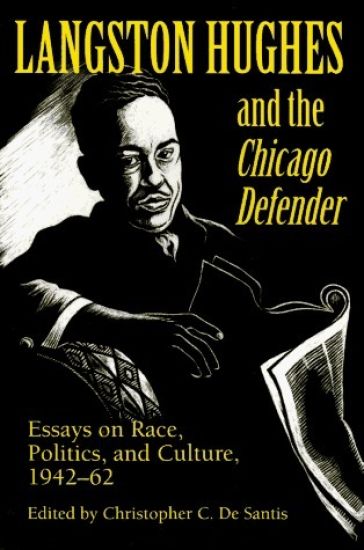
Langston Hughes and the *Chicago Defender*

Langston Hughes and the *Chicago Defender*

Langston Hughes

University of Illinois Press
1995
nidottu
Langston Hughes is well known as a poet, playwright, novelist, social activist, communist sympathizer, and brilliant member of the Harlem Renaissance. He has been referred to as the "Dean of Black Letters" and the "poet low-rate of Harlem." But it was as a columnist for the famous African-American newspaper the Chicago Defender that Hughes chronicled the hopes and despair of his people. For twenty years, he wrote forcefully about international race relations, Jim Crow, the South, white supremacy, imperialism and fascism, segregation in the armed forces, the Soviet Union and communism, and African-American art and culture. None of the racial hypocrisies of American life escaped his searing, ironic prose.This is the first collection of Hughes's nonfiction journalistic writings. For readers new to Hughes, it is an excellent introduction; for those familiar with him, it gives new insights into his poems and fiction.
Langston Hughes

Langston Hughes

Thomas Mikolyzk

Greenwood Press
1990
sidottu
Langston Hughes was the first black writer to be taken seriously by the general literary public, and with the current resurgence of interest in the evolution of black American writing, he continues to be a primary subject of study for scholars and students throughout the world. This bio-bibliography is the first annotated collection of materials on Hughes's life and work, and compiler Thomas Mikolyzk has made the work even more valuable by verifying the relative availability of each item cited and noting where certain materials can be found. The up-to-date listings provide both primary and secondary sources, and focus on works by Hughes as well as those written about him.The work begins with a chronology of events in Hughes's life, followed by a brief biography. The annotations are then divided into four major sections: books by Hughes, shorter works by Hughes, books about Hughes, and articles about Hughes. Each citation is given an alphanumeric code to denote its category and entry number. All collectable published works by Hughes are cited here, as is virtually every critical piece published throughout the world, including contemporary reviews, scholarly articles, essays and book-length commentaries, and dissertations. In addition to these annotated citations, two appendixes are included. The first provides an alphabetical listing of Hughes's works, including place and date of publication, and the second describes special collections in America of Hughes's personal material as well as detailing The Langston Hughes Review, the official journal of The Langston Hughes Society. Three indexes, covering author, title, and subject, conclude the work. This book will be an important resource for courses in American literature and African-American history, and a significant addition to high school, public, and academic libraries.
Langston Hughes

Langston Hughes

Joseph McLaren

Praeger Publishers Inc
1997
sidottu
Though known primarily as a poet, Langston Hughes crafted well over 40 theatrical works. This book examines Hughes's stage pieces from his first published play, The Gold Piece (1921), through his post-radical wartime effort, For This We Fight (1943). Hughes's stage writing of this period includes such forms as the folk comedy, the protest drama, the historical play and the blues opera. McLaren concludes that the democratic argument is ultimately employed by Hughes to challenge segregation in the military and that Hughes's iconography prefigures the black aesthetic of the 1960s. Photographs complement the text. McLaren demonstrates that Hughes's folk comedies, such as Mule Bone (1930) and Little Ham (1936), valorize folk humor and black vernacular. Written in collaboration with Zora Neale Hurston, Mule Bone resulted in a literary controversy. The study also analyzes Hughes's radical plays, including Scottsboro Limited (1931) and Don't You Want to Be Free? (1938), which blend poetry and drama. Also addressed is Hughes's association with community drama groups, especially Karamu Theatre in Cleveland and the Harlem Suitcase Theatre, which premiered Don't You Want to Be Free? and a number of Hughes's satires. In the early 1940s, Hughes entered his post-radical period but continued to protest fascism and celebrate black heroes and heroines. This transition is reflected in his critique of Richard Wright's Native Son. McLaren concludes that the democratic argument is used to challenge segregation in the military and that Hughes's iconography prefigures the black aesthetic of the 1960s. This book will be of great interest to students and scholars of radical theatre and African American drama. Photographs complement the text.
Langston Hughes

Langston Hughes

Laurie Leach

Greenwood Press
2004
sidottu
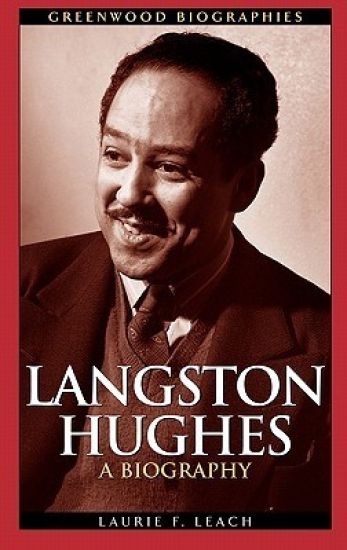
This biography traces Hughes' life and artistic development, from his early years of isolation, which fostered his fierce independence, to his prolific life as a poet, playwright, lyricist, and journalist. Hughes' inspiring story is told through 21 engaging chapters, each providing a fascinating vignette of the artistic, personal, and political associations that shaped his life. Recounted are the pivotal developments in his literary career, with all its struggles and rewards, as well as his travel adventures to Africa, Europe, and Asia, and his political commitments to fight fascism as well as racism.Langston Hughes was raised by a grandmother who actively aided the Underground Railroad, and his first forays into poetry reflected personal tales of slavery and heroism. Through his poetry, Hughes lived up to a proud tradition and continued the uplifting legacy of his race. He was a renaissance man in nearly every aspect of his life, and his name has become synonymous with the Harlem Renaissance movement he helped launch. This biography traces Hughes' life and artistic development, from his early years of isolation, which fostered his fierce independence, to his prolific life as a poet, playwright, lyricist, and journalist. Hughes' inspiring story is told through 21 engaging chapters, each providing a fascinating vignette of the artistic, personal, and political associations that shaped his life.Recounted are the pivotal developments in his literary career, with all its struggles and rewards, as well as his travel adventures to Africa, Europe, and Asia, and his political commitments to fight fascism as well as racism. A timeline, a selected bibliography of biographical and critical sources, and a complete list of Hughes' writings complete the volume.
Langston Hughes

Langston Hughes

Cambridge University Press
2009
pokkari
American Critical Archives is a series of reference books that provide representative selections of contemporary reviews of the main works of major American authors. Providing reprints of over 760 reviews and checklists of nearly 950 others, this book represents the first comprehensive collection of contemporary reviews of the writing of Langston Hughes from 1926 until his death in 1967. Celebrated as a young poet of the Harlem Renaissance, his poetry appeared in The Crisis and The New Negro. His other works include the play The Mulatto, and poetry collected in Shakespeare of Harlem and Ask your Mama. This collection will prove indispensable not only to Langston Hughes specialists but to all students of twentieth-century African-American literature.
Selected Poems of Langston Hughes

Selected Poems of Langston Hughes

Langston Hughes

Vintage Books
1990
nidottu
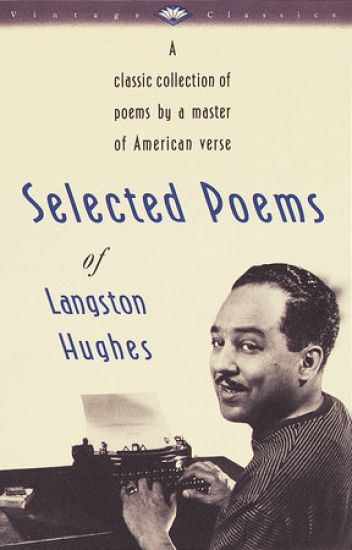
With the publication of his first book of poems, The Weary Blues, in 1926, Langston Hughes electrified readers and launched a renaissance in black writing in America. The poems Hughes wrote celebrated the experience of invisible men and women: of slaves who "rushed the boots of Washington"; of musicians on Lenox Avenue; of the poor and the lovesick; of losers in "the raffle of night." They conveyed that experience in a voice that blended the spoken with the sung, that turned poetic lines into the phrases of jazz and blues, and that ripped through the curtain separating high from popular culture. They spanned the range from the lyric to the polemic, ringing out "wonder and pain and terror-- and the marrow of the bone of life."The poems in this collection were chosen by Hughes himself shortly before his death in 1967 and represent work from his entire career, including "The Negro Speaks of Rivers," "The Weary Blues," "Still Here," "Song for a Dark Girl," "Montage of a Dream Deferred," and "Refugee in America." It gives us a poet of extraordinary range, directness, and stylistic virtuosity.
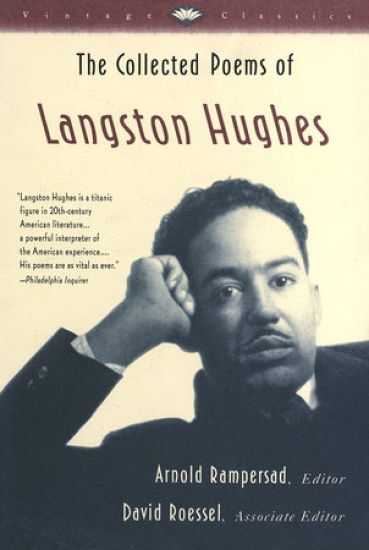
Collected Poems of Langston Hughes

Collected Poems of Langston Hughes

Langston Hughes

Vintage Books
1995
nidottu
"The ultimate book for both the dabbler and serious scholar--. [Hughes] is sumptuous and sharp, playful and sparse, grounded in an earthy music--. This book is a glorious revelation."--Boston GlobeSpanning five decades and comprising 868 poems (nearly 300 of which have never before appeared in book form), this magnificent volume is the definitive sampling of a writer who has been called the poet laureate of African America--and perhaps our greatest popular poet since Walt Whitman. Here, for the first time, are all the poems that Langston Hughes published during his lifetime, arranged in the general order in which he wrote them and annotated by Arnold Rampersad and David Roessel.Alongside such famous works as "The Negro Speaks of Rivers" and Montage of a Dream Deferred, The Collected Poems includes the author's lesser-known verse for children; topical poems distributed through the Associated Negro Press; and poems such as "Goodbye Christ" that were once suppressed. Lyrical and pungent, passionate and polemical, the result is a treasure of a book, the essential collection of a poet whose words have entered our common language.
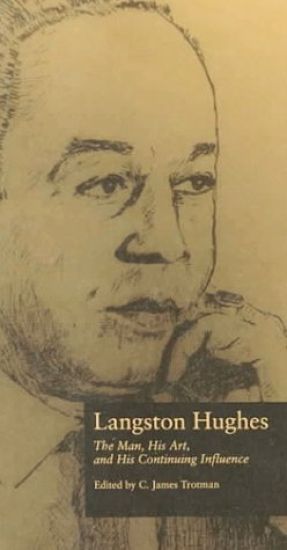
Langston Hughes

Langston Hughes

CRC Press Inc
1995
sidottu
First published in 1995. This volume focuses on the life and influence of Langston Hughes (1902-1967) and forms part of the Critical Studies in Black Life and Culture series. The series is devoted to original, book-Iength studies of African American developments. Written by well-qualified scholars, the series is interdisciplinary and global, interpreting tendencies and themes wherever African Americans have left their mark.
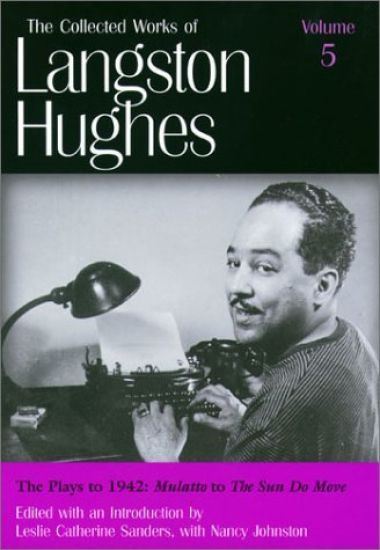
The Collected Works of Langston Hughes v. 5; Plays to 1942 - ""Mulatto"" to ""The Sun Do Move
But someday somebody'll Stand up and talk about me - Black and beautiful - And sing about me. And put on plays about me! I reckon it'll be Me myself! Yes, it'll be me. Langston Hughes is least known for his theatrical endeavors, yet his attention to the theater was lifelong. His love of the stage began in childhood, and from the late 1920s on he was continually writing plays, for black community theater, for theater companies he established himself, and for the Broadway and off-Broadway stage. His early plays endeavor to provide ""authentic"" representations of African American life, both to counter and correct the stereotypical stage portrayals of African Americans in white theater and to provide suitable plays for black theater companies hungry for scripts that would entertain and challenge black audiences. Volume 5 of The Collected Works of Langston Hughes includes the plays Hughes wrote between 1930 and 1942, alone and in collaboration. Almost all the plays were performed during the same period; a few have never seen the stage, but are included because they indicate the range of Hughes's artistic and political concerns. Because very few of the plays in this volume have been previously published, they disclose a side of Langston Hughes's artistry that is virtually unknown.
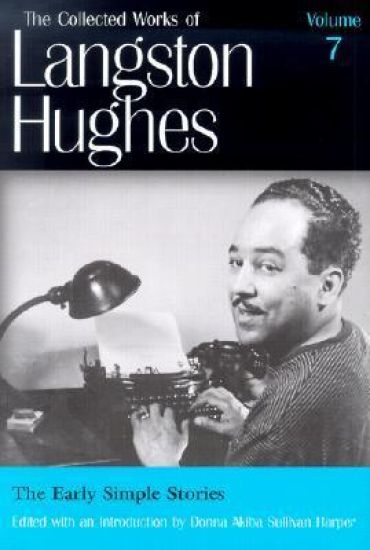
The Collected Works of Langston Hughes v. 7; Early Simple Stories

The Collected Works of Langston Hughes v. 7; Early Simple Stories

Langston Hughes

University of Missouri Press
2002
sidottu
Jesse B. Semple first sprang to life in Langston Hughes's weekly Chicago Defender column in 1943. Almost immediately, the ""Simple stories,"" as they were routinely called, had a large and ever-increasing audience. Simple soon became Harlem's Everyman - an ordinary black workingman, representative of the masses of black folks in the 1940s. Simple had migrated to Harlem, like many other blacks, seeking to escape the racism of the South, and he celebrated his new freedoms despite the economic struggles he still confronted. Simple's bar buddy and foil in the stories is the better-educated, more articulate Boyd who has never lived in the South. Their conversations permit Simple to speak the wisdom of the working class. By the time the first book of Simple stories was published, Hughes had honed and polished these two characters, enhancing the distinctions between the vernacular language of Simple and the more educated diction of his friend. Remaining within the Afrocentric world that was his chosen sphere, Hughes makes clear the message that Simple and Boyd are very much alike; both are black men in a racially unbalanced society. Both exist in a world within a world, in Harlem, the separate black community of New York City. Countless exchanges between Simple and his companion offer wit and wisdom that remind contemporary readers why Langston Hughes is so special.
The Collected Works of Langston Hughes v. 6; Gospel Plays, Operas and Later Dramatic Works
Although Langston Hughes had a lifelong engagement in theatre and other performance arts, his work in this area is the least known of his rich and complex contributions to African American expressive culture. This volume focuses on Hughes's plays after 1942, along with all of his other work written for performance, including operas, musicals, radio plays, ballet libretti and song lyrics, all of which demonstrate his strong determination to inject an African American presence into a range of cultural forms. In 1943, Hughes brought into being what would become his most famous character, Jesse B. Semple - not for the stage, but for a newspaper column he would write for the ""Chicago Defender"" for 15 years and then for the ""New York Post"" until 1965. Hughes revised and collected the stories into four books, and following the success of his second collection, ""Simple Takes a Wife"", composed a play of the same name, which he later turned into the musical ""Simply Heavenly"". Although well known, this work was atypical of Hughes's interests during the postwar period. It was African American music that engaged him, particularly gospel music, which was, in the 1950s, acquiring significant crossover success. Aside from a few educational or occasional pieces, virtually all of Hughes's stage writing after 1942 incorporated music in some form. He wrote five complete operas, as well as musicals, gospel plays, several cantatas, two very successful Broadway productions, and the more than 30 plays that he provided to community theatres and collegiate, church and amateur groups. It was inevitable that HUghes, the most prolific of African American playwrights at that time, would seek to employ the music genre that dominated Broadway during the 1940s and 1950s to tell his own kind of stories. Hughes's intense engagement with theatre and other performance arts lasted more than 35 years. In every genre he attempted, Hughes left unforgettable and inspiring work, giving rise to the range and richness of contemporary African American theatrical achievement.
Langston Hughes
First published in 1995. This volume focuses on the life and influence of Langston Hughes (1902-1967) and forms part of the Critical Studies in Black Life and Culture series. The series is devoted to original, book-Iength studies of African American developments. Written by well-qualified scholars, the series is interdisciplinary and global, interpreting tendencies and themes wherever African Americans have left their mark.
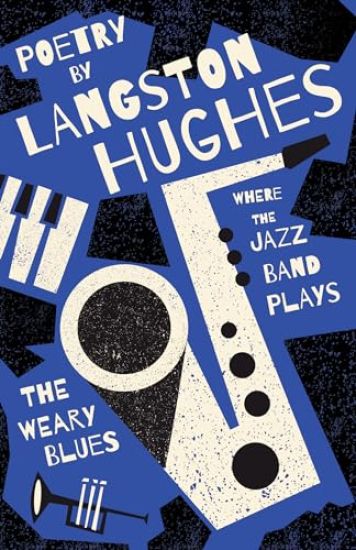
Where the Jazz Band Plays - The Weary Blues - Poetry by Langston Hughes
A leading figure of the Harlem Renaissance, Langston Hughes was the first to use his poetry to reflect the real daily lives of average Black people. This collection celebrates Black pride and contains messages of hope and optimism from the 1920s. Langston Hughes is often referred to as the Poet Laureate of African-American experience. The writer featured themes of cultural heritage, racial discrimination, and optimism in his poetry. He used his work to reflect the struggles of Black people in America, but also to send messages of hope. Jazz and blues had a strong influence on his work and dreams are a recurring theme in his poetry. Not only does Hughes comment on the American dream and Black people's inability to achieve it, but he also uses dreams as a symbol of hope for equity and freedom. This collection features several sections, including: - The Weary Blues - Dream Variations - The Negro Speaks of Rivers - Black Pierrot - Water-Front Streets - Shadows in the Sun - Our Land Where the Jazz Band Plays - The Weary Blues has been proudly published by specialist poetry imprint Ragged Hand and features an introductory excerpt by Carl Van Vechten and the introductory essay A Brief History of the Harlem Renaissance. This collection is a perfect gift for fans of Hughes' poetry and those with an interest in Black history.
Langston Hughes

Langston Hughes

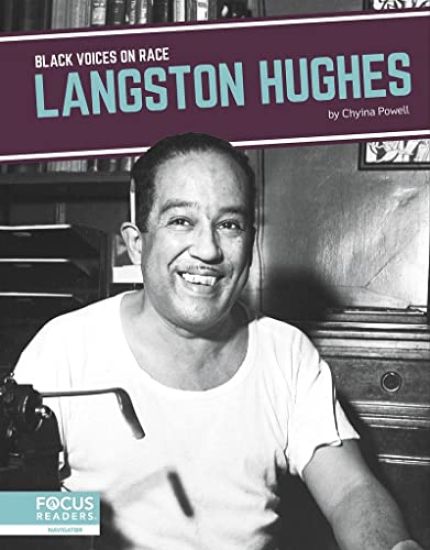
Chyina Powell

North Star Editions
2022
sidottu
This fascinating book introduces readers to the life and legacy of Langston Hughes, a Black poet and activist whose artistic and cultural contributions expanded and illuminated the collective conversation on race. The book includes a table of contents, a Consider This special feature, a biographical timeline, informative sidebars, quiz questions, a glossary, additional resources, and an index. This Focus Readers series is at the Navigator level, aligned to reading levels of grades 3-5 and interest levels of grades 4-7.
Langston Hughes

Langston Hughes

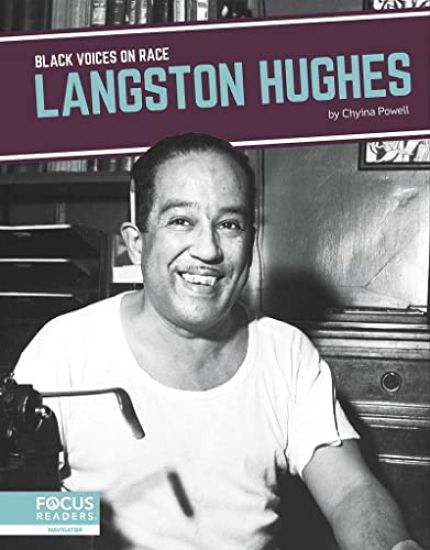
Chyina Powell

North Star Editions
2022
pokkari
This fascinating book introduces readers to the life and legacy of Langston Hughes, a Black poet and activist whose artistic and cultural contributions expanded and illuminated the collective conversation on race. The book includes a table of contents, a Consider This special feature, a biographical timeline, informative sidebars, quiz questions, a glossary, additional resources, and an index. This Focus Readers series is at the Navigator level, aligned to reading levels of grades 3-5 and interest levels of grades 4-7.
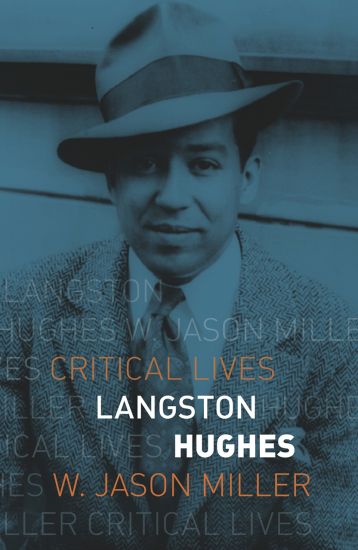
Langston Hughes

Langston Hughes

W. Jason Miller

Reaktion Books
2020
nidottu
As the first black author in America to make his living exclusively by writing, Langston Hughes inspired a generation of writers and activists. One of the pioneers of jazz poetry, Hughes led the Harlem Renaissance, while Martin Luther King invoked his signature metaphor of dreaming in his speeches. In this new biography, W. Jason Miller illuminates Hughes’s status as an international literary figure through a compelling look at the relationship between his extraordinary life and his canonical works. Drawing on unpublished letters and manuscripts, Miller addresses Hughes’s often ignored contributions to the civil rights movement of the 1960s and his complex and well-guarded sexuality, and repositions him as a writer, rather than merely the most beloved African American poet of the twentieth century.
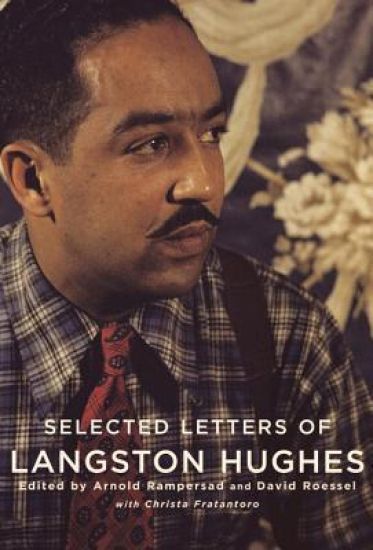
Selected Letters of Langston Hughes

Selected Letters of Langston Hughes

Langston Hughes

Knopf Publishing Group
2015
sidottu
This is the first comprehensive selection from the correspondence of the iconic and beloved Langston Hughes. It offers a life in letters that showcases his many struggles as well as his memorable achievements. Arranged by decade and linked by expert commentary, the volume guides us through Hughes's journey in all its aspects: personal, political, practical, and--above all--literary. His letters range from those written to family members, notably his father (who opposed Langston's literary ambitions), and to friends, fellow artists, critics, and readers who sought him out by mail. These figures include personalities such as Carl Van Vechten, Blanche Knopf, Zora Neale Hurston, Arna Bontemps, Vachel Lindsay, Ezra Pound, Richard Wright, Kurt Weill, Carl Sandburg, Gwendolyn Brooks, James Baldwin, Martin Luther King, Jr., Alice Walker, Amiri Baraka, and Muhammad Ali. The letters tell the story of a determined poet precociously finding his mature voice; struggling to realize his literary goals in an environment generally hostile to blacks; reaching out bravely to the young and challenging them to aspire beyond the bonds of segregation; using his artistic prestige to serve the disenfranchised and the cause of social justice; irrepressibly laughing at the world despite its quirks and humiliations. Venturing bravely on what he called the "big sea" of life, Hughes made his way forward always aware that his only hope of self-fulfillment and a sense of personal integrity lay in diligently pursuing his literary vocation. Hughes's voice in these pages, enhanced by photographs and quotations from his poetry, allows us to know him intimately and gives us an unusually rich picture of this generous, visionary, gratifyingly good man who was also a genius of modern American letters.