Kirjahaku
Etsi kirjoja tekijän nimen, kirjan nimen tai ISBN:n perusteella.
1000 tulosta hakusanalla Larry E. Tise
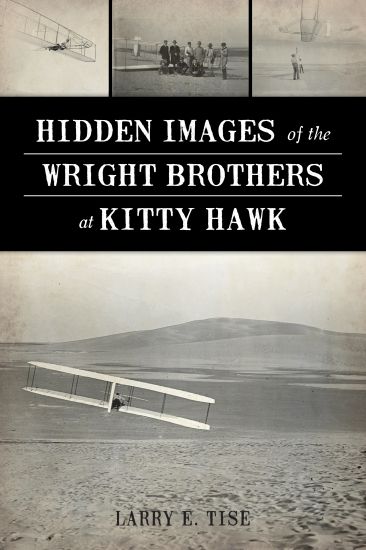
Despite their great achievements following their first powered flights in 1903, Wilbur and Orville Wright still enjoyed virtual anonymity until 1908. In seven crucial days in May of that year, however, the eyes of the world were suddenly cast upon them as they sought lucrative government contracts for their flying technology and then had to prove the capabilities of their machines. In these pivotal moments, the brothers were catapulted into unwanted worldwide fame as the international press discovered and followed their covert flight tests, and reported their every move using rudimentary telegraphs and early forms of photography. From the brothers' rise to fame on the historic Outer Banks, to the quickly expanding role of the world press and the flights' repercussions in war and military technology, Tise weaves a fascinating tale of a key turning point in the history of flight.
Probing at the very core of the American political consciousness from the colonial period through the early republic, this thorough and unprecedented study by Larry E. Tise suggests that American proslavery thought, far from being an invention of the slave-holding South, had its origins in the crucible of conservative New England.Proslavery rhetoric, Tise shows, came late to the South, where the heritage of Jefferson's ideals was strongest and where, as late as the 1830s, most slaveowners would have agreed that slavery was an evil to be removed as soon as possible. When the rhetoric did come, it was often in the portmanteau of ministers who moved south from New England, and it arrived as part of a full-blown ideology. When the South finally did embrace proslavery, the region was placed not at the periphery of American thought but in its mainstream.
When the world learned that Wilbur and Orville Wright had performed man's first powered, controlled flights at Kitty Hawk on December 17, 1903, that sleepy village became an international landmark. In addition to recording their first flight in one of the twentieth century's most famous photographs, the Wrights took hundreds of other images of the windswept clime and the people they met on North Carolina's coast. Historian Larry Tise uses their photographs to reveal people, places and events nowhere else recorded. Join Tise for a guided tour of the Wright brothers' Outer Banks encampment between 1900 and 1911.
The Southern Experience in the American Revolution
Larry E. Tise; Jeffrey J. Crow
The University of North Carolina Press
1979
nidottu
These essays pose new questions concerning the social and political origins of the Revolution in the South, the social disorder indiced by the war, and the impact of the conflict and its ideologies on blacks and women. Contributors are: Pauline Maier, Robert M. Weir, Jack P. Greene, Marvin L. Michale Kay, Lorin Lee Cary, John Shy, Clyde R. Ferguson, Mary Beth Norton, Michael Mullin, and Peter H. Wood.Originally published in 1978.A UNC Press Enduring Edition -- UNC Press Enduring Editions use the latest in digital technology to make available again books from our distinguished backlist that were previously out of print. These editions are published unaltered from the original, and are presented in affordable paperback formats, bringing readers both historical and cultural value.
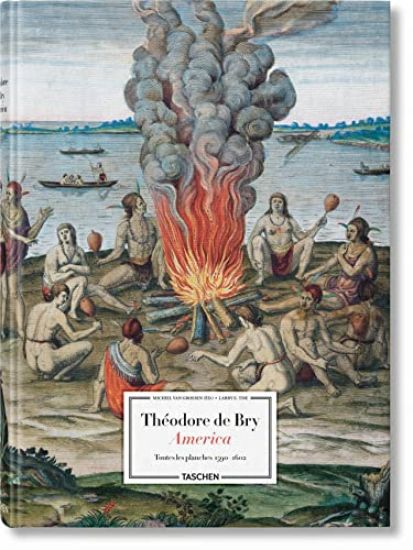
When Flemish engraver and publisher Theodore de Bry issued the first volume of his America series in 1590, the New World was, for most Europeans, truly novel. Gleaned from the travel accounts of adventurers like Thomas Harriot, Sir Francis Drake, and Sir Walter Raleigh, De Bry’s magnificent engravings brought the new continent and its inhabitants to an enraptured audience across the Atlantic. From “Virginia” (today’s North Carolina) and Florida through Central America and down into Patagonia, the first nine volumes of America depict scenery and encounters between native Americans and Europeans, revealing the latter’s perceptions of the former. Portrayals of European discovery and native American customs were based on the explorers’ reports as well as De Bry’s own imagination, he himself never having traveled to the New World. Although based in Frankfurt, De Bry laid the foundations of the series while in London, collaborating with artists John White and Jacques Le Moyne, whose original watercolors he adapted for the opening two volumes. With his sons, De Bry formed a family enterprise known for exquisite copper engravings and high-quality illustrations unrivaled in their mastery. The legacy of America is profound, coloring Europe’s earliest visions of the Atlantic world. Countless European illustrations would, throughout the following centuries, draw inspiration from the spectacular collection. TASCHEN’s edition pays homage to De Bry’s finesse, reprinting all 218 plates from the first nine volumes alongside their respective frontispieces and continental maps. Volumes I to VI are based on the original hand-colored editions held at the John Hay and John Carter Brown Libraries at Brown University in Providence; volumes VII to IX are from the Staats- und Stadtbibliothek in Augsburg, Germany.Exceptionally rare even at the time of their completion, De Bry’s hand-colored America can finally be admired by all, in XXL resolution.
When Flemish engraver and publisher Theodore de Bry issued the first volume of his America series in 1590, the New World was, for most Europeans, truly novel. Gleaned from the travel accounts of adventurers like Thomas Harriot, Sir Francis Drake, and Sir Walter Raleigh, De Bry’s magnificent engravings brought the new continent and its inhabitants to an enraptured audience across the Atlantic. From “Virginia” (today’s North Carolina) and Florida through Central America and down into Patagonia, the first nine volumes of America depict scenery and encounters between native Americans and Europeans, revealing the latter’s perceptions of the former. Portrayals of European discovery and native American customs were based on the explorers’ reports as well as De Bry’s own imagination, he himself never having traveled to the New World. Although based in Frankfurt, De Bry laid the foundations of the series while in London, collaborating with artists John White and Jacques Le Moyne, whose original watercolors he adapted for the opening two volumes. With his sons, De Bry formed a family enterprise known for exquisite copper engravings and high-quality illustrations unrivaled in their mastery. The legacy of America is profound, coloring Europe’s earliest visions of the Atlantic world. Countless European illustrations would, throughout the following centuries, draw inspiration from the spectacular collection. TASCHEN’s edition pays homage to De Bry’s finesse, reprinting all 218 plates from the first nine volumes alongside their respective frontispieces and continental maps. Volumes I to VI are based on the original hand-colored editions held at the John Hay and John Carter Brown Libraries at Brown University in Providence; volumes VII to IX are from the Staats- und Stadtbibliothek in Augsburg, Germany.Exceptionally rare even at the time of their completion, De Bry’s hand-colored America can finally be admired by all.
Theodore de Bry. The New World. 45th Ed.
Larry E. Tise; Michiel van Groesen
TASCHEN GMBH
2026
sidottu
When Flemish engraver and publisher Theodore de Bry issued the first volume of his America series in 1590, the New World was truly novel for most Europeans. Gleaned from the travel accounts of adventurers like Thomas Harriot, Sir Francis Drake, and Sir Walter Raleigh, De Bry’s magnificent engravings brought the new continent and its inhabitants to an enraptured audience across the Atlantic. From “Virginia” (today’s North Carolina) and Florida to Central America and down into Patagonia, the first nine volumes of America depict scenery and encounters between Native Americans and Europeans, revealing the latter’s perceptions of the former. Portrayals of European discovery and Native American customs were based on the explorers’ reports as well as De Bry’s own imagination – he himself never traveled to the New World. Although based in Frankfurt, De Bry laid the foundations of the series while in London, collaborating with artists John White and Jacques Le Moyne, whose original watercolors he adapted for the opening two volumes. With his sons, De Bry formed a family enterprise known for exquisite copper engravings and high-quality illustrations unrivaled in their mastery. The legacy of America is profound, coloring Europe’s earliest visions of the Atlantic world. Throughout the following centuries, countless European illustrations would draw inspiration from the spectacular collection. TASCHEN’s edition pays homage to De Bry’s finesse, reprinting all 218 plates from the first nine volumes alongside their respective frontispieces and continental maps. Volumes I to VI are based on the original hand-colored editions held at the John Hay and John Carter Brown Libraries at Brown University in Providence; volumes VII to IX are from the Staats- und Stadtbibliothek in Augsburg, Germany. Exceptionally rare even at the time of completion, De Bry’s hand-colored America can finally be admired by all.
Standing along the coast of today's Outer Banks, it can be hard to envision the barrier island world at Kitty Hawk as it appeared to Wilbur and Orville Wright when they first arrived in 1900 to begin their famous experiments leading to the world's first powered flight three years later. Around 1903, the islands and inland seas of North Carolina's coast were distinctive maritime realms-seemingly at the ends of the earth. But as the Wrights soon recognized, the region was far more developed than they expected. This rich photographic history illuminates this forgotten barrier island world as it existed when the Wright brothers arrived. Larry E. Tise shows that while the banks seemed remote, its maritime communities huddled near lighthouses and lifesaving stations and busy fisheries were linked to the mainland and offered precisely the resources needed by the Wrights as they invented flight. Tise presents dozens of newly discovered images never before published and others rarely seen or understood. His book offers fresh light on the life, culture, and environment of the Carolina coast at the opening of the twentieth century, an era marked by transportation revolutions and naked racial divisions. Tise subtly shows how unexplored photographs reveal these dramatic changes and in the process transforms how we've thought of the Outer Banks for more than a century.
Poems by Larry K: Christian...Comedy...Life Volume 2 #'s 173-273
Grant F. C. Gillard; Larry E. Kuntze
Createspace Independent Publishing Platform
2014
nidottu
Poems by Larry K - Volume 1: Christian...Comedy...Life #'s
Grant F. C. Gillard; Larry E. Kuntze
Createspace Independent Publishing Platform
2014
nidottu
Poems by Larry K - Volume 3: Christian...Comedy...Life
Grant F. C. Gillard; Larry E. Kuntze
Createspace Independent Publishing Platform
2015
nidottu
Beloved and respected poet, Larry Kuntze, writes from his home south of Jackson, Missouri, where he enjoys his retirement with his wife, Loretta. Larry tenderly observes the deeper richness of life, along with the sacred ironies that befall us all, often noting the unseen and gracious infusion of God's mercy as we travel along this journey we call, "life." Larry's poetry offers a unique perspective originating from the depth of his life and faith, his work and his most cherished relationships. He is a poet, a gentleman, and most of all, a friend.
Now, more than at any time since the 1960s, issues about race have taken center stage in America. From the killing of young black boys, to the travesty of mass incarceration, America is every day presented with evidence that the struggle for equality and justice is far from over. This book responds to many of the timely, sensitive, and often uncomfortable conversations that are taking place on our television screens, the front page of newspapers, on Twitter, and in homes around the country. Why Are They Angry With Us? attempts to resolve the questions and conflicts about race in America that have plagued our country from the days of Jim Crow, through the battle for civil rights, and remain with us today. The author's personal journey and his professional scholarship have lead him to an understanding of our collective history. This collection of eight essays relates racial incidents and observations to address the deep misunderstandings our country holds about race and attempt to explain the workings of race and racism in America. These essays attack the core of many commonly held attitudes which contribute to racism in America.
Guidelines for the Systematic Treatment of the Depressed Patient
Larry E. Beutler; John Clarkin; Bruce Bongar
Oxford University Press Inc
2000
sidottu
From initial consultation to termination of treatment, psychologists and other mental health practitioners make a series of crucial decisions to determine the progress and therapy of the patient. These decisions have varied implications such as the clinical course of the patient, the efficacy and efficiency of the treatment, and the cost of the sessions. Thus, the decisions made by mental health professionals need to be accurate and consistent, respecting a series of guidelines that will ultimately benefit the patient. This is the first in a series of guidebooks that is designed to do just that by providing practitioners with some structure in the development of treatment programmes. Previous guidelines have been based on consensus panels of experts or on the opinions of membership groups, causing guidelines to be very far off from the findings of empirical research. Here, guidelines are presented in terms of treatment principles rather than in terms of specific treatment models or theories, and they do not favour one theory of psychotherapy over another. Instead, they define strategies and considerations that can be woven into comprehensive treatment programmes. The entire series of guidebooks will cover numerous topics, including anxiety disorders, drug abuse, alcohol abuse, and treatment of serious mental disorders. This volume will cover in detail the nature of depression, issues in treatment research, contemporary treatments, and implications for education and training. It is ideal for postgraduates and professionals in the mental health field and is intended to provide important background on treatment of non-bipolar depressive disorders.
Am I Crazy, Or Is It My Shrink?
Larry E. Beutler; Bruce Bongar; Joel N. Shurkin
Oxford University Press Inc
1998
sidottu
With over 400 types of psychotherapy available, ranging from the highly effective to the highly questionable to the downright fraudulent, the task of choosing a therapist can be daunting. Now, Am I Crazy Or Is My Shrink? gives you all the information you need to get the most effective help and to know when your therapy is working--or when it's time for a change. Drawing on years of practical experience and the most up-to-date research, the authors give you expert guidance on all the issues you should consider, whether you're seeking therapy or uncertain about the therapy you're receiving: What questions should I ask my therapist about a recommended treatment? What personal qualities and professional qualifications should I look for in a therapist? What do research studies say about the effectiveness of a particular therapy? How do I recognize when a therapist is not right for me? How can I tell when my therapist's behavior is unethical or unprofessional? What strategies can I use to evaluate my progress? The authors also provide an overview of the main branches of psychotherapy and suggest which approaches are best suited to the most commonly occurring problems, such as depression, anxiety, obsessive-compulsive disorders, eating disorders, relationship and sexual difficulties, and many others. Finally, the authors stress that because therapies don't come with warning labels, and because a therapist will typically apply his or her theory to whoever walks through the door, regardless of their unique symptoms and circumstances, it is essential to choose your therapist wisely, with as much forethought as possible. Am I Crazy Or Is My Shrink? empowers you to make that choice with confidence and to be a knowledgeable participant in your own treatment.
Prescriptive Psychotherapy
Larry E. Beutler; T. Mark Harwood
Oxford University Press Inc
2000
sidottu
A brief reference book for professional psychotherapists. It is inteneded to help practising clinicians select the appropriate therapeutic procedure for various patients.
When individuals, businesses, or corporations are dissatisfied with an existing law, there are typically two ways it can be fixed: by rewriting the law via political mechanisms or simply physically relocating to a more favorable jurisdiction. Both can be costly and time-consuming. This book explores a new way of looking at law, not as something that can be changed only through cumbersome political and legislative processes or avoided by physical movement, but as something that can be shopped for in a market. To a significant extent this perspective on the law is already a reality. Wherever they may be located, corporations are free to choose in which state to incorporate (often Delaware) and online shoppers from one state or country who buy from a company located in another state or country usually agree to provisions that dictate the law governing the transaction from yet another state or country. Disconnecting the choice of law from the location of activities creates a market for law that allows the involved parties to choose which jurisdiction will apply to their relationship, contract, or dispute. The resulting law markets, Ribstein and O'Hara argue, can work to increase efficiency, create better laws, and ensure that laws in all jurisdictions serve the interests of those they govern.
The Rise of the Uncorporation covers the history, law, and finance of unincorporated firms. These "uncorporations" including general and limited partnerships and limited liability companies, are now the dominant business form of non-publicly-traded firms. Through private equity and publicly traded partnerships, uncorporations have emerged as a significant force in the governance of a wide range of the biggest firms. This is the first general theoretical and practical overview of alternatives to incorporation, including ancillary concepts connected with the evolution of these firms, and analysis of likely future trends in business organization. The Rise of the Uncorporation provides a clear and easily understandable theoretical and practical background to this important subject.
The clash between scholarship and politics—between truth and propaganda—was ruthless for historians in Istpart, the Russian Communist Central Committee's official historical department. Istpart was tasked with preserving the documentary record, compiling memoirs, and upholding ideological conformism within the national narrative of the 1917 revolution. In Revising the Revolution, Larry E. Holmes examines the role of Istpart's historians, in both the Moscow office and a regional branch in Viatka, who initially believed they could adhere to the traditional standards of research and simultaneously provide a history useful to the party. However, they quickly realized that the party rejected any version of history that suggested nonideological or nonpolitical sources of truth. By 1928, Istpart had largely abandoned its mission to promote scholarly work on the 1917 revolution and instead advanced the party's master narrative. Revising the Revolution explores the battle for the Russian national narrative and the ways in which history can be used to centralize power.