

Kirjahaku
Etsi kirjoja tekijän nimen, kirjan nimen tai ISBN:n perusteella.
1000 tulosta hakusanalla Larry L. Eddings

This 90,000 word novel involves the life of a fifty-something black woman who, following a short-lived and devastating marriage, finds work in the King County system, ultimately as Court Stenographer. She encounters belligerent youth, judges like Horatio Morgan and inept defense attorneys who challenge her ethical and moral values. A convicted felon escapes custody, then terrorizes and threatens the life of everyone related to his conviction, including the court stenographer. Having previously worked with aggressive youth in the King County Juvenile Service Center, Shirley decided to find ways to legitimately defend herself. This ultimately proves to be instrumental in foiling an attempted robbery. It also serves to save her life in a later encounter with the escaped felon. While on vacation in a tropical paradise and away from the often hostile environment of her workplace, she meets a man who desires for her to spend all her ma anas with him. It could be like a dream come true, but it would mean moving to another country and learning another language. In the end, it could be well worth it - in more ways than one.

Growing Up Into Christ is written as a guide to Spiritual Formation for those who are Disciples of Jesus Christ and who have a desire to grow in their spiritual maturity. God's Holy Spirit "grows us up into the image of Jesus."

A Place Of Refuge: A safe place for youth and adults who find themselves trapped in unhealthy lifestyles or homes.
Larry L. Eddings
Createspace Independent Publishing Platform
2017
nidottu
Where do you go to get away from the very ones with whom you once felt safe, but discover that is no longer the case? How do you find a safe place, far away from the ones who abuse you and take advantage of you? What do you do when you know you do not want to move yet again? Phyllis discovered that she and her two little boys could no longer take the abuse meted out by a once loving and caring, prize fighter husband. She needed to find a safe place to escape the constant verbal and physical barrage that left her without feeling or any sense of self-worth. Perhaps the new family that just moved to town can help her find such a place. Rollie wanted more than anything to finish his senior year in the local high school. He liked living here and he liked playing basketball with his best friend, Arnie. He liked Coach Richardson and his family who lived across the street. However, his mother has informed him that they were moving again, like so many other times before. He didn't like the men who were hanging out at his house, especially the Terrance guy who got his mother and sister hooked on drugs and also involved in other things. What can a high school kid do to get away from that lifestyle and find a better way of life? Maybe sleeping in his car is the answer, until something better can be found. The whole county, once a peaceful and quiet place to raise your children, seems to have been overrun by a group that is enticing the youth to get involved in a lifestyle that leads to destruction. And yet, sometimes there are those in that very group who experience a change of heart. Their once seared conscience is touched and awakened by some of the very kids they had been helping to destroy. Perhaps they can provide some answers that will help the county become a safe place to live once again. And too, they understand that when they tell what they know, it could mean placing in danger their own lives as well as the lives of the very ones they love. Still, it has to be done, regardless

One of the great questions with which the human race is confronted is that of what happens when life here on earth is finished? Is there life after death? All major religions have a belief system that deals with this question. Some systems state simply that there is nothing after death. Since there is no afterlife, then "eat, drink and be merry, for tomorrow we die." The Christian faith that focuses on the Life, Death and Resurrection of Jesus, believes that there is life after death. That life is made possible through belief in him as the Way, the Truth and the Life and anyone may come to God through him. The Holy Bible, Scriptures, provides God's direction for how that happens. We are saved by God's grace through faith. That salvation is God's gift to all who will receive Jesus as their Savior. And by that Grace, we are given a place in God's eternal Kingdom of Heaven, where there is no more death, sorrow, suffering, sickness or pain anymore. Heaven is the eternal habitation of those who believe in Jesus and allow God's Holy Spirit to transform us into the image of Jesus, preparing us for our eternal home with him.

It Came To Pass: Life's Short Stories
Larry L. Eddings
Createspace Independent Publishing Platform
2018
nidottu
Real life stories illustrate the truth that life is often stranger than fiction. It also proves to be more exciting, hopeful and fulfilling than that which is imagined. Real life stories demonstrate the truth of what Jesus said, "He came that we might have life and have it abundantly, or to the full." He came also so that those who live and believe in him, have eternal life. Even an abundant and full life here on earth ultimately comes to an end. However, the eternal life of which Jesus spoke, has no end. It lasts forever. Some things come to pass. Other things come to last.

From the archives of the Southwestern Writers Collection at Southwest Texas State University, former curator Richard Holland has selected from among thousands of Larry L. King's letters dealing with the daily warp and woof of an American writer alternately giddy with success and doubting his own talents. The result is a crazy ride of almost fifty years on a roller coaster of many dips, loops, and steep climbs. As a Texas farm boy, young Lawrence Leo King wrote postcards or tablet-paper letters of advice and/or instruction to--among others--FDR, Winston Churchill, quarterback Sammy Baugh, writer James M. Cain, upcoming football opponents, pen pals in distant lands, and relatives. As a young newspaperman, his complaints of "jackass rules" so bedeviled J. Edgar Hoover that the top G-man handed him off to subordinates and, ultimately, "The Bureau" quit responding. King has feuded in public print with Burt Reynolds, Norman Podhoretz, Tommy Tune, his own book editors and publishers, Universal Picture moguls, his collaborators in writing projects, professional critics, and some "fans" who had the temerity to write less than admiring letters. Norman Mailer, William Styron, Willie Morris, Dan Jenkins and Bud Shrake are just a few of the many writers with whom King long has corresponded. Politicians include former Speaker of the House Jim Wright, Congressman Mo Udall, and Senator Ralph Yarborough. Show-biz types count directors Mike Nichols and Peter Masterson and actors Dan Blocker and Henderson Forsythe. But it is to old Texas friends that King truly lets his hair down in telling intimate secrets of the salts and sours of the literary life that has been his for almost forty years.
Computer Networks ISE, Fifth Edition, is the sole introductory networking book written by authors with first-hand experience with several of the protocols covered in the book who have actually designed some of them as well and who are still actively designing the computer networks today. The newly revised edition continues to offer an enduring, practical understanding of networks and their building blocks through rich, example-based instruction. The focus is not just on the specifications comprising today’s systems but how key technologies and protocols actually work in real-world setting to solve specific problems. The new edition features increased accessibility by clearly separating the advanced material from more fundamental via special headings and boxed features, a structure that makes it easier to teach top-down, less dependence on code to explain protocols, vastly improved ancillary package to include robust lecture slide package, and shift to higher levels in the protocol stock where the real innovation is happening currently. the book is targeted at networking professionals and upper level undergraduate and graduate students in CS, EE, and CSE programs.

Computer Networks: A Systems Approach, Sixth Edition, explores the key principles of computer networking, using real world examples from network and protocol design. Using the Internet as the primary example, this best-selling classic textbook explains various protocols and networking technologies. The systems-oriented approach encourages students to think about how individual network components fit into a larger, complex system of interactions. This sixth edition contains completely updated content with expanded coverage of the topics of utmost importance to networking professionals and students, as provided by numerous contributors via a unique open source model developed jointly by the authors and publisher. Hallmark features of the book are retained, including chapter problem statements, which introduce issues to be examined; shaded sidebars that elaborate on a topic or introduce a related advanced topic; What’s Next? discussions that deal with emerging issues in research, the commercial world, or society; and exercises. This book is intended primarily for graduate or upper-division undergraduate classes in computer networking. It will also be useful for industry professionals retraining for network-related assignments, as well as for network practitioners seeking to understand the workings of network protocols and the big picture of networking.
Thoughtful observers agree that the planetary crisis we now face-climate change; species extinction; the destruction of entire ecosystems; the urgent need for a more just economic-political order-is pushing human civilization to a radical turning point: change or perish. But precisely how to change remains an open question. In Earth-honoring Faith, Larry Rasmussen answers that question with a dramatically new way of thinking about human society, ethics, and the ongoing health of our planet. Rejecting the modern assumption that morality applies to human society alone, Rasmussen insists that we must derive a spiritual and ecological ethic that accounts for the well-being of all creation, as well as the primal elements upon which it depends: earth, air, fire, water, and sunlight. He argues that good science, necessary as it is, will not be enough to inspire fundamental change. We must draw on religious resources as well to make the difficult transition from an industrial-technological age obsessed with consumption to an ecological age that restores wise stewardship of all life. Earth-honoring Faith advocates an alliance of spirituality and ecology, in which the material requirements for planetary life are reconciled with deep traditions of spirituality across religions, traditions that include mysticism, sacramentalism, prophetic practices, asceticism, and the cultivation of wisdom. It is these shared spiritual practices that can produce a chorus of world faiths to counter the consumerism, utilitarianism, alienation, oppression, and folly that have pushed us to the brink. Written with passionate commitment and deep insight, Earth-honoring Faith reminds us that we must live in the present with the knowledge that the eyes of future generations will look back at us.
Larry L. Rasmussen offers a dramatic new way of thinking about human society, ethics, and the health of our planet. Rejecting the modern ethical assumption that morality applies to human society alone, Earth-honoring Faith argues that we must derive a system of ethics and morality that accounts for the wellbeing of all creation on Earth, as well as the primal elements upon which it depends: earth, air, fire, water, and sunlight. Rasmussen shows that religious resources are essential in the difficult transition from an industrial-technological age to an ecological one. He advocates an alliance of spirituality and ecology, in which the requirements for planetary life are reconciled with the deep traditions of spirituality across religions -- mysticism, sacramentalism, asceticism, prophetic/liberative practices, and wisdom. These millennial, cross-cultural traditions are in need of their own conversion, however, if they are to be Earth-healing. Rasmussen poses critical questions: Are moral-spiritual traditions as we know them Earth-honoring or not? If not, how might they be? How might religious imagination expand the measure of the mind and heart in the service of planetary health? Who is leading the way? Rasmussen shows that by seeking to answer these questions, we can cease confining our moral views and daily habits to human society, instead placing them in the full community of earthly life. Joined to science and technology, religious ethics can find a new key for a new geological age: the Anthropocene. As Rasmussen demonstrates, fidelity to God can be lived more fully as fidelity to God and Earth.
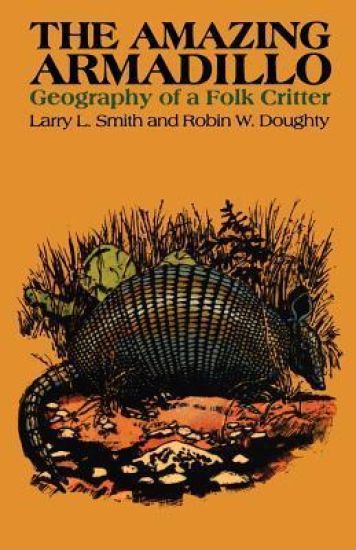
Perhaps no creature has so fired the imagination of a populace as the armadillo-that most ungainly, awkward, and timid little animal. Its detractors call it a varmint and wish it good speed from the Lone Star State and its other natural territories. But its supporters claim that it is the animal kingdom's representative of all that's truly Texan: tough, pioneering, adaptable, and generous in sharing its habitation with others. What is it that sets this quizzical little creature apart from the rest of the animal kingdom? Larry L. Smith and Robin W. Doughty ably answer this question in The Amazing Armadillo: Geography of a Folk Critter. This informative book traces the spread of the nine-banded armadillo from its first notice in South Texas late in the 1840s to its current range east to Florida and north to Missouri. The authors look at the armadillo's natural history and habitat as well as the role of humans in promoting its spread, projecting that the animal is increasing in both range and number, continuing its ecological success in areas where habitat and climate are favorable. The book also contributes to a long-standing research theme in geography-the relationship between humans and wildlife. It explores the armadillo's value to the medical community in current research in Hansen's Disease (leprosy) as well as commercial uses, and abuses, of the armadillo in recent times. Of particular note is the author's engaging look at the armadillo as a symbol of popular culture, the efforts now underway to make it a "totem animal" symbolizing the easy-going lifestyles of some Sunbelt cities, and the spread of the craze for armadilliana to other urban centers.
This book will help students of German language, literature, and civilization to develop their skills in using the resources and services of college and university libraries. Not restricted to the traditional study of German language and literature, the book also guides the student over the bibliographic terrain of German history; prehistory and folklore; philosophy and religion; and art, music, and cinema. Dr. Richardson begins with a practical overview of bibliographic access systems--catalogs, indexes, abstracts, and bibliographies--and of basic search strategies for effective library research, An annotated bibliography, the largest section of the book, describes the most important research tools in German studies, as well as representative examples of specialized resources needed by the advanced scholar. The book concludes with a review of supplementary resources, including books about German reference works, books on how to write research papers, and data bases for computerized literature searches. Appendixes list library classification systems and subject headings for German studies.
This book introduces Germanists to the mechanics and methodology of modern library research. It explains the use of various bibliographic access systems, providing step-by-step search strategies to the most modern computerized data bases for the whole field of German studies.

Structural and Functional Relationships in Prokaryotes
Larry L. Barton
Springer-Verlag New York Inc.
2004
sidottu
For several decades, bacteria have served as model systems to describe the life p- cesses of growth and metabolism. In addition, it is well recognized that prokaryotes have contributed greatly to the many advances in the areas of ecology, evolution, and biotechnology. This understanding of microorganisms is based on studies of members from both theBacteria andArchaea domains. With each issue of the various scienti?c publications, new characteristics of prokaryotic cells are being reported and it is - portant to place these insights in the context of the appropriate physiological processes. Structural and Functional Relationships in Prokaryotes describes the fundamental physiological processes for members of the Archaea and Bacteria domains. The - ganization of the book re?ects the emphasis that I have used in my 30 years of teaching a course of bacterial physiology. The philosophy used in the preparation of this book is to focus on the fundamental features of prokaryotic physiology and to use these features as the basis for comparative physiology. Even though diverse phenotypes have evolved from myriad genetic possibilities, these prokaryotes display considerable functional similarity and support the premise that there is a unity of physiology in the prokaryotes. The variations observed in the chemical structures and biochemical p- cesses are important in contributing to the persistence of microbial strains in a speci?c environment.
Magnetocumulative Generators
Larry L. Altgilbers; Mark D.J. Brown; Igor Grishnaev; Bucur M. Novac; Ivor R. Smith; Yuriy Tkach; Iaroslav Tkach
Springer-Verlag New York Inc.
2000
sidottu
Devices that convert explosive energy into electromagnetic energy are often called Flux Compression Generators (FCGs) in the United States, whereas the term Magnetocumulative Generators (MCGs) is more com monly used in Russia. Since the Russian literature is accessed more heavily in this book, the latter term is used here. In any event, the basic process involves using explosives to force an initial magnetic flux into a region of smaller inductance in such a manner that loss of flux is minimized. In the event that no flux is lost, the magnetic energy associated with the flux, inversely proportional to the inductance, must increase. Flux loss is min imized by confining it with good conductors which, in turn, are driven rapidly by the explosive to reduce the system inductance. The magnetic energy is increased by the work the conductors do as they are forcibly moved against the magnetic field, the energy, in turn, being supplied by the explosive driving them. As the reader may infer, there are different kinds of generators, some of which might be difficult to recognize as MCGs. Nonetheless, they all possess the features outlined above. Explosives have some unique features as energy sources. They have very high available energy densities; they release energy rapidly, or at high power; they can develop very high pressures.
This book covers the ecological activities of microbes in the biosphere with an emphasis on microbial interactions within their environments and communities In thirteen concise and timely chapters, Microbial Ecology presents a broad overview of this rapidly growing field, explaining the basic principles in an easy-to-follow manner. Using an integrative approach, it comprehensively covers traditional issues in ecology as well as cutting-edge content at the intersection of ecology, microbiology, environmental science and engineering, and molecular biology. Examining the microbial characteristics that enable microbes to grow in different environments, the book provides insights into relevant methodologies for characterization of microorganisms in the environment. The authors draw upon their extensive experience in teaching microbiology to address the latest hot-button topics in the field, such as: Ecology of microorganisms in natural and engineered environmentsAdvances in molecular-based understanding of microbial phylogeny and interactionsMicrobially driven biogeochemical processes and interactions among microbial populations and communitiesMicrobial activities in extreme or unusual environmentsEcological studies pertaining to animal, plant, and insect microbiologyMicrobial processes and interactions associated with environmental pollution Designed for use in teaching, Microbial Ecology offers numerous special features to aid both students and instructors, including: Information boxes that highlight key microbial ecology issues"Microbial Spotlights" that focus on how prominent microbial ecologists became interested in microbial ecologyExamples that illustrate the role of bacterial interaction with humansExercises to promote critical thinkingSelected reading listsChapter summaries and review questions for class discussion Various microbial interactions and community structures are presented through examples and illustrations. Also included are mini case studies that address activities of microorganisms in specific environments, as well as a glossary and key words. All these features make this an ideal textbook for graduate or upper-level undergraduate students in biology, microbiology, ecology, or environmental science. It also serves as a highly useful reference for scientists and environmental professionals.

A concise survey of compliant mechanisms-from fundamentals to state-of-the-art applications This volume presents the newest and most effective methods for the analysis and design of compliant mechanisms. It provides a detailed review of compliant mechanisms and includes a wealth of useful design examples for engineers, students, and researchers. Concise chapters guide the reader from simple to more challenging concepts-using examples of increasing complexity-eventually leading to real-world applications for specific types of devices. The author focuses on compliant mechanisms that can be designed using both standard linear beam equations and more advanced pseudo-rigid-body models. He describes a number of special-purpose compliant mechanisms that have use across a wide range of applications and discusses compliant mechanisms in microelectromechanical systems (MEMS) with several accompanying MEMS examples. Coverage of essential topics in strength of materials, machine design, and kinematics is provided to allow for a self-contained book that requires little additional reference to solve compliant mechanism problems. This information can be used as a refresher on the basics or as resource material for readers from other disciplines currently working in MEMS. Compliant Mechanisms serves as both an introductory text for students and an up-to-date resource for practitioners and researchers. It provides comprehensive, expert coverage of this growing field.

The Cambridge Dictionary of Human Biology and Evolution
Larry L. Mai; Marcus Young Owl; M. Patricia Kersting
Cambridge University Press
2005
pokkari
The Dictionary of Human Biology and Evolution (DHBE) is an invaluable research and study tool for both professionals and students covering a broad range of subjects within human biology, physical anthropology, anatomy, auxology, primatology, physiology, genetics, paleontology and zoology. Packed with 13000 descriptions of terms, specimens, sites and names, DHBE also includes information on over 1000 word roots, taxonomies and reference tables for extinct, recent and extant primates, geological and oxygen isotope chronologies, illustrations of landmarks, bones and muscles and an illustration of current hominid phylogeny, making this a must-have volume for anyone with an interest in human biology or evolution. DHBE is especially complete in its inventory of archaeological sites and the best-known hominid specimens excavated from them, but also includes up-to-date information on terms such as in silico, and those relating to the rapidly developing fields of human genomics.