Kirjahaku
Etsi kirjoja tekijän nimen, kirjan nimen tai ISBN:n perusteella.
1000 tulosta hakusanalla Larry M. Wortzel
[T]he book is splendid. Wortzel combines his expertise in Sinology with his meticulous attention to epistemology and methodology in studying the class structure and stratification in Maoist China, accomplishing the rare feat of freeing himself from ideological bias and parochial ethnic subjectivity. . . . It is indeed refreshing to read Wortzel's realistic book. Journal of Third World StudiesAlthough the hierarchy of class is said to have been replaced with distinctions between the friends and enemies of Communism, Larry Wortzel argues that the Chinese Communist Party has in reality evolved into a ruling class which serves its own interests. Drawing on literature from dissident Marxists and using analyses of writings from underground journals and the Beijing publication People's Literature, the author examines perceptions of social stratification and finds that the determinants of social and economic standing now appear to depend on lines of management and authority, residence in urban or rural areas, and Party membership, especially when combined with positions of authority This work presents one of the first comprehensive analyses of the class system in socialist China as it exists in practice rather as conceived in theory.
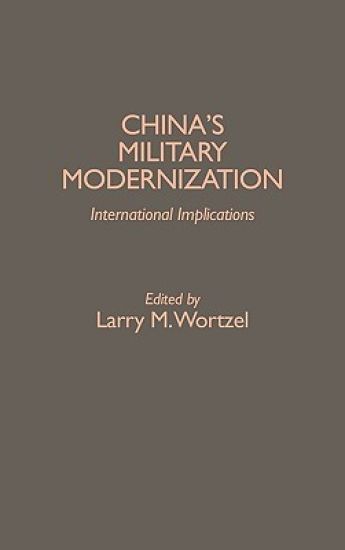
Some of the key aspects of doctrinal, manpower, and technical modernization of China's armed forces are the subject of this unique collection of essays. The volume goes beyond a limited assessment of China's military modernization, to stress the implications of modernization with respect to regional Asian security and the broader international scene. Varying perspectives on China's military modernization are presented against a framework that considers U.S. national security policy, the Strategic Defense Initiative, and strategic trade with China, in addition to China's own nuclear deterrent and its military posture vis-a-vis the Soviet Union, Japan, and Southeast Asia. The critical issue of China's defense modernization is presented in light of practical, domestic, political, and economic constraints on defense modernization facing the Beijing government.
Tracking the evolution of the Red Army through the war against Japan and the Chinese civil war, Wortzel's book provides a comprehensive basic reference focusing on the major events, people, and issues that have produced the historical legacy of the People's Liberation Army. Placing contemporary Chinese military history in the context of China's 19th century clashes with the West and Japan, Wortzel illustrates how the imposition of unequal treaties by foreign powers conditioned China's 20th century defense forces and actions and explains how the Communist military forces developed. It also shows how fractionalization in the Communist military leadership led to the Cultural Revolution and Mao Zedong's purges.Drawing on a substantial number of sources available only in Chinese as well as on English-language secondary sources, the book provides a basic reference aimed at orienting the nonspecialist to the significant events and people in China's recent military history. The book will also provide a quick reference for the specialist in Chinese history.
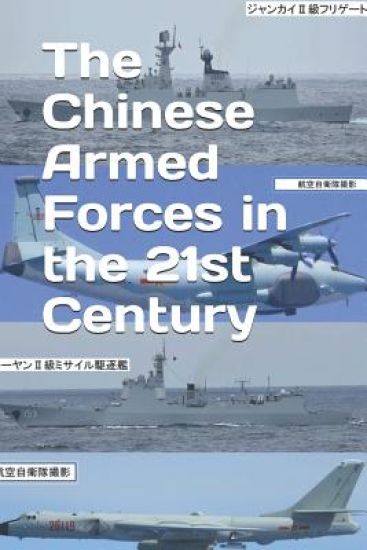
The Chinese Armed Forces in the 21st Century
The Chinese People's Liberation Army and Information Warfare
Larry M. Wortzel
Independently Published
2019
nidottu
China has evolved from a nation with local and regional security interests to a major economic and political power with global interests, investments, and political commitments. It now requires a military that can project itself around the globe, albeit on a limited scale, to secure its interests. Therefore, as Larry M. Wortzel explains, the Chinese Communist Party leadership has charged the People’s Liberation Army (PLA) with new and challenging missions that require global capabilities. Advances in technology and the development of indigenous weapons platforms in China, combined with reactions to modern conflicts, have produced a military force very different from that which China has fielded in the past. Wortzel presents a clear and sobering picture of the PLA’s modernization effort as it expands into space and cyberspace, and as it integrates operations in the traditional domains of war. This book will appeal to the specialist in security and foreign policy issues in Asia as well as to the person interested in arms control, future warfare, and global military strategies. The book puts China’s military growth into historical context for readers of recent military and diplomatic history.
The Chinese People's Liberation Army and Information Warfare
Larry M. Wortzel; Strategic Studies Institute; U.S. Army War College
Lulu.com
2014
nidottu
On November 23, 2013, China's Ministry of National Defense spokesman announced that a new air defense intercept zone (ADIZ) will be established by the government to include the Diaoyu, or Senkaku Islands. Sovereignty over these islands is disputed by Japan, China, and Taiwan. The new ADIZ also included a submerged rock that falls inside overlapping Exclusive Economic Zones (EEZ) claimed by China, Japan, and South Korea. Pundits and policy analysts quickly engaged in a broad debate about whether China's expanded ADIZ is designed to create tension in Asia, or is part of a broader plan to impose a new definition of China's territorial space in the Asia-Pacific region. Meanwhile, to deal with cyber penetrations attributed to the Chinese People's Liberation Army (PLA), the U.S. Departments of Justice, Homeland Security, and State are devising new means to protect intellectual property and secrets from the PLA's computer network operations.
China's Nuclear Forces: Operations, Training, Doctrine, Command, Control, and Campaign Planning
Larry M. Wortzel; Strategic Studies Institute
Lulu.com
2014
nidottu
A decade ago, many scholars and policy analysts who followed China dismissed the People's Liberation Army (PLA) as an antiquated force that was essentially infantry, fighting with decades-old weapons, poor communications, and World War II era doctrine. China's nuclear forces were also technologically outmoded and fixed to silo or tunnel launch sites. Very little information was available about China's "Second Artillery Corps," as China calls its strategic rocket forces. The United States knew that the PLA maintained a separate corps of rocket troops, but its doctrine and command and control structures remained shrouded in secrecy. Chinese diplomats, political leaders, and security thinkers regularly announced that China would adhere to a "no first use" policy, but very little published military information was available about how China intended to use its missile forces in crisis or war.
Shaping China's Security Environment
Andrew Scobell; Larry M Wortzel
Hutson Street Press
2025
sidottu
Shaping China's Security Environment
Andrew Scobell; Larry M Wortzel
Hutson Street Press
2025
pokkari
Shaping China's Security Environment: the Role of the People's Liberation Army
Andrew Scobell; Larry M. Wortzel; Strategic Studies Institute
Lulu.com
2014
nidottu
This is the eighth volume on the People's Liberation Army (PLA) to be published by the Strategic Studies Institute. It is the product of a conference held at Carlisle Barracks, Pennsylvania, from September 23-25, 2005, to examine the PLA and the global security environment in which it operates. This gathering was the 18th in a series of annual conferences on China's PLA. I have been privileged to be involved with and/or attend most of these gatherings over the years. At the 2005 conference, I was honored to deliver the keynote address in which I offered some of my insights and observations about China derived from a lifetime of living in or working on the Middle Kingdom. More than 50 experts on China participating in this conference provided critical comments and guidance on the initial drafts of the chapters included in this volume.
Chinese National Security Decisionmaking Under Stress
Andrew Scobell; Larry M. Wortzel; American Enterprise Institute
Lulu.com
2014
nidottu
National security decisionmaking under stress or crisis management is something with which I have had some firsthand experience over the course of my career in government service. Most relevant to the topic of this edited volume is my tour of duty as U.S. Ambassador in Beijing which began in May 1989-a month before Tiananmen of June 3 and 4. In my position as chief U.S. diplomat in China, I was an actor and an observer-along with many dedicated and resourceful U.S. Embassy personnel-to the events that constituted a case study of Chinese communist crisis management. My colleagues and I were witnesses to what, in my judgment, constituted one of the gravest crises to the communists' control of China since 1949. We engaged the Chinese leadership during this time of tension and precipitous action.
China's Growing Military Power: Perspectives on Security, Ballistic Missiles, and Conventional Capabilities
Andrew Scobell; Larry M. Wortzel
Lulu.com
2014
nidottu
The tenor of U.S.-China relations for much of the first year of the administration of President George W. Bush was set by a crisis that need not have occurred. How the situation was handled and eventually resolved is instructive. It tells us about a beleaguered communist leadership in the buildup to major generational transition (scheduled for late 2002 and early 2003) and the mettle of a democratically elected U.S. government tested early in its tenure by a series of foreign policy crises and a carefully coordinated set of devastating terrorist strikes against the continental United States. The way the April 2001 crisis on Hainan Island was resolved must be chalked up as a success for the United States. the key was Washington's ability to convince Beijing that holding the air crew was hurting, and not advancing, Chinese interests.
Taking the Fight to the Enemy: Chinese Thinking About Long-Distance and Expeditionary Operations
Strategic Studies Institute (SSI); Larry M. Wortzel
Lulu.com
2016
nidottu
The Chinese People's Liberation Army (PLA) was once focused on China's immediate periphery. The PLA Navy had no "blue water" naval capabilities and very limited combat logistics support. The Air Force could not fly long-distance missions overwater or operate effectively in conjunction with the Navy or naval air forces; nor could it coordinate joint, precision strikes with the missiles of the Second Artillery. Land forces, meanwhile, could move effectively within China by rail, and could operate on China's periphery, but were neither capable of nor equipped for long-distance force projection. Dr. Larry M. Wortzel's Letort Paper analyzes a body of literature that provides internal critiques of PLA capabilities. He starts with an analysis of the book Long-Distance Operations, by a strategist from the Academy of Military Science of the Chinese PLA, published in 2007.
The Lessons of History: the Chinese People's Liberation Army at 75
Laurie Burkitt; Andrew Scobell; Larry M. Wortzel
Lulu.com
2014
nidottu
With the armed forces of the People's Republic of China celebrating their 75th anniversary on August 1, 2002, it only seemed appropriate and timely to take stock of the world's largest military. The People's Liberation Army (PLA) has officially been in existence for three-quarters of a century, and its history is one filled with turmoil and warfare. One weekend in September 2002, a group of PLA specialists gathered at Carlisle Barracks, the home of the U.S. Army War College, to assess what lessons China's soldiers had drawn from the history of their own armed forces. This volume constitutes the final product of months of extensive research by the individual authors and hours of intense discussion at the 3-day conference by approximately 50 participants. The conference was sponsored jointly by the American Enterprise Institute, the Heritage Foundation, and the U.S. Army War College. It is with great pleasure that I commend this book to anyone with a serious interest in the Chinese military.
A Twenty-First Century Approach to Community Change
Larry M. Gant; Leslie Hollingsworth; Patricia L. Miller
Oxford University Press Inc
2017
sidottu
Urban renewal has been the dominant approach to revitalizing industrialized communities that fall into decline. A national, community-based organization, the Skillman Foundation sought to engage in a joint effort with the University of Michigan's School of Social Work to bring six neighborhoods in one such declining urban center, Detroit, back to positions of strength and national leadership. A Twenty-First Century Approach to Community Change introduces readers to the basis for the Foundation's solicitation of social work expertise and the social context within which the work of technical assistance began. Building on research, the authors introduce the theory and practice knowledge of earlier scholars, including the conduct of needs assessments at multiple levels, engagement of community members in identifying problem-solving strategies, assistance in developing community goals, and implementation of social work field instruction opportunities. Lessons learned and challenges are described as they played out in the process of creating partnerships for the Foundation with community leaders, engaging and maintaining youth involvement, managing roles and relationships with multiple partners recruited by the Foundation for their specialized expertise, and ultimately conducting the work of technical assistance within a context of increasing influence of the city's surrounding systems (political, economic, educational, and social). Readers will especially note the role of technical assistance in an evolving theory of change.
Larry M. Jorgensen provides a systematic reappraisal of Leibniz's philosophy of mind, revealing the full metaphysical background that allowed Leibniz to see farther than most of his contemporaries. In recent philosophy much effort has been put into discovering a naturalized theory of mind. Leibniz's efforts to reach a similar goal three hundred years earlier offer a critical stance from which we can assess our own theories. But while the goals might be similar, the content of Leibniz's theory significantly diverges from that of today's thought. Perhaps surprisingly, Leibniz's theological commitments yielded a thoroughgoing naturalizing methodology: the properties of an object are explicable in terms of the object's nature. Larry M. Jorgensen shows how this methodology led Leibniz to a fully natural theory of mind.