Laura Elizabeth Howe Richards (February 27, 1850 - January 14, 1943) was an American writer. She wrote more than 90 books including biographies, poetry, and several for children. One well-known children's poem is her literary nonsense verse "Eletelephony", which is adapted into an animated segment (Vowel Letter Poem: E - Elephant) produced by Jeff Hale, and his animation studio, Imagination, Inc., for the television show Sesame Street.
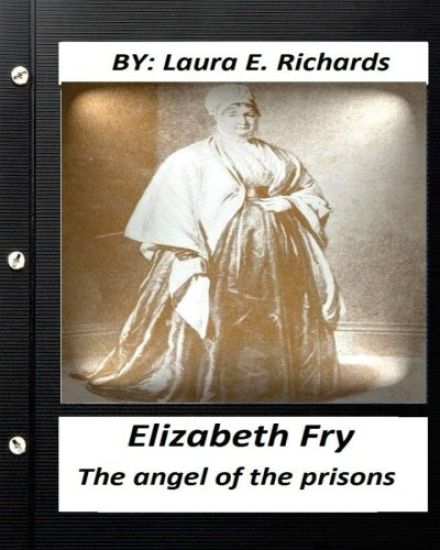
Elizabeth (Betsy) Fry (21 May 1780 - 12 October 1845), n e Gurney, was an English prison reformer, social reformer and, as a Quaker, a Christian philanthropist. She has sometimes been referred to as the "angel of prisons". Fry was a major driving force behind new legislation to make the treatment of prisoners more humane, and she was supported in her efforts by the reigning monarch. Since 2001, she has been depicted on the Bank of England 5 note Elizabeth (Betsy) Gurney was born in Gurney Court, off Magdalen Street, Norwich, Norfolk, England into a prominent Quaker family, the Gurneys. Her childhood family home was Earlham Hall which is now part of the University of East Anglia. 1] Her father, John Gurney (1749-1809), was a partner in Gurney's Bank. Her mother, Catherine, was a member of the Barclay family who were among the founders of Barclays Bank. Her mother died when Elizabeth was twelve years old. As one of the oldest girls in the family, Elizabeth was partly responsible for the care and education of the younger children, including her brother Joseph John Gurney, a philanthropist. One of her sisters was Louisa Gurney Hoare (1784-1836), a writer on education.
SEVENTEEN HUNDRED AND FORTY-FOUR George the Second on the throne of England, "snuffy old drone from the German hive"; Charles Edward Stuart ("bonnie Prince Charlie") making ready for his great coup which, the next year, was to cast down said George from the throne and set Charles Edward thereupon as "rightful, lawful prince-for wha'll be king but Charlie?", and which ended in Culloden and the final downfall and dispersion of the Scottish Stuarts. In France, Louis XV., Lord of Misrule, shepherding his people toward the Abyss with what skill was in him; at war with England, at war with Hungary; Frederick of Prussia alone standing by him. In Europe, generally, a seething condition which is not our immediate concern. In America, seething
Joan of Arc (French: Jeanne d'Arc, IPA: 6 January c. 1412- 30 May 1431), nicknamed "The Maid of Orl ans" (French: La Pucelle d'Orl ans) is considered a heroine of France for her role during the Lancastrian phase of the Hundred Years' War, and was canonized as a Roman Catholic saint. Joan of Arc was born to Jacques d'Arc and Isabelle, a peasant family, at Domr my in north-east France. Joan said she received visions of the Archangel Michael, Saint Margaret, and Saint Catherine instructing her to support Charles VII and recover France from English domination late in the Hundred Years' War. The uncrowned King Charles VII sent Joan to the siege of Orl ans as part of a relief mission. She gained prominence after the siege was lifted only nine days later. Several additional swift victories led to Charles VII's coronation at Reims. This long-awaited event boosted French morale and paved the way for the final French victory. On 23 May 1430, she was captured at Compi gne by the Burgundian faction which was allied with the English. She was later handed over to the English, 6] and then put on trial by the pro-English Bishop of Beauvais Pierre Cauchon on a variety of charges. 7] After Cauchon declared her guilty she was burned at the stake on 30 May 1431, dying at about nineteen years of age.
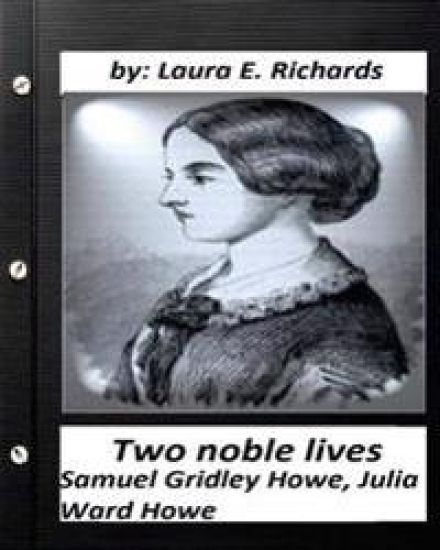
"Laura Richards" redirects here. It is not to be confused with Laura Richard or Laura Richardson. Laura Elizabeth Howe Richards Portrait of Laura E. Richards.jpg Born February 27, 1850 74 Mount Vernon Street Boston, Massachusetts Died January 14, 1943 (aged 92) Gardiner, Maine Notable awards 1917 Pulitzer Prize Spouse Henry Richards Children 7 (Alice Maud, Rosalind, Henry Howe, Julia Ward, Maud, John, Laura Elizabeth) Relatives Samuel Gridley Howe, father Julia Ward Howe, mother Maud Howe Elliott, sister Laura Elizabeth Howe Richards (February 27, 1850 - January 14, 1943) was an American writer. She wrote more than 90 books including biographies, poetry, and several for children. One well-known children's poem is her literary nonsense verse "Eletelephony", which is adapted into an animated segment (Vowel Letter Poem: E - Elephant) produced by Jeff Hale, and his animation studio, Imagination, Inc., for the television show Sesame Street.Laura Elizabeth Howe was born in Boston, Massachusetts, on February 27, 1850. Her father was Dr. Samuel Gridley Howe, an abolitionist and the founder of the Perkins Institution and Massachusetts School for the Blind. 1] She was named after his famous deaf-blind pupil Laura Bridgman. citation needed] Her mother Julia Ward Howe wrote the words to The Battle Hymn of the Republic. In 1871 Laura married Henry Richards. He would accept a management position in 1876 at his family's paper mill at Gardiner, Maine, where the couple moved with their three children. In 1917 Laura won a Pulitzer Prize for Julia Ward Howe, 1819-1910, a biography, which she co-authored with her sister, Maud Howe Elliott. She died on January 14, 1943.
SEVENTEEN HUNDRED AND FORTY-FOUR George the Second on the throne of England, "snuffy old drone from the German hive"; Charles Edward Stuart ("bonnie Prince Charlie") making ready for his great coup which, the next year, was to cast down said George from the throne and set Charles Edward thereupon as "rightful, lawful prince-for wha'll be king but Charlie?", and which ended in Culloden and the final downfall and dispersion of the Scottish Stuarts. In France, Louis XV., Lord of Misrule, shepherding his people toward the Abyss with what skill was in him; at war with England, at war with Hungary; Frederick of Prussia alone standing by him. In Europe, generally, a seething condition which is not our immediate concern. In America, seething. Laura Elizabeth Howe Richards (February 27, 1850 - January 14, 1943) was an American writer. She wrote more than 90 books including biographies, poetry, and several for children. One well-known children's poem is her literary nonsense verse "Eletelephony", which is adapted into an animated segment (Vowel Letter Poem: E - Elephant) produced by Jeff Hale, and his animation studio, Imagination, Inc., for the television show Sesame Street.Laura Elizabeth Howe was born in Boston, Massachusetts, on February 27, 1850. Her father was Dr. Samuel Gridley Howe, an abolitionist and the founder of the Perkins Institution and Massachusetts School for the Blind. 1] She was named after his famous deaf-blind pupil Laura Bridgman. citation needed] Her mother Julia Ward Howe wrote the words to The Battle Hymn of the Republic. In 1871 Laura married Henry Richards. He would accept a management position in 1876 at his family's paper mill at Gardiner, Maine, where the couple moved with their three children. In 1917 Laura won a Pulitzer Prize for Julia Ward Howe, 1819-1910, a biography, which she co-authored with her sister, Maud Howe Elliott. She died on January 14, 1943. Abigail Adams (n e Smith; November 22 O.S. November 11] 1744 - October 28, 1818) was the wife of John Adams and the mother of John Quincy Adams. She is now designated the first Second Lady and second First Lady of the United States, although these titles were not in use at the time. Adams's life is one of the most documented of the first ladies: she is remembered for the many letters she wrote to her husband while he stayed in Philadelphia, Pennsylvania, during the Continental Congresses. John frequently sought the advice of Abigail on many matters, and their letters are filled with intellectual discussions on government and politics. The letters serve as eyewitness accounts of the American Revolutionary War home front.
One evening, some time after the great Crimean War of 1854-55, a company of military and naval officers met at dinner in London. They were talking over the war, as soldiers and sailors love to do, and somebody said: "Who, of all the workers in the Crimea, will be longest...... Florence Nightingale, OM, RRC ( 12 May 1820 - 13 August 1910) was a celebrated English social reformer and statistician, and the founder of modern nursing.She came to prominence while serving as a manager of nurses trained by her during the Crimean War, where she organised the tending to wounded soldiers.She gave nursing a highly favourable reputation and became an icon of Victorian culture, especially in the persona of "The Lady with the Lamp" making rounds of wounded soldiers at night.Some recent commentators have asserted Nightingale's achievements in the Crimean War were exaggerated by the media at the time, to satisfy the public's need for a hero. Nevertheless, critics agree on the decisive importance of her follow-up achievements in professionalising nursing roles for women. In 1860, Nightingale laid the foundation of professional nursing with the establishment of her nursing school at St Thomas' Hospital in London. It was the first secular nursing school in the world, now part of King's College London. In recognition of her pioneering work in nursing, the Nightingale Pledge taken by new nurses, and the Florence Nightingale Medal, the highest international distinction a nurse can achieve, were named in her honour, and the annual International Nurses Day is celebrated around the world on her birthday. Her social reforms include improving healthcare for all sections of British society, advocating better hunger relief in India, helping to abolish prostitution laws that were over-harsh to women, and expanding the acceptable forms of female participation in the workforce.Nightingale was a prodigious and versatile writer. In her lifetime, much of her published work was concerned with spreading medical knowledge. Some of her tracts were written in simple English so that they could easily be understood by those with poor literary skills. She also helped popularise the graphical presentation of statistical data. Much of her writing, including her extensive work on religion and mysticism, has only been published posthumously. "Laura Richards" redirects here. It is not to be confused with Laura Richard or Laura Richardson. Laura Elizabeth Howe Richards (February 27, 1850 - January 14, 1943) was an American writer. She wrote more than 90 books including biographies, poetry, and several for children. One well-known children's poem is her literary nonsense verse "Eletelephony", which is adapted into an animated segment (Vowel Letter Poem: E - Elephant) produced by Jeff Hale, and his animation studio, Imagination, Inc., for the television show Sesame Street.