
Kirjahaku
Etsi kirjoja tekijän nimen, kirjan nimen tai ISBN:n perusteella.
1000 tulosta hakusanalla Laura Erdman-Luntz

Trauma and Young Children
Laura J. Colker; Sarah Erdman; Elizabeth C. Winter
National Association for the Education of Young Children
2020
pokkari
Educators need access to accurate and useful guidance on helping children and families who have been exposed to trauma. Learn the basics of what trauma is, what the effects can look like, and specific types of trauma that may be experienced as well as targeted suggestions for creating trauma-informed classrooms and practices that support children and families. This book brings together how educators can incorporate the community into trauma-aware practices, acknowledges and addresses the needs of educators, and offers solutions for caring for themselves as well as the populations they serve.

Big Data und Wirtschaftsprüfung. Kritische Würdigung jüngster Entwicklungen
Laura Erdmann
GRIN Verlag
2019
nidottu
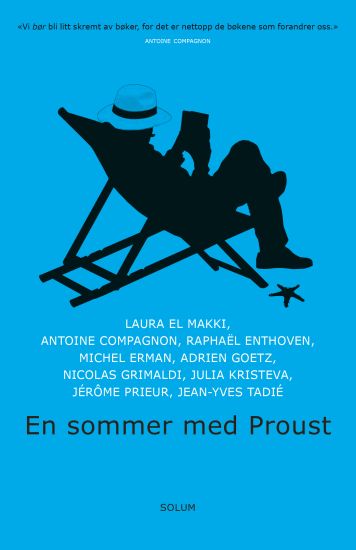
En sommer med Proust
Jérome Prieur; Julia Kristeva; Nicolas Grimaldi; Adrien Goetz; Michel Erman; Raphaël Enthoven; Antoine Compagnon; Laura El Makki; Jean-Yves Tadié
Solum
2016
nidottu
På sporet av den tapte tid er klassikeren mange føler de burde ha lest. Andre regner den til en av sine største leseopplevelser. Uansett hvilken kategori du tilhører er En sommer med Proust tilfredsstillende lesning. Denne lille boken viser at Prousts roman kan leses på like mange måter som det finnes lesere. Her følger vi de åtte forfatterne som alle er eksperter på Prousts litteratur, til salongene, teatrene og bordellene i Paris, og til kysten av Normandie, mens de diskuterer spørsmålet om hvorvidt kjærligheten og kunsten kan lindre livets skuffelser og utfordringer. En sommer med Proust er oppfølgeren til den internasjonale bestselgeren En sommer med Montaigne, som ble både en kritiker- og publikumsfavoritt i Norge.

In the doorway of an elegant New York apartment, blood seeps over silk negligee, over polished wood floors and plush carpet: a beautiful young woman lies dead, her face disfigured by a single gun shot. But who was Laura?

In a captivating departure, Larry Watson, "a writer whose work is worthy of prizes" ("Los Angeles Times Book Review"), unveils a portrait of faith, obsession, and enduring love -- and a work of greater tenderness than anything he has yet written. "Laura" Love captures Paul Finley, in, of all places, his own bedroom -- literally waking him from his dreams. The night he discovers Laura Pettit standing at his windowsill, Paul is eleven years old, a boy naturally inclined toward seriousness, precociously adept at the art of watching the world without being watched. Laura is twenty-two, a fiercely passionate and independent poet already experiencing the first flickers of fame, a beautiful woman on the brink of seducing Paul's father. No matter; Paul is smitten. When she leaves him to rejoin the grown-ups' party downstairs, Laura issues Paul a wholly impossible command, one that will haunt and consume both of them for the rest of their lives: "Forget me." Laying bare the inner life of one man during the course of nearly four decades, Larry Watson delivers a riveting treatise on the excruciating power of love -- and two of the most remarkable characters in recent American literature. Infused with breathtaking pathos and delicate grace, "Laura" is an extraordinary triumph of the novelist's art.
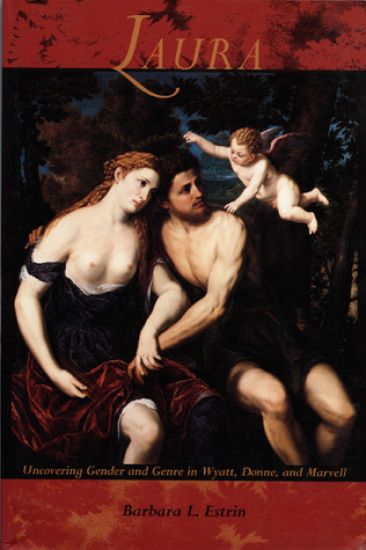
How do men imagine women? In the poetry of Petrarch and his English successors-Wyatt, Donne, and Marvell-the male poet persistently imagines pursuing a woman, Laura, whom he pursues even as she continues to deny his affections. Critics have long held that, in objectifying Laura, these male-authored texts deny the imaginative, intellectual, and physical life of the woman they idealize. In Laura, Barbara L. Estrin counters this traditional view by focusing not on the generative powers of the male poet, but on the subjectivity of the imagined woman and the imaginative space of the poems she occupies. Through close readings of the Rime sparse and the works of Wyatt, Donne, and Marvell, Estrin uncovers three Lauras: Laura-Daphne, who denies sexuality; Laura-Eve, who returns the poet’s love; and Laura-Mercury, who reinvents her own life. Estrin claims that in these three guises Laura subverts both genre and gender, thereby introducing multiple desires into the many layers of the poems. Drawing upon genre and gender theories advanced by Jean-FranÇois Lyotard and Judith Butler to situate female desire in the poem’s framework, Estrin shows how genre and gender in the Petrarchan tradition work together to undermine the stability of these very concepts.Estrin’s Laura constitutes a fundamental reconceptualization of the Petrarchan tradition and contributes greatly to the postmodern reassessment of the Renaissance period. In its descriptions of how early modern poets formulate questions about sexuality, society and poetry, Laura will appeal to scholars of the English and Italian Renaissance, of gender studies, and of literary criticism and theory generally.
How do men imagine women? In the poetry of Petrarch and his English successors-Wyatt, Donne, and Marvell-the male poet persistently imagines pursuing a woman, Laura, whom he pursues even as she continues to deny his affections. Critics have long held that, in objectifying Laura, these male-authored texts deny the imaginative, intellectual, and physical life of the woman they idealize. In Laura, Barbara L. Estrin counters this traditional view by focusing not on the generative powers of the male poet, but on the subjectivity of the imagined woman and the imaginative space of the poems she occupies. Through close readings of the Rime sparse and the works of Wyatt, Donne, and Marvell, Estrin uncovers three Lauras: Laura-Daphne, who denies sexuality; Laura-Eve, who returns the poet’s love; and Laura-Mercury, who reinvents her own life. Estrin claims that in these three guises Laura subverts both genre and gender, thereby introducing multiple desires into the many layers of the poems. Drawing upon genre and gender theories advanced by Jean-FranÇois Lyotard and Judith Butler to situate female desire in the poem’s framework, Estrin shows how genre and gender in the Petrarchan tradition work together to undermine the stability of these very concepts.Estrin’s Laura constitutes a fundamental reconceptualization of the Petrarchan tradition and contributes greatly to the postmodern reassessment of the Renaissance period. In its descriptions of how early modern poets formulate questions about sexuality, society and poetry, Laura will appeal to scholars of the English and Italian Renaissance, of gender studies, and of literary criticism and theory generally.



Laura is a fictionalized story of Laura Boult of St. Maurice, Louisiana. She left her small town and went to the big city in 1900 after having four boys with two different common-law husbands. In 1905, after being fired by the famous Schubert Brothers of Broadway fame, she left New York in disgrace with an all-black dance troupe headed to Paris, France. It was in Paris that she met the handsome Fran oise Goldman who taught her how to drop her strap and step out of her tap pants to fame and fortune, the likes of which she had never imagined. In 1940, just days before the Germans invaded Paris, Laura, Fran oise, and their daughter fled for their lives, arriving in New York with little more than the clothes they carried in their suitcases. While in New York, they worked at whatever jobs that were offered them. Laura returned to a liberated Paris in 1948 where, with the help of her former stage manger Jules Eitenne, she regained both her fame and her fortune.


"Laura" de George Sand. George Sand, romanci re et femme de lettres fran aise (1804-1876).

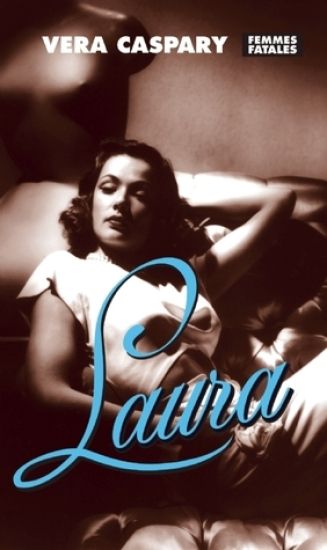
Laura Hunt was the ideal modern woman: beautiful, elegant, highly ambitious, and utterly mysterious. No man could resist her charms-not even the hardboiled NYPD detective sent to find out who turned her into a faceless corpse. As this tough cop probes the mystery of Laura's death, he becomes obsessed with her strange power. Soon he realizes he's been seduced by a dead woman-or has he? "Laura won lasting renown as an Academy Award-nominated 1944 film, the greatest noir romance of all time. Vera Caspary's equally haunting novel is remarkable for its stylish, hardboiled writing, its electrifying plot twists, and its darkly complex characters-including a woman who stands as the ultimate femme fatale.