
Kirjahaku
Etsi kirjoja tekijän nimen, kirjan nimen tai ISBN:n perusteella.
1000 tulosta hakusanalla Laura J. Jackson

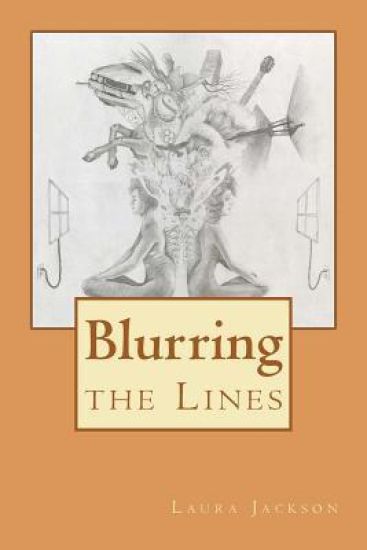
At the tender age of three, I developed a case of chicken pox. A horrible case that I know I will never forget. Not because I actually remember it, but because my mother will make sure the horrid occasion is firmly implanted in my brain.which, believe me, it is. This chicken pox episode has followed me from the toddler years up to now. And, it will continue to follow me until the end of my years. At the age of 15, I developed encephalitis, meningitis and shingles and three years later had another occurrence of meningitis. It was at this time I began to write. Three years after the last episode, I began to develop symptoms of what is now diagnosed as post-Encephalitic Parkinson's Disease. It has now been over 20 years since I found PD had entered my life. The docs classify me as being in the advanced stages. I say it is all in mindset. It has not ruined my way of living. In many ways it has enhanced it. I find that my creative side has blossomed as never before. My faith in my Lord has also blossomed. He guides me through each day with new lessons added frequently. He holds me when I am down, and lifts me up when I feel good. He always reminds me that I am human. Knowing this, I know that I will make it.He is my Father after all. I have three daughters Melissa, Jasmine, and Cameo. I am also blessed with a wonderful granddaughter, Chloe. I was a single mother for 15 years and bought my own home and 1978 Harley Davidson Superglide. I am now married to the man I can truly claim to have made my life complete. I have not been able to work for 11 years, but enjoy the peace and quiet of living on my acreage in the countryside of the Pacific Northwest. I have become humble to my Lord Jesus through the trials of this disease and have found strength and wisdom that I would not ever have known otherwise. I have learned that His will is in my best interest, and through His love, I have found contentment.

At the tender age of three, I developed a case of chicken pox. A horrible case that I know I will never forget. Not because I actually remember it, but because my mother will make sure the horrid occasion is firmly implanted in my brain.which, believe me, it is. This chicken pox episode has followed me from the toddler years up to now. And, it will continue to follow me until the end of my years. At the age of 15, I developed encephalitis, meningitis and shingles and three years later had another occurrence of meningitis. It was at this time I began to write. Three years after the last episode, I began to develop symptoms of what is now diagnosed as post-Encephalitic Parkinson's Disease. It has now been over 20 years since I found PD had entered my life. The docs classify me as being in the advanced stages. I say it is all in mindset. It has not ruined my way of living. In many ways it has enhanced it. I find that my creative side has blossomed as never before. My faith in my Lord has also blossomed. He guides me through each day with new lessons added frequently. He holds me when I am down, and lifts me up when I feel good. He always reminds me that I am human. Knowing this, I know that I will make it.He is my Father after all. I have three daughters Melissa, Jasmine, and Cameo. I am also blessed with a wonderful granddaughter, Chloe. I was a single mother for 15 years and bought my own home and 1978 Harley Davidson Superglide. I am now married to the man I can truly claim to have made my life complete. I have not been able to work for 11 years, but enjoy the peace and quiet of living on my acreage in the countryside of the Pacific Northwest. I have become humble to my Lord Jesus through the trials of this disease and have found strength and wisdom that I would not ever have known otherwise. I have learned that His will is in my best interest, and through His love, I have found contentment.

Gender, UN Peacebuilding, and the Politics of Space
Laura J. Shepherd
Oxford University Press Inc
2019
nidottu
The United Nations Peacebuilding Commission (UNPBC) was established in December 2005 to develop outlines of best practice in post-conflict reconstruction, and to secure the political and material resources necessary to assist states in transition from conflict to peacetime. Currently, the organization is involved in reconstruction and peacebuilding activities in six countries. Yet, a 2010 review by permanent representatives to the United Nations found that the hopes of the UN peacebuilding architecture "despite committed and dedicated efforts...ha[d] yet to be realized." Two of these hopes relate to gender and power, specifically that peacebuilding efforts integrate a "gender perspective" and that the Commission consult with civil society, NGOs, and women's organizations. This book is the first to offer an extensive and dedicated analysis of the activities of the UN Peacebuilding Commission with regard to both gender politics, broadly conceived, and the gendered dynamics of civil society participation in peacebuilding activities. Laura J. Shepherd draws upon original fieldwork that she conducted at the UN to argue that the gendered and spatial politics of peacebuilding not only feminizes civil society organizations, but also perpetuates hierarchies that privilege the international over the domestic realms. The book argues that the dominant representations of women, gender, and civil society in UN peacebuilding discourse produce spatial hierarchies that paradoxically undermine the contemporary emphasis on "bottom-up" governance of peacebuilding activities.

Family-based Interpersonal Psychotherapy for Depressed Preadolescents
Laura J. Dietz; Laura Mufson; Rebecca B. Weinberg
Oxford University Press Inc
2018
nidottu
Depression is a recurrent, debilitating and sometimes fatal disorder that may first effect children between the ages of 9 and 12. Preadolescent depression is an important public health concern because it is a "gateway" condition that increases the risk for recurrent depression into adolescence and adulthood, particularly when there is a strong family history of mood disorders. The preadolescent period presents a window of opportunity for early psychosocial intervention for depressive disorders and for decreasing risk factors associated with recurrence, namely difficulties in relationships with family members and friends. Addressing and treating depressive disorders in preadolescents has the potential to be extremely successful given the dramatic increase in rates of depression that occur in adolescence. Family-Based Interpersonal Psychotherapy for Depressed Preadolescents is a psychosocial intervention that aims to reduce depressive and anxiety symptoms among preadolescents and to provide them with skills to improve interpersonal relationships. Parents are systematically involved in all stages of the preteen's treatment to provide support and model positive communication and problem solving skills. The Initial Phase of treatment addresses psychoeducation about preadolescent depression, challenges in parenting a depressed preadolescent, and appropriate expectations for their child's behavior and performance at this time. The Middle Phase of treatment outlines ways for clinicians to present FB-IPT skills to both the preteen and parent. The Termination Phase focuses on consolidating skills, addressing prevention strategies, and identifying when to seek treatment for recurrent depression.
Narrating the Women, Peace and Security Agenda
Laura J. Shepherd
Oxford University Press Inc
2021
sidottu
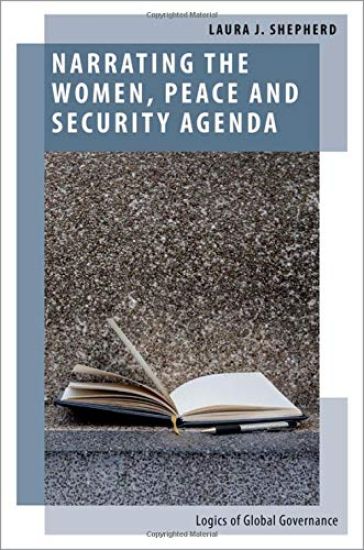
The "narrative turn" has recently influenced theories, methods, and research design within the field of international relations. Its goal is, in part, to show how stories about international events and issues emerge and develop, and how these stories influence the uptake and limitations of global policy "solutions" around the world. Through the lens of narrative, this book examines the Women, Peace and Security (WPS) agenda, adopted by the United Nations Security Council twenty years ago. The agenda seeks to increase the participation of women in conflict prevention efforts and to protect the rights of women during conflict and peacebuilding. Those involved in the creation of the WPS agenda, including its strategies, guidelines, and protocols, tend to assume that implementation is the most critical element of it. But what can the stories about the agenda's emergence tell us about its limits and possibilities? Laura J. Shepherd examines WPS as a policy agenda that has been realized in and through the stories that have been told about it, focusing on the world of WPS work at the United Nations Headquarters in New York. She argues that to understand the implementation of the agenda we need to also understand the narration of the agenda's beginnings, its ongoing unfolding, and its plural futures. These stories outline the agenda's priorities and delimit its possibilities--as well as communicate and constitute its triumphs and disasters. As the book shows, much energy and resources are expended in efforts to reduce or resolve the agenda to a singular, essential "thing"--with singular, essential meaning. There is no "true" WPS agenda that practitioners, activists, and policymakers can apprehend and use as their guide; there is only a messy and contested space for political interventions of different kinds. Shepherd shows that the narratives of the WPS agenda incorporate plural logics but that this plurality cannot--should not--be used as an alibi for limited engagement or strategic inaction. Those seeking to realize the WPS agenda might need to live with the irreconcilable, the irresolvable, and the ambiguous.
Narrating the Women, Peace and Security Agenda
Laura J. Shepherd
Oxford University Press Inc
2021
nidottu
The "narrative turn" has recently influenced theories, methods, and research design within the field of international relations. Its goal is, in part, to show how stories about international events and issues emerge and develop, and how these stories influence the uptake and limitations of global policy "solutions" around the world. Through the lens of narrative, this book examines the Women, Peace and Security (WPS) agenda, adopted by the United Nations Security Council twenty years ago. The agenda seeks to increase the participation of women in conflict prevention efforts and to protect the rights of women during conflict and peacebuilding. Those involved in the creation of the WPS agenda, including its strategies, guidelines, and protocols, tend to assume that implementation is the most critical element of it. But what can the stories about the agenda's emergence tell us about its limits and possibilities? Laura J. Shepherd examines WPS as a policy agenda that has been realized in and through the stories that have been told about it, focusing on the world of WPS work at the United Nations Headquarters in New York. She argues that to understand the implementation of the agenda we need to also understand the narration of the agenda's beginnings, its ongoing unfolding, and its plural futures. These stories outline the agenda's priorities and delimit its possibilities--as well as communicate and constitute its triumphs and disasters. As the book shows, much energy and resources are expended in efforts to reduce or resolve the agenda to a singular, essential "thing"--with singular, essential meaning. There is no "true" WPS agenda that practitioners, activists, and policymakers can apprehend and use as their guide; there is only a messy and contested space for political interventions of different kinds. Shepherd shows that the narratives of the WPS agenda incorporate plural logics but that this plurality cannot--should not--be used as an alibi for limited engagement or strategic inaction. Those seeking to realize the WPS agenda might need to live with the irreconcilable, the irresolvable, and the ambiguous.
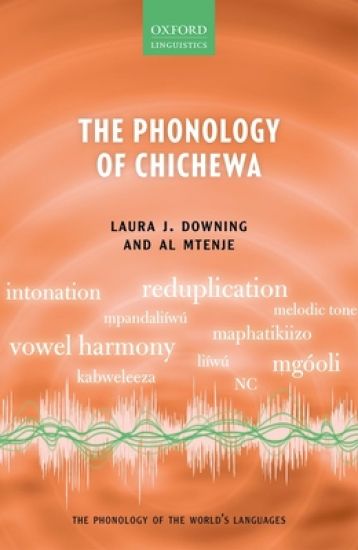
This book provides thorough descriptive and theory-neutral coverage of the full range of phonological phenomena of Chichewa, a Malawian Bantu language. Bantu languages have played and continue to play an important role as a source of data illustrating core phonological processes such as vowel harmony, nasal place assimilation, postnasal laryngeal alternations, tonal phenomena such as High tone spread and the OCP, prosodic morphology, and the phonology-syntax interface. Chichewa, in particular, has been a key language in the development of theoretical approaches to these phenomena. In this volume, Laura Downing and Al Mtenje examine not only these well-known features of Chichewa but also less well-studied phonological topics such as positional asymmetries in the distribution of segments, the phonetics of tone, and intonation. They survey important recent theoretical approaches to phonological problems such as focus prosody, reduplication, and vowel harmony, where Chichewa data is routinely referred to in the literature. The book will serve as a resource for all phonologists interested in these processes, regardless of their theoretical background, as well as Bantu scholars and linguists working on interface issues.
This book considers the interaction of morphological and phonological determinants of linguistic form and the degree to which one determines the other. It considers the operation of canonical forms, the invariant syllabic shapes of morphemes and the defining characteristic of prosodic morphology. Dr Downing presents an original theory which she tests on data from a wide variety of languages. Her book will be of central interest to scholars and advanced students of phonology and morphology, and of linguistic theory more generally.
Prosodic morphology concerns the interaction of morphological and phonological determinants of linguistic form and the degree to which one determines the other. This is the first book devoted to understanding the definition and operation of canonical forms - the invariant syllabic shapes of morphemes - which are the defining characteristic of prosodic morphology. Dr Downing discusses past research in the field and provides a critical evaluation of the current leading theory which, she shows, is empirically inadequate. She sets out an alternative approach and tests this in a cross-linguistic analysis of phonological and morphological forms over a wide range languages, including several not previously been studied from this perspective. Prosodic morphology has been the testing ground for theoeretical developments in phonology over the past twenty years, from autosegmental theory to optimality theory. This book will be of central interest to specialists in phonology and morphology, as well as to advanced students of these fields and of linguistic theory more generally.

Putting Intellectual Property in its Place
Laura J. Murray; S. Tina Piper; Kirsty Robertson
Oxford University Press Inc
2014
sidottu
Putting Intellectual Property in its Place examines the relationship between creativity and intellectual property law on the premise that, despite concentrated critical attention devoted to IP law from academic, policy and activist quarters, its role as a determinant of creative activity is overstated. The effects of IP rights or law are usually more unpredictable, non-linear, or illusory than is often presumed. Through a series of case studies focusing on nineteenth century journalism, "fake" art, plant hormone research between the wars, online knitting communities, creativity in small cities, and legal practice, the authors discuss the many ways people comprehend the law through information and opinions gathered from friends, strangers, coworkers, and the media. They also show how people choose to share, create, negotiate, and dispute based on what seems fair, just, or necessary, in the context of how their community functions in that moment, while ignoring or reimagining legal mechanisms. In this book authors Murray, Piper, and Robertson define "the everyday life of IP law", constituting an experiment in non-normative legal scholarship, and in building theory from material and located practice.
Gender, UN Peacebuilding, and the Politics of Space
Laura J. Shepherd
Oxford University Press Inc
2017
sidottu
The United Nations Peacebuilding Commission (UNPBC) was established in December 2005 to develop outlines of best practice in post-conflict reconstruction, and to secure the political and material resources necessary to assist states in transition from conflict to peacetime. Currently, the organization is involved in reconstruction and peacebuilding activities in six countries. Yet, a 2010 review by permanent representatives to the United Nations found that the hopes of the UN peacebuilding architecture "despite committed and dedicated efforts...ha[d] yet to be realized." Two of these "hopes" deal with gender issues, specifically that peacebuilding efforts integrate a "gender perspective" and that the Commission consult with civil society, NGOs, and women's organizations. This book is the first to offer an extensive and dedicated analysis of the activities of the UN Peacebuilding Commission with regard to both gender politics, broadly conceived, and the gendered dynamics of civil society participation in peacebuilding activities. Laura J. Shepherd draws upon original fieldwork that she conducted with the UNPBC to argue that the spatial politics of peacebuilding are not only gendered - such that they further marginalize and disadvantage indigenous populations in peacebuilding activities - but also perpetuate hierarchies that privilege the international over the domestic realms. Laying bare the logics of gender and space that organize UN peacebuilding discourse, the book asserts that the representations of women, gender, and civil society inform the meaning of UN peacebuilding in contemporary world politics.

The Victorian period in Britain was an "age of reform." It is therefore not surprising that two of the era's most eminent intellects described themselves as reformers. John Stuart Mill - philosopher, political economist, and Parliamentarian - remains a canonical author of Anglo-American philosophy, while William Whewell - Anglican cleric, scientist, and educator - is now often overlooked, though in his day he was renowned as an authority on science. Both Mill and Whewell believed that by reforming philosophy - including the philosophy of science - they could effect social and political change. But their divergent visions of this societal transformation led to a sustained and spirited controversy that covered motality, politics, science, and economics. Situating their debate within the larger context of Victorian society and its concerns, Reforming Philosophy shows how two very different men captured the intellectual spirit of the day and engaged the attention of other scientists and philosophers, including the young Charles Darwin.

For the first 150 years of their existence, "natural foods" were consumed primarily by body-builders, hippies, religious sects, and believers in nature cure. And those consumers were dismissed by the medical establishment and food producers as kooks, faddists, and dangerous quacks. In the 1980s, broader support for natural foods took hold and the past fifteen years have seen an explosion everything from healthy-eating superstores to mainstream institutions like hospitals, schools, and workplace cafeterias advertising their fresh-from-the-garden ingredients.Building Nature's Market shows how the meaning of natural foods was transformed as they changed from a culturally marginal, religiously inspired set of ideas and practices valorizing asceticism to a bohemian lifestyle to a mainstream consumer choice. Laura J. Miller argues that the key to understanding this transformation is to recognize the leadership of the natural foods industry. Rather than a simple tale of cooptation by market forces, Miller contends the participation of business interests encouraged the natural foods movement to be guided by a radical skepticism of established cultural authority. She challenges assumptions that private enterprise is always aligned with social elites, instead arguing that profit-minded entities can make common cause with and even lead citizens in advocating for broad-based social and cultural change.
Over the past half-century, bookselling, like many retail industries, has evolved from an arena dominated by independent bookstores to one in which chain stores have significant market share. And as in other areas of retail, this transformation has often been a less-than-smooth process. This has been especially pronounced in bookselling, argues Laura J. Miller, because more than most other consumer goods, books are the focus of passionate debate. What drives that debate? And why do so many people believe that bookselling should be immune to questions of profit? In "Reluctant Capitalists", Miller looks at a century of book retailing, demonstrating that the independent/chain dynamic is not entirely new. It began one hundred years ago when department stores began selling books, continued through the 1960s with the emergence of national chain stores, and exploded with the formation of "super-stores" in the 1990s. The advent of the Internet has further spurred tremendous changes in how booksellers approach their business. All of these changes have met resistance from book professionals and readers who believe that the book business should somehow be "above" market forces and instead embrace more noble priorities. Miller uses interviews with bookstore customers and members of the book industry to explain why books evoke such distinct and heated reactions. She reveals why customers have such fierce loyalty to certain bookstores and why they identify so strongly with different types of books. In the process, she also teases out the meanings of retailing and consumption in American culture at large, underscoring her point that any type of consumer behavior is inevitably political, with consequences for communities as well as commercial institutions.
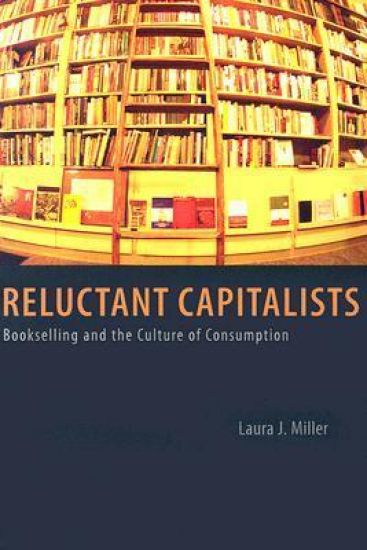
Over the past half-century, bookselling, like many retail industries, has evolved from an arena dominated by independent bookstores to one in which chain stores have significant market share. Yet unlike other retail industries, bookselling, many people believe, should be "above" questions of profit. In "Reluctant Capitalists", Laura J. Miller investigates what drives this belief and how it is affected by the changing retail environment. Miller argues that the independent/chain dynamic is not entirely new - it started a century ago when department stores began selling books and has culminated in the advent of Internet marketplaces. Miller uses interviews with bookstore customers and members of the book industry to explore how these changes have met resistance from book professionals and readers who believe that the book business should be ethically superior to market forces. In the process, she also teases out the meanings of retailing and consumption in American culture at large, underscoring her point that any type of consumer behavior is inevitably political, with consequences for communities as well as commercial institutions.
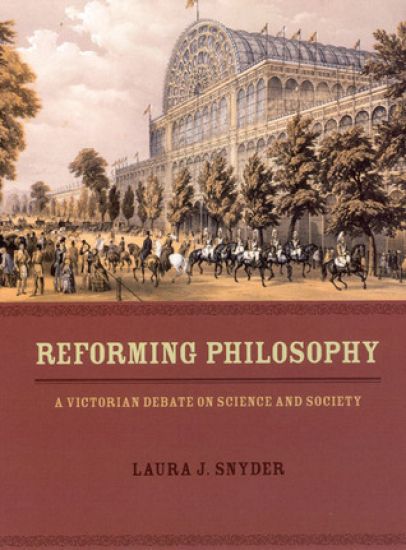
A philosophically and historically sensitive account of the engagement of the major protagonists of Victorian British philosophy, "Reforming Philosophy" considers the controversies between William Whewell and John Stuart Mill on the topics of science, morality, politics, and economics. By situating their debate within the larger context of Victorian society and its concerns, Laura J. Snyder shows how two very different men - Whewell, an educator, Anglican priest, and critic of science; and Mill, a philosopher, political economist, and parliamentarian - reacted to the challenges of their times, each seeking to reform science as a means of reforming society as a whole. The first book-length examination of the dispute between Mill and Whewell in its entirety, "Reforming Philosophy" provides a rich and nuanced understanding of the intellectual spirit of Victorian Britain and will be welcomed by philosophers and historians of science, scholars of Victorian studies, and students of the history of philosophy and political economy.
Laura J. Mitchell concentrates on the contested dynamics of land tenure in the Cedarberg region of the Western Cape, from the first settler land claim of 1725 to the entrenchment of colonial administration in the 1830s. Based on a decade of research, Mitchell focuses on the conflict between Dutch East India Company officials, settlers, indigenous Khoisan, and Indian-Ocean slaves, detailing the ways in which settlers themselves--rather than Company policy or an imperial army--drew the frontier into a colonial orbit and then gradually placed it under colonial control. Against a backdrop of often violent resistance, settlers claimed land one farm at a time. Family by family, household by household, the inhabitants of the Cedarberg region were bound to each other and to a colonial society based at Cape Town. The Khoisan resisted displacement, the appropriation of their livestock and hunting grounds, involuntary servitude, and subordination. Likewise, settlers resisted the Dutch East India Company's efforts at controlling territorial expansion, limiting their interaction with independent Khoisan groups, and regulating bonded labor. At the same time, the increasing presence of European material culture in frontier spaces proved that many settlers still affirmed their relationship to colonial power. Mitchell enriches her social history with insights from anthropology, archaeology, sociology, and environmental and women's studies, considering multiple sources of power and identity and recovering the role of women in creating settler society.

It is manifest in developing countries around the world that the “shock” therapy administered to their economies by the neoliberal model of structural adjustment has failed, leaving much social and economic destruction in its wake. In Latin America this failure has led to a resurgence of interest in alternative models, some of them deploying various versions of socialism, as in Bolivia, Chile, and Venezuela, which has given rise to talk about the new “pink tide” enveloping the region. In this comparative study of four economies that have been making a transition to the market from their orthodox socialist pasts, Laura Enríquez focuses our attention on the plight of the small farmer in particular and on the importance of this sector for the overall socioeconomic success of the transition. Through this comparison, we see the similarities between Nicaragua and Russia in their rapid retreat from socialism and their adoption of reforms that have placed small agriculture, especially that focused on food crops, at a distinct disadvantage relative to export-oriented production. By contrast, Cuba has been more like China in adopting aspects of market reform while emphasizing small-scale cooperative and private farming in an effort to achieve food self-sufficiency. Drawing insights from Karl Polanyi’s study of the social and economic effects of the expansion of market relations in the nineteenth century, Enríquez highlights the role of the state in each of these countries in driving change in a certain direction: toward de-emphasis of small-scale farming and the eventual assumed demise of the peasantry in Nicaragua and Russia, which has led to countermovements of peasants struggling to survive, and toward the reconfirmation of the value of small farming in contributing to balanced economic development in Cuba and China.

It is manifest in developing countries around the world that the “shock” therapy administered to their economies by the neoliberal model of structural adjustment has failed, leaving much social and economic destruction in its wake. In Latin America this failure has led to a resurgence of interest in alternative models, some of them deploying various versions of socialism, as in Bolivia, Chile, and Venezuela, which has given rise to talk about the new “pink tide” enveloping the region. In this comparative study of four economies that have been making a transition to the market from their orthodox socialist pasts, Laura Enríquez focuses our attention on the plight of the small farmer in particular and on the importance of this sector for the overall socioeconomic success of the transition. Through this comparison, we see the similarities between Nicaragua and Russia in their rapid retreat from socialism and their adoption of reforms that have placed small agriculture, especially that focused on food crops, at a distinct disadvantage relative to export-oriented production. By contrast, Cuba has been more like China in adopting aspects of market reform while emphasizing small-scale cooperative and private farming in an effort to achieve food self-sufficiency. Drawing insights from Karl Polanyi’s study of the social and economic effects of the expansion of market relations in the nineteenth century, Enríquez highlights the role of the state in each of these countries in driving change in a certain direction: toward de-emphasis of small-scale farming and the eventual assumed demise of the peasantry in Nicaragua and Russia, which has led to countermovements of peasants struggling to survive, and toward the reconfirmation of the value of small farming in contributing to balanced economic development in Cuba and China.