Kirjahaku
Etsi kirjoja tekijän nimen, kirjan nimen tai ISBN:n perusteella.
1000 tulosta hakusanalla Laura McVpherson
The Chaldean language of Sanandaj Christians has been forgotten over time, but recently the new generation of this people is trying to revive and learn this language, and future generations will also speak this mother tongue. In addition, linguists and researchers from all over the world were looking for a source to learn about this type of language that was specific to the Christians of Sanandaj. Therefore, with the publication of this dictionary, this language will be revived
Tommo So is a Dogon language with approximately 60,000 speakers in Mali, West Africa. As only the second full grammatical description of a Dogon language, this volume is a critical resource for solving the mystery of Dogon's genetic affiliation with other languages in Africa. Tommo So is an SOV language with isolating nominal morphology and agglutinative verbal morphology; suffixes on the verb mark tense/aspect/negation as well as subject agreement. The phonology is sensitive to levels of verbal morphology in that variable vowel harmony applies less frequently as one moves to outer layers of the morphology. The tone system of Tommo So is of typological interest in both its phonological and syntactic instantiations. Phonologically, it is a two-tone system of H and L, but these specified tones contrast with a surface-underspecified tone. Grammatically, the lexical tone of a word is often overwritten by syntactically-induced overlays. For example, an inalienable noun's tone will be replaced with L if it is possessed by a non-pronominal possessor, and by either H or HL if the possessor is pronominal. The language has also innovated a series of locative quasi-verbs and focus particles sensitive to pragmatic factors like certainty.
Seenku is a Western Mande language of the Samogo group spoken in southwestern Burkina Faso by approximately 17,000 speakers. It has undergone a lot of phonological reduction, leading to a rich segmental and tonal phoneme inventory but mainly mono- and sesquisyllabic roots. The language has four contrastive levels of tone that combine to create over a dozen contours. Tone has a high functional load lexically and grammatically, permeating all aspects of grammar. Most verbs have two stem forms: a realis form and an irrealis form. The realis is derived from the irrealis by infixing a high vowel before the stem vowel, creating a diphthong. The use of a particular stem form is determined by aspect and construction type, but most other morphosyntactic meanings (e.g. progressive aspect or causative) are expressed analytically. Like most Mande languages, Seenku has an S Aux O V X word order in addition to areal clause-final negation. It displays a reduced set of post-subject “predicate markers” compared to other Mande languages, and those that are attested are variably realized only by tone changes and lengthening on the subject itself.
Phonology in Language Documentation
Gabriela Caballero; Laura McPherson
Cambridge University Press
2025
sidottu
This Element addresses the challenges and opportunities that arise in the study of sound systems of understudied languages within the context of language documentation, an expanding field that seeks to develop records of the world's languages and their patterns of use in their broader cultural and social context. The topics covered in this Element focus on different elements of language documentation and their relationship to phonological analysis, including lexicography, documentary corpora, music and the verbal arts, as well as grammar writing. For each of these areas, the authors examine methodological and theoretical implications for phonology. With growing concern in the field of language documentation and linguistics more generally for the distribution and implementation of the products of research and its impact for Indigenous language communities, this Element also discusses how phonological documentation may contribute to the development of resources for language communities.
Phonology in Language Documentation
Gabriela Caballero; Laura McPherson
Cambridge University Press
2025
pokkari
This Element addresses the challenges and opportunities that arise in the study of sound systems of understudied languages within the context of language documentation, an expanding field that seeks to develop records of the world's languages and their patterns of use in their broader cultural and social context. The topics covered in this Element focus on different elements of language documentation and their relationship to phonological analysis, including lexicography, documentary corpora, music and the verbal arts, as well as grammar writing. For each of these areas, the authors examine methodological and theoretical implications for phonology. With growing concern in the field of language documentation and linguistics more generally for the distribution and implementation of the products of research and its impact for Indigenous language communities, this Element also discusses how phonological documentation may contribute to the development of resources for language communities.
100 Games and Activities for the Introductory Foreign Language Classroom
Thierry Boucquey; Laura McPherson
Routledge
2015
sidottu
Stimulating, engaging, and effective, the games and activites in this book offer your students alternatives to learning by rote or performing drills. This book makes it easy for you to develop their linguistic functions through active learning. The specific skills and vocabulary taught in each game or activity is highlighted, as are the easy-to-follow instructions, helpful charts, worksheets and other visuals.
100 Games and Activities for the Introductory Foreign Language Classroom
Thierry Boucquey; Laura McPherson
Eye On Education, Inc
2007
nidottu
Stimulating, engaging, and effective, the games and activites in this book offer your students alternatives to learning by rote or performing drills. This book makes it easy for you to develop their linguistic functions through active learning. The specific skills and vocabulary taught in each game or activity is highlighted, as are the easy-to-follow instructions, helpful charts, worksheets and other visuals.
Leveraging Disability Sport Events
Laura Misener; Gayle McPherson; David McGillivray; David Legg
Routledge
2020
nidottu
This empirically-grounded text examines the policy, planning, development and implementation of disability sport events. It draws insights from a major international comparative study of different types of large multi-national sporting events: integrated events where able-bodied athletes and athletes with a disability compete alongside one another, and non-integrated events where athletes with a disability are separated by time but occurring in the same location. Guided by a critical disability studies perspective, the book highlights the strategic opportunity of sporting events to influence social change around community participation, and attitudes and awareness about disability more broadly. It also challenges assumptions about positive event legacies and suggests a need for a multi-lateral approach to planning.An important read for students, researchers and scholars in the fields of sport policy, sport development, disability sport, sport management, disability studies and event studies.
Leveraging Disability Sport Events
Laura Misener; Gayle McPherson; David McGillivray; David Legg
Routledge
2018
sidottu
This empirically-grounded text examines the policy, planning, development and implementation of disability sport events. It draws insights from a major international comparative study of different types of large multi-national sporting events: integrated events where able-bodied athletes and athletes with a disability compete alongside one another, and non-integrated events where athletes with a disability are separated by time but occurring in the same location. Guided by a critical disability studies perspective, the book highlights the strategic opportunity of sporting events to influence social change around community participation, and attitudes and awareness about disability more broadly. It also challenges assumptions about positive event legacies and suggests a need for a multi-lateral approach to planning.An important read for students, researchers and scholars in the fields of sport policy, sport development, disability sport, sport management, disability studies and event studies.
Dear Family: The Travel Letters and Reminiscences of Laura MacPherson Crawford
Laura MacPherson Crawford; Ruth Saunders
Literary Licensing, LLC
2011
nidottu
Teacher, Take Care
Cher Brasok; Monika Cichosz Rosney; Laura Doney; Dana Fulwiler Volk; Jackie Gagne; Megan Hunter; Kelsey McDonald; Keith MacPherson; Lisa Dumas Neufeld; Sandra Pacheco Melo; Richelle North Star Scott; Joyce Sunada
Portage Main Press
2022
nidottu
Teaching can be a highly satisfying profession, but it can also be overwhelming. Stress management. Self-care. Mental well-being. Mindfulness. These words have become all too familiar, but what do they actually mean for you? And how can they help without adding to your to-do list?All teachers have different experiences and different needs. Through stories by diverse educators, this professional resource invites you to try different wellness strategies, explore varying perspectives, and consider new ideas of what it means to “be well.”Grounded in servant leadership and a holistic model, each chapter connects to Indigenous perspectives of wellness through remarks from Elder Stanley Kipling and Knowledge Keeper Richelle North Star Scott.
In the doorway of an elegant New York apartment, blood seeps over silk negligee, over polished wood floors and plush carpet: a beautiful young woman lies dead, her face disfigured by a single gun shot. But who was Laura?
In a captivating departure, Larry Watson, "a writer whose work is worthy of prizes" ("Los Angeles Times Book Review"), unveils a portrait of faith, obsession, and enduring love -- and a work of greater tenderness than anything he has yet written. "Laura" Love captures Paul Finley, in, of all places, his own bedroom -- literally waking him from his dreams. The night he discovers Laura Pettit standing at his windowsill, Paul is eleven years old, a boy naturally inclined toward seriousness, precociously adept at the art of watching the world without being watched. Laura is twenty-two, a fiercely passionate and independent poet already experiencing the first flickers of fame, a beautiful woman on the brink of seducing Paul's father. No matter; Paul is smitten. When she leaves him to rejoin the grown-ups' party downstairs, Laura issues Paul a wholly impossible command, one that will haunt and consume both of them for the rest of their lives: "Forget me." Laying bare the inner life of one man during the course of nearly four decades, Larry Watson delivers a riveting treatise on the excruciating power of love -- and two of the most remarkable characters in recent American literature. Infused with breathtaking pathos and delicate grace, "Laura" is an extraordinary triumph of the novelist's art.
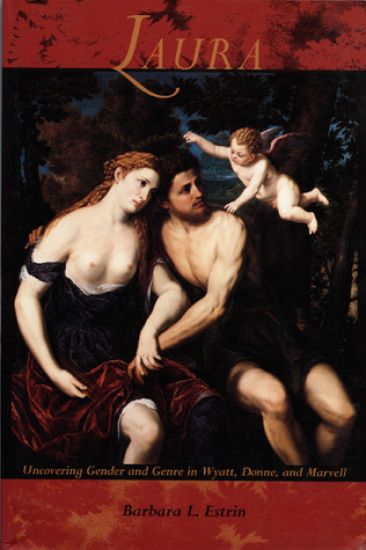
How do men imagine women? In the poetry of Petrarch and his English successors-Wyatt, Donne, and Marvell-the male poet persistently imagines pursuing a woman, Laura, whom he pursues even as she continues to deny his affections. Critics have long held that, in objectifying Laura, these male-authored texts deny the imaginative, intellectual, and physical life of the woman they idealize. In Laura, Barbara L. Estrin counters this traditional view by focusing not on the generative powers of the male poet, but on the subjectivity of the imagined woman and the imaginative space of the poems she occupies. Through close readings of the Rime sparse and the works of Wyatt, Donne, and Marvell, Estrin uncovers three Lauras: Laura-Daphne, who denies sexuality; Laura-Eve, who returns the poet’s love; and Laura-Mercury, who reinvents her own life. Estrin claims that in these three guises Laura subverts both genre and gender, thereby introducing multiple desires into the many layers of the poems. Drawing upon genre and gender theories advanced by Jean-FranÇois Lyotard and Judith Butler to situate female desire in the poem’s framework, Estrin shows how genre and gender in the Petrarchan tradition work together to undermine the stability of these very concepts.Estrin’s Laura constitutes a fundamental reconceptualization of the Petrarchan tradition and contributes greatly to the postmodern reassessment of the Renaissance period. In its descriptions of how early modern poets formulate questions about sexuality, society and poetry, Laura will appeal to scholars of the English and Italian Renaissance, of gender studies, and of literary criticism and theory generally.