Kirjojen hintavertailu. Mukana 11 342 296 kirjaa ja 12 kauppaa.

Kirjahaku

Etsi kirjoja tekijän nimen, kirjan nimen tai ISBN:n perusteella.

1000 tulosta hakusanalla Laura Seymour

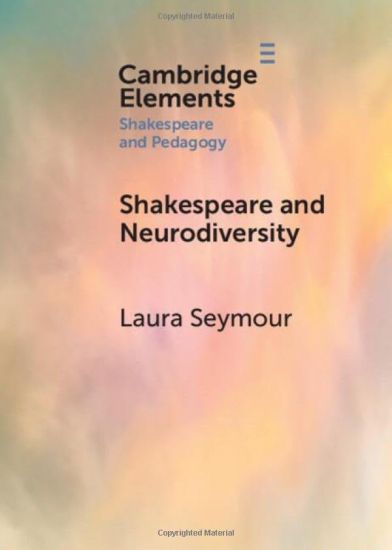
Shakespeare and Neurodiversity

Shakespeare and Neurodiversity

Laura Seymour

Cambridge University Press
2025
pokkari
Shakespeare and Neurodiversity argues that the Shakespeare classroom should be a place where neurodivergent learners flourish. This Element addresses four key areas: questions of reasonable adjustments, the pace of learning, the issue of diagnosis, and Shakespearean neurodivergent futures in education. Throughout, the Element provides activities and theoretical explanations to enable students and educators to understand how these four areas of Shakespeare education have often been underpinned by ableism, but can now become sources of neurodivergent flourishing.
Refusing to Behave in Early Modern Literature

Refusing to Behave in Early Modern Literature

Laura Seymour

EDINBURGH UNIVERSITY PRESS
2022
sidottu
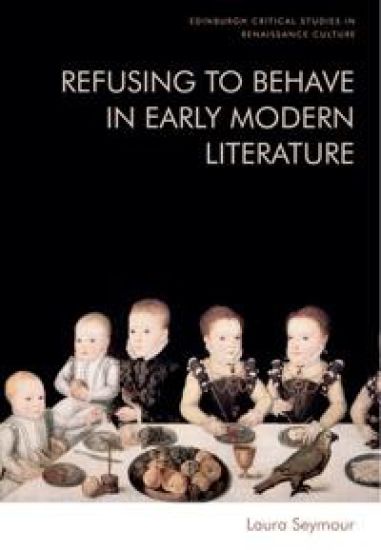
Examines the interrelation of the bodily and the textual in four early modern literary examples of bad behavior Broadens the scope of current understandings of early modern literature by identifying and analysing the significance of genre to representations of resistance to behavioural norms Brings together a variety of texts that are not usually considered side by side (Elizabethan and Jacobean devil plays, non-conformist life writing, picaresque prose), using this carefully-chosen mix of texts to explore social norms as a generic concern Provides a definitive study of texts lacking a substantial critical apparatus, like Grim the Collier of Croydon Comparatively analyses early modern Anglophone texts alongside Spanish picaresque prose thus opening out new avenues in comparative literary studies Refusing to Behave in Early Modern Literature explores texts shaped by collisions between the idiosyncrasies of individual bodyminds and the values of small communities such as religion, sect, social milieu, congregation and family. The book encompasses the period from the late sixteenth century to the early eighteenth century, examining early modern shrew and devil plays, picaresque and rogue literature, and Quaker life-writing. Refusing to Behave examines the ways in which Thomas Dekker, Thomas Ellwood, Mateo Alem n and his translator James Mabbe, and the anonymous author of Grim the Collier of Croydon use textual tricks to provoke bodily responses in readers, and also draw on readers' bodily experiences to enrich their textual descriptions. This study broadens the scope of current understandings of early modern literature by identifying and analysing the significance of genre to representations of resistance to behavioural norms.
Refusing to Behave in Early Modern Literature

Refusing to Behave in Early Modern Literature

Laura Seymour

EDINBURGH UNIVERSITY PRESS
2024
nidottu
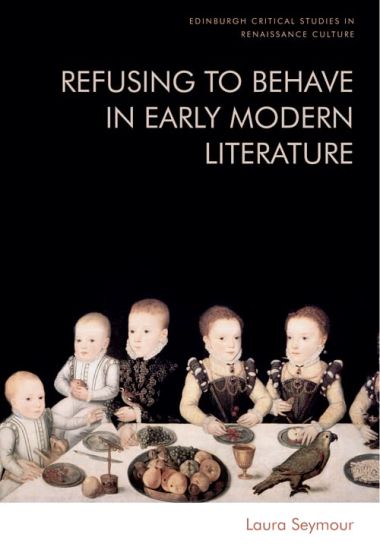
Refusing to Behave in Early Modern Literature explores texts shaped by collisions between the idiosyncrasies of individual bodyminds and the values of small communities such as religion, sect, social milieu, congregation and family. The book encompasses the period from the late sixteenth century to the early eighteenth century, examining early modern shrew and devil plays, picaresque and rogue literature, and Quaker life-writing. Refusing to Behave examines the ways in which Thomas Dekker, Thomas Ellwood, Mateo Aleman and his translator James Mabbe, and the anonymous author of Grim the Collier of Croydon use textual tricks to provoke bodily responses in readers, and also draw on readers' bodily experiences to enrich their textual descriptions. This study broadens the scope of current understandings of early modern literature by identifying and analysing the significance of genre to representations of resistance to behavioural norms.
An Analysis of Roland Barthes's The Death of the Author

An Analysis of Roland Barthes's The Death of the Author

Laura Seymour

Macat International Limited
2018
nidottu
Roland Barthes’s 1967 essay, "The Death of the Author," argues against the traditional practice of incorporating the intentions and biographical context of an author into textual interpretation because of the resultant limitations imposed on a text. Hailing "the birth of the reader," Barthes posits a new abstract notion of the reader as the conceptual space containing all the text’s possible meanings. The essay has become one of the most cited works in literary criticism and is a key text for any reader approaching reader response theory.
An Analysis of Roland Barthes's The Death of the Author

An Analysis of Roland Barthes's The Death of the Author

Laura Seymour

Macat International Limited
2018
sidottu
Roland Barthes’s 1967 essay, "The Death of the Author," argues against the traditional practice of incorporating the intentions and biographical context of an author into textual interpretation because of the resultant limitations imposed on a text. Hailing "the birth of the reader," Barthes posits a new abstract notion of the reader as the conceptual space containing all the text’s possible meanings. The essay has become one of the most cited works in literary criticism and is a key text for any reader approaching reader response theory.
Laura

Laura

Vera Caspary

Vintage
2012
pokkari
In the doorway of an elegant New York apartment, blood seeps over silk negligee, over polished wood floors and plush carpet: a beautiful young woman lies dead, her face disfigured by a single gun shot. But who was Laura?
Laura

Laura

Larry Watson

Washington Square Press Inc.,N.Y.
2001
pokkari
In a captivating departure, Larry Watson, "a writer whose work is worthy of prizes" ("Los Angeles Times Book Review"), unveils a portrait of faith, obsession, and enduring love -- and a work of greater tenderness than anything he has yet written. "Laura" Love captures Paul Finley, in, of all places, his own bedroom -- literally waking him from his dreams. The night he discovers Laura Pettit standing at his windowsill, Paul is eleven years old, a boy naturally inclined toward seriousness, precociously adept at the art of watching the world without being watched. Laura is twenty-two, a fiercely passionate and independent poet already experiencing the first flickers of fame, a beautiful woman on the brink of seducing Paul's father. No matter; Paul is smitten. When she leaves him to rejoin the grown-ups' party downstairs, Laura issues Paul a wholly impossible command, one that will haunt and consume both of them for the rest of their lives: "Forget me." Laying bare the inner life of one man during the course of nearly four decades, Larry Watson delivers a riveting treatise on the excruciating power of love -- and two of the most remarkable characters in recent American literature. Infused with breathtaking pathos and delicate grace, "Laura" is an extraordinary triumph of the novelist's art.
Laura

Laura

Barbara L. Estrin

Duke University Press
1994
pokkari
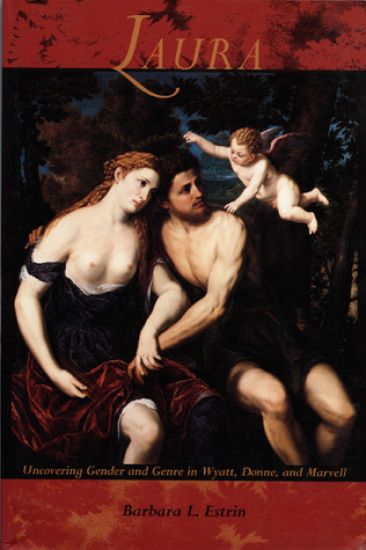
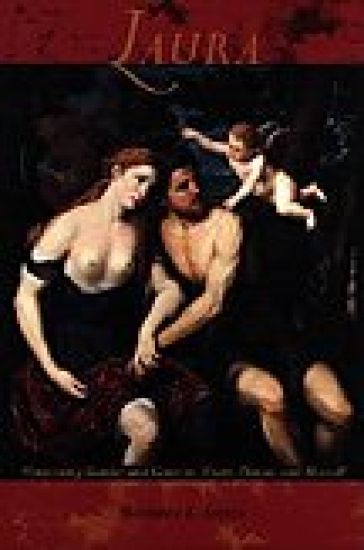
How do men imagine women? In the poetry of Petrarch and his English successors-Wyatt, Donne, and Marvell-the male poet persistently imagines pursuing a woman, Laura, whom he pursues even as she continues to deny his affections. Critics have long held that, in objectifying Laura, these male-authored texts deny the imaginative, intellectual, and physical life of the woman they idealize. In Laura, Barbara L. Estrin counters this traditional view by focusing not on the generative powers of the male poet, but on the subjectivity of the imagined woman and the imaginative space of the poems she occupies. Through close readings of the Rime sparse and the works of Wyatt, Donne, and Marvell, Estrin uncovers three Lauras: Laura-Daphne, who denies sexuality; Laura-Eve, who returns the poet’s love; and Laura-Mercury, who reinvents her own life. Estrin claims that in these three guises Laura subverts both genre and gender, thereby introducing multiple desires into the many layers of the poems. Drawing upon genre and gender theories advanced by Jean-FranÇois Lyotard and Judith Butler to situate female desire in the poem’s framework, Estrin shows how genre and gender in the Petrarchan tradition work together to undermine the stability of these very concepts.Estrin’s Laura constitutes a fundamental reconceptualization of the Petrarchan tradition and contributes greatly to the postmodern reassessment of the Renaissance period. In its descriptions of how early modern poets formulate questions about sexuality, society and poetry, Laura will appeal to scholars of the English and Italian Renaissance, of gender studies, and of literary criticism and theory generally.
Laura

Laura

Barbara L. Estrin

Duke University Press
1994
sidottu
How do men imagine women? In the poetry of Petrarch and his English successors-Wyatt, Donne, and Marvell-the male poet persistently imagines pursuing a woman, Laura, whom he pursues even as she continues to deny his affections. Critics have long held that, in objectifying Laura, these male-authored texts deny the imaginative, intellectual, and physical life of the woman they idealize. In Laura, Barbara L. Estrin counters this traditional view by focusing not on the generative powers of the male poet, but on the subjectivity of the imagined woman and the imaginative space of the poems she occupies. Through close readings of the Rime sparse and the works of Wyatt, Donne, and Marvell, Estrin uncovers three Lauras: Laura-Daphne, who denies sexuality; Laura-Eve, who returns the poet’s love; and Laura-Mercury, who reinvents her own life. Estrin claims that in these three guises Laura subverts both genre and gender, thereby introducing multiple desires into the many layers of the poems. Drawing upon genre and gender theories advanced by Jean-FranÇois Lyotard and Judith Butler to situate female desire in the poem’s framework, Estrin shows how genre and gender in the Petrarchan tradition work together to undermine the stability of these very concepts.Estrin’s Laura constitutes a fundamental reconceptualization of the Petrarchan tradition and contributes greatly to the postmodern reassessment of the Renaissance period. In its descriptions of how early modern poets formulate questions about sexuality, society and poetry, Laura will appeal to scholars of the English and Italian Renaissance, of gender studies, and of literary criticism and theory generally.

Laura!

Laura!

Tracey Richardson

Createspace Independent Publishing Platform
2013
nidottu
Laura is a fictionalized story of Laura Boult of St. Maurice, Louisiana. She left her small town and went to the big city in 1900 after having four boys with two different common-law husbands. In 1905, after being fired by the famous Schubert Brothers of Broadway fame, she left New York in disgrace with an all-black dance troupe headed to Paris, France. It was in Paris that she met the handsome Fran oise Goldman who taught her how to drop her strap and step out of her tap pants to fame and fortune, the likes of which she had never imagined. In 1940, just days before the Germans invaded Paris, Laura, Fran oise, and their daughter fled for their lives, arriving in New York with little more than the clothes they carried in their suitcases. While in New York, they worked at whatever jobs that were offered them. Laura returned to a liberated Paris in 1948 where, with the help of her former stage manger Jules Eitenne, she regained both her fame and her fortune.