Kirjojen hintavertailu. Mukana 11 627 220 kirjaa ja 12 kauppaa.

Kirjahaku

Etsi kirjoja tekijän nimen, kirjan nimen tai ISBN:n perusteella.

1000 tulosta hakusanalla Laurence Coupe

Myth

Myth

Laurence Coupe

Routledge
2008
sidottu
Laurence Coupe offers students a comprehensive overview of the development of myth, showing how mythic themes, structures and symbols persist in literature and entertainment today. This introductory volume:illustrates the relation between myth, culture and literature with discussions of poetry, fiction, film and popular songexplores uses made of the term ‘myth’ within the fields of literary criticism, anthropology, cultural studies, feminism, Marxism and psychoanalysisdiscusses the association between modernism, postmodernism, myth and historyfamiliarizes the reader with themes such as the dying god, the quest for the Grail, the relation between ‘chaos’ and ‘cosmos’, and the vision of the end of timedemonstrates the growing importance of the green dimension of myth.Fully updated and revised in this new edition, Myth is both a concise introduction and a useful tool to students first approaching the topic, while also a valuable contribution to the study of myth.
Myth

Myth

Laurence Coupe

Routledge
2008
nidottu
Laurence Coupe offers students a comprehensive overview of the development of myth, showing how mythic themes, structures and symbols persist in literature and entertainment today. This introductory volume:illustrates the relation between myth, culture and literature with discussions of poetry, fiction, film and popular songexplores uses made of the term ‘myth’ within the fields of literary criticism, anthropology, cultural studies, feminism, Marxism and psychoanalysisdiscusses the association between modernism, postmodernism, myth and historyfamiliarizes the reader with themes such as the dying god, the quest for the Grail, the relation between ‘chaos’ and ‘cosmos’, and the vision of the end of timedemonstrates the growing importance of the green dimension of myth.Fully updated and revised in this new edition, Myth is both a concise introduction and a useful tool to students first approaching the topic, while also a valuable contribution to the study of myth.
Beat Sound, Beat Vision

Beat Sound, Beat Vision

Laurence Coupe

Manchester University Press
2012
sidottu
This book reveals the ideas behind the Beat vision which influenced the Beat sound of the songwriters who followed on from them. Having explored the thinking of Alan Watts, who coined the term ‘Beat Zen’, and who influenced the counterculture which emerged out of the Beat movement, it celebrates Jack Kerouac as a writer in pursuit of a ‘beatific’ vision. On this basis, the book goes on to explain the relevance of Kerouac and his friends Allen Ginsberg and Gary Snyder to songwriters who emerged in the 1960s. Not only are new, detailed readings of the lyrics of the Beatles and of Dylan given, but the range and depth of the Beat legacy within popular song is indicated by way of an overview of some important innovators: Jim Morrison, Joni Mitchell, Leonard Cohen, Donovan, the Incredible String Band, Van Morrison and Nick Drake.
Beat Sound, Beat Vision

Beat Sound, Beat Vision

Laurence Coupe

Manchester University Press
2011
nidottu
This book reveals the ideas behind the Beat vision which influenced the Beat sound of the songwriters who followed on from them. Having explored the thinking of Alan Watts, who coined the term ‘Beat Zen’, and who influenced the counterculture which emerged out of the Beat movement, it celebrates Jack Kerouac as a writer in pursuit of a ‘beatific’ vision. On this basis, the book goes on to explain the relevance of Kerouac and his friends Allen Ginsberg and Gary Snyder to songwriters who emerged in the 1960s. Not only are new, detailed readings of the lyrics of the Beatles and of Dylan given, but the range and depth of the Beat legacy within popular song is indicated by way of an overview of some important innovators: Jim Morrison, Joni Mitchell, Leonard Cohen, Donovan, the Incredible String Band, Van Morrison and Nick Drake.
Marina Warner

Marina Warner

Laurence Coupe

Northcote House Publishers Ltd
2005
nidottu
Warner is such a widely celebrated writer that it is a source of some wonderment that this is the first full-length study of her work. Warner is a novelist whose work is rooted in traditional forms such as legend, romance and fairy tale yet who is wholly contemporary in her thinking. This is a must read for students and fans alike.
Marina Warner

Marina Warner

Laurence Coupe

Northcote House Publishers Ltd
2005
sidottu
Warner is such a widely celebrated writer that it is a source of some wonderment that this is the first full-length study of her work. Warner is a novelist whose work is rooted in traditional forms such as legend, romance and fairy tale yet who is wholly contemporary in her thinking. This is a must read for students and fans alike.
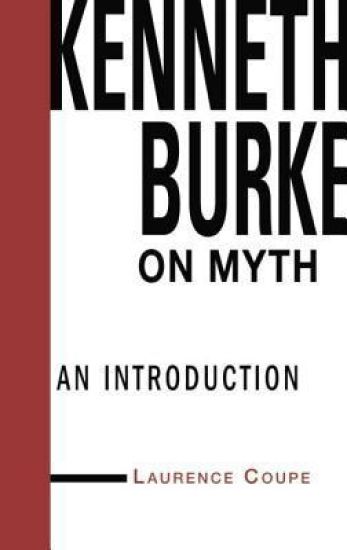
Kenneth Burke on Myth

Kenneth Burke on Myth

Lawrence Coupe

Routledge
2014
nidottu
Kenneth Burke--rhetorician, philosopher, linguist, sociologist, literary and music critic, crank--was one of the foremost theorists of literary form. He did not fit tidily into any philosophical school, nor was he reducible to any simple set of principles or ideas. He published widely, and is probably best known for two of his classic works, A Rhetoric of Motive and Philosophy ofLiterary Form. His observations on myth, however, were never systematic, and much of his writing on literary theory and other topics cannot be fully understood without fleshing out his thoughts on myth and mythmaking.
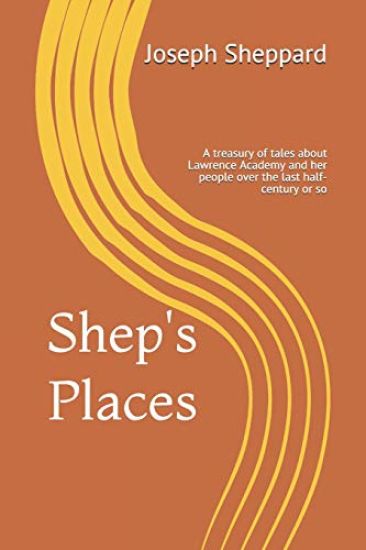
Shep's Places: A compendium of tales about Lawrence Academy and her people over the last half-century or so
Originally written for the Shep's Place column on the Lawrence Academy website, these 41 short pieces highlight many aspects of life at LA: the people, the events, the places, the legends, and more. Some are serious; some are funny (or meant to be ); a few are poignant. Older readers will rekindle fond memories, while the younger generations will enjoy glimpses into "the way we were" on the elm tree-shaded hillside in years past.
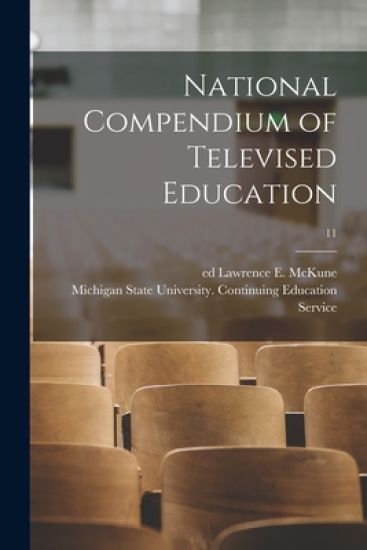
National Compendium of Televised Education; 11

National Compendium of Televised Education; 11

Lawrence E. Ed McKune; Michigan State University Continuing

Hassell Street Press
2021
sidottu
This work has been selected by scholars as being culturally important and is part of the knowledge base of civilization as we know it.This work is in the public domain in the United States of America, and possibly other nations. Within the United States, you may freely copy and distribute this work, as no entity (individual or corporate) has a copyright on the body of the work.Scholars believe, and we concur, that this work is important enough to be preserved, reproduced, and made generally available to the public. To ensure a quality reading experience, this work has been proofread and republished using a format that seamlessly blends the original graphical elements with text in an easy-to-read typeface.We appreciate your support of the preservation process, and thank you for being an important part of keeping this knowledge alive and relevant.
National Compendium of Televised Education; 11

National Compendium of Televised Education; 11

Lawrence E. Ed McKune; Michigan State University Continuing

Hassell Street Press
2021
nidottu
This work has been selected by scholars as being culturally important and is part of the knowledge base of civilization as we know it.This work is in the public domain in the United States of America, and possibly other nations. Within the United States, you may freely copy and distribute this work, as no entity (individual or corporate) has a copyright on the body of the work.Scholars believe, and we concur, that this work is important enough to be preserved, reproduced, and made generally available to the public. To ensure a quality reading experience, this work has been proofread and republished using a format that seamlessly blends the original graphical elements with text in an easy-to-read typeface.We appreciate your support of the preservation process, and thank you for being an important part of keeping this knowledge alive and relevant.
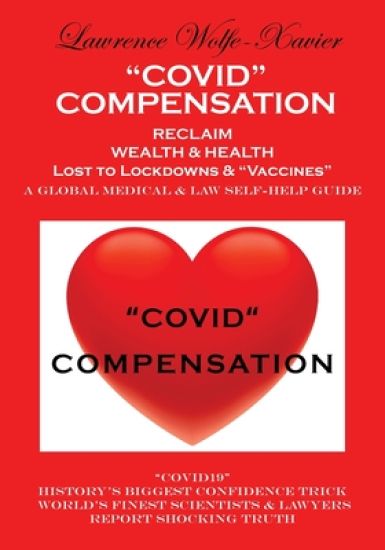
"COVID" COMPENSATION

"COVID" COMPENSATION

Lawrence Wolfe-Xavier

GROSVENOR HOUSE PUBLISHING LTD
2023
nidottu
The world was quietly going about its "normal business" when late in 2019 the entire global world of 195 countries, even China, was turned completely on its head by a fake "virus" and a fake "pandemic". However, the world was not to know at the time, and for the most part still does not know; until the publication of this book, that the entire chapter and verse of the "virus" paradigm called "SarsCov2", and its ensuing ailment "Covid19 and its "pandemic" were all total lies and fake. Lies and fake propagated by hidden persons and their nominated puppets in mostly unelected, globalist organisations beyond the reach of sovereign states: WHO, WEF, UN, World Bank etc who in reality control the world. Consequently, in early 2020 and the following months through to 2021 there was a world-wide 'nightmare' that no one seemed to fully understand or indeed understand at all. This nightmare was known variously as "Coronavirus" "Sars-Cov2" and "Covid19". Coronaviruses can cause mild disease similar to a common cold. "Sars-Cov2" - severe acute respiratory syndrome coronavirus 2 was claimed to be a "novel" (new) coronavirus and the illness "Covid19", was supposedly caused by "Sars-Cov2". Mass Induced Dystopian Nightmare The dystopian nightmare had only just begun and was to last almost two full years - 2020-2022. Horrible images appeared from China (not the most democratic country in the world) then from Italy and other countries until world-wide. Preposterous projections of not to happen global deaths based on very flawed computer models were bandied about to an unknowing mass of a very frightened and unfortunately deliberately ill-informed global population. Global mass media fanned the flames morning, day, and night for many months on end. Inappropriate quarantine measures were globally, in lockstep, imposed that restricted human movement to an inhuman level that people were not permitted to see their loved ones when their loved ones were dying in hospitals and care homes! The world was a surreal, dystopian horror story - police vans patrolling the street at night, complete lockdown and no one allowed outside except for one hours walk per day, no gatherings greater than six, empty streets, closed and boarded shops, empty parks, and empty beaches. Draconian civil rights restrictions were imposed. The Global economic and social life the world over were about to fall into total collapse. On what data were these extreme measures taken? Was the world really under such a massive threat that we had to close down global capitalism for 2 years? Had the benefits of these very severe measures been adequately assessed against the damage that they would also no doubt cause to the global economy and to individual person's lives throughout the world? No, they had not. They were simply imposed globally without recourse to any open debate or serious risk analysis. Medico-Totalitarianism strode the world like a Great Dictator with all debate and opposition silenced by the baying mob of puppet Mainstream Media. Until the publication of this book - "COVID" COMPENSATION - SHOCKING TRUTH REVEALED by the finest independent scientific, medical, and legal minds in the world.
Fungipedia: Un Compendio Breve Sobre El Mundo del Hongo / Fungipedia: A Brief Compendium of Mushroom Lore
En estos momentos, en la oscura humedad de un tronco hueco, crece un hongo. Parece inveros mil, pero ese hongo tiene el mismo ancestro que t , y tu relaci n con l no solo es gen tica: tambi n es gastron mica, espiritual, religiosa y comercial.Desde el ag rico blanco, que provoca la orina y baja la fiebre de la malaria, hasta los hongos bailarines de la pel cula Fantas a de Disney, pasando por Alicia en el pa s de las maravillas y el hongo de Chern bil que se alimenta de la radiaci n, este compendio con m s de 180 entradas te transportar a un universo incre ble.No es una exageraci n: este a o encontrar s muy pocos libros m s interesantes que este. No importa en qu a o leas esto.ENGLISH DESCRIPTION"This little book is big fun."--Michael Pollan An illustrated mini-encyclopedia of fungal lore, from John Cage and Terence McKenna to mushroom sex and fairy rings Fungipedia presents a delightful A-Z treasury of mushroom lore. With more than 180 entries--on topics as varied as Alice in Wonderland, chestnut blight, medicinal mushrooms, poisonings, Santa Claus, and waxy caps--this collection will transport both general readers and specialists into the remarkable universe of fungi. Combining ecological, ethnographic, historical, and contemporary knowledge, author and mycologist Lawrence Millman discusses how mushrooms are much more closely related to humans than to plants, how they engage in sex, how insects farm them, and how certain species happily dine on leftover radiation, cockroach antennae, and dung. He explores the lives of individuals like African American scientist George Washington Carver, who specialized in crop diseases caused by fungi; Beatrix Potter, creator of Peter Rabbit, who was prevented from becoming a professional mycologist because she was a woman; and Gordon Wasson, a J. P. Morgan vice-president who almost single-handedly introduced the world to magic mushrooms. Millman considers why fungi are among the most significant organisms on our planet and how they are currently being affected by destructive human behavior, including climate change. With charming drawings by artist and illustrator Amy Jean Porter, Fungipedia offers a treasure trove of scientific and cultural information. The world of mushrooms lies right at your door--be amazed
National Toxicology Program's Chemical Solubility Compendium

National Toxicology Program's Chemical Solubility Compendium

Lawrence H. Keith; Douglas B. Walters

CRC Press Inc
1991
sidottu
This book is a compilation of experimentally determined solubility ranges of over 1,700 compounds in the National Toxicology Program's Chemical Repository. Each compound's solubility was determined in a consistent manner in one to six solvents. Solvents chosen were those most commonly used for toxicology studies, spill cleanups, and chemical synthesis or chemical reaction experiments. These solvents include acetone, 95% ethanol, water, dimethyl sulfoxide, methanol, and toluene. Data for many of the research and industrial chemicals featured in this volume do not exist anywhere else. If you are a toxicologist, safety professional, industrial hygienist, or chemist, this book is a valuable reference tool you'll find yourself using every day.
Advertising Agency Compensation [microform]; Theory, Law, Practice

Advertising Agency Compensation [microform]; Theory, Law, Practice

Albert E. Haase; Lawrence Campbell 1899- Lockley; I. W. (Isaac Watlington) 189 Digges

Hassell Street Press
2021
nidottu
This work has been selected by scholars as being culturally important and is part of the knowledge base of civilization as we know it.This work is in the public domain in the United States of America, and possibly other nations. Within the United States, you may freely copy and distribute this work, as no entity (individual or corporate) has a copyright on the body of the work.Scholars believe, and we concur, that this work is important enough to be preserved, reproduced, and made generally available to the public. To ensure a quality reading experience, this work has been proofread and republished using a format that seamlessly blends the original graphical elements with text in an easy-to-read typeface.We appreciate your support of the preservation process, and thank you for being an important part of keeping this knowledge alive and relevant.
Laurence Sterne

Laurence Sterne

Ian Campbell Ross

Oxford University Press
2002
nidottu
Laurence Sterne was in his mid-forties when the publication of Tristram Shandy catapulted him from obscurity into unprecedented literary fame. The story of how a provincial clergyman became the most fashionable writer of his day is extraordinary, and all the more remarkable for having been engineered by its subject. 'I wrote not to be fed, but to be famous', Laurence Sterne declared of his comic masterpiece, and in order to achieve his ambiton he became an assiduous networked, as astute a self-publicist as any modern author could hope to be. Shocked critics of Tristram Shandy denounced his bawdy novel as a scandal to the cloth but Sterne revelled in the celebrity his age's obsession with novelty and fashion allowed him. He at last found compensation for a life characterized by alternating moods of gaiety and gloom. Unhappily married to a woman who suffered a nervous breakdown and at one time believed herself to be the Queen of Bohemia, Sterne became notorious for his sexual and sentimental liaisons with other women. His second book, A Sentimental Journey, transmuted his experiences into literary expressions of moral feeling. Dependent for so much of his life on patrons, it was the patronage of the reading public that was to secure his livelihood. Tristram Shandy remains one of the most innovative and influential novels in world literature, and Ian Campbell Ross makes full use of important new materials to examine Sterne's life and career and the cult of the celebrity author.
Laurence Sterne's Tristram Shandy

Laurence Sterne's Tristram Shandy

Oxford University Press Inc
2006
sidottu
The responsiveness of Sterne's writing to a wide range of approaches and topics of recent and ongoing interest--among them narrative, interpretation, intertextuality, gender, the body, sentimentalism, and print culture--has ensured a wealth of recent activity in the journals. Two specialist periodicals, the Shandean and Eighteenth-Century Fiction, have become major repositories for innovative work on Sterne since their foundation in the late 1980s, and important new readings continue to appear in the established journals. The proliferation of periodical articles means, in turn, access to the full range of this material is now a problem in all but the largest institutions. This situation creates a major opportunity for a volume designed to reprint the best essays of the last fifteen years. The book is divided into five sections. Section one looks at one of the most contentious recent debates about Tristram Shandy, on the issue of generic definition, and is designed to help students orient themselves in their encounters with this convention-breaking text in terms of prior traditions and intertexts. Section two's essays on print culture represent a major new area of interest in literary study as a whole. In this context "print culture" denotes not only Sterne's experimental deformation of typographical resources in Tristram Shandy (the black, marbled, and blank pages being the famous instances) but also his engagement with a literary marketplace in which reviewers and other readers could influence the text as it serially emerged. Section three focuses on topics about the body in Sterne. These essays, related closely to the essays in section four, go beyond run of the mill "body in literature" criticism by linking the topic to other issues of current interest: narrative, language, and scientific discourse and/or medical practices in the period. Political readings, another growth area in recent years, is the subject of the final, fifth section.
Laurence Sterne's Tristram Shandy

Laurence Sterne's Tristram Shandy

Oxford University Press Inc
2006
nidottu
The responsiveness of Sterne's writing to a wide range of approaches and topics of recent and ongoing interest--among them narrative, interpretation, intertextuality, gender, the body, sentimentalism, and print culture--has ensured a wealth of recent activity in the journals. Two specialist periodicals, the Shandean and Eighteenth-Century Fiction, have become major repositories for innovative work on Sterne since their foundation in the late 1980s, and important new readings continue to appear in the established journals. The proliferation of periodical articles means, in turn, access to the full range of this material is now a problem in all but the largest institutions. This situation creates a major opportunity for a volume designed to reprint the best essays of the last fifteen years. The book is divided into five sections. Section one looks at one of the most contentious recent debates about Tristram Shandy, on the issue of generic definition, and is designed to help students orient themselves in their encounters with this convention-breaking text in terms of prior traditions and intertexts. Section two's essays on print culture represent a major new area of interest in literary study as a whole. In this context "print culture" denotes not only Sterne's experimental deformation of typographical resources in Tristram Shandy (the black, marbled, and blank pages being the famous instances) but also his engagement with a literary marketplace in which reviewers and other readers could influence the text as it serially emerged. Section three focuses on topics about the body in Sterne. These essays, related closely to the essays in section four, go beyond run of the mill "body in literature" criticism by linking the topic to other issues of current interest: narrative, language, and scientific discourse and/or medical practices in the period. Political readings, another growth area in recent years, is the subject of the final, fifth section.
Laurence Sterne and his Readers in Early Soviet Russia
This book examines the 1920s and 1930s as a critical juncture in the rich history of the Russian reception of Laurence Sterne, author of The Life and Opinions of Tristram Shandy (1759-1767) and A Sentimental Journey Through France and Italy (1768). Drawing on archival sources, it traces how this eccentric eighteenth-century Yorkshire clergyman was read and admired within an increasingly totalitarian society. It is difficult to imagine a phenomenon more antithetical to the Bolshevik vision of society than the whimsical universe of Laurence Sterne. Yet it is precisely this apparent incongruity that makes Sterne--whom Nietzsche once called 'the freest writer of all times'--a revealing figure for understanding cultural life in the early Soviet period. By situating individual readerly encounters within broader biographical, cultural, and institutional contexts, this book treats Sternean reception as part of the wider history of the survival of intellectual autonomy after the revolution. At its centre is the question of how individuals found forms of escape in the subversive, digressive worlds of Sterne's fiction. The book combines book history, group biography, translation studies, and reader response criticism to examine the publication, circulation, and reception of Sterne's works in Soviet Russia. It focuses on specific institutional and material contexts: publishing houses, editorial practices, censorship, and the everyday lives of readers and translators. It also sheds new light on Shklovskii's reception of Sterne and, looking beyond Russian Formalism, recovers a range of overlooked figures and introduces a wealth of previously unpublished material, including unknown translations of Tristram Shandy and A Sentimental Journey, scholarly essays, illustrations, and private letters.