Kirjojen hintavertailu. Mukana 11 627 461 kirjaa ja 12 kauppaa.

Kirjahaku

Etsi kirjoja tekijän nimen, kirjan nimen tai ISBN:n perusteella.

1000 tulosta hakusanalla Laurence Kanter; John J. Marciari

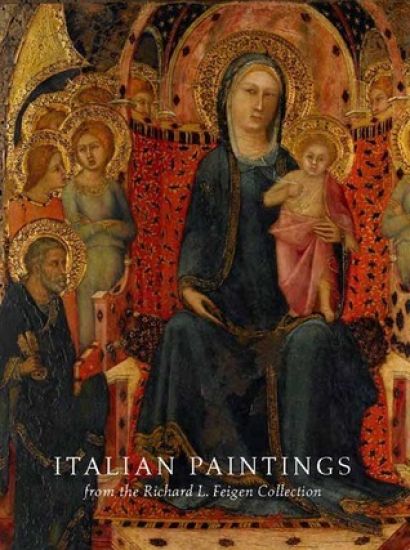
Italian Paintings from the Richard L. Feigen Collection

Italian Paintings from the Richard L. Feigen Collection

Laurence Kanter; John J. Marciari

Yale University Press
2010
sidottu
Richard L. Feigen has amassed a collection of Italian paintings that is widely admired for its depth and quality, especially for the works it features by the principal masters of the early Italian Renaissance. This beautifully illustrated catalogue of the complete collection presents rare masterpieces by artists from Bernardo Daddi to Fra Angelico, Orazio Gentileschi’s Danaë, Annibale Carracci’s Virgin and Child, and precious, small-scale coppers by major Mannerist and Baroque masters. Italian Paintings from the Richard L. Feigen Collection catalogues more than fifty major works from the 14th to the 17th century, and is the first publication of this remarkable and important collection.Published in association with the Yale University Art GalleryExhibition Schedule:Yale University Art Gallery, New Haven (5/28/10–9/12/10)
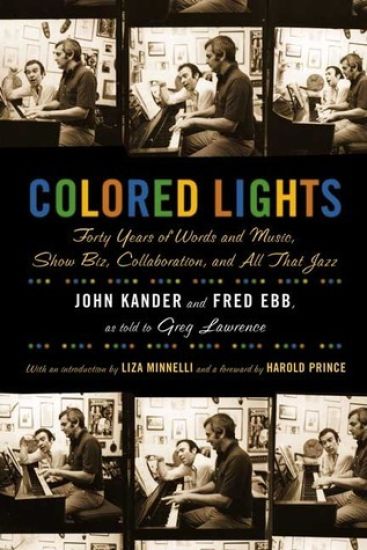
Colored Lights

Colored Lights

John Kander; Fred Ebb; Greg Lawrence; Harold Prince

Farrar, Strauss Giroux-3pl
2004
pokkari
Composer John Kander and lyricist Fred Ebb are the longest-running song-writing partnership in Broadway history, having first joined forces in 1962. The creators of such groundbreaking musicals as "Chicago," "Cabaret," and" Kiss of the Spider Woman," Kander and Ebb have helped to push American musical theater in a more daring direction, both musically and dramatically. Their impact on individual performers has been great as well, starting with the handpicked star of their first musical: an untested nineteen-year-old named Liza Minnelli (who writes of this experience in her introduction)."Colored Lights" covers the major shows of Kander and Ebb's partnership, from "Flora, the Red Menace" (starring a then-unknown Liza) to "The Visit," their newest show, which is set to star another Kander and Ebb favorite, Chita Rivera. The pages and musicals in between reveal what has made theirs such an important and long-lived musical partnership--and one so valued by the artists they have worked with. In recounting the genesis and controversies of "Cabaret," reflecting on the superstar mentality of such artists as Frank Sinatra and Barbra Streisand, and recalling their work with Bob Fosse on "Chicago" (as well as their thoughts on the Oscar-winning film version), John Kander and Fred Ebb provide a history not only of their own lives but also of the American musical theater of the late twentieth century.
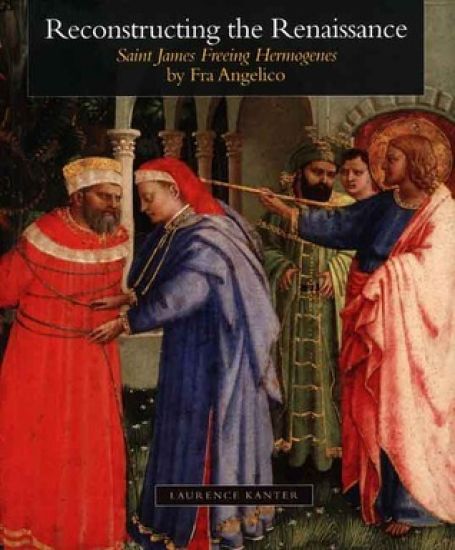
Reconstructing the Renaissance

Reconstructing the Renaissance

Laurence Kanter

Yale University Press
2008
pokkari
Saint James Freeing Hermogenes, an important painting by one of the world’s most beloved Renaissance artists, was privately owned and rarely seen until two decades ago, when it was acquired by the Kimbell Art Museum. Now an eminent authority reviews previous studies on this beautiful Fra Angelico painting and draws on new technical and archival research to provide a more precise reconstruction of its original format and context. In analyzing this painting, Laurence Kanter reexamines and confirms Fra Angelico’s status as a pioneer of the new representational style championed in Florence in the early fifteenth century by Brunelleschi, Masaccio, and Donatello, and he shows why he was one of the great artistic minds of his age. Kanter presents both detailed information for students and an introduction for the general reader to the methods and procedures of reconstructing and interpreting history when little contemporary written testimony survives. Distributed for the Kimbell Art Museum
Leonardo: Discoveries from Verrocchio's Studio

Leonardo: Discoveries from Verrocchio's Studio

Laurence Kanter

Yale University Press
2018
sidottu
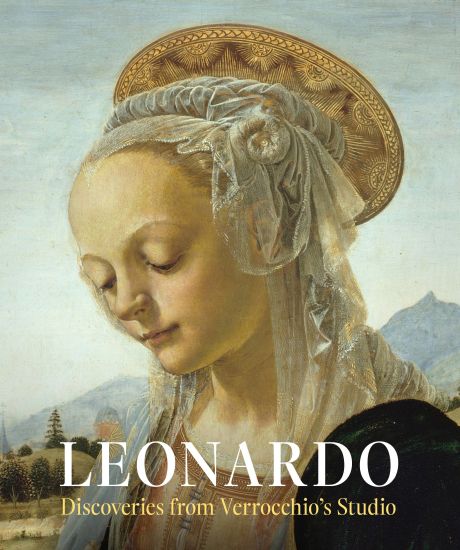
Presents exciting, original conclusions about Leonardo da Vinci’s early life as an artist and amplifies his role in Andrea del Verrocchio’s studio This groundbreaking reexamination of the beginnings of Leonardo da Vinci’s (1452–1519) life as an artist suggests new candidates for his earliest surviving work and revises our understanding of his role in the studio of his teacher, Andrea del Verrocchio (1435–1488). Anchoring this analysis are important yet often overlooked considerations about Verrocchio’s studio—specifically, the collaborative nature of most works that emerged from it and the probability that Leonardo must initially have learned to paint in tempera, as his teacher did. The book searches for the young artist’s hand among the tempera works from Verrocchio’s studio and proposes new criteria for judging Verrocchio’s own painting style. Several paintings are identified here as likely the work of Leonardo, and others long considered works by Verrocchio or his assistant Lorenzo di Credi (1457/59–1536) may now be seen as collaborations with Leonardo sometime before his departure from Florence in 1482/83. In addition to Laurence Kanter’s detailed arguments, the book features three essays presenting recent scientific analysis and imaging that support the new attributions of paintings, or parts of paintings, to Leonardo.Distributed for the Yale University Art GalleryExhibition Schedule:Yale University Art Gallery (06/29/18–10/07/18)
Italian Paintings at the Yale University Art Gallery

Italian Paintings at the Yale University Art Gallery

Laurence Kanter; Pia Palladino

YALE UNIVERSITY PRESS
2026
sidottu
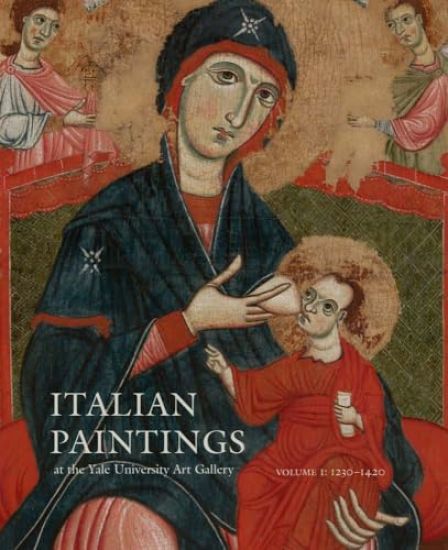
A comprehensive presentation of the Yale University Art Gallery’s collection of Italian paintings from the thirteenth to the fifteenth century The collection of Italian paintings at the Yale University Art Gallery is one of the largest and richest in the world. The first of four volumes on the collection, this sumptuously illustrated book features over seventy-five works dating from 1230 to 1420 by artists such as Taddeo Gaddi, Andrea di Cione (better known as Orcagna), Lippo Memmi, Pietro and Ambrogio Lorenzetti, and Lorenzo Monaco. In addition to discussions of each painting’s meaning, function, and significance, entries provide published references, provenance, full technical notes, and detailed conservation histories. An introduction by Laurence Kanter chronicles the history of the collection, from the James Jackson Jarves Collection that was assembled in the nineteenth century—the earliest formed collection of Italian paintings in any American museum—to more recent gifts by Louis and Hannah Rabinowitz and Richard Feigen. While many of the works are from Florence and Siena, the volume also includes examples from Bologna, Rimini, Venice, and more. Through its wide-ranging holdings, the Gallery’s collection provides a remarkable sense of the diverse visual culture of the time. Distributed for the Yale University Art Gallery
Broadway

Broadway

Maslon Laurence; Kantor Michael

Applause
2020
pokkari
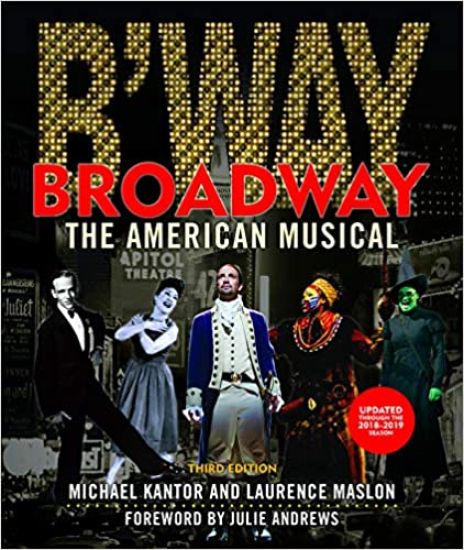
A comprehensive companion to the six-part Emmy-winning PBS documentary series, Broadway: The American Musical is the gold standard of musical theater history books, tracing the roots of the art form at the turn of the twentieth century through the smashing successes of the new millennium. The in-depth text is lavishly illustrated with a treasure trove of photographs, scenic renderings, production stills, and rehearsal shots, many previously unpublished. With a foreword by Julie Andrews, this edition is revised and updated, with brand-new material on all the Broadway musicals through the 2018-2019 season, including The Book of Mormon, Hamilton, Dear Evan Hansen, and more. Called by Playbill "an epic tome-handsomely produced and intensely researched," this five hundred-page volume is a must-have for theater fans, casual enthusiasts, and students of all ages.
Testing Computer Software

Testing Computer Software

Cem Kaner; James Bach; Robert Johnson; Brian Lawrence; Jack Falk; Hung Q. Nguyen

John Wiley Sons Inc
2013
nidottu
Software testing exists in all software development in order to determine if a program meets required specifications and to find errors in programming code. Testing involves the operation of a system or application under controlled conditions and evaluation of the results. This edition covers techniques and concepts that are useful to the individual test contributor.
Laurence Sterne

Laurence Sterne

Ian Campbell Ross

Oxford University Press
2002
nidottu
Laurence Sterne was in his mid-forties when the publication of Tristram Shandy catapulted him from obscurity into unprecedented literary fame. The story of how a provincial clergyman became the most fashionable writer of his day is extraordinary, and all the more remarkable for having been engineered by its subject. 'I wrote not to be fed, but to be famous', Laurence Sterne declared of his comic masterpiece, and in order to achieve his ambiton he became an assiduous networked, as astute a self-publicist as any modern author could hope to be. Shocked critics of Tristram Shandy denounced his bawdy novel as a scandal to the cloth but Sterne revelled in the celebrity his age's obsession with novelty and fashion allowed him. He at last found compensation for a life characterized by alternating moods of gaiety and gloom. Unhappily married to a woman who suffered a nervous breakdown and at one time believed herself to be the Queen of Bohemia, Sterne became notorious for his sexual and sentimental liaisons with other women. His second book, A Sentimental Journey, transmuted his experiences into literary expressions of moral feeling. Dependent for so much of his life on patrons, it was the patronage of the reading public that was to secure his livelihood. Tristram Shandy remains one of the most innovative and influential novels in world literature, and Ian Campbell Ross makes full use of important new materials to examine Sterne's life and career and the cult of the celebrity author.
Laurence Sterne's Tristram Shandy

Laurence Sterne's Tristram Shandy

Oxford University Press Inc
2006
sidottu
The responsiveness of Sterne's writing to a wide range of approaches and topics of recent and ongoing interest--among them narrative, interpretation, intertextuality, gender, the body, sentimentalism, and print culture--has ensured a wealth of recent activity in the journals. Two specialist periodicals, the Shandean and Eighteenth-Century Fiction, have become major repositories for innovative work on Sterne since their foundation in the late 1980s, and important new readings continue to appear in the established journals. The proliferation of periodical articles means, in turn, access to the full range of this material is now a problem in all but the largest institutions. This situation creates a major opportunity for a volume designed to reprint the best essays of the last fifteen years. The book is divided into five sections. Section one looks at one of the most contentious recent debates about Tristram Shandy, on the issue of generic definition, and is designed to help students orient themselves in their encounters with this convention-breaking text in terms of prior traditions and intertexts. Section two's essays on print culture represent a major new area of interest in literary study as a whole. In this context "print culture" denotes not only Sterne's experimental deformation of typographical resources in Tristram Shandy (the black, marbled, and blank pages being the famous instances) but also his engagement with a literary marketplace in which reviewers and other readers could influence the text as it serially emerged. Section three focuses on topics about the body in Sterne. These essays, related closely to the essays in section four, go beyond run of the mill "body in literature" criticism by linking the topic to other issues of current interest: narrative, language, and scientific discourse and/or medical practices in the period. Political readings, another growth area in recent years, is the subject of the final, fifth section.
Laurence Sterne's Tristram Shandy

Laurence Sterne's Tristram Shandy

Oxford University Press Inc
2006
nidottu
The responsiveness of Sterne's writing to a wide range of approaches and topics of recent and ongoing interest--among them narrative, interpretation, intertextuality, gender, the body, sentimentalism, and print culture--has ensured a wealth of recent activity in the journals. Two specialist periodicals, the Shandean and Eighteenth-Century Fiction, have become major repositories for innovative work on Sterne since their foundation in the late 1980s, and important new readings continue to appear in the established journals. The proliferation of periodical articles means, in turn, access to the full range of this material is now a problem in all but the largest institutions. This situation creates a major opportunity for a volume designed to reprint the best essays of the last fifteen years. The book is divided into five sections. Section one looks at one of the most contentious recent debates about Tristram Shandy, on the issue of generic definition, and is designed to help students orient themselves in their encounters with this convention-breaking text in terms of prior traditions and intertexts. Section two's essays on print culture represent a major new area of interest in literary study as a whole. In this context "print culture" denotes not only Sterne's experimental deformation of typographical resources in Tristram Shandy (the black, marbled, and blank pages being the famous instances) but also his engagement with a literary marketplace in which reviewers and other readers could influence the text as it serially emerged. Section three focuses on topics about the body in Sterne. These essays, related closely to the essays in section four, go beyond run of the mill "body in literature" criticism by linking the topic to other issues of current interest: narrative, language, and scientific discourse and/or medical practices in the period. Political readings, another growth area in recent years, is the subject of the final, fifth section.
Laurence Sterne and his Readers in Early Soviet Russia
This book examines the 1920s and 1930s as a critical juncture in the rich history of the Russian reception of Laurence Sterne, author of The Life and Opinions of Tristram Shandy (1759-1767) and A Sentimental Journey Through France and Italy (1768). Drawing on archival sources, it traces how this eccentric eighteenth-century Yorkshire clergyman was read and admired within an increasingly totalitarian society. It is difficult to imagine a phenomenon more antithetical to the Bolshevik vision of society than the whimsical universe of Laurence Sterne. Yet it is precisely this apparent incongruity that makes Sterne--whom Nietzsche once called 'the freest writer of all times'--a revealing figure for understanding cultural life in the early Soviet period. By situating individual readerly encounters within broader biographical, cultural, and institutional contexts, this book treats Sternean reception as part of the wider history of the survival of intellectual autonomy after the revolution. At its centre is the question of how individuals found forms of escape in the subversive, digressive worlds of Sterne's fiction. The book combines book history, group biography, translation studies, and reader response criticism to examine the publication, circulation, and reception of Sterne's works in Soviet Russia. It focuses on specific institutional and material contexts: publishing houses, editorial practices, censorship, and the everyday lives of readers and translators. It also sheds new light on Shklovskii's reception of Sterne and, looking beyond Russian Formalism, recovers a range of overlooked figures and introduces a wealth of previously unpublished material, including unknown translations of Tristram Shandy and A Sentimental Journey, scholarly essays, illustrations, and private letters.
Laurence Sterne
The Critical Heritage gathers together a large body of critical sources on major figures in literature. Each volume presents contemporary responses to a writer's work, enabling student and researcher to read the material themselves.
Laurence Sterne
The Critical Heritage gathers together a large body of critical sources on major figures in literature. Each volume presents contemporary responses to a writer's work, enabling student and researcher to read the material themselves.
Laurence Nowell's Vocabularium Saxonicum

Laurence Nowell's Vocabularium Saxonicum

The University of Michigan Press
1952
nidottu
In his Preface to Laurence Nowell's Vocabularium Saxonicum, Albert H. Marckwardt writes: "Many years ago, when I first read Laurence Nowell's Vocabularium Saxonicum in manuscript, I was firmly convinced that it was of sufficient intrinsic interest to merit publication. It seemed desirable that a man like Nowell, so important in the development of Old English studies, should become more than a footnote in an occasional history of linguistic or legal scholarship. His dictionary, reflecting so clearly the personality of a true scholar with broad and human interests, deserved to be made generally available despite the advance of linguistic knowledge since its time."