Kirjojen hintavertailu. Mukana 11 417 157 kirjaa ja 12 kauppaa.

Kirjahaku

Etsi kirjoja tekijän nimen, kirjan nimen tai ISBN:n perusteella.

1000 tulosta hakusanalla Laurence Lampert

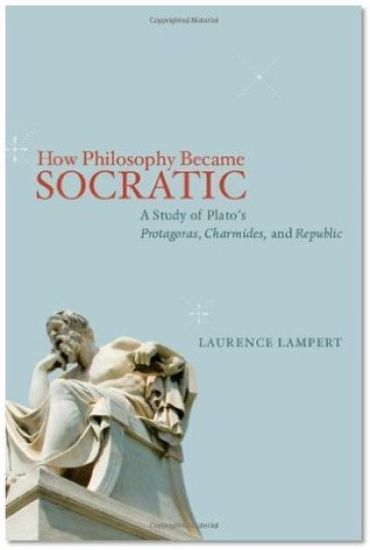
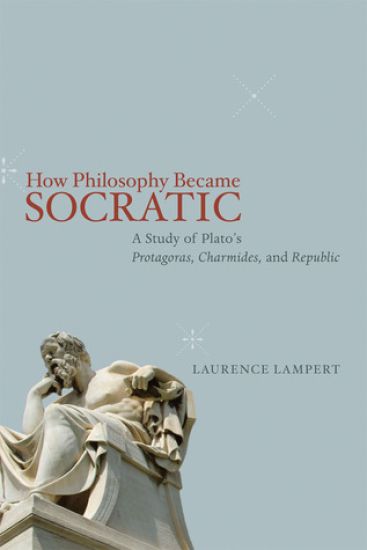
How Philosophy Became Socratic

How Philosophy Became Socratic

Laurence Lampert

University of Chicago Press
2013
nidottu
Plato's dialogues show Socrates at different ages, beginning when he was about nineteen and already deeply immersed in philosophy and ending with his execution five decades later. By presenting this model philosopher across a fifty-year span of his life, Plato leads his readers to wonder: Does that time period correspond to the development of Socrates' thought? In this magisterial investigation of the evolution of Socrates' philosophy, Laurence Lampert answers in the affirmative. The chronological route that Plato maps for us, Lampert argues, reveals the enduring record of philosophy as it gradually took the form that came to dominate the life of the mind in the West. The reader accompanies Socrates as he breaks with the century-old tradition of philosophy, turns to his own path, gradually enters into a deeper understanding of nature and human nature, and discovers the successful way to transmit his wisdom to the wider world. Focusing on the final and most prominent step in that process and offering detailed textual analysis of Plato's "Protagoras, Charmides, and Republic", "How Philosophy Became Socratic" charts Socrates' gradual discovery of a proper politics to shelter and advance philosophy.
The Enduring Importance of Leo Strauss

The Enduring Importance of Leo Strauss

Laurence Lampert

University of Chicago Press
2013
sidottu
In The Enduring Importance of Leo Strauss, Laurence Lampert takes on the crucial task of separating what is truly important in the work of Leo Strauss from the ephemeral politics associated with his school. Lampert focuses on exotericism - the use of artful rhetoric to simultaneously communicate a socially responsible message to the public at large and a more radical message of philosophic truth to a smaller, more intellectually fit audience. Largely forgotten after the Enlightenment, exotericism, he shows, deeply informed Strauss both as a reader and as a philosopher. Examining Strauss' most important books and essays through this exoteric lens, Lampert reevaluates not only Strauss but the philosophers - from Plato to Homer to Halevi to Nietzsche - with whom Strauss most deeply engaged. Ultimately he shows that Strauss' famous distinction between ancient and modern thinkers is primarily rhetorical, one of the great examples of Strauss' own exoteric craft. Celebrating Strauss' achievements but recognizing one main shortcoming - a lack of proper grounding in modern science, which Nietzsche would remedy - Lampert illuminates Strauss as having even greater philosophic importance than generally realized.
Leo Strauss and Nietzsche

Leo Strauss and Nietzsche

Laurence Lampert

University of Chicago Press
1997
nidottu
The political philosopher Leo Strauss has been credited by conservatives with the recovery of the great tradition of political philosophy stretching back to Plato. Strauss left a strongly negative assessment of Nietzsche as the modern philosopher most at odds with that tradition and most responsible for the sins of 20th-century culture - relativism, godlessness, nihilism, and the breakdown of family values. In fact, this apparent denunciation has become so closely associated with Strauss that it is often seen as the very core of his thought. This text offers a reassessment of the Strauss-Nietzsche connection. The author undertakes a searching examination of the key Straussian essay, "Note on the Plan of Nietzsche's `Beyond Good and Evil'". He shows that this essay, written toward the end of Strauss's life and placed at the centre of his final work, reveals an affinity for and debt to Nietzsche greater than Strauss's followers allow. Lampert argues that the essay comprises the most important interpretation of Nietzsche ever published, one that clarifies Nietzsche's conception of nature and of human spiritual history, and demonstrates the logical relationship between the essential themes in Nietzsche's thought - the will to power and the eternal return.
How Philosophy Became Socratic

How Philosophy Became Socratic

Laurence Lampert

University of Chicago Press
2010
sidottu
Plato's dialogues show Socrates at different ages, beginning when he was about nineteen and already deeply immersed in philosophy and ending with his execution five decades later. By presenting his model philosopher across a fifty-year span of his life, Plato leads his readers to wonder: does that time period correspond to the development of Socrates' thought? In this magisterial investigation of the evolution of Socrates' philosophy, Laurence Lampert answers in the affirmative. The chronological route that Plato maps for us, Lampert argues, reveals the enduring record of philosophy as it gradually took the form that came to dominate the life of the mind in the West. The reader accompanies Socrates as he breaks with the century-old tradition of philosophy, turns to his own path, gradually enters into a deeper understanding of nature and human nature, and discovers a successful way to transmit his wisdom to the wider world. Focusing on the final and most prominent step in that process and offering detailed textual analysis of Plato's "Protagoras", "Charmides", and "Republic", "How Philosophy Became Socratic" charts Socrates' gradual discovery of a proper politics to shelter and advance philosophy.
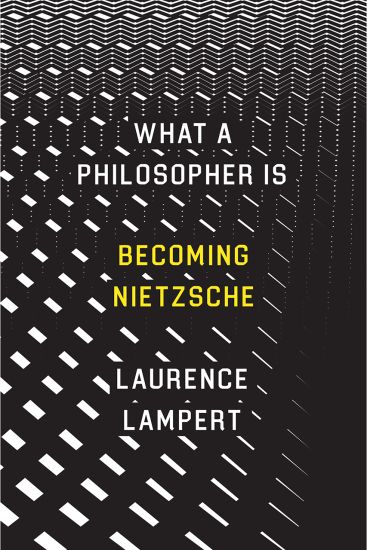
What a Philosopher Is

What a Philosopher Is

Laurence Lampert

University of Chicago Press
2018
sidottu
The trajectory of Friedrich Nietzsche's thought has long presented a difficulty for the study of his philosophy. How did the young Nietzsche classicist and ardent advocate of Wagner's cultural renewal become the philosopher of Will to Power and the Eternal Return? With this book, Laurence Lampert answers that question. He does so through his trademark technique of close readings of key works in Nietzsche's journey to philosophy: The Birth of Tragedy, Schopenhauer as Educator, Richard Wagner in Bayreuth, Human All Too Human, and "Sanctus Januarius," the final book of the 1882 Gay Science. Relying partly on how Nietzsche himself characterized his books in his many autobiographical guides to the trajectory of his thought, Lampert sets each in the context of Nietzsche's writings as a whole, and looks at how they individually treat the question of what a philosopher is. Indispensable to his conclusions are the workbooks in which Nietzsche first recorded his advances, especially the 1881 workbook which shows him gradually gaining insights into the two foundations of his mature thinking. The result is the most complete picture we've had yet of the philosopher's development, one that gives us a Promethean Nietzsche, gaining knowledge even as he was expanding his thought to create new worlds.
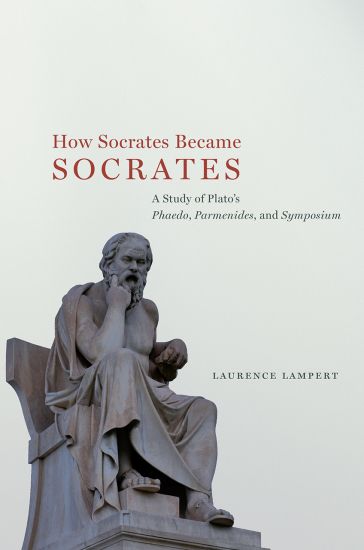
How Socrates Became Socrates

How Socrates Became Socrates

Laurence Lampert

University of Chicago Press
2021
sidottu
Plato dispersed his account of how Socrates became Socrates across three dialogues. Thus, Plato rendered his becoming discoverable only to readers truly invested. In How Socrates Became Socrates, Laurence Lampert recognizes the path of Plato's strides and guides us through the true account of Socrates' becoming. He divulges how and why Plato ordered his Phaedo, Parmenides, and Symposium chronologically to give readers access to Socrates' development on philosophy's fundamental questions of being and knowing. In addition to a careful and precise analysis of Plato's Phaedo, Parmenides, and Symposium, Lampert shows that properly entwined, Plato's three dialogues fuse to portray a young thinker entering philosophy's true radical power. Lampert reveals why this radicality needed to be guarded and places this discussion within the greater scheme of the politics of philosophy.
What a Philosopher Is

What a Philosopher Is

Laurence Lampert

University of Chicago Press
2021
nidottu
The trajectory of Friedrich Nietzsche’s thought has long presented a difficulty for the study of his philosophy. How did the young Nietzsche—classicist and ardent advocate of Wagner’s cultural renewal—become the philosopher of Will to Power and the Eternal Return? With this book, Laurence Lampert answers that question. He does so through his trademark technique of close readings of key works in Nietzsche’s journey to philosophy: The Birth of Tragedy, Schopenhauer as Educator, Richard Wagner in Bayreuth, Human All Too Human, and “Sanctus Januarius,” the final book of the 1882 Gay Science. Relying partly on how Nietzsche himself characterized his books in his many autobiographical guides to the trajectory of his thought, Lampert sets each in the context of Nietzsche’s writings as a whole, and looks at how they individually treat the question of what a philosopher is. Indispensable to his conclusions are the workbooks in which Nietzsche first recorded his advances, especially the 1881 workbook which shows him gradually gaining insights into the two foundations of his mature thinking. The result is the most complete picture we’ve had yet of the philosopher’s development, one that gives us a Promethean Nietzsche, gaining knowledge even as he was expanding his thought to create new worlds.
Nietzsche and Modern Times

Nietzsche and Modern Times

Laurence Lampert

Yale University Press
1995
pokkari
This major work by Laurence Lampert provides a new interpretation of modern philosophy by developing Nietzsche's view that genuine philosophers set out to determine the direction of culture through their ideas and that they conceal the radical nature of their thought by their esoteric style. From this Nietzschean perspective, Francis Bacon and René Descartes can be considered the founders of modernity.Lampert argues that Bacon's positive claims for science aimed to destroy the dominance of Christianity. Descartes continued Bacon's radical program while providing it with the mathematical physics required for its success. Far from being solely an epistemological and metaphysical thinker, says Lampert, Descartes was a master writer whose comic ridicule helped bring down the Church to which he paid lip service. Both Bacon and Descartes used the Platonic art of dissimulation to achieve their ends by making their revolutionary aims appear compatible with Christianity.Once we recognize Bacon and Descartes as legislators of modern times in a specifically Nietzschean sense, we can also see Nietzsche in a new way—as the first thinker to have understood modern times and transcended it in a postmodern worldview. According to Lampert, Nietzsche provides a new foundation for culture, a joyous science that reveals the grandeur and purposeless play of the cosmic whole and yet avoids enervating despair or destructive, dogmatic belief.
Nietzsche's Task

Nietzsche's Task

Laurence Lampert

Yale University Press
2004
pokkari
When Nietzsche published Beyond Good and Evil in 1886, he told a friend that it was a book that would not be read properly until “around the year 2000.” Now Laurence Lampert sets out to fulfill this prophecy by providing a section by section interpretation of this philosophical masterpiece that emphasizes its unity and depth as a comprehensive new teaching on nature and humanity.According to Lampert, Nietzsche begins with a critique of philosophy that is ultimately affirmative, because it shows how philosophy can arrive at a defensible ontological account of the way of all beings. Nietzsche next argues that a new post-Christian religion can arise out of the affirmation of the world disclosed to philosophy. Then, turning to the implications of the new ontology for morality and politics, Nietzsche argues that these can be reconstituted on the fundamental insights of the new philosophy. Nietzsche’s comprehensive depiction of this anti-Platonic philosophy ends with a chapter on nobility, in which he contends that what can now be publicly celebrated as noble in our species are its highest achievements of mind and spirit.
The Beijing Lectures: Strauss, Plato, Nietzsche
"In this brilliant analysis of the coming to be of Strauss, Plato, and Nietzsche as philosophers and poets, Laurence Lampert reaches new heights and plumbs new depths. An extraordinarily rich and insightful book, thoughtful and beautiful in its execution. A masterful performance by a thinker and author at the height of his power."--Michael Allen Gillespie, author of Nietzsche's Final Teaching Six essays from a well-known Nietzsche scholar on Strauss, Plato, Nietzsche, and the history of western philosophy In The Beijing Lectures: Strauss, Plato, Nietzsche, Laurence Lampert presents what he calls the new history of philosophy made possible by Friedrich Nietzsche. This "new" history takes seriously Nietzsche's claim that "the greatest thoughts are the greatest events." To put it even more assertively that "genuine philosophers are commanders and legislators."Beginning with Leo Strauss and how his recovery of the philosophers' art of writing can change our way of viewing the history of philosophy, Lampert then focuses on six Platonic dialogues--Protagoras, Charmides, Republic, Phaedo, Parmenides, and Symposium. These, he believes, mark a turning point in Western history and set the pattern for the whole Western philosophic tradition. In the third and final section, Lampert considers Nietzsche in order to show how he revolutionized our understanding of the world, and in particular why it is appropriate to view him as "the first comprehensive ecological philosopher."
Sadie The Guardian Angel: Do Dogs Go to Heaven?

Sadie The Guardian Angel: Do Dogs Go to Heaven?

Lawrence/ L. Eric/ E. Lambert

Createspace Independent Publishing Platform
2017
nidottu
Experience the power and love of angels. This is one of the most beautifully illustrated stories of angels and their efforts to bring protection to the people they love. Experience the story of a little angel who is willing to sacrifice everything to become a part of a child's life. This story answers the question, once and for all, do dogs go to heaven?
Lippincott's Illustrated Q&A Review of Anatomy and Embryology

Lippincott's Illustrated Q&A Review of Anatomy and Embryology

H. Wayne Lambert; Lawrence E. Wineski

Lippincott Williams and Wilkins
2010
pokkari
Lippincott's Illustrated Q&A Review of Anatomy and Embryology offers up-to-date, clinically relevant board-style questions—perfect for course review and board prep. Approximately 400 multiple-choice questions with detailed answer explanations cover frequently tested topics in anatomy and embryology, including clinical topics addressed in Moore, Clinically Oriented Anatomy and Sadler, Langman's Medical Embryology. Readers will find USMLE-style clinical vignette questions as well as content review questions. The book is heavily illustrated with anatomical images, clinical images that portray signs and symptoms, and radiological images including ultrasounds, PET scans, MRIs, CT scans, and X-rays.Online access to the questions and answers on a companion website provides flexible study options.
Laurence Sterne

Laurence Sterne

Ian Campbell Ross

Oxford University Press
2002
nidottu
Laurence Sterne was in his mid-forties when the publication of Tristram Shandy catapulted him from obscurity into unprecedented literary fame. The story of how a provincial clergyman became the most fashionable writer of his day is extraordinary, and all the more remarkable for having been engineered by its subject. 'I wrote not to be fed, but to be famous', Laurence Sterne declared of his comic masterpiece, and in order to achieve his ambiton he became an assiduous networked, as astute a self-publicist as any modern author could hope to be. Shocked critics of Tristram Shandy denounced his bawdy novel as a scandal to the cloth but Sterne revelled in the celebrity his age's obsession with novelty and fashion allowed him. He at last found compensation for a life characterized by alternating moods of gaiety and gloom. Unhappily married to a woman who suffered a nervous breakdown and at one time believed herself to be the Queen of Bohemia, Sterne became notorious for his sexual and sentimental liaisons with other women. His second book, A Sentimental Journey, transmuted his experiences into literary expressions of moral feeling. Dependent for so much of his life on patrons, it was the patronage of the reading public that was to secure his livelihood. Tristram Shandy remains one of the most innovative and influential novels in world literature, and Ian Campbell Ross makes full use of important new materials to examine Sterne's life and career and the cult of the celebrity author.
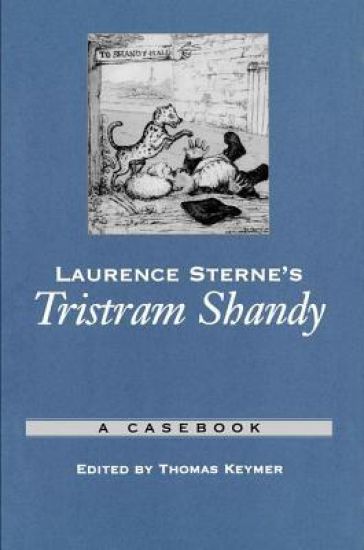
Laurence Sterne's Tristram Shandy

Laurence Sterne's Tristram Shandy

Oxford University Press Inc
2006
sidottu
The responsiveness of Sterne's writing to a wide range of approaches and topics of recent and ongoing interest--among them narrative, interpretation, intertextuality, gender, the body, sentimentalism, and print culture--has ensured a wealth of recent activity in the journals. Two specialist periodicals, the Shandean and Eighteenth-Century Fiction, have become major repositories for innovative work on Sterne since their foundation in the late 1980s, and important new readings continue to appear in the established journals. The proliferation of periodical articles means, in turn, access to the full range of this material is now a problem in all but the largest institutions. This situation creates a major opportunity for a volume designed to reprint the best essays of the last fifteen years. The book is divided into five sections. Section one looks at one of the most contentious recent debates about Tristram Shandy, on the issue of generic definition, and is designed to help students orient themselves in their encounters with this convention-breaking text in terms of prior traditions and intertexts. Section two's essays on print culture represent a major new area of interest in literary study as a whole. In this context "print culture" denotes not only Sterne's experimental deformation of typographical resources in Tristram Shandy (the black, marbled, and blank pages being the famous instances) but also his engagement with a literary marketplace in which reviewers and other readers could influence the text as it serially emerged. Section three focuses on topics about the body in Sterne. These essays, related closely to the essays in section four, go beyond run of the mill "body in literature" criticism by linking the topic to other issues of current interest: narrative, language, and scientific discourse and/or medical practices in the period. Political readings, another growth area in recent years, is the subject of the final, fifth section.
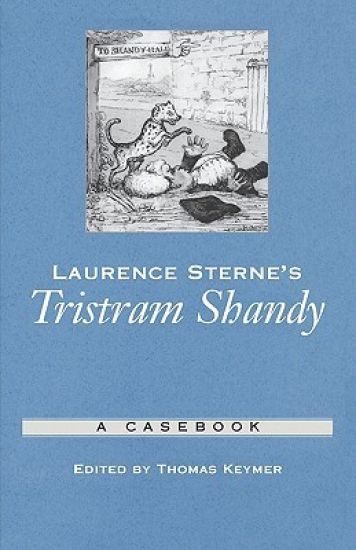
Laurence Sterne's Tristram Shandy

Laurence Sterne's Tristram Shandy

Oxford University Press Inc
2006
nidottu
The responsiveness of Sterne's writing to a wide range of approaches and topics of recent and ongoing interest--among them narrative, interpretation, intertextuality, gender, the body, sentimentalism, and print culture--has ensured a wealth of recent activity in the journals. Two specialist periodicals, the Shandean and Eighteenth-Century Fiction, have become major repositories for innovative work on Sterne since their foundation in the late 1980s, and important new readings continue to appear in the established journals. The proliferation of periodical articles means, in turn, access to the full range of this material is now a problem in all but the largest institutions. This situation creates a major opportunity for a volume designed to reprint the best essays of the last fifteen years. The book is divided into five sections. Section one looks at one of the most contentious recent debates about Tristram Shandy, on the issue of generic definition, and is designed to help students orient themselves in their encounters with this convention-breaking text in terms of prior traditions and intertexts. Section two's essays on print culture represent a major new area of interest in literary study as a whole. In this context "print culture" denotes not only Sterne's experimental deformation of typographical resources in Tristram Shandy (the black, marbled, and blank pages being the famous instances) but also his engagement with a literary marketplace in which reviewers and other readers could influence the text as it serially emerged. Section three focuses on topics about the body in Sterne. These essays, related closely to the essays in section four, go beyond run of the mill "body in literature" criticism by linking the topic to other issues of current interest: narrative, language, and scientific discourse and/or medical practices in the period. Political readings, another growth area in recent years, is the subject of the final, fifth section.
Laurence Sterne and his Readers in Early Soviet Russia
This book examines the 1920s and 1930s as a critical juncture in the rich history of the Russian reception of Laurence Sterne, author of The Life and Opinions of Tristram Shandy (1759-1767) and A Sentimental Journey Through France and Italy (1768). Drawing on archival sources, it traces how this eccentric eighteenth-century Yorkshire clergyman was read and admired within an increasingly totalitarian society. It is difficult to imagine a phenomenon more antithetical to the Bolshevik vision of society than the whimsical universe of Laurence Sterne. Yet it is precisely this apparent incongruity that makes Sterne--whom Nietzsche once called 'the freest writer of all times'--a revealing figure for understanding cultural life in the early Soviet period. By situating individual readerly encounters within broader biographical, cultural, and institutional contexts, this book treats Sternean reception as part of the wider history of the survival of intellectual autonomy after the revolution. At its centre is the question of how individuals found forms of escape in the subversive, digressive worlds of Sterne's fiction. The book combines book history, group biography, translation studies, and reader response criticism to examine the publication, circulation, and reception of Sterne's works in Soviet Russia. It focuses on specific institutional and material contexts: publishing houses, editorial practices, censorship, and the everyday lives of readers and translators. It also sheds new light on Shklovskii's reception of Sterne and, looking beyond Russian Formalism, recovers a range of overlooked figures and introduces a wealth of previously unpublished material, including unknown translations of Tristram Shandy and A Sentimental Journey, scholarly essays, illustrations, and private letters.
Laurence Sterne
The Critical Heritage gathers together a large body of critical sources on major figures in literature. Each volume presents contemporary responses to a writer's work, enabling student and researcher to read the material themselves.
Laurence Sterne
The Critical Heritage gathers together a large body of critical sources on major figures in literature. Each volume presents contemporary responses to a writer's work, enabling student and researcher to read the material themselves.