Kirjojen hintavertailu. Mukana 11 627 064 kirjaa ja 12 kauppaa.

Kirjahaku

Etsi kirjoja tekijän nimen, kirjan nimen tai ISBN:n perusteella.

1000 tulosta hakusanalla Laurence Ligon

Ember

Ember

Laurence Ligon

iUniverse
2019
pokkari
James Atkins lived a life filled with triumph and misfortune, dogged by hurt passed down through his family. As the years go by, he witnesses both joy and tragedy in a time of great change in the United States. Ember is a story of love, hurt, betrayal, faith and forgiveness reflected in the struggles of the Atkins and Knight families - from the disfiguring echoes of slavery in the deep South to the promise of a better life in the Imperial Valley, California during the tumultuous 1960s and '70s. Part mystery, part family saga, Ember traces the struggles, sacrifices, frustrations, and righteous anger of James Atkins culminating with the burning of his family home and its aftermath. James' life becomes a window into a troubled soul trying to find his footing in a changing world where answers are scarce and healing never seems to take hold.
Laurence Sterne

Laurence Sterne

Ian Campbell Ross

Oxford University Press
2002
nidottu
Laurence Sterne was in his mid-forties when the publication of Tristram Shandy catapulted him from obscurity into unprecedented literary fame. The story of how a provincial clergyman became the most fashionable writer of his day is extraordinary, and all the more remarkable for having been engineered by its subject. 'I wrote not to be fed, but to be famous', Laurence Sterne declared of his comic masterpiece, and in order to achieve his ambiton he became an assiduous networked, as astute a self-publicist as any modern author could hope to be. Shocked critics of Tristram Shandy denounced his bawdy novel as a scandal to the cloth but Sterne revelled in the celebrity his age's obsession with novelty and fashion allowed him. He at last found compensation for a life characterized by alternating moods of gaiety and gloom. Unhappily married to a woman who suffered a nervous breakdown and at one time believed herself to be the Queen of Bohemia, Sterne became notorious for his sexual and sentimental liaisons with other women. His second book, A Sentimental Journey, transmuted his experiences into literary expressions of moral feeling. Dependent for so much of his life on patrons, it was the patronage of the reading public that was to secure his livelihood. Tristram Shandy remains one of the most innovative and influential novels in world literature, and Ian Campbell Ross makes full use of important new materials to examine Sterne's life and career and the cult of the celebrity author.
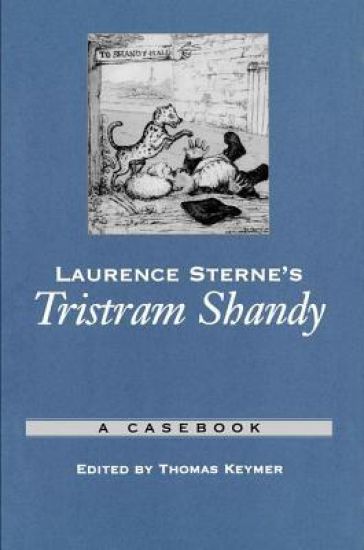
Laurence Sterne's Tristram Shandy

Laurence Sterne's Tristram Shandy

Oxford University Press Inc
2006
sidottu
The responsiveness of Sterne's writing to a wide range of approaches and topics of recent and ongoing interest--among them narrative, interpretation, intertextuality, gender, the body, sentimentalism, and print culture--has ensured a wealth of recent activity in the journals. Two specialist periodicals, the Shandean and Eighteenth-Century Fiction, have become major repositories for innovative work on Sterne since their foundation in the late 1980s, and important new readings continue to appear in the established journals. The proliferation of periodical articles means, in turn, access to the full range of this material is now a problem in all but the largest institutions. This situation creates a major opportunity for a volume designed to reprint the best essays of the last fifteen years. The book is divided into five sections. Section one looks at one of the most contentious recent debates about Tristram Shandy, on the issue of generic definition, and is designed to help students orient themselves in their encounters with this convention-breaking text in terms of prior traditions and intertexts. Section two's essays on print culture represent a major new area of interest in literary study as a whole. In this context "print culture" denotes not only Sterne's experimental deformation of typographical resources in Tristram Shandy (the black, marbled, and blank pages being the famous instances) but also his engagement with a literary marketplace in which reviewers and other readers could influence the text as it serially emerged. Section three focuses on topics about the body in Sterne. These essays, related closely to the essays in section four, go beyond run of the mill "body in literature" criticism by linking the topic to other issues of current interest: narrative, language, and scientific discourse and/or medical practices in the period. Political readings, another growth area in recent years, is the subject of the final, fifth section.
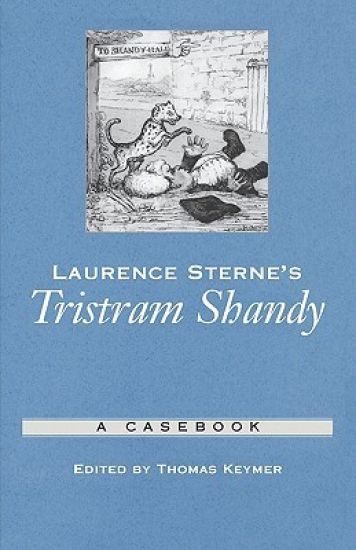
Laurence Sterne's Tristram Shandy

Laurence Sterne's Tristram Shandy

Oxford University Press Inc
2006
nidottu
The responsiveness of Sterne's writing to a wide range of approaches and topics of recent and ongoing interest--among them narrative, interpretation, intertextuality, gender, the body, sentimentalism, and print culture--has ensured a wealth of recent activity in the journals. Two specialist periodicals, the Shandean and Eighteenth-Century Fiction, have become major repositories for innovative work on Sterne since their foundation in the late 1980s, and important new readings continue to appear in the established journals. The proliferation of periodical articles means, in turn, access to the full range of this material is now a problem in all but the largest institutions. This situation creates a major opportunity for a volume designed to reprint the best essays of the last fifteen years. The book is divided into five sections. Section one looks at one of the most contentious recent debates about Tristram Shandy, on the issue of generic definition, and is designed to help students orient themselves in their encounters with this convention-breaking text in terms of prior traditions and intertexts. Section two's essays on print culture represent a major new area of interest in literary study as a whole. In this context "print culture" denotes not only Sterne's experimental deformation of typographical resources in Tristram Shandy (the black, marbled, and blank pages being the famous instances) but also his engagement with a literary marketplace in which reviewers and other readers could influence the text as it serially emerged. Section three focuses on topics about the body in Sterne. These essays, related closely to the essays in section four, go beyond run of the mill "body in literature" criticism by linking the topic to other issues of current interest: narrative, language, and scientific discourse and/or medical practices in the period. Political readings, another growth area in recent years, is the subject of the final, fifth section.
Laurence Sterne and his Readers in Early Soviet Russia
This book examines the 1920s and 1930s as a critical juncture in the rich history of the Russian reception of Laurence Sterne, author of The Life and Opinions of Tristram Shandy (1759-1767) and A Sentimental Journey Through France and Italy (1768). Drawing on archival sources, it traces how this eccentric eighteenth-century Yorkshire clergyman was read and admired within an increasingly totalitarian society. It is difficult to imagine a phenomenon more antithetical to the Bolshevik vision of society than the whimsical universe of Laurence Sterne. Yet it is precisely this apparent incongruity that makes Sterne--whom Nietzsche once called 'the freest writer of all times'--a revealing figure for understanding cultural life in the early Soviet period. By situating individual readerly encounters within broader biographical, cultural, and institutional contexts, this book treats Sternean reception as part of the wider history of the survival of intellectual autonomy after the revolution. At its centre is the question of how individuals found forms of escape in the subversive, digressive worlds of Sterne's fiction. The book combines book history, group biography, translation studies, and reader response criticism to examine the publication, circulation, and reception of Sterne's works in Soviet Russia. It focuses on specific institutional and material contexts: publishing houses, editorial practices, censorship, and the everyday lives of readers and translators. It also sheds new light on Shklovskii's reception of Sterne and, looking beyond Russian Formalism, recovers a range of overlooked figures and introduces a wealth of previously unpublished material, including unknown translations of Tristram Shandy and A Sentimental Journey, scholarly essays, illustrations, and private letters.
Laurence Sterne
The Critical Heritage gathers together a large body of critical sources on major figures in literature. Each volume presents contemporary responses to a writer's work, enabling student and researcher to read the material themselves.
Laurence Sterne
The Critical Heritage gathers together a large body of critical sources on major figures in literature. Each volume presents contemporary responses to a writer's work, enabling student and researcher to read the material themselves.
Laurence Nowell's Vocabularium Saxonicum

Laurence Nowell's Vocabularium Saxonicum

The University of Michigan Press
1952
nidottu
In his Preface to Laurence Nowell's Vocabularium Saxonicum, Albert H. Marckwardt writes: "Many years ago, when I first read Laurence Nowell's Vocabularium Saxonicum in manuscript, I was firmly convinced that it was of sufficient intrinsic interest to merit publication. It seemed desirable that a man like Nowell, so important in the development of Old English studies, should become more than a footnote in an occasional history of linguistic or legal scholarship. His dictionary, reflecting so clearly the personality of a true scholar with broad and human interests, deserved to be made generally available despite the advance of linguistic knowledge since its time."