Kirjojen hintavertailu. Mukana 11 244 527 kirjaa ja 12 kauppaa.

Kirjahaku

Etsi kirjoja tekijän nimen, kirjan nimen tai ISBN:n perusteella.

1000 tulosta hakusanalla Laurence Power

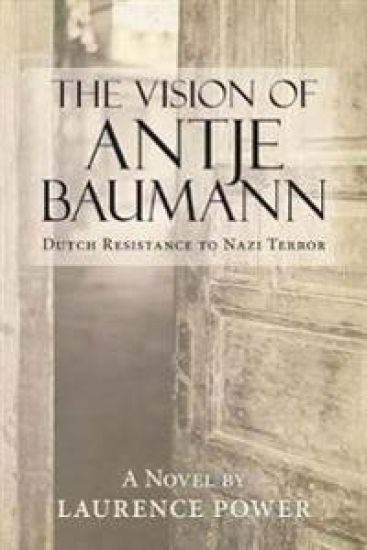
The Vision of Antje Baumann

The Vision of Antje Baumann

Laurence Power

Lulu.com
2018
pokkari
It is May 1940 in Holland. As the Baumann family realizes that Hitler's war has suddenly become their war, sirens begin blaring as a squadron of airplanes flies over Oosterbeek. Antje, Gerrit, and Cornelis Baumann are too young to understand what is happening around them. All they know is that they feel powerless as they watch their father cry. As the Germans invade, the Baumanns strive to maintain a quiet life. But as war comes to their street and doorstep, they soon recognize that keeping a low profile is not an option. Antje, Gerrit, and Cornelis each respond in their own way to their new crisis. Just as the French and Belgian armies surrender to the Nazis, little Antje loses her sight, prompting a chain of events that causes all the Baumanns to realize that surviving as a family in a land of mayhem and death is a greater challenge than they ever imagined. In this historical novel, a Dutch family struggles to endure the chaos of war after Holland is invaded by the Nazis.
Rivers of Power: How a Natural Force Raised Kingdoms, Destroyed Civilizations, and Shapes Our World
An "eye-opening, sometimes alarming, and ultimately inspiring" natural history of rivers and their complex and ancient relationship with human civilization (Elizabeth Kolbert, Pulitzer Prize-winning author of The Sixth Extinction). Rivers, more than any road, technology, or political leader, have shaped the course of human civilization. They have opened frontiers, founded cities, settled borders, and fed billions. They promote life, forge peace, grant power, and can capriciously destroy everything in their path. Even today, rivers remain a powerful global force -- one that is more critical than ever to our future. In Rivers of Power, geographer Laurence C. Smith explores the timeless yet underappreciated relationship between rivers and civilization as we know it. Rivers are of course important in many practical ways (water supply, transportation, sanitation, etc). But the full breadth of their influence on the way we live is less obvious. Rivers define and transcend international borders, forcing cooperation between nations. Huge volumes of river water are used to produce energy, raw commodities, and food. Wars, politics, and demography are transformed by their devastating floods. The territorial claims of nations, their cultural and economic ties to each other, and the migrations and histories of their peoples trace back to rivers, river valleys, and the topographic divides they carve upon the world. And as climate change, technology, and cities transform our relationship with nature, new opportunities are arising to protect the waters that sustain us. Beautifully told and expansive in scope, Rivers of Power reveals how and why rivers have so profoundly influenced our civilization and examines the importance this vast, arterial power holds for the future of humanity."As fascinating as it is beautifully written."---Jared Diamond, Pulitzer Prize-winning author of Guns, Germs, and Steel, Collapse, and Upheaval
Rivers of Power: How a Natural Force Raised Kingdoms, Destroyed Civilizations, and Shapes Our World
An "eye-opening, sometimes alarming, and ultimately inspiring" natural history of rivers and their complex and ancient relationship with human civilization (Elizabeth Kolbert, Pulitzer Prize-winning author of The Sixth Extinction). Rivers, more than any road, technology, or political leader, have shaped the course of human civilization. They have opened frontiers, founded cities, settled borders, and fed billions. They promote life, forge peace, grant power, and can capriciously destroy everything in their path. Even today, rivers remain a powerful global force -- one that is more critical than ever to our future. In Rivers of Power, geographer Laurence C. Smith explores the timeless yet underappreciated relationship between rivers and civilization as we know it. Rivers are of course important in many practical ways (water supply, transportation, sanitation, etc). But the full breadth of their influence on the way we live is less obvious. Rivers define and transcend international borders, forcing cooperation between nations. Huge volumes of river water are used to produce energy, raw commodities, and food. Wars, politics, and demography are transformed by their devastating floods. The territorial claims of nations, their cultural and economic ties to each other, and the migrations and histories of their peoples trace back to rivers, river valleys, and the topographic divides they carve upon the world. And as climate change, technology, and cities transform our relationship with nature, new opportunities are arising to protect the waters that sustain us. Beautifully told and expansive in scope, Rivers of Power reveals how and why rivers have so profoundly influenced our civilization and examines the importance this vast, arterial power holds for the future of humanity. "As fascinating as it is beautifully written."---Jared Diamond, Pulitzer Prize-winning author of Guns, Germs, and Steel, Collapse, and Upheaval
Power Thinking: 30 Concepts That Will Transform Your Life!

Power Thinking: 30 Concepts That Will Transform Your Life!

Robert Laurence Albee

Createspace Independent Publishing Platform
2018
nidottu
The ability to POWER THINK is inherent within each of us. But while most people are content with their simple creature comforts and satisfied with their station in life, a rare breed of individuals continually pull out all the stops and strive to reach their full potential. They let nothing get in their way in order to accomplish their goals. They endeavor to attain great wealth and power and success, and they'll constantly battle to be masters of their own lives, fate and destiny. You can become one of those exceptional individuals. You can develop the inner drive and mastered the skills of how to POWER THINK, if you truly desire great success. You too can join this elite group of extraordinary men and women, if only you would master the principles, develop the skills and learn the success secrets of how to POWER THINK.
Diagrams of Power in Benjamin and Foucault

Diagrams of Power in Benjamin and Foucault

Mark Laurence Jackson

SPRINGER VERLAG, SINGAPORE
2022
sidottu
This book’s overarching premise is that discussion and critique in the discourses of architecture and urbanism have their primary focus on engagements with form, particularly in the sense of the question as to what planning and architecture signify with respect to the forms they take, and how their meanings or content (what is “contained”) is considered in relation to form-as-container. While significant critical work in these disciplines has been published over the past 20 years that engages pertinently with the writings of Walter Benjamin and Michel Foucault, there has been no address to the co-incidence in the work of Benjamin and Foucault of an architectural figure that is pivotal to each of their discussions of the emergence of modernity: The arcade for Benjamin and the panoptic prison for Foucault have a parallel role. In Foucault’s terms, panopticism is a “diagram of power.” The parallel, for Benjamin, would be his understanding of “constellation.” In more recent architectural writings, the notion of the diagram has emerged as a key motif. Yet, and in as much as it supposedly relates to aspects of the work of Foucault, along with Gilles Deleuze, this notion of “diagram” amounts, for the most part, to a thinly veiled reinstatement of geometry-as-idea. This book redresses the emphasis given to form within the cultural philosophy of modernity and—particularly with respect to architecture and urbanism—inflects on the agency of force that opens a reading of their productive capacities as technologies of power. It is relevant to students and scholars in poststructuralist critical theory, architecture, and urban studies.“This is a book about Foucault and Benjamin and it is grounded in a deep knowledge of and reflection upon their works, but it is also underpinned by an impressive erudition. There are reflections on Hegel and Heidegger (central to the author) and Derrida, along with Kierkegaard, and others. This leads to a rich and suggestive discussion … in staging a spatial-architectural-political conversation between Foucault and Benjamin.”- Anonymous Reviewer“Mark Jackson’s Diagrams of Power in Benjamin and Foucault, The Recluse of Architecture juxtaposes and interrogates its two leading actors so as to draw from and through them a theory of architecture, which is inseparable from its recluse. In doing so it elaborates a series of complex connections with their various interlocutors and inspirations, Hegel, Heidegger, Derrida, the Kabbalah, Agamben, allegory, Marx, Deleuze, Klossowski, tragedy, capitalism, modernity, and so on. The list is long and impressive. This is not only done with an extremely high degree of scholarship, but is presented in a light, lucid and very compelling manner in a voice both personal and authoritative. The recluse is the figure of mimesis itself, the appearance of a withdrawal, always already a ruin. This book not only contributes a highly astute reading of its philosophical objects, but it enacts the ontology of the recluse through its own unfolding, simultaneously revealing and withholding the meaning of architecture ‘as such’, so that we not only understand its meaning, but feel the pulsing differential of the book’s object as if it were alive within us.”- Stephen Zepke, Independent Researcher, Vienna
Diagrams of Power in Benjamin and Foucault

Diagrams of Power in Benjamin and Foucault

Mark Laurence Jackson

SPRINGER VERLAG, SINGAPORE
2023
nidottu
This book’s overarching premise is that discussion and critique in the discourses of architecture and urbanism have their primary focus on engagements with form, particularly in the sense of the question as to what planning and architecture signify with respect to the forms they take, and how their meanings or content (what is “contained”) is considered in relation to form-as-container. While significant critical work in these disciplines has been published over the past 20 years that engages pertinently with the writings of Walter Benjamin and Michel Foucault, there has been no address to the co-incidence in the work of Benjamin and Foucault of an architectural figure that is pivotal to each of their discussions of the emergence of modernity: The arcade for Benjamin and the panoptic prison for Foucault have a parallel role. In Foucault’s terms, panopticism is a “diagram of power.” The parallel, for Benjamin, would be his understanding of “constellation.” In more recent architectural writings, the notion of the diagram has emerged as a key motif. Yet, and in as much as it supposedly relates to aspects of the work of Foucault, along with Gilles Deleuze, this notion of “diagram” amounts, for the most part, to a thinly veiled reinstatement of geometry-as-idea. This book redresses the emphasis given to form within the cultural philosophy of modernity and—particularly with respect to architecture and urbanism—inflects on the agency of force that opens a reading of their productive capacities as technologies of power. It is relevant to students and scholars in poststructuralist critical theory, architecture, and urban studies.“This is a book about Foucault and Benjamin and it is grounded in a deep knowledge of and reflection upon their works, but it is also underpinned by an impressive erudition. There are reflections on Hegel and Heidegger (central to the author) and Derrida, along with Kierkegaard, and others. This leads to a rich and suggestive discussion … in staging a spatial-architectural-political conversation between Foucault and Benjamin.”- Anonymous Reviewer“Mark Jackson’s Diagrams of Power in Benjamin and Foucault, The Recluse of Architecture juxtaposes and interrogates its two leading actors so as to draw from and through them a theory of architecture, which is inseparable from its recluse. In doing so it elaborates a series of complex connections with their various interlocutors and inspirations, Hegel, Heidegger, Derrida, the Kabbalah, Agamben, allegory, Marx, Deleuze, Klossowski, tragedy, capitalism, modernity, and so on. The list is long and impressive. This is not only done with an extremely high degree of scholarship, but is presented in a light, lucid and very compelling manner in a voice both personal and authoritative. The recluse is the figure of mimesis itself, the appearance of a withdrawal, always already a ruin. This book not only contributes a highly astute reading of its philosophical objects, but it enacts the ontology of the recluse through its own unfolding, simultaneously revealing and withholding the meaning of architecture ‘as such’, so that we not only understand its meaning, but feel the pulsing differential of the book’s object as if it were alive within us.”- Stephen Zepke, Independent Researcher, Vienna
The Nonprofit Fundraising Solution: Powerful Revenue Strategies to Take You to the Next Level
To survive and ultimately thrive, a nonprofit needs forceful revenue strategies and an organizational culture that champions them, and this book shows you just how to do it.Between government cutbacks, shrinking endowments, and business belt-tightening, the nonprofit sector may end up being the biggest victim of today's unpredictable market that few even hear about. However, this does not mean that nonprofits aren't just as vital as before--if not more so--or that yours cannot receive the regular funding it needs to fulfill the mission you heroically set out to do. It's going to take the same type of advanced organizational and competitive strategies that the most successful for-profit businesses have utilized to remain atop the leader board.Bridging the gap between theory and practical methods, The Nonprofit Fundraising Solution shows you how to: Ensure that executive leadership and board dynamics fully support fundraising initiativesBuild a broad constituency of donors aligned to the missionDetermine the right level of funding diversificationUse tactics such as challenge drives, stretch gifts, and corporate matching; parlor gatherings; leadership councils; year-end drives; corporate partnerships; and major campaigns to power revenue, increase access to wealthy donors, and raise their community profileProactively encourage planned givingAvoid revenue plateausComplete with stories of those who have done this exceptionally well, as well as "casebooks" of the strategies-in-action, The Nonprofit Fundraising Solution reveals how any nonprofit can implement advanced fundraising methods and secure the funds they need to excel.
An ecclesiastical history, ancient and modern; in which the rise, progress, and variations of church power, are considered in their connexion with the state of learning and philosophy, and the political history of Europe during that period (Volume II)
This book has been considered by academicians and scholars of great significance and value to literature. This forms a part of the knowledge base for future generations. So that the book is never forgotten we have represented this book in a print format as the same form as it was originally first published. Hence any marks or annotations seen are left intentionally to preserve its true nature.
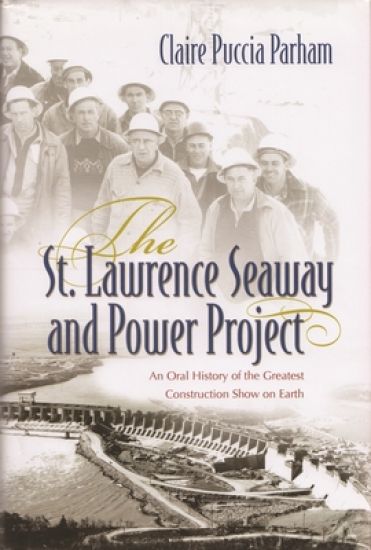
The St. Lawrence Seaway and Power Project

The St. Lawrence Seaway and Power Project

Claire Puccia Parham

Syracuse University Press
2016
nidottu
In this book, Claire Puccia Parham reveals the human side of the project in the words of its engineers, laborers, and carpenters. Drawing on firsthand accounts, she provides a vivid portrait of the lives of the men who built the seaway and the women who accompanied them. On the fiftieth anniversary of the dedication of the power dam and waterway, this book is a fitting tribute to the hard work and dedication of the project’s 22,000 workers.