Kirjahaku
Etsi kirjoja tekijän nimen, kirjan nimen tai ISBN:n perusteella.
1000 tulosta hakusanalla Laurence R. Goldman
Using new case data from South American, Australian, and Papua New Guinean societies, the authors explore how cultural ideas for humanity are reflected in seemingly universal understandings of our potential for anthropophagy. Whether or not a society actually practices cannibalism, these conceptions are often articulated at the level of folklore and myth, where flesh-eating is imbued with symbolic meanings centered on ideas about regeneration after death, the equivalence between human flesh and food, and the morality of social exchange in and between groups. Thus, cannibalism emerges at once as a resource for political agendas that perpetuate ethnic stereotypes of exotic others; a cultural practice capable of expressing violent suppression as well as transforming death into a life-sustaining process; and a theme whose horrific potentiality engenders baleful monsters and myths for public delectation as well as child control. Cannibalism exists in folklore traditions as the definition of the antithesis of socially accepted morality, as well as something that in practice was a conduit for the regeneration and reproduction of positive values. Cannibalism is seen as bound up with the commerce of exchange between people intent on defining their economic and political worlds in and through symbols. This book is a major milestone, providing a valuable set of correctives for both the academic discourse on cannibalism as well as the wider conventional beliefs about the topic.
This innovative book finally takes seriously the need for anthropologists to produce in-depth ethnographies of children's play. In examining the subject from a cross-cultural perspective, the author argues that our understanding of the way children transform their environment to create make-believe is enhanced by viewing their creations as oral poetry. The result is a richly detailed ‘thick description' of how pretence is socially mediated and linguistically constructed, how children make sense of their own play, how play relates to other imaginative genres in Huli life, and the relationship between play and cosmology. Informed by theoretical approaches in the anthropology of play, developmental and child psychology, philosophy and phenomenology and drawing on ethnographic data from Melanesia, the book analyzes the sources for imitation, the kinds of identities and roles emulated, and the structure of collaborative make-believe talk to reveal the complex way in which children invoke their experiences of the world and re-invent them as types of virtual reality. Particular importance is placed on how the figures of the ogre and trickster are articulated. The author demonstrates that while the concept of ‘imagination' has been the cornerstone of Western intellectual traditions from Plato to Postmodernism, models of child fantasy play have always intruded into such theorizing because of children's unique capacity to throw into relief our understanding of the relationship between representation and reality.
Myths are best understood as a convergence of voices from across times and cultures. They are the instruments through which authors and audiences seek to grapple with questions about the fundamental nature of the universe. The answers, however, constantly change in light of changing circumstances such as the interface between western and non-western cultures, or cataclysmic events. The authors argue that these societies' worldviews assume that the process of flow between events, rather than the nature of the events, is critical to a model of human sociality.Boundaries, whether of a ritual, physical, or social nature, are perceived as constantly broken by the exchange of ideas across time, space, and peoples. Our understanding of such issues as gender relations and the body, social change, imagination, play, and the conceptualization of power is furthered by probing how it is that myth is both expressive as well as constitutive of human thought on these topics.
Myths are best understood as a convergence of voices from across times and cultures. They are the instruments through which authors and audiences seek to grapple with questions about the fundamental nature of the universe. The answers, however, constantly change in light of changing circumstances such as the interface between western and non-western cultures, or cataclysmic events. The authors argue that these societies' worldviews assume that the process of flow between events, rather than the nature of the events, is critical to a model of human sociality. Boundaries, whether of a ritual, physical, or social nature, are perceived as constantly broken by the exchange of ideas across time, space, and peoples. Our understanding of such issues as gender relations and the body, social change, imagination, play, and the conceptualization of power is furthered by probing how it is that myth is both expressive as well as constitutive of human thought on these topics.
R. H. Tawney was the most influential theorist and exponent of socialism in Britain in the 20th century and also a leading historian. Based on papers deposited at the London School of Economics including a collection of personal material previously held by his family, this book provides the first detailed biography. Lawrence Goldman shows that to understand Tawney's work it is necessary to understand his life.This biography takes a broadly chronological approach, and uses this framework to examine major themes, including Tawney's political thought and historical writings. Tawney was the most representative of Labour's intellectuals as well as the most influential, and the contradictions he embodied are evident in the general history of British socialism.
Felson's Principles of Chest Roentgenology, A Programmed Text
Lawrence R. Goodman
Elsevier - Health Sciences Division
2020
nidottu
Easy to read, engaging, and highly interactive, Felson's Principles of Chest Roentgenology: A Programmed Text, 5th Edition, has long been the go-to learning resource for medical students, residents, radiologists, and others who order and interpret chest x-rays. It offers a clear, self-directed tutorial on all aspects of chest imaging, including pathologies and anatomic challenges. You'll find essential, accessible explanations of basic science, image reading and interpretation, and key terminology, along with hundreds of high-quality radiographs and interactive quizzes that have made this best-selling title the must-have primer of chest radiology. Presents essential concepts in a straightforward, logically sequenced manner, with one chapter building on the next. Emphasizes basic radiographic anatomy and signs of disease seen in everyday practice on the chest x-ray, helpfully presented from various points of view. Includes more than 550 radiographs (many are new!) with correlative PET, CT, and MR images as appropriate-all presented with humor and insightful comments that provide a uniquely engaging self-directed learning experience for clinical application or board review. Keeps you up to date with the latest thoracic imaging topics, including pleuroparenchymal fibroelastosis, combined pulmonary fibrosis with emphysema (CPFE), age-related lung changes, interstitial lung disease (ILD), lung cancer screening and tumor classification, and lower radiation dosing and safety considerations. Provides numerous multiple-choice questions and quizzes throughout, along with answers, annotated x-rays, line drawings, cartoons, and engaging clinical tips. Includes access to robust interactive offerings online, such as easy-to-access quizzes and board review questions. Enhanced eBook version included with purchase. Your enhanced eBook allows you to access all of the text, figures, and references from the book on a variety of devices.
Felson's Principles of Chest Roentgenology
Lawrence R. Goodman
Elsevier Health Sciences
2026
nidottu
Using a programmed learning approach that demystifies the many nuances of lung imaging, Felson's Principles of Chest Roentgenology: A Programmed Text, has long been the go-to learning resource for medical students, residents, radiologists, and others who order and interpret chest x-rays. In this fully revised 6th Edition, Dr. Lawrence R. Goodman offers a clear, self-directed tutorial on all aspects of chest imaging, including an organized search pattern, an approach to imaging interpretation, and differential diagnosis. The chapter organization fosters reader participation, reinforces key concepts, and allows you to progress at your own pace. Humor and interesting quips sustain your attention-proving that learning can also be fun. Presents essential concepts in a straightforward, logically sequenced manner, with one chapter building on the next Emphasizes basic radiographic anatomy and signs of disease seen in everyday practice on the chest x-ray Updates include many new or upgraded images, an additional chapter on ICU imaging, new review questions, and a link to the Fleischner Society: Glossary of Terms for Thoracic Imaging (2024) Includes more than 550 radiographs with additional correlative PET, CT, and MR images as appropriate-all presented with humor and insightful comments Contains a brief discussion of how images are formed and radiation safety considerations Provides numerous multiple-choice questions and quizzes throughout, along with answers, annotated x-rays, line drawings, cartoons, and engaging clinical pearls The eBook version (with upgraded functionality) is included with purchase. The electronic edition allows you to access all of the text, figures, videos, bonus chapters and quizzes, and a board review, with the ability to search, magnify, take notes, highlight text, and have content read aloud Easy to read, engaging, and highly interactive, Felson's Principles of Chest Roentgenology: A Programmed Text, 6th Edition, is the go-to learning resource for medical students, residents, radiologists, and others who order and interpret chest x-rays. It fosters reader participation, reinforces key concepts, and allows you to progress at your own pace.
Goodman and Gilman's The Pharmacological Basis of Therapeutics
Laurence Brunton; Bjorn Knollmann
McGraw-Hill Education
2022
sidottu
The landmark pharmacology reference—updated to reflect the latest research and developments in the fieldA Doody's Core Title for 2024 & 2023!For more than 50 years, Goodman & Gilman’s: The Pharmacological Basis of Therapeutics has represented the pinnacle of authority and accuracy in describing the actions and uses of therapeutic agents in relation to physiology and pathophysiology. The text's careful balance of basic science and clinical applications has guided thousands of health care practitioners and students to a clear understanding of the drugs essential to preventing, diagnosing and treating disease.This Fourteenth Edition includes five new chapters, 600+ illustrations, and important content from 53 new contributors. More than a textbook, Goodman & Gilman’s is a working template for the effective and rational prescribing of drugs in daily practice.Goodman & Gilman’s: The Pharmacological Basis of Therapeutics, Fourteenth Edition features:Five NEW chapters on:-Pharmacovigilance-The blood-brain barrier-Cannabis-Antibodies, immune checkpoint inhibitors, CAR-T cells, and other biological agents-Gastrointestinal microbiome and drug response Expanded coverage of the use of genetic polymorphisms in designing appropriate therapiesRevised and expanded chapter on pharmacodynamics and the molecular mechanisms of drug action600+ color illustrationsDrug Fact Tables summarizing clinical pharmacologyContent Outline and Abbreviation List at the beginning of each chapter50 NEW figures on mechanism of drug actions53 NEW contributorsNEW online updates
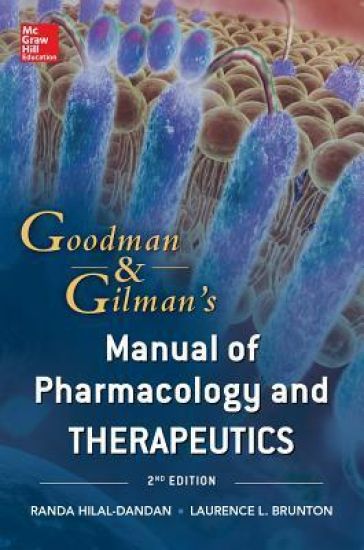
Goodman and Gilman Manual of Pharmacology and Therapeutics, Second Edition
Randa Hilal-Dandan; Laurence Brunton
McGraw-Hill Medical
2014
nidottu
A full-color manual derived from Goodman & Gilman's The Pharmacological Basis of TherapeuticsA Doody's Core Title for 2022!Goodman & Gilman's The Manual of Pharmacology and Therapeutics offers concise, authoritative coverage of class-specific and disease-specific drugs, organized primarily by organ/system. Derived from Goodman & Gilman's Pharmacological Basis of Therapeutics, Twelfth Edition and further updated, this streamlined text focuses on the principles of medical pharmacology and drug therapy and delivers coverage of all major drug classes.More than a pocket drug guide, this powerful resource covers:General PrinciplesNeuropharmacologyModulation of Cardiovascular, Pulmonary, and Renal FunctionInflammation, Immunomodulation, and HematopoiesisHormones and Hormone AntagonistsDrugs Affecting Gastrointestinal FunctionChemotherapy of Microbial DiseasesChemotherapy of Neoplastic DiseasesSpecial Systems Pharmacology, including Environmental ToxicologyThe text explains the physiology and pathophysiology of major organ systems and pathogens with respect to pharmacotherapy and the mechanisms of drug action. With a new full color design and numerous tables, charts, and illustrations that highlight, explain, and summarize important information, Goodman & Gilman's Manual of Pharmacology and Therapeutics is essential wherever knowledge of drug actions and interactions is required. Nursing, pharmacy, and medical students will find the Manual to be a concise and authoritative textbook.
Studienarbeit aus dem Jahr 1999 im Fachbereich Germanistik - Linguistik, Note: 1, Ludwig-Maximilians-Universit t M nchen, Veranstaltung: Wortbedeutung und Pragmatik, 4 Quellen im Literaturverzeichnis, Sprache: Deutsch, Abstract: In seinem Aufsatz "Logic and Conversation" von 1975 besch ftigt sich H. Paul Grice mit dem Ph nomen der Differenz zwischen Gesagtem und Gemeintem. Einen Teil solcher F lle beschreibt er als sogenannte Implikaturen, wobei er sein Augenmerk v.a. auf die "conversational implicatures" (Grice 1975, S.307) richtet. Er geht dabei von der Existenz eines Kooperationsprinzips und bestimmter Maximen f r die Gespr chsf hrung aus, deren Beachtung durch den Sprecher der H rer grunds tzlich voraussetzt. Falls eine u erung durch den Sprecher nun auf den ersten Blick gegen diese Prinzipien verst t oder sie nur m ig erf llt, interpretiert der H rer Grice zufolge diese u erung in einer Weise um, so dass zumindest das Gemeinte mit den Prinzipien in Einklang ist. Diese Uminterpretierung ber das w rtlich Gesagte, die Semantik der u erung hinaus, ist das, was Grice als konversationelle Implikatur bezeichnet. Grice und in seiner Nachfolge und Weiterf hrung auch Stephen Levinson (in dem Kapitel "Conversational implicature" seines Grundlagenbuches "Pragmatics" von 1983, deutsch 1994) teilen die konversationellen Implikaturen in dreierlei Hinsicht ein: Zum einen nehmen sie eine Einteilung der Implikaturen nach der jeweiligen Gespr chsmaxime vor, die f r das Zustandekommen der Implikatur verantwortlich ist, d.h. also z. B. der Quantit tsmaxime, der Maxime der Art und Weise, etc.. Zum zweiten unterteilt Levinson die konversationellen Implikaturen in Standardimplikaturen, bei denen der Sprecher die Maximen grunds tzlich beachtet, und in Implikaturen, die entstehen, wenn der Sprecher eine oder mehrere der Maximen bewu t mi achtet, verletzt oder aussch pft. Als dritte Einteilungskategorie dient Grice und Levinson die Frage, ob die entstandene konversationelle Implika
The World Blind Union Guide to the Marrakesh Treaty
Laurence R. Helfer; Molly K. Land; Ruth L. Okediji; Jerome H. Reichman
Oxford University Press Inc
2017
sidottu
"The Marrakesh Treaty to Facilitate Access to Published Works for Persons Who Are Blind, Visually Impaired, or Otherwise Print Disabled" is a watershed development in the fields of intellectual property and human rights. As the first international legal instrument to establish mandatory exceptions to copyright, the Marrakesh Treaty uses the legal and policy tools of copyright to advance human rights. The World Blind Union Guide to the Marrakesh Treaty offers a comprehensive framework for interpreting the Treaty in ways that enhance the ability of print-disabled individuals to create, read, and share books and cultural materials in accessible formats. The Guide also provides specific recommendations to government officials, policymakers, and disability rights organizations involved with implementing the Treaty's provisions in national law.
The World Blind Union Guide to the Marrakesh Treaty
Laurence R. Helfer; Molly K. Land; Ruth L. Okediji; Jerome H. Reichman
Oxford University Press Inc
2017
nidottu
"The Marrakesh Treaty to Facilitate Access to Published Works for Persons Who Are Blind, Visually Impaired, or Otherwise Print Disabled" is a watershed development in the fields of intellectual property and human rights. As the first international legal instrument to establish mandatory exceptions to copyright, the Marrakesh Treaty uses the legal and policy tools of copyright to advance human rights. The World Blind Union Guide to the Marrakesh Treaty offers a comprehensive framework for interpreting the Treaty in ways that enhance the ability of print-disabled individuals to create, read, and share books and cultural materials in accessible formats. The Guide also provides specific recommendations to government officials, policymakers, and disability rights organizations involved with implementing the Treaty's provisions in national law.
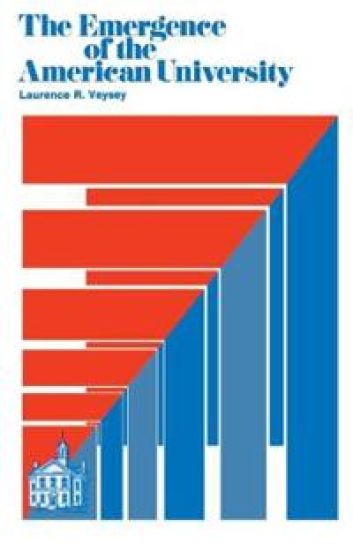
The Emergence of the American University
Laurence R. Veysey
University of Chicago Press
1970
nidottu
The American university of today is the product of a sudden, mainly unplanned period of development at the close of the nineteenth and the beginning of the twentieth centuries. At that time the university, and with it a recognizably modern style of academic life, emerged to eclipse the older, religiously oriented college. Precedents, formal and informal, were then set which have affected the soul of professor, student, and academic administrator ever since. What did the men living in this formative period want the American university to become? How did they differ in defining the ideal university? And why did the institution acquire a form that only partially corresponded with these definitions? These are the questions Mr. Veysey seeks to answer.
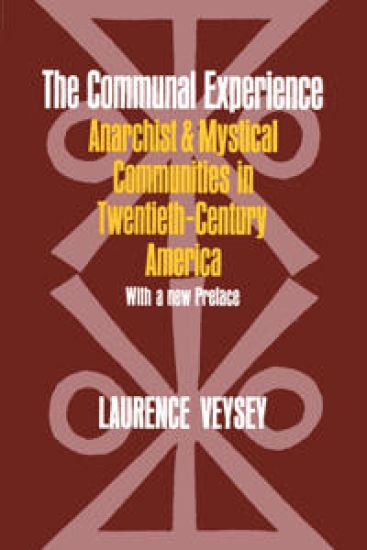
The original impulse for groups to separate from society and establish communities of their own was religious. Though the religious side of this drive toward separation remains strong, the last two centuries have seen the appearance of secular communities with a socialist or anarchist orientation. In The Communal Experience, nominated for a National Book Award in 1973, Laurence Veysey explores the close resemblances between the secular and religious forms of cultural radicalism through intensive observation of four little-known communities. Veysey compares the history of secular communities such as the early Ferrer Colony and Modern School, of Shelton, New Jersey, with contemporary anarchist communities in New York, Vermont, and New Mexico. Religious communes—"Communities of Discipline"—such as the Vedanta monasteries of the early twentieth century are compared with contemporary mystical communities in New Mexico. Distinctions between the anarchist and the mystical groups are most obvious from their approach to communal life. As Veysey shows, anarchist communities are loose, unstructured, voluntaristic; the mystics establish more rigid life-styles, focus on spiritual leaders, and hold community a secondary goal to self-realization. In a new preface written for this Phoenix Edition, he describes his return to a New Mexican mystical community and the changes that have occurred in the six years since his last visit.
This intriguing book reflects on the conditions on college campuses that give rise to words and acts of hate, on the consequences of these episodes, and on strategies intended to improve intergroup harmony. Using the speech given by Nation of Islam spokesperson Khalid Abdul Muhammad at Kean College in 1993, the book begins with a consideration of the societal trends affecting today's college student, including the increasing economic uncertainty that characterizes their future and the hostility and fragmentation that characterizes their present. Attitudinal changes have proven to be widespread, as more Americans have begun to view the world through the lenses of political, social, and economic self-interest, calling prevailing equity policy into question and giving new life to identity politics. Since issues of affirmative action, multiculturalism, and political correctness are at the core of the national debate and command the attention of college students, each is addressed in detail. A discussion of what prompted Kean students to invite Muhammad follows a consideration of the current status of intergroup relations on campuses across the nation. This examination covers the inescapable conclusion that, despite the desires of most students for positive relations with people of other groups, there are serious gaps to be bridged.
Human Rights and Intellectual Property
Laurence R. Helfer; Graeme W. Austin
Cambridge University Press
2011
pokkari
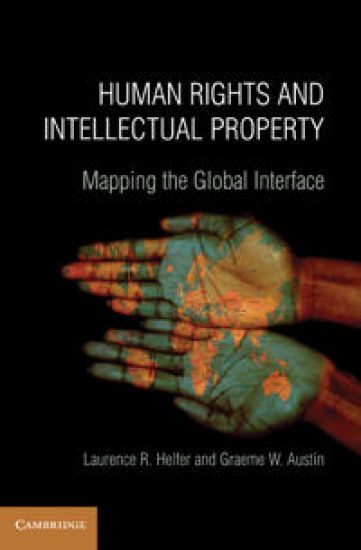
This book explores the interface between intellectual property and human rights law and policy. The relationship between these two fields has captured the attention of governments, policymakers, and activist communities in a diverse array of international and domestic political and judicial venues. These actors often raise human rights arguments as counterweights to the expansion of intellectual property in areas including freedom of expression, public health, education, privacy, agriculture, and the rights of indigenous peoples. At the same time, creators and owners of intellectual property are asserting a human rights justification for the expansion of legal protections. This book explores the legal, institutional, and political implications of these competing claims: by offering a framework for exploring the connections and divergences between these subjects; by identifying the pathways along which jurisprudence, policy, and political discourse are likely to evolve; and by serving as an educational resource for scholars, activists, and students.
Human Rights and Intellectual Property
Laurence R. Helfer; Graeme W. Austin
Cambridge University Press
2011
sidottu
This book explores the interface between intellectual property and human rights law and policy. The relationship between these two fields has captured the attention of governments, policymakers, and activist communities in a diverse array of international and domestic political and judicial venues. These actors often raise human rights arguments as counterweights to the expansion of intellectual property in areas including freedom of expression, public health, education, privacy, agriculture, and the rights of indigenous peoples. At the same time, creators and owners of intellectual property are asserting a human rights justification for the expansion of legal protections. This book explores the legal, institutional, and political implications of these competing claims: by offering a framework for exploring the connections and divergences between these subjects; by identifying the pathways along which jurisprudence, policy, and political discourse are likely to evolve; and by serving as an educational resource for scholars, activists, and students.