Kirjahaku
Etsi kirjoja tekijän nimen, kirjan nimen tai ISBN:n perusteella.
1000 tulosta hakusanalla Laurence W Thomas
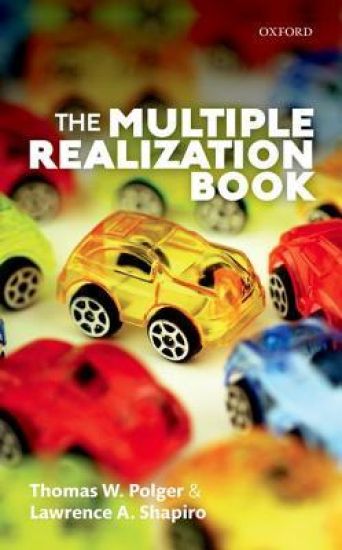
The Multiple Realization Book
Thomas W. Polger; Lawrence A. Shapiro
Oxford University Press
2016
sidottu
Since Hilary Putnam offered multiple realization as an empirical hypothesis in the 1960s, philosophical consensus has turned against the idea that mental processes could be identified with brain processes, and multiple realization has become the keystone of the 'antireductive consensus' across philosophy of science broadly. Thomas W. Polger and Lawrence A. Shapiro offer the first book-length investigation of multiple realization. Their analysis of multiple realization serves as a starting point to a series of philosophically sophisticated and empirically informed arguments that cast doubt on the generality of multiple realization in the cognitive sciences. In the course of making their case, they respond to classic defenses of multiple realization that Jerry Fodor, Ned Block, and other prominent philosophers of psychology have offered. Polger and Shapiro conclude that the identity theory, once left for dead, remains a viable theory of mind--one that, when suitably framed, enjoys the benefits typically thought to accrue only to theories of mind that presuppose the truth of multiple realization. As Polger and Shapiro see matters, mind-brain identities have played an important role in the growth and achievements of the cognitive sciences, and they see little prospect--or need--for multiple realization in an empirically-based theory of mind. This leads Polger and Shapiro to offer an alternative framework for understanding explanations in the cognitive sciences, as well as in chemistry, biology, and other non-basic sciences.
The Multiple Realization Book
Thomas W. Polger; Lawrence A. Shapiro
Oxford University Press
2016
nidottu
Since Hilary Putnam offered multiple realization as an empirical hypothesis in the 1960s, philosophical consensus has turned against the idea that mental processes could be identified with brain processes, and multiple realization has become the keystone of the 'antireductive consensus' across philosophy of science broadly. Thomas W. Polger and Lawrence A. Shapiro offer the first book-length investigation of multiple realization. Their analysis of multiple realization serves as a starting point to a series of philosophically sophisticated and empirically informed arguments that cast doubt on the generality of multiple realization in the cognitive sciences. In the course of making their case, they respond to classic defenses of multiple realization that Jerry Fodor, Ned Block, and other prominent philosophers of psychology have offered. Polger and Shapiro conclude that the identity theory, once left for dead, remains a viable theory of mind--one that, when suitably framed, enjoys the benefits typically thought to accrue only to theories of mind that presuppose the truth of multiple realization. As Polger and Shapiro see matters, mind-brain identities have played an important role in the growth and achievements of the cognitive sciences, and they see little prospect--or need--for multiple realization in an empirically-based theory of mind. This leads Polger and Shapiro to offer an alternative framework for understanding explanations in the cognitive sciences, as well as in chemistry, biology, and other non-basic sciences.

Contaminants Investigation of Aransas Dredge Spoil Islands, Texas, 1988-1989
Thomas W. Schultz; Lawrence R. Gamble; Thomas C. Maurer
Createspace Independent Publishing Platform
2012
nidottu
Anecdote Biography: William Hogarth, Sir Joshua Reynolds, Thomas Gainsborough, Henry Fuseli, Sir Thomas Lawrence And J. M. W. Turner (1860)
John Timbs
KESSINGER PUBLISHING, LLC
2008
nidottu

Lawrence B. Scott, Petitioner, V. Hal W. Harman. U.S. Supreme Court Transcript of Record with Supporting Pleadings
Thomas M Dougherty; Wayne S Gerber; Warren H F Schmieding
Gale, U.S. Supreme Court Records
2011
pokkari

Kenneth Burke and Contemporary European Thought
Carole Blair; James W. Chesebro; Celeste Michelle Condit; Thomas B. Farrell; Mark Lawrence McPhail
The University of Alabama Press
2006
nidottu
Relates the rhetorical theory and critical approaches of American critic Kenneth Burke to four major European philosophers - Jurgen Habermas, Ernesto Grassi, Michel Foucault, and Jacques Derrida - as they discuss the nature of language and its central role in society.
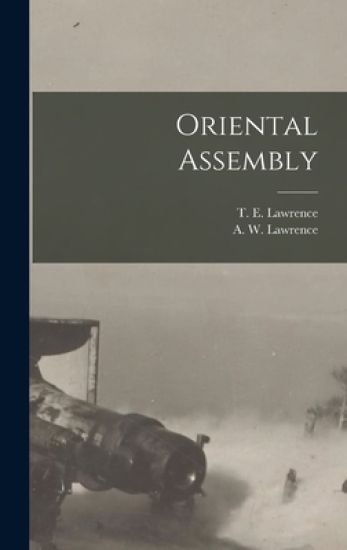
Oriental Assembly
T. E. (Thomas Edward) 1888 Lawrence; A. W. (Arnold Walter) 1900- Lawrence
Hassell Street Press
2021
sidottu
This work has been selected by scholars as being culturally important and is part of the knowledge base of civilization as we know it.This work is in the public domain in the United States of America, and possibly other nations. Within the United States, you may freely copy and distribute this work, as no entity (individual or corporate) has a copyright on the body of the work.Scholars believe, and we concur, that this work is important enough to be preserved, reproduced, and made generally available to the public. To ensure a quality reading experience, this work has been proofread and republished using a format that seamlessly blends the original graphical elements with text in an easy-to-read typeface.We appreciate your support of the preservation process, and thank you for being an important part of keeping this knowledge alive and relevant.

Oriental Assembly
T. E. (Thomas Edward) 1888 Lawrence; A. W. (Arnold Walter) 1900- Lawrence
Hassell Street Press
2021
nidottu
This work has been selected by scholars as being culturally important and is part of the knowledge base of civilization as we know it.This work is in the public domain in the United States of America, and possibly other nations. Within the United States, you may freely copy and distribute this work, as no entity (individual or corporate) has a copyright on the body of the work.Scholars believe, and we concur, that this work is important enough to be preserved, reproduced, and made generally available to the public. To ensure a quality reading experience, this work has been proofread and republished using a format that seamlessly blends the original graphical elements with text in an easy-to-read typeface.We appreciate your support of the preservation process, and thank you for being an important part of keeping this knowledge alive and relevant.
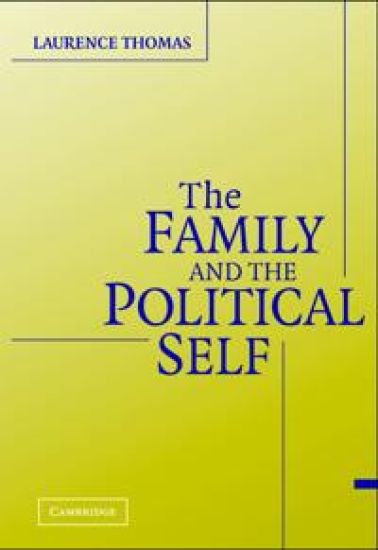
Having children is the most common aim among human beings. The Family and the Political Self aims to capture the insights that can be gleaned from taking this truth seriously. One truth is that human beings may not be as self-interested as is commonly supposed. In this book Laurence Thomas argues that the best construal of the political self reflects this truth.
Having children is the most common aim among human beings. The Family and the Political Self aims to capture the insights that can be gleaned from taking this truth seriously. One truth is that human beings may not be as self-interested as is commonly supposed. In this book Laurence Thomas argues that the best construal of the political self reflects this truth.

What constitutes a moral life? How does one acquire and maintain a good moral character?
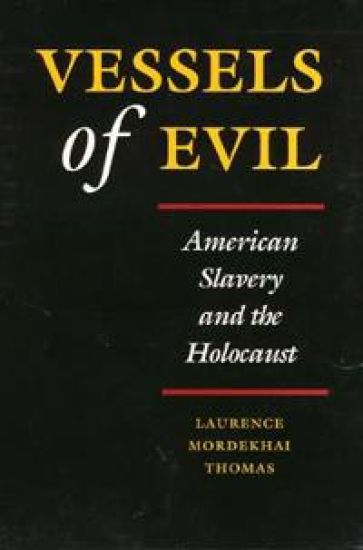
Two profound atrocities in the history of Western culture form the subject of this moving philosophical exploration: American Slavery and the Holocaust. An African American and a Jew, Laurence Mordekhai Thomas denounces efforts to place the suffering of one group above the other. Rather, he pronounces these two defining historical experiences as profoundly evil in radically different ways and points to their logically incompatible aims. The author begins with a discussion of the nature of evil, exploring the fragility of human beings and the phenomena of compartmentalizing, unquestioning obedience to authority, and moral drift. Citing compelling examples from history and contemporary life, he characterizes evil acts in terms of moral agency, magnitude, and intent. With moving testimony, Thomas depicts the moral pain of African Americans and Jews during their ordeals and describes how their past as victims has affected their future. Without invidious comparison, he distinguishes between extermination and domination, death and natal alienation, physical and mental cruelty, and between being viewed as irredeemable evil and as a moral simpleton. Thomas also considers the role of blacks and Jews in the Christian narrative.In Vessels of Evil, Thomas also considers the ways Jews and blacks have gone on to survive. He analyzes the relative flourishing of Jews and the languishing of blacks in this country and examines the implications of their dissimilar tragedies on any future relationship between these two minorities.
In Licensing Parents, Michael McFall argues that political structures, economics, education, racism, and sexism are secondary in importance to the inequality caused by families, and that the family plays the primary role in a child's acquisition of a sense of justice. He demonstrates that examination of the family is necessary in political philosophy and that informal structures (families) and considerations (character formation) must be taken seriously. McFall advocates a threshold that should be accepted by all political philosophers: children should not be severely abused or neglected because child maltreatment often causes deep and irreparable individual and societal harm. The implications of this threshold are revolutionary, but this is not recognized fully because no philosophical book has systematically considered the ethical or political ramifications of child maltreatment. By exposing a tension between the rights of children and adults, McFall reveals pervasive ageism; parental rights usually trump children's rights, and this is often justified because children are not fully autonomous. Yet parental rights should not always trump children's rights. Ethics and political philosophy are not only about rights, but also about duties—especially when considering potential parents who are unable or unwilling to provide minimally decent nurturance. While contemporary political philosophy focuses on adult rights, McFall examines systems whereby the interests and rights of children and parents are better balanced. This entails exploring when parental rights are defeasible and defending the ethics of licensing parents, whereby some people are precluded from rearing children. He argues that, if a sense of justice is largely developed in childhood, parents directly influence the character of future generations of adults in political society. A completely stable and well-ordered society needs stable and psychologically healthy citizens in addition to just laws, and McFall demonstrates how parental love
In Licensing Parents, Michael McFall argues that political structures, economics, education, racism, and sexism are secondary in importance to the inequality caused by families, and that the family plays the primary role in a child's acquisition of a sense of justice. He demonstrates that examination of the family is necessary in political philosophy and that informal structures (families) and considerations (character formation) must be taken seriously. McFall advocates a threshold that should be accepted by all political philosophers: children should not be severely abused or neglected because child maltreatment often causes deep and irreparable individual and societal harm. The implications of this threshold are revolutionary, but this is not recognized fully because no philosophical book has systematically considered the ethical or political ramifications of child maltreatment. By exposing a tension between the rights of children and adults, McFall reveals pervasive ageism; parental rights usually trump children's rights, and this is often justified because children are not fully autonomous. Yet parental rights should not always trump children's rights. Ethics and political philosophy are not only about rights, but also about duties_especially when considering potential parents who are unable or unwilling to provide minimally decent nurturance. While contemporary political philosophy focuses on adult rights, McFall examines systems whereby the interests and rights of children and parents are better balanced. This entails exploring when parental rights are defeasible and defending the ethics of licensing parents, whereby some people are precluded from rearing children. He argues that, if a sense of justice is largely developed in childhood, parents directly influence the character of future generations of adults in political society. A completely stable and well-ordered society needs stable and psychologically healthy citizens in addition to just laws, and McFall demonstrates how parental love and healthy families can help achieve this.

History of Frederick the Second, Emperor of the Romans
Thomas Laurence Kington-Oliphant
Hutson Street Press
2025
sidottu

History of Frederick the Second, Emperor of the Romans
Thomas Laurence Kington-Oliphant
Hutson Street Press
2025
pokkari
Verses Spoken at the Appearance of the King and Queene, Duke and Dutchesse of York, in Christ-Church Hall, Oxford, Sept
Thomas Laurence
British Library, Historical Print Editions
2011
pokkari