Kirjahaku
Etsi kirjoja tekijän nimen, kirjan nimen tai ISBN:n perusteella.
1000 tulosta hakusanalla Laurie J. Brenner

The Little Book Of Becoming: Understanding The Law Of Attraction
Laurie J. Brenner
Createspace Independent Publishing Platform
2010
nidottu
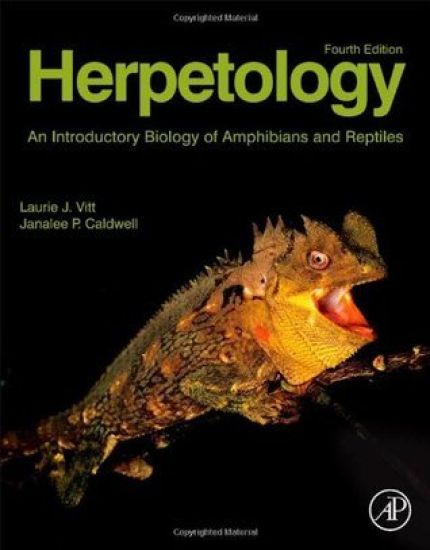
The fourth edition of the textbook Herpetology covers the basic biology of amphibians and reptiles, with updates in nearly every conceptual area. Not only does it serve as a solid foundation for modern herpetology courses, but it is also relevant to courses in ecology, behavior, evolution, systematics, and morphology. Examples taken from amphibians and reptiles throughout the world make this book a useful herpetology textbook in several countries. Naturalists, amateur herpetologists, herpetoculturists, zoo professionals, and many others will find this book readable and full of relevant natural history and distributional information. Amphibians and reptiles have assumed a central role in research because of the diversity of ecological, physiological, morphological, behavioral, and evolutionary patterns they exhibit. This fully revised edition brings the latest research to the reader, ranging over topics in evolution, reproduction, behavior and more, allowing students and professionals to keep current with a quickly moving field.

Someday Saints, America's Blesseds, Venerables, and Servants of God
Laurie J. Schmitt
Sancti in Spe Books
2022
nidottu
Someday Saints, America's Blesseds, Venerables, and Servants of God, is a series recommended for children ages four and up, dedicated to heroic Catholics who shared the faith in America. Blessed Solanus Casey, Venerable Frederic Baraga, and Venerable Samuel Mazzuchelli fostered the faith in the hearts and lives of the people of the upper Midwest region of the United States. Their virtuous lives and heroic example left a mark in America's history through the missions and churches they founded, but more importantly, in the lives of the people they served. Follow the examples of these someday saints, for you are called to be a someday saint, too Solanus Casey, Bishop Baraga, and Samuel Mazzuchelli are Someday Saints who served the people in the Midwest region around the Great Lakes, in Wisconsin, Michigan, and beyond.Solanus Casey, a Wisconsin farm boy, milked cows on his family farm, later joining the Capuchins. Bishop Frederic Baraga, born in Slovenia, came to the New World as a missionary priest, traveling far and wide in his ministry to the native peoples. Father Samuel Mazzuchelli, born in Italy, seemed to have the world at his fingertips, and gladly sacrificed it all in order to bring the Gospel of Jesus Christ to the people in North America.Young readers will be inspired by these holy heroes as they learn about the childhood, vocational call and special mission of these Someday Saints.Someday Saints has received the Imprimatur seal. (The "Imprimatur" is granted by an official censor of the Catholic Church and verifies that the book is free from moral and doctrinal error).
The treatment of HIV is perhaps the most demanding and complex aspect of work for today's health care provider. Often the first decision providers and patients make is whether or not to test for the virus; this is only the first in a series of involved--and often troubling--decisions confronting both provider and patient. HIV Care considers many of the diverse elements affecting and affected by this illness, from its physical and neuropsychological manifestations to its legal and financial implications. Addressing concerns about HIV testing, the authors introduce a practical risk assessment tool and discuss some of the subjects and approaches germane to pre- and posttest counseling. Medical management is surveyed, exploring not only traditional therapies but experimental and complementary ones such as acupuncture, exercise, and diet. The psychological, psychosocial, and spiritual impacts of HIV are also considered, often generating conflicting perspectives. Finally, pragmatic issues including housing and home care, financial assistance, and legal issues pertaining to the counseling of HIV-positive patients are presented. Appendixes record laws related to HIV by state, catalog available legal assistance, and list state and national resources for HIV patients. Offering a thorough look at the most recent developments in HIV treatment, this handbook will serve as a powerful reference guide for practitioners in primary care, nursing, and public health, or anyone working with HIV patients. "The authors have compiled an extremely useful and easy-to-use handbook that should be on the desk of all primary care providers who treat HIV-positive individuals. Of particular interest are the legal issues where the state laws for each state are outlined concerning reporting, informed consent, confidentiality, affirmative duty to disclose, quarantine, mandatory testing, and transmission crime. This is a highly recommended book for all medical, public, and academic libraries; but especially for the professional primary care provider. It answers many questions for those who have not had the years of experience of dealing with HIV-positive patients." --AIDS Book Review Journal
The treatment of HIV is perhaps the most demanding and complex aspect of work for today's health care provider. Often the first decision providers and patients make is whether or not to test for the virus; this is only the first in a series of involved--and often troubling--decisions confronting both provider and patient. HIV Care considers many of the diverse elements affecting and affected by this illness, from its physical and neuropsychological manifestations to its legal and financial implications. Addressing concerns about HIV testing, the authors introduce a practical risk assessment tool and discuss some of the subjects and approaches germane to pre- and posttest counseling. Medical management is surveyed, exploring not only traditional therapies but experimental and complementary ones such as acupuncture, exercise, and diet. The psychological, psychosocial, and spiritual impacts of HIV are also considered, often generating conflicting perspectives. Finally, pragmatic issues including housing and home care, financial assistance, and legal issues pertaining to the counseling of HIV-positive patients are presented. Appendixes record laws related to HIV by state, catalog available legal assistance, and list state and national resources for HIV patients. Offering a thorough look at the most recent developments in HIV treatment, this handbook will serve as a powerful reference guide for practitioners in primary care, nursing, and public health, or anyone working with HIV patients. "The authors have compiled an extremely useful and easy-to-use handbook that should be on the desk of all primary care providers who treat HIV-positive individuals. Of particular interest are the legal issues where the state laws for each state are outlined concerning reporting, informed consent, confidentiality, affirmative duty to disclose, quarantine, mandatory testing, and transmission crime. This is a highly recommended book for all medical, public, and academic libraries; but especially for the professional primary care provider. It answers many questions for those who have not had the years of experience of dealing with HIV-positive patients." --AIDS Book Review Journal
Shadows of Empire explores Javanese shadow theater as a staging area for negotiations between colonial power and indigenous traditions. Charting the shifting boundaries between myth and history in Javanese Mahabharata and Ramayana tales, Laurie J. Sears reveals what happens when these stories move from village performances and palace manuscripts into colonial texts and nationalist journals and, most recently, comic books and novels. Historical, anthropological, and literary in its method and insight, this work offers a dramatic reassessment of both Javanese literary/theatrical production and Dutch scholarship on Southeast Asia. Though Javanese shadow theater (wayang) has existed for hundreds of years, our knowledge of its history, performance practice, and role in Javanese society only begins with Dutch documentation and interpretation in the nineteenth century. Analyzing the Mahabharata and Ramayana tales in relation to court poetry, Islamic faith, Dutch scholarship, and nationalist journals, Sears shows how the shadow theater as we know it today must be understood as a hybrid of Javanese and Dutch ideas and interests, inseparable from a particular colonial moment. In doing so, she contributes to a re–envisioning of European histories that acknowledges the influence of Asian, African, and New World cultures on European thought-and to a rewriting of colonial and postcolonial Javanese histories that questions the boundaries and content of history and story, myth and allegory, colonialism and culture.

Shadows of Empire explores Javanese shadow theater as a staging area for negotiations between colonial power and indigenous traditions. Charting the shifting boundaries between myth and history in Javanese Mahabharata and Ramayana tales, Laurie J. Sears reveals what happens when these stories move from village performances and palace manuscripts into colonial texts and nationalist journals and, most recently, comic books and novels. Historical, anthropological, and literary in its method and insight, this work offers a dramatic reassessment of both Javanese literary/theatrical production and Dutch scholarship on Southeast Asia. Though Javanese shadow theater (wayang) has existed for hundreds of years, our knowledge of its history, performance practice, and role in Javanese society only begins with Dutch documentation and interpretation in the nineteenth century. Analyzing the Mahabharata and Ramayana tales in relation to court poetry, Islamic faith, Dutch scholarship, and nationalist journals, Sears shows how the shadow theater as we know it today must be understood as a hybrid of Javanese and Dutch ideas and interests, inseparable from a particular colonial moment. In doing so, she contributes to a re–envisioning of European histories that acknowledges the influence of Asian, African, and New World cultures on European thought-and to a rewriting of colonial and postcolonial Javanese histories that questions the boundaries and content of history and story, myth and allegory, colonialism and culture.
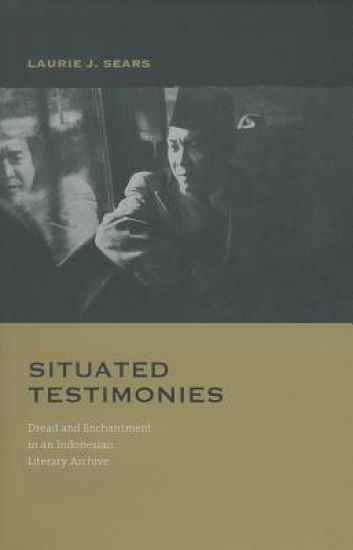
The Indonesian writer Pramoedya Ananta Toer made a distinction between a “downstream” literary reality and an “upstream” historical reality. Pramoedya suggested that literature has an effect on the upstream flow of history and that it can in fact change history. In Situated Testimonies Laurie Sears illuminates this process by considering a selection of Dutch Indies and Indonesian literary works that span the twentieth century and beyond and by showing how authors like Louis Couperus and Maria Dermoût help retell and remodel history. Sears sees certain literary works as “situated testimonies,” bringing ineffable experiences of trauma into narrative form and preserving something of the dread and enchantment that animated the past. These literary works offer a method of reading the emotional traces that historians may fail to witness or record—traces that elude archival constructions where political factors or colonial conditions have influenced processes of what is preserved and how it is shaped. Sears’ use of Donna Haraway’s notion of “situatedness” reiterates the idea that all of us speak from somewhere. Testimony, especially eyewitness testimony, is a gold standard in historical methodology, and the authors of literary works are eyewitnesses of their time. But the works of authors like Tirto Adhi Soerjo and Soewarsih Djojopoespito are first of all written as literature, and literary or stylistic devices cannot be ignored. Sears finds substantial evidence of the movement of psychoanalytic theories between Europe and the Indies/Indonesia throughout the twentieth century. She concludes that far from being only a Jewish or European discourse, psychoanalysis is a transnational discourse of desire that has influenced Indies and Indonesian writers for more than a century. Psychoanalytic ideas, and the suggestion by French psychoanalyst Jean Laplanche and Indonesian author Ayu Utami that memories, like literature, can move us back and forth in time, have inspired Sears’ thinking about historical archives, literature, and trauma. Soekarno’s words haunt this book as he haunts Indonesia’s past. Situated Testimonies rewrites portions of the literary and social history of Indonesia over a sweep of many decades. Historians, scholars of literary theory, and Indonesianists will all be interested in the book’s insights on how colonial and postcolonial novels of the Indies and Indonesia illuminate nationalist narratives and imperial histories.
The last six Minor Prophets--Nahum through Malachi--span preexilic and postexilic times. The first three--Nahum, Habakkuk, and Zephaniah--lead up to the exile, with themes ranging from God's judgment to his enduring faithfulness; the final three--Haggai, Zechariah, and Malachi--lay spiritual foundations for the community returned from exile, encouraging the temple's rebuilding, visualizing the messianic age, and affirming God's covenantal faithfulness.Authors Laurie Braaten and Jim Edlin have expertly crafted a New Beacon Bible Commentary on these remarkable writings. Together these exceptional scholars have explored the individual themes of these biblical books, while also bringing to light any broader themes these books may share.The New Beacon Bible Commentary is an engaging, indispensable reference tool to aid individuals in every walk of life in the study and meditation of God's Word. Written from the Wesleyan theological perspective, it offers insight and perceptive scholarship to help you unlock the deeper truths of Scripture and garner an awareness of the history, culture, and context attributed to each book of study. Readable, relevant, and academically thorough, it offers scholars, pastors, and laity a new standard for understanding and interpreting the Bible in the 21st century.EACH VOLUME FEATURES: Completely New Scholarship from notable experts in the Wesleyan tradition Convenient Introductory Material for each book of the Bible including information on authorship, date, history, audience, sociological/cultural issues, purpose, literary features, theological themes, hermeneutical issues, and more Clear Verse-by-Verse Explanations, which offer a contemporary, Wesleyan-based understanding derived from the passage's original language


King Alfred's English, a History of the Language We Speak and Why We Should Be Glad We Do
Laurie J. White
Shorter Word Press
2009
nidottu


Arthur the Short Tailed Hero
Laurie J Carmichael; Daisy Belle Kling
HoneyBunny D Publishing
2025
pokkari