Kirjahaku
Etsi kirjoja tekijän nimen, kirjan nimen tai ISBN:n perusteella.
1000 tulosta hakusanalla Lawrence E. Johnson
This book offers an introductory account of the central theories of truth. A wide range of theories, from those of correspondence and coherence to Tarski's semantic conception of truth are presented and assessed in order to profit from that which is of value in them. The authot proposes a new account which it is asserted is adequate to meet the legitimate demands made on the theory of truth.
Approaches bioethics on the basis of a conception of life and what is needed for the affirmation of its quality in the most encompassing sense. Johnson applies this conception to discussions of controversial issues in bioethics including euthanasia, abortion, cloning and genetic engineering. His emphasis is not on providing definitive solutions to all bioethical issues but on developing an approach to coping with them that can also help us deal with new issues as they emerge. The foundation of this discussion is an extensive examination of the nature of the self and its good and of various approaches to ethics. His bioethic is integrally related to his well-known work on environmental philosophy. The book also applies these principles on an individual level, offering a user-friendly discussion of how to deal with ethical slippery slopes and how and where to draw the line when dealing with difficult questions of bioethics.
Lawrence Johnson advocates a major change in our attitude toward the nonhuman world. He argues that nonhuman animals, and ecosystems themselves, are morally significant beings with interests and rights. The author considers recent work in environmental ethics in the introduction and then presents his case with the utmost precision and clarity. Written in an attractive, nontechnical style, the book will be of particular interest to philosophers, environmentalists and ecologists.
Approaches bioethics on the basis of a conception of life and what is needed for the affirmation of its quality in the most encompassing sense. Johnson applies this conception to discussions of controversial issues in bioethics including euthanasia, abortion, cloning and genetic engineering. His emphasis is not on providing definitive solutions to all bioethical issues but on developing an approach to coping with them that can also help us deal with new issues as they emerge. The foundation of this discussion is an extensive examination of the nature of the self and its good and of various approaches to ethics. His bioethic is integrally related to his well-known work on environmental philosophy. The book also applies these principles on an individual level, offering a user-friendly discussion of how to deal with ethical slippery slopes and how and where to draw the line when dealing with difficult questions of bioethics.
St. Lawrence River Ship Canal (supplementary to Reference Shelf. Volume I, Number 3.); 4
Julia E. (Julia Emily) Comp Johnsen
Hassell Street Press
2021
sidottu
This work has been selected by scholars as being culturally important and is part of the knowledge base of civilization as we know it.This work is in the public domain in the United States of America, and possibly other nations. Within the United States, you may freely copy and distribute this work, as no entity (individual or corporate) has a copyright on the body of the work.Scholars believe, and we concur, that this work is important enough to be preserved, reproduced, and made generally available to the public. To ensure a quality reading experience, this work has been proofread and republished using a format that seamlessly blends the original graphical elements with text in an easy-to-read typeface.We appreciate your support of the preservation process, and thank you for being an important part of keeping this knowledge alive and relevant.
St. Lawrence River Ship Canal (supplementary to Reference Shelf. Volume I, Number 3.); 4
Julia E. (Julia Emily) Comp Johnsen
Hassell Street Press
2021
nidottu
This work has been selected by scholars as being culturally important and is part of the knowledge base of civilization as we know it.This work is in the public domain in the United States of America, and possibly other nations. Within the United States, you may freely copy and distribute this work, as no entity (individual or corporate) has a copyright on the body of the work.Scholars believe, and we concur, that this work is important enough to be preserved, reproduced, and made generally available to the public. To ensure a quality reading experience, this work has been proofread and republished using a format that seamlessly blends the original graphical elements with text in an easy-to-read typeface.We appreciate your support of the preservation process, and thank you for being an important part of keeping this knowledge alive and relevant.
Preparing and Training for the Full Spectrum of Military Challenges
David E. Johnson; Jennifer D. P. Moroney; Roger Cliff; M. Wade Markel; Laurence Smallman; Michael Spirtas
RAND
2010
pokkari
What can the United States learn from other militaries about how better to prepare for full-spectrum operations - simultaneous offensive, defensive, and stability or civil support operations - and deployments? The authors examine the militaries of China, France, the UK, India, and Israel to identify different approaches to readiness, adaptability, and operational issues, including using subject-matter experts to improve training for specific deployments * using staff training to prepare forces for multiple contingencies; allowing combat training centers to focus on foundational skills; and, preparing units for a specific operational environment prior to deployment. The authors also examine how the United States, France, and the UK prepare for and conduct train, advise, and assist (TAA) missions, finding that the three countries employ significantly different approaches to staff selection, TAA deployments, staff training, and career progression.
The Trial of Lawrence Earl Ferrers, for the Murder of John Johnson, Before the Right Honourable the House of Peers, in Westminster-Hall, in Full Parliament, ...
Lawrence Shirley
Gale Ecco, Print Editions
2010
pokkari
The Trial of Lawrence Earl Ferrers, for the Murder of John Johnson, Before the Right Honourable the House of Peers, in Westminster-Hall, in Full Parliament,
Lawrence Shirley
Gale Ecco, Print Editions
2018
sidottu
The 18th century was a wealth of knowledge, exploration and rapidly growing technology and expanding record-keeping made possible by advances in the printing press. In its determination to preserve the century of revolution, Gale initiated a revolution of its own: digitization of epic proportions to preserve these invaluable works in the largest archive of its kind. Now for the first time these high-quality digital copies of original 18th century manuscripts are available in print, making them highly accessible to libraries, undergraduate students, and independent scholars.This collection reveals the history of English common law and Empire law in a vastly changing world of British expansion. Dominating the legal field is the Commentaries of the Law of England by Sir William Blackstone, which first appeared in 1765. Reference works such as almanacs and catalogues continue to educate us by revealing the day-to-day workings of society.++++The below data was compiled from various identification fields in the bibliographic record of this title. This data is provided as an additional tool in helping to insure edition identification: ++++Trinity College Library Watkinson CollectionT143971With an initial imprimatur leaf.London: printed for Samuel Billingsley, 1760. 4],55, 1]p.; 2
Supreme Court of Illinois, Third Grand Division, Ottawa, April Term, A.D. 1866, Franklin Parmelee, David A. Gage, Walter S. Johnson, Appellants, vs. Daniel Lawrence, Appellee
Daniel Lawrence; Franklin Parmelee
Palala Press
2018
pokkari
This work has been selected by scholars as being culturally important, and is part of the knowledge base of civilization as we know it. This work was reproduced from the original artifact, and remains as true to the original work as possible. Therefore, you will see the original copyright references, library stamps (as most of these works have been housed in our most important libraries around the world), and other notations in the work.This work is in the public domain in the United States of America, and possibly other nations. Within the United States, you may freely copy and distribute this work, as no entity (individual or corporate) has a copyright on the body of the work.As a reproduction of a historical artifact, this work may contain missing or blurred pages, poor pictures, errant marks, etc. Scholars believe, and we concur, that this work is important enough to be preserved, reproduced, and made generally available to the public. We appreciate your support of the preservation process, and thank you for being an important part of keeping this knowledge alive and relevant.
1850 Census, Eastern Kentucky, Volume 5. Includes Counties of Breathitt, Carter, Floyd, Greenup, Johnson, Lawrence, Letcher, Morgan, Perry and Pike
Byron Sistler; Barbara Sistler; Samuel Sistler
Janaway Publishing, Inc.
2012
nidottu
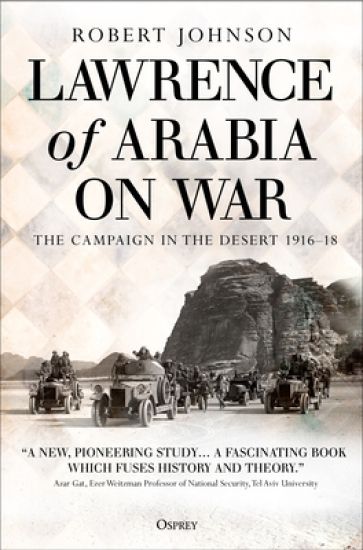
WINNER OF THE BRITISH ARMY BOOK OF THE YEAR 2021'A riveting account of T. E. Lawrence’s battles on and off the battlefield… Using scrupulous research and succinct prose, Johnson provides a gold mine of stratagems… a must-read for military leaders to come!'- Arnel P. David, Lt Col, US Army Special Advisor to the Chief of the General Staff (UK)'An innovative study of Lawrence that carefully and intelligently examines his campaigns and thinking on irregular warfare, and in doing so produces an accessible and intellectually stimulating work of military history.'- James Kitchen, Royal Military Academy Sandhurst'This is a major contribution to the literature on the Middle East in the Great War, and the history of military ideas - and it is highly relevant to contemporary armed force.'- Professor Gary Sheffield, University of WolverhamptonA new study of Captain T. E. Lawrence’s ideas on warfare and the context of his military campaign, as well as the peace settlement and the legacies that followed.-----Lawrence of Arabia is one of the most iconic figures of the First World War, seen by many as a heroic and romantic guerrilla leader in a period of savage and deeply impersonal industrial warfare. While Lawrence himself has been the subject of many biographies, and an award-winning film, the context of his war in the desert, and his ideas on war itself, are less well known.Lawrence of Arabia on War is a study of those ideas and of his campaign of irregular warfare which has informed tactical theory and decision-making down to the present day, juxtaposed alongside the operations conducted by the Ottoman Empire and those of the Allied army in Palestine. It explores the challenges he faced in a complex environment against a more numerous and better armed adversary, and the manner in which he assessed what was changing, what was distinctive, and what was unique to guerrilla warfare in the desertSetting Lawrence in his historical context, it examines the peace settlement process he participated in during 1919–20, analyses how other military writers made use of his ideas, and describes the ways in which his legacy has informed and inspired those partnering and mentoring local forces today.
Lawrence of Arabia is one of the most iconic figures of the First World War, seen by many as a heroic and romantic guerrilla leader in a period of savage and deeply impersonal industrial warfare. While Lawrence himself has been the subject of many biographies, and an award-winning film, the context of his war in the desert, and his ideas on war itself, are less well known. Lawrence of Arabia on War is a study of those ideas, and of his campaign of irregular warfare which has informed tactical theory and decision-making down to the present day. It explores the challenges he faced in a complex environment against a more numerous and better armed adversary, and the manner in which he assessed what was changing, what was distinctive, and what was unique to guerrilla warfare in the desert. Setting Lawrence in his historical context, it examines the peace settlement he participated in, analyses how other military writers made use of his ideas, and describes the ways in which his legacy has informed and inspired those partnering and mentoring local forces today.
USS Card: A Novel By L. wade Johnson
Lawrence Wade Johnson M. S.
Createspace Independent Publishing Platform
2012
nidottu
The USS Warren Lynn Card was DE 383 had the worst reputation of any ship in the Reserve fleet. All that was about to change; Commander Robert Mills had assumed command. It was to be a just another scheduled routine combat readiness exercise, down to Guantanamo Bay and back. What it turned out to be was a series of experiences the crew will never forget. The turbulent sea was relentless in its punishment of the little 308 foot ship. The USS Warren Lynn Card DE 383 was a tough, stable little vessel, well designed for heavy seas. The ship was designed to recover from 70 rolls but the crew was not. After all they had been through now the storm of storms. Many times the Card was standing on end with its bow out of the water and the depth charges submerged. It stood on end for what seemed to be five minutes was actually more like 10 seconds. The sound of the wind and rain like an oncoming freight train ran over the ship in a seemingly unending relentless assault rolling side to side and rocking fore and aft. On-coming swells crashed into the forward hull, with a loud bump that felt like it was crashing into large rocks. Sometimes the crashing of the sea exploded sprays of powerful gushes flying in all directions. Each onslaught was followed by climbing a giant wave standing the ship on its stern with the stem out of the water and then falling into the trough the wave created standing on its head with the screws out of the water, the bow plunging into the green and white swirling sea. Without resistance from the sea, the screws would race wildly causing the governors on the propeller shafts to slow the revolutions. If the governor did not slow the shafts, the generators and drive motors would shut down. Then they would have to go through a restart procedure to bring the generators back online, and then start the electric motors that drove the screws all while wallowing in seas without steering or forward control. Situations like that can sink a vessel. Another mountainous wave lifted the craft higher and higher, then swiftly abandoning its purpose dropping her 20 feet in an abyss with bone shuttering sudden stop landing her back on the beam. There was no respite as once again a watery hand lifted the bow upward and dropping her bow downward once again lifting the drive propellers out of the water. There were two instant flashes from the oncoming ship, followed by a vague frump, frump of gunfire off in the distance then the whine of shells heading for the Card, falling short generating two columns of water sprouting up from where they entered the sea. Then A random shell from the enemy's amidships gun that slammed into the Card's forward gun mount. The sudden explosion threw a blinding red flash across the forecastle and the up to the pilot house carrying with it a blistering hot shock wave and the stench of cordite and charred flesh and steel creating a blazing inferno that seemed to engulf the entire bow of the ship. The force of the detonation changed the normal five pounds per square inch air pressure to about two thousand pounds per square inch. The pyrotechnics, concussion, heat and pressure of the eruption of the corvette's shell was enough to instantly tear away muscle from bone and limbs from body tearing up the steel deck plates and gun parts transforming them into shards of bent fragments with razor edges blowing out in all directions, tearing to small pieces everything in their path.
He was a servant to the public, a writer for hire. He was a hero, an author adding to the glory of his nation. But can a writer be both hack and hero? The career of Samuel Johnson, recounted here by Lawrence Lipking, proves that the two can be one. And it further proves, in its enduring interest for readers, that academic fashions today may be a bit hasty in pronouncing the "death of the author."A book about the life of an author, about how an author is made, not born, Lipking's Samuel Johnson is the story of the man as he lived--and lives--in his work. Tracing Johnson's rocky climb from anonymity to fame, in the course of which he came to stand for both the greatness of English literature and the good sense of the common reader, the book shows how this life transformed the very nature of authorship.Beginning with the defiant letter to Chesterfield that made Johnson a celebrity, Samuel Johnson offers fresh readings of all the writer's major works, viewed through the lens of two ongoing preoccupations: the urge to do great deeds--and the sense that bold expectations are doomed to disappointment. Johnson steers between the twin perils of ambition and despondency. Mounting a challenge to the emerging industry that glorified and capitalized on Shakespeare, he stresses instead the playwright's power to cure the illusions of everyday life. All Johnson's works reveal his extraordinary sympathy with ordinary people. In his groundbreaking Dictionary, in his poems and essays, and in The Lives of the English Poets, we see Johnson becoming the key figure in the culture of literacy that reaches from his day to our own.
The Transfer of Negotiable Paper as Collateral Security, Being the Sharswood Prize Essay of the University of Pennsylvania for the Year 1886, and the Johnson Prize Essay for the Same Year
Lewis Lawrence Smith
Hutson Street Press
2025
sidottu
The Transfer of Negotiable Paper as Collateral Security, Being the Sharswood Prize Essay of the University of Pennsylvania for the Year 1886, and the Johnson Prize Essay for the Same Year
Lewis Lawrence Smith
Hutson Street Press
2025
pokkari
The Air Cavalry Troops who served in Vietnam were an unusually courageous and resourceful lot. Constantly facing death, they developed a bravado and camaraderie that made them a force to be reckoned with. Winged Sabers is a comprehensive, multi-faceted volume on the men, the machines, and the missions that shaped this unique group. Author Lawrence H. Johnson traces the development of the Air Cavalry concept from its tenuous beginnings to its present-day status as an accepted member of the combined arms team. Available in paperback for the first time, Winged Sabers should remain an indispensable resource for years to come. The son of a pioneer Air Cavalryman, Lawrence H. Johnson III served as an aeroscout platoon commander and operations officer of an Air Cavalry troop during the Vietnam conflict. A member of the Company of Military Historians, he has written more than twenty-five articles on the history of the U.S. Cavalry.