Cora Jean is the story of a young girl from the American South, the daughter of a prostitute who is sold for forty dollars and five sacks of sweet potatoes.From a brutal upbringing and tumultuous life growing up in the 1960s to modern day, Cora Jean's simple heart and strength of character shine through in a story of love, loss and ultimate grace that speaks volumes to us all.
The 18th century was a wealth of knowledge, exploration and rapidly growing technology and expanding record-keeping made possible by advances in the printing press. In its determination to preserve the century of revolution, Gale initiated a revolution of its own: digitization of epic proportions to preserve these invaluable works in the largest archive of its kind. Now for the first time these high-quality digital copies of original 18th century manuscripts are available in print, making them highly accessible to libraries, undergraduate students, and independent scholars.This collection reveals the history of English common law and Empire law in a vastly changing world of British expansion. Dominating the legal field is the Commentaries of the Law of England by Sir William Blackstone, which first appeared in 1765. Reference works such as almanacs and catalogues continue to educate us by revealing the day-to-day workings of society.++++The below data was compiled from various identification fields in the bibliographic record of this title. This data is provided as an additional tool in helping to insure edition identification: ++++Trinity College Library Watkinson CollectionT143971With an initial imprimatur leaf.London: printed for Samuel Billingsley, 1760. 4],55, 1]p.; 2
This work has been selected by scholars as being culturally important and is part of the knowledge base of civilization as we know it.This work is in the public domain in the United States of America, and possibly other nations. Within the United States, you may freely copy and distribute this work, as no entity (individual or corporate) has a copyright on the body of the work.Scholars believe, and we concur, that this work is important enough to be preserved, reproduced, and made generally available to the public. To ensure a quality reading experience, this work has been proofread and republished using a format that seamlessly blends the original graphical elements with text in an easy-to-read typeface.We appreciate your support of the preservation process, and thank you for being an important part of keeping this knowledge alive and relevant.
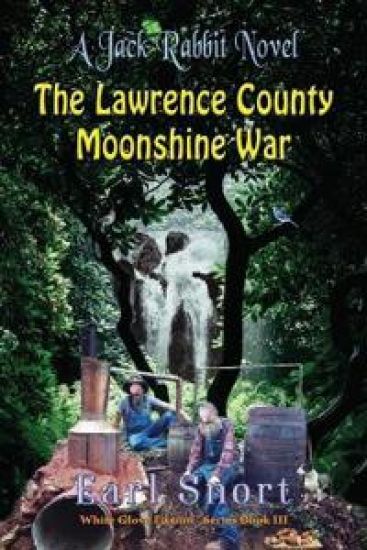
This is a tale of a changeling shortly after these powers were bestowed upon him. Jack, who began life as a rabbit, fell asleep in arid West Texas shortly after wishing he had a home someplace else in a more temperate climate. When he awoke, he was a young man in a forest glen in such a place. He got exactly what he wished for The problem was, he was wearing an Army uniform and he did not know his location. He didn't even know which century it was Jack was suffering from a serious case of amnesia.He soon learned that the year was 1920 and that he had been slumbering on his own property in Eastern Kentucky. He was re-introduced to his cousin, Gerard, whom he did not recognize, yet with whom he had maintained a best-friend relationship since childhood. Gerard also introduced Jack into his moonshine business during these, the early days of Prohibition. Before long, Jack found himself situated between big city gangsters and state investigators.Lead was flying in the hills of Eastern Kentucky and Jack was in the thick of it. Author Earl Snort is the nom de plume of a retired law enforcement officer with more than forty years experience toting a badge and a gun.
This work has been selected by scholars as being culturally important and is part of the knowledge base of civilization as we know it.This work is in the public domain in the United States of America, and possibly other nations. Within the United States, you may freely copy and distribute this work, as no entity (individual or corporate) has a copyright on the body of the work.Scholars believe, and we concur, that this work is important enough to be preserved, reproduced, and made generally available to the public. To ensure a quality reading experience, this work has been proofread and republished using a format that seamlessly blends the original graphical elements with text in an easy-to-read typeface.We appreciate your support of the preservation process, and thank you for being an important part of keeping this knowledge alive and relevant.
As a painter and writer of prodigious talent and remarkable visionary sensibility, Barbara Earl Thomas continues to spark increasing attention both regionally and nationally. The granddaughter of southern sharecroppers who migrated to Seattle in the middle 1940s, Thomas expresses in her art a dual heritage, translating her own vision of southern roots and culture into a Northwestern landscape.Storm Watch is a radiant book, offering a richly satisfying combination of luminous images and the written word. Generously illustrated, it includes a color sequence of more than twenty powerful paintings, representing two decades of Thomas's career. In her paintings, Thomas incorporates themes of people and their rituals with the land, weaving images around the metaphor of place as both a geographical and spiritual location. Her writing, too, pulses with life. Her essay, "Passing Secrets," not only offers a perceptive sketch of the attitudes of black immigrants to the Northwest but also provides a personal insight into her technical and philosophical approach. Because her use of imagery is highly symbolic, Storm Watch has an appeal that crosses the boundaries of artistic media—of painting and writing—and transcends regional locale.Vicki Halper's masterful introduction chronicles Barbara Thomas's life and education and traces the impact of those experiences in the development of her art. Halper quotes extensively from Thomas's discussions about herself and her work, and draws useful comparisons between her art and that of selected painters, in particular, Americans Jacob Lawrence and Guy Anderson, and British artist William Blake. Most of all, she sheds light on the magic realism that infuses the stories Thomas tells with her paintings.
Rainfall, hurricanes, rivers, reservoirs, springs, lakes, aquifers, wetlands, floodplains, water parks, irrigation, wells - the list of water-related topics in Texas is long and critical to the state's economic and political future. ""Texas Water Atlas"" provides the first comprehensive reference for water-related topics in Texas.Geographers Lawrence E. Estaville and Richard A. Earl have compiled a host of data to visually convey vital information on Texas' climate, surface and groundwater, water uses and hazards, water quantity and quality, recreation, future supply projections, and the environmental management of its water resources. In addition to more than 150 color maps, the book includes brief introductions to each chapter and a Texas water timeline that traces the state's water events since European settlement.An excellent resource for teachers, students, and policy makers, the atlas promises also to be an invaluable tool for conservation professionals and the general public.
Theories and Applications of Counseling and Psychotherapy provides students with the foundational knowledge needed to implement various therapeutic approaches in individual and family counseling. The dynamic author team presents theories through a multicultural and social justice-oriented lens, including evidence to support each theory. Students will embrace chapter concepts through vibrant illustrations and relevant examples from movies, TV shows, photographs, paintings, musical lyrics, news articles, and other sources presented throughout.
The 18th century was a wealth of knowledge, exploration and rapidly growing technology and expanding record-keeping made possible by advances in the printing press. In its determination to preserve the century of revolution, Gale initiated a revolution of its own: digitization of epic proportions to preserve these invaluable works in the largest archive of its kind. Now for the first time these high-quality digital copies of original 18th century manuscripts are available in print, making them highly accessible to libraries, undergraduate students, and independent scholars.Rich in titles on English life and social history, this collection spans the world as it was known to eighteenth-century historians and explorers. Titles include a wealth of travel accounts and diaries, histories of nations from throughout the world, and maps and charts of a world that was still being discovered. Students of the War of American Independence will find fascinating accounts from the British side of conflict. ++++The below data was compiled from various identification fields in the bibliographic record of this title. This data is provided as an additional tool in helping to insure edition identification: ++++Cambridge University LibraryT173740London: printed for J. Coote, and sold by all booksellers in England, 1760. 4],51, 1]p., plate: port.; 8
Observera att förlaget som ger ut denna produkt baserar innehållet i sina produkter på fria källor som Wikipedia. Boken är med stor sannolikhet endast ett utdrag ur dessa informationskällor, alltså inte en vanlig bok i den bemärkelsen.
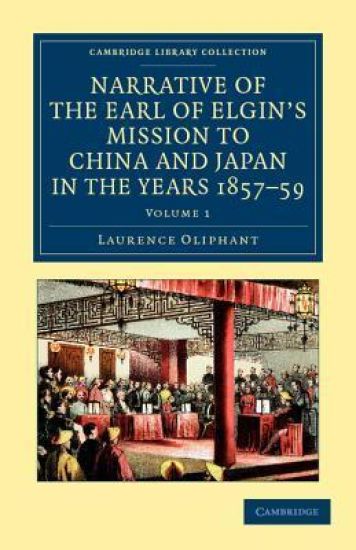
In 1857 Laurence Oliphant (1829–88), lawyer, journalist, diplomat, and sometime spy, later Liberal MP, satirical novelist, and, for a time, adherent of the religious mystic Thomas Harris, became private secretary to Lord Elgin (1811–63), accompanying him to China, and thence to Japan, on a mission to protect and extend British trading interests in the region. Oliphant's 1859 account of the trip was published in two volumes. Volume 1 deals with the events of the Second Opium War, from the 'Arrow Incident', discussed in retrospect, to the Treaty of Tientsin, as well as an early diversion to India to suppress the Mutiny. The work is a mixture of travel narrative - Oliphant had previously written about his travels in the Crimea (also reissued in this series) - and political analysis. It provides both an informative account of the war from a privileged vantage point and a window upon Oliphant's colourful career.
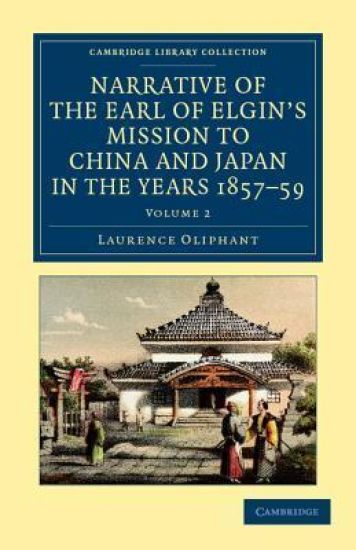
In 1857 Laurence Oliphant (1829–88), lawyer, journalist, diplomat and sometime spy, later Liberal MP, satirical novelist, and, for a time, adherent of the religious mystic Thomas Harris, became private secretary to Lord Elgin (1811–63), accompanying him to China, and thence to Japan, on a mission to protect and extend British trading interests in the region. Oliphant's 1859 account of the trip was published in two volumes. Volume 2 deals with the negotiation of the Anglo-Japanese Treaty of Yedo, the legalisation of the Chinese opium trade and combat with Chinese insurgents at Nankin. The work is a mixture of travel narrative - Oliphant had previously written about his travels in Nepal and in the Crimea (also reissued in this series) - and political analysis. It provides both an informative account of the war from a privileged vantage point and a window upon Oliphant's own colourful career.