
Kirjahaku
Etsi kirjoja tekijän nimen, kirjan nimen tai ISBN:n perusteella.
1000 tulosta hakusanalla Lawrence Emerson Gelfand

In this first extended literary description and analysis of Emerson's Journals, Lawrence Rosenwald argues that they are his masterpiece, realizing his standards of literary excellence more fully than do his other works, and constituting one of the greatest commentaries on nineteenth-century America.
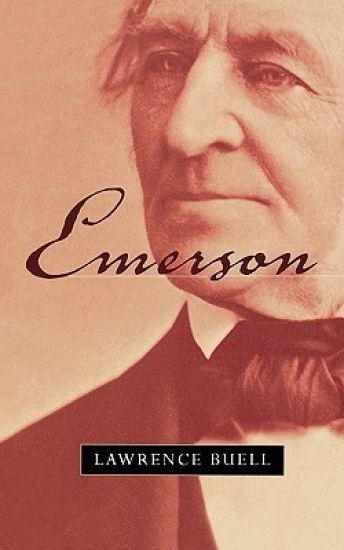
"An institution is the lengthened shadow of one man," Ralph Waldo Emerson once wrote--and in this book, the leading scholar of New England literary culture looks at the long shadow Emerson himself has cast, and at his role and significance as a truly American institution. On the occasion of Emerson's 200th birthday, Lawrence Buell revisits the life of the nation's first public intellectual and discovers how he became a "representative man."Born into the age of inspired amateurism that emerged from the ruins of pre-revolutionary political, religious, and cultural institutions, Emerson took up the challenge of thinking about the role of the United States alone and in the world. With characteristic authority and grace, Buell conveys both the style and substance of Emerson's accomplishment--in his conception of America as the transplantation of Englishness into the new world, and in his prodigious work as writer, religious thinker, and philosopher. Here we see clearly the paradoxical key to his success, the fierce insistence on independence that acted so magnetically upon all around him. Steeped in Emerson's writings, and in the life and lore of the America of his day, Buell's book is as individual--and as compelling--as its subject. At a time when Americans and non-Americans alike are struggling to understand what this country is, and what it is about, Emerson gives us an answer in the figure of this representative American, an American for all, and for all times.
Emerson Electric Mfg Co V. Emerson Radio & Phonograph Corporation U.S. Supreme Court Transcript of Record with Supporting Pleadings
Lawrence C Kingsland; Louis D Fletcher
Gale, U.S. Supreme Court Records
2011
pokkari
Ruth Fielding on the St. Lawrence The Queer Old Man of the Thousand Islands
Alice B Emerson
Tredition Classics
2013
pokkari
Ruth Fielding on the St. Lawrence The Queer Old Man of the Thousand Islands
Alice B Emerson
Tredition Classics
2013
sidottu
Ruth Fielding on the St. Lawrence The Queer Old Man of the Thousand Islands
Alice B Emerson
Alpha Edition
2018
pokkari

Ruth Fielding on the St. Lawrence or The Queer Old Man of the Thousand Islands
Alice B. Emerson
KESSINGER PUBLISHING CO
2005
pokkari
Ruth Fielding On The St. Lawrence: Or The Queer Old Man Of The Thousand Islands
Alice B. Emerson
Literary Licensing, LLC
2014
nidottu
Ruth Fielding on the St. Lawrence Or The Queer Old Man of the Thousand Islands
Alice B. Emerson
Createspace Independent Publishing Platform
2015
nidottu

Ruth Fielding on the St. Lawrence; Or, The Queer Old Man of the Thousand Islands
Alice B. Emerson
Createspace Independent Publishing Platform
2015
nidottu
Ruth Fielding on the St. Lawrence
Alice B. Emerson
Createspace Independent Publishing Platform
2017
nidottu

A Bibliography Of Canadian Fiction
Lewis Emerson Horning; Lawrence J. Burpee
Kessinger Pub
2008
pokkari
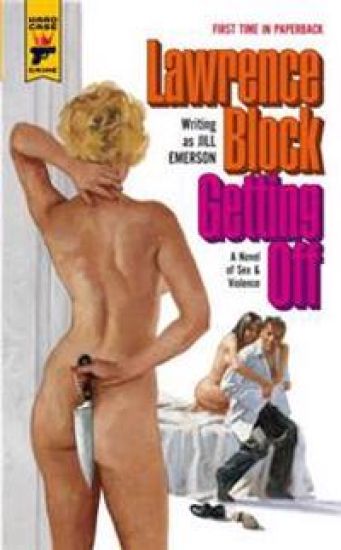
SO THIS GIRL WALKS INTO A BAR......and when she walks out there's a man with her. She goes to bed with him, and she likes that part. Then she kills him, and she likes that even better. On her way out, she cleans out his wallet. She keeps moving, and has a new name for each change of address. She's been doing this for a while, and she's good at it. And then a chance remark gets her thinking of the men who got away, the lucky ones who survived a night with her. She starts writing down names. And now she's a girl with a mission. Picking up their trails. Hunting them down. Crossing them off her list...

One morning in the spring of 1958 I woke up in my room at the Hotel Alexandria with a paralyzing hangover (which was not unusual) and an idea for a book (which was). I sat in front of my typewriter, and within a few hours I had produced a chapter-by-chapter outline of a novel. I had all the characters sketched out and knew how they'd relate to one another, and how the rather elementary storyline would resolve itself. I even had a title: SHADOWS.At the time I was working as an editor at a shady literary agency, but I'd already arranged for my departure, as I'd be resuming college in the fall in Ohio. Sometime in May I gave up my room at the Alexandria and went home to Buffalo, where I turned that outline into a book. My agent sent it to Crest Books, then the country's premier publisher of lesbian fiction.They spent a couple of months reading it and thinking it over, during which time I wrote and sold several lesser books to Harry Shorten's Midwood Books. Then, a couple of months after I'd returned to Antioch and gone through a lot of sturm und drang that needn't concern us here, Crest accepted Shadows. They had some editorial suggestions, and the only one that bothered me was their insistence that I cut a chapter in which one character, Peggy, gets drunk after a love affair ends badly, and is raped on her way home. The editor thought it was extraneous, and for years it bothered me that I hadn't stood up for my auctorial rights.They changed my title to STRANGE ARE THE WAYS OF LOVE. They also changed my pen name. I'd known a lesbian novel ought to have a woman's name on it, and I picked Rhoda Moore. They decided on Leslie Evans instead, so it could be gender-neutral, and then switched it to Lesley Evans, which made it more specifically female. Welcome to publishing, young man. Or young woman, or whatever the hell you are...Okay. It's clear to me now, almost 60 years later, that the book ought to set sail under its original title, and since I'm republishing it myself, that's a decision I get to make. It's also clear to me that SHADOWS is in fact Jill Emerson's very first novel, as it's far more of a piece with WARM AND WILLING and ENOUGH OF SORROW than with anything else I've written. So that's how I'll publish it, right? As SHADOWS, dammit, by Jill Emerson-and while I'm at it, why not restore that missing chapter?So I started reading the book. I don't much like looking at my early work. Once, when a publisher was issuing a collection of my earliest magazine fiction, he asked if I'd reread the stories and write an introduction; "One or the other," was my reply. Reading SHADOWS was an experience, as there was so much I didn't remember. I'd put Jan in my first NYC apartment: 54 Barrow Street. I'd sent her to Caricatures, my favorite MacDougal Street coffeehouse. I remembered the lesbian bar, The Shadows; in real life it called itself Swing Rendezvous, and Jan wouldn't have had much trouble hooking up there.And the writing struck me as okay. "This kid can write," I said to myself, "and maybe someday he will."But here's the stunner. I was looking for the place where that Peggy chapter used to be, and what I found was...the chapter itself It had been hiding in plain sight for over half a century. All along I thought I'd let myself be talked out of it, and resented that editor while berating myself for knuckling under, and the damned chapter was right there.Go know. I'd been all set to recreate that chapter, matching my style to Jill's, and now I didn't have to. So I changed something else.. There are a couple of scenes in which Laura criticizes Peggy for her potty mouth, and it was hard to know why, as Peggy didn't say anything stronger than "pain in the ass" and "goddamned." Well, how could she, back in 1958? In print, that is to say? So I spiced up her speech a little and let her say the F word.

Warm and Willing
Jill Emerson; Lawrence Block
Createspace Independent Publishing Platform
2016
nidottu
Here's what someone wrote as the book description for an earlier edition of WARM AND WILLING: "An emotionally and sexually frustrated divorc e explores her mounting attraction to women. Rhoda's divorce has her thinking that romance is not for her. But maybe she just needs to look in a new direction. Megan is an attractive blonde who instantly sees what Rhoda's love life has been missing: a woman's touch. As Megan guides Rhoda into the sensuous - but hidden - world of women who love women, the two unlock a passion that may be too hot to contain. There are a lot of beautiful women in the Village, and Rhoda's just begun her adventure as a freewheeling lesbian."I guess that's fair. But these early books cry out for a stroll down Memory Lane, and there's a lot to remember about the beginnings of Jill Emerson.In 1958 I wrote my first book, a novel about a young woman's confusion about her sexual nature. It's recently been republished as SHADOWS, by Jill Emerson, but back then the publisher slapped a different title and pen name on it, because there was no Jill Emerson.Jill came out, as it were, six years later-by which time I'd acquired wife and children and had written close to a hundred books. Then in 1964 I broke with my agent and found myself stranded; my chief market was a closed shop, and I could no longer write for it. A brighter man than I would have been terrified, but I just figured things would work out.I decided I'd write a lesbian novel. That's what my first book had been, so it seemed a logical choice for a new beginning. Now I could have proposed such a book to Midwood Tower, Harry Shorten's operation, which was by no means a closed shop, and where they thought highly of me. But instead I chose to submit the book over the transom, under a pen name.Specifically, Jill Emerson. Now Jill already existed, because I'd enrolled her as a member of Daughters of Bilitis, a lesbian organization, so that she could subscribe to their magazine, The Ladder. I put her name on the manuscript of my new novel-I can't recall what I called it, but you can be damned sure it wasn't WARM AND WILLING-and wrote out a cover letter and mailed it off to John J. Plunkett, editor in chief at Midwood Tower.I'm not sure what I was trying to prove. But, astonishingly, I proved it. Mr. Plunkett sent a contract by return mail, and some day I'm going to publish our correspondence. He and Jill really hit it off nicely, and I think he may have had a slight crush on her. A hopeless one, of course, because Jill wasn't interested in anybody with a Y chromosome...Jill went on to write a second book for Midwood. I called it ENOUGH OF SORROW, taking the phrased from a Mary Carolyn Davies poem I've always liked, and I'll be damned if Midwood Tower didn't keep it. They stuck an award medallion on the cover, and included a quote-"A remarkably candid treatment of a particularly controversial theme..." The source of the quote is never revealed, and I can only assume it was either John J. Plunkett or another Midwood editor, Sandy Levine.Over the decades, I've come to regard Jill Emerson as rather more than a pen name. She would appear to be more an aspect of self. One way or another, donning her persona seems to liberate something within me, and to give me access to otherwise elusive parts of myself.But need we inquire all that closely? Probably not. This is, after all, just a book-a sensitive exploration of a young woman's sexual awakening.