Kirjojen hintavertailu. Mukana 11 244 527 kirjaa ja 12 kauppaa.

Kirjahaku

Etsi kirjoja tekijän nimen, kirjan nimen tai ISBN:n perusteella.

1000 tulosta hakusanalla Lawrence J. Brown

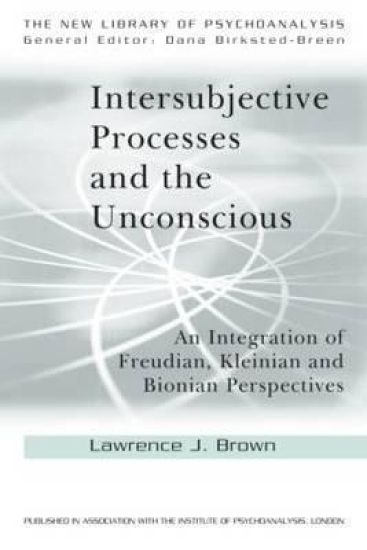
Intersubjective Processes and the Unconscious
Intersubjective Processes and the Unconscious looks at how the minds of the therapist and the patient interact with each other in a profound and unconscious way: a concept first described by Freud. This book expands Freud’s ideas further and examines how these have been greatly elaborated by contributions from the Kleinian School as well as from the work of Bion. It explores how, together, patient and therapist co-create a narrative through these unconscious intersubjective processes. Topics of discussion include: the unconscious dimensions of intersubjective processes an historical overview of Freudian, Kleinian and Bionian contributionsan integrated theory of the nature of unconscious intersubjective processesthe central importance of dreaming in intersubjective processesthe clinical implications of this intersubjective model The author offers in-depth clinical examples and case vignettes to illustrate the application of these principles when working with trauma, countertransference dreams and supervision. As such, this book will be invaluable to all psychoanalysts and psychotherapists interested in the topic of intersubjectivity as well as those who want to learn more about the interactional dimensions of Freud, Klein and Bion.
Intersubjective Processes and the Unconscious
Intersubjective Processes and the Unconscious looks at how the minds of the therapist and the patient interact with each other in a profound and unconscious way: a concept first described by Freud. This book expands Freud’s ideas further and examines how these have been greatly elaborated by contributions from the Kleinian School as well as from the work of Bion. It explores how, together, patient and therapist co-create a narrative through these unconscious intersubjective processes. Topics of discussion include: the unconscious dimensions of intersubjective processes an historical overview of Freudian, Kleinian and Bionian contributionsan integrated theory of the nature of unconscious intersubjective processesthe central importance of dreaming in intersubjective processesthe clinical implications of this intersubjective model The author offers in-depth clinical examples and case vignettes to illustrate the application of these principles when working with trauma, countertransference dreams and supervision. As such, this book will be invaluable to all psychoanalysts and psychotherapists interested in the topic of intersubjectivity as well as those who want to learn more about the interactional dimensions of Freud, Klein and Bion.
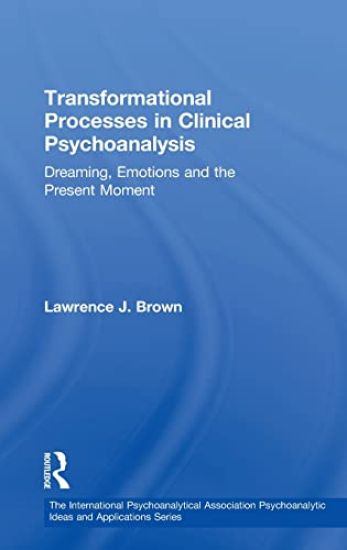
Transformational Processes in Clinical Psychoanalysis
In this book, Lawrence J. Brown offers a contemporary perspective on how the mind transforms, and gives meaning to, emotional experience that arises unconsciously in the here-and-now of the clinical hour. Brown surveys the developments in theory and practice that follow from Freud’s original observations and traces this evolution from its conception to contemporary analytic field theory. Brown emphasizes that these unconscious transformational processes occur spontaneously, in the blink of an eye, through the "unconscious work" in which the analyst and patient are engaged. Though unconscious, these processes are accessible and the analyst must train himself to become aware of the subtle ways he is affected by the patient in the clinical moment. By paying attention to one’s reveries, countertransference manifestations and even supposed "wild" or extraneous thoughts, the analyst is able to obtain a glimpse of how his unconscious is transforming the ambient emotions of the session in order to formulate an interpretation. Brown casts a wide theoretical net in his exploration of these transformational processes and builds on the contributions of Freud, Theodor Reik, Bion, Ogden, the Barangers, Cassorla, Civitarese and Ferro. Bion’s theories of alpha function, transformations, dreaming and his clinical emphasis on the present moment are foundational to this book. Brown’s writing is clear and aims to describe the various theoretical ideas as plainly as possible. Detailed clinical material is given in most chapters to illustrate the theoretical perspectives. Brown applies this theory of transformational processes to a variety of topics, including the analyst’s receptivity, countertransference as transformation, the analytic setting, the paintings of J.M.W. Turner, "autistic transformations" and other clinical situations in the analysis of children and adults.Transformational Processes in Clinical Psychoanalysis will be of great interest to all psychoanalysts and psychoanalytic psychotherapists.
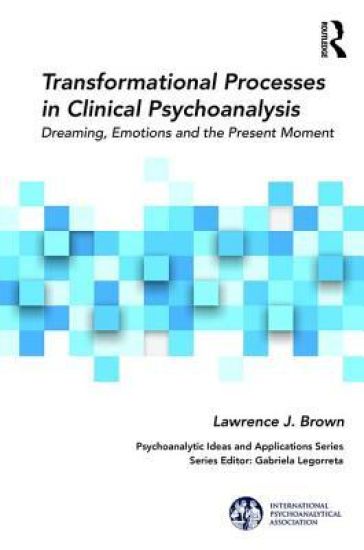
Transformational Processes in Clinical Psychoanalysis
In this book, Lawrence J. Brown offers a contemporary perspective on how the mind transforms, and gives meaning to, emotional experience that arises unconsciously in the here-and-now of the clinical hour. Brown surveys the developments in theory and practice that follow from Freud’s original observations and traces this evolution from its conception to contemporary analytic field theory. Brown emphasizes that these unconscious transformational processes occur spontaneously, in the blink of an eye, through the "unconscious work" in which the analyst and patient are engaged. Though unconscious, these processes are accessible and the analyst must train himself to become aware of the subtle ways he is affected by the patient in the clinical moment. By paying attention to one’s reveries, countertransference manifestations and even supposed "wild" or extraneous thoughts, the analyst is able to obtain a glimpse of how his unconscious is transforming the ambient emotions of the session in order to formulate an interpretation. Brown casts a wide theoretical net in his exploration of these transformational processes and builds on the contributions of Freud, Theodor Reik, Bion, Ogden, the Barangers, Cassorla, Civitarese and Ferro. Bion’s theories of alpha function, transformations, dreaming and his clinical emphasis on the present moment are foundational to this book. Brown’s writing is clear and aims to describe the various theoretical ideas as plainly as possible. Detailed clinical material is given in most chapters to illustrate the theoretical perspectives. Brown applies this theory of transformational processes to a variety of topics, including the analyst’s receptivity, countertransference as transformation, the analytic setting, the paintings of J.M.W. Turner, "autistic transformations" and other clinical situations in the analysis of children and adults.Transformational Processes in Clinical Psychoanalysis will be of great interest to all psychoanalysts and psychoanalytic psychotherapists.
Diabetes: A Short Guide to Getting Your Number Under Control

Diabetes: A Short Guide to Getting Your Number Under Control

Laurence J. Browner

Createspace Independent Publishing Platform
2015
nidottu
So you or someone you know has diabetes. What's the next step? Doctors will tell you - lose weight, exercise and eat right. In other words, it's all in your hands. It may seem that way at first, but doctors aren't just writing you off. The doctor is telling you there are THREE THINGS you need to do to lower your blood sugar number. How you tackle these three things is up to you. Think of it as three legs of the stool to a better and healthier life. Of the three, your diet is the quickest way to get blood sugar back down to where it belongs. This book quickly outlines the things you need to look for and know about the foods you eat.Remember, every day your blood sugar number stays high, is another day your body or that of your loved one, is damaged by this ruthless disease. Follow the guidelines in this book and get that number down - fast.
The Lawrence Browne Affair

The Lawrence Browne Affair

Cat Sebastian

Avon Books
2017
pokkari
An earl hiding from his future . . . Lawrence Browne, the Earl of Radnor, is mad. At least, that's what he and most of the village believes. A brilliant scientist, he hides himself away in his family's crumbling estate, unwilling to venture into the outside world. When an annoyingly handsome man arrives at Penkellis, claiming to be Lawrence's new secretary, his carefully planned world is turned upside down. A swindler haunted by his past . . . Georgie Turner has made his life pretending to be anyone but himself. A swindler and con man, he can slip into an identity faster than he can change clothes. But when his long-dead conscience resurrects and a dangerous associate is out for blood, Georgie escapes to the wilds of Cornwall. Pretending to be a secretary should be easy, but he doesn't expect that the only madness he finds is the one he has for the gorgeous earl.Can they find forever in the wreckage of their lives? Challenging each other at every turn, the two men soon give into the desire that threatens to overwhelm them. But with one man convinced he is at the very brink of madness and the other hiding his real identity, only true love can make this an affair to remember.
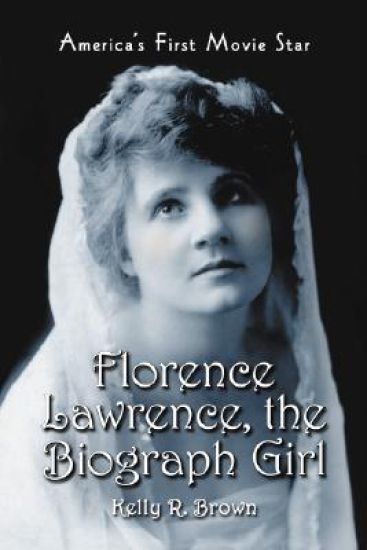
Florence Lawrence, the Biograph Girl

Florence Lawrence, the Biograph Girl

Kelly R. Brown

McFarland Co Inc
2007
pokkari
Florence Lawrence's film career began just as the cinema was being born. She recognized the wonder and appeal of the fledgling industry, and her early work with the Vitagraph company gained her a legion of fans and a reputation as a willing and hard working actress. In 1908 she appeared in Romeo and Juliet--America's very first screen Juliet. By 1909, she was working steadily for the Biograph studio-she was dubbed "the Biograph girl"--and was being praised for her "personal attractions" and "very fine dramatic ability." But just as Lawrence was the first movie star in the industry, she was also one of the first to be undone by it. Hindered by setbacks, grueling work schedules, self-imposed retirements, three marriages, repeatedly unsuccessful comeback attempts, Lawrence finally committed suicide in 1938. This impressively researched piece of film history represents the first full-length biography of Florence Lawrence, also called "The Girl of a Thousand Faces." Among the photographs are some never before published. A complete filmography of Lawrence's entire career is provided. A summary chapter includes comments from various critics and historians, addressing how Lawrence is important to film history.
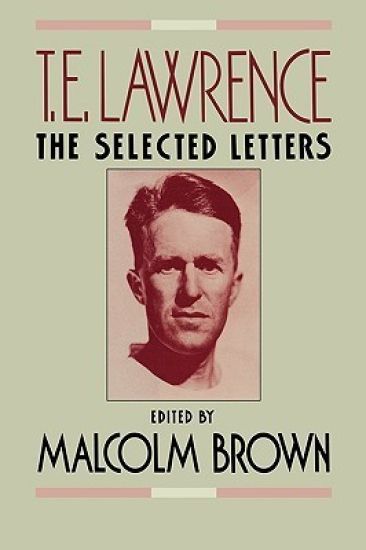
T.E. Lawrence

T.E. Lawrence

Malcolm Brown

WW NORTON CO
1980
nidottu
Although T.E. Lawrence was one of the greatest letter writers of our century, at least two thirds of his letters collected here have never been published before. This selection contains his correspondence with Mrs. George Bernard Shaw.
T.E. Lawrence

T.E. Lawrence

Malcolm Brown

New York University Press
2003
sidottu
T.E. Lawrence (1888-1935)--known worldwide as Lawrence of Arabia-- was many people in one: scholar, archaeologist, intelligence officer, guerrilla leader, diplomat, aspiring writer, and ordinary serviceman hiding under aliases from the celebrity he had first largely created and then come to despise. Illegitimate, but with aristocratic connections, an outsider yet also at ease with, and much admired by, many of his finest contemporaries, he was a man forever on the run, whether as a youth searching for fresh experience and fame, or a middle-aged figure seeking sanctuary both from his reputation and from a sense of guilt, resulting from wartime experiences from which he could never break free. Deeply religious by background, sexually ambiguous and always on the edge, he craved for peace, but was also convinced he deserved punishment. This new biography by Malcolm Brown, a well-known authority on Lawrence, is part fast-moving adventure story, part modern morality tale, and places special emphasis on the years of the Arab revolt: the period that both made Lawrence and broke him.Thoroughly illustrated with portraits, a rich range of photographs, letters in Lawrence's hand and extracts from his writings, T.E. Lawrence presents a compelling portrait of a remarkable man.
Separate No More: The Long Road to Brown V. Board of Education (Scholastic Focus)
Critically acclaimed author Lawrence Goldstone offers an affecting portrait of the road to the landmark Brown v. Board of Education case, which significantly shaped the United States and effectively ended segregation. Since 1896, in the landmark outcome of Plessy v. Ferguson, the doctrine of "separate but equal" had been considered acceptable under the United States Constitution. African American and white populations were thus segregated, attending different schools, living in different neighborhoods, and even drinking from different water fountains. However, as African Americans found themselves lacking opportunity and living under the constant menace of mob violence, it was becoming increasingly apparent that segregation was not only unjust, but dangerous.Fighting to turn the tide against racial oppression, revolutionaries rose up all over America, from Booker T. Washington to W. E. B. Du Bois. They formed coalitions of some of the greatest legal minds and activists, who carefully strategized how to combat the racist judicial system. These efforts would be rewarded in the groundbreaking cases of 1952-1954 known collectively as Brown v. Board of Education of Topeka, in which the US Supreme Court would decide, once and for all, the legality of segregation -- and on which side of history the United States would stand.In this thrilling examination of the path to Brown v. Board of Education, Constitutional law scholar Lawrence Goldstone highlights the key trials and players in the fight for integration. Written with a deft hand, this story of social justice will remind readers, young and old, of the momentousness of the segregation hearings.
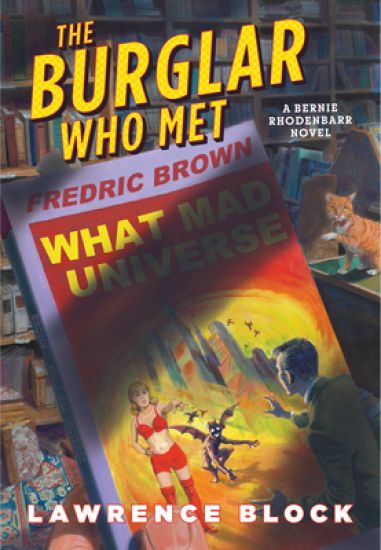
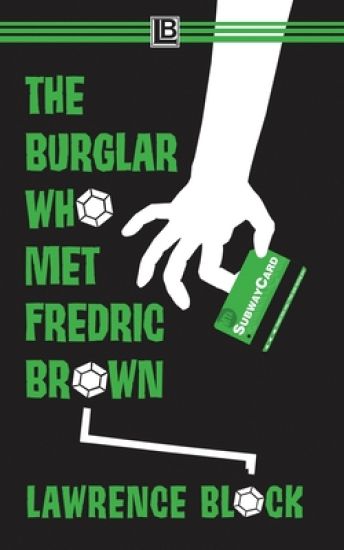
The Burglar Who Met Fredric Brown

The Burglar Who Met Fredric Brown

Lawrence Block

LB Productions
2022
nidottu
Suppose you're Bernie Rhodenbarr.You've got a dream job, running your own cozy secondhand bookstore, complete with Raffles, your caudally challenged cat. It's in Greenwich Village, and your best friend's dog grooming salon is two doors away, and the two of you lunch together and meet for drinks after work.And you've got another way to make a buck. Every once in a while you put your conscience on the shelf and let yourself into someone else's residence, and you leave with more than you came with. You're a burglar, and you know it's wrong, but you love it.And you're good at it. You've got two ways to make a living, one larcenous, the other literary and legitimate, and you're good at both of them.Nice, huh?Until the 21st Century pulls the rug out from under you. All of a sudden the streets of your city are so overpopulated with security cameras and closed-circuit TV that you have to lock yourself in the bathroom to have an undocumented moment. And locks, which used to provide the recreational pleasure of a moderately challenging crossword puzzle, have become genuinely pickproof.Meanwhile, internet booksellers have muscled your legit enterprise into obsolescence. The new breed of customers browse your bookshop, find what they're looking for, then whip out their phones and order their books online.Wonderful. You had two ways to make a living, and neither of them works anymore.But suppose you keep on supposing, okay?Suppose you wake up one morning in a world just like the one in which you fell asleep-but with a couple of differences.The first one you notice doesn't amount to much. The Metrocard in your wallet has somehow changed color and morphed into what seems to be called a SubwayCard. That's puzzling, but you swipe it at the turnstile same as always, and it gets you on the subway, so what difference does it make?But that's not the only thing that's changed. The Internet's up and running, as robust as ever, but nobody seems to be using it to sell books. Doors are secured not with pickproof electronic gizmos but with good old reliable Rabson locks, the kind you can open with your eyes closed. And what happened to all those security cameras? Where'd they go?All of a sudden you've got your life back, and your bookshop's packed with eager customers, and how are you gonna find time to steal something?Well, just suppose one of the world's worst human beings has recently acquired one of the world's most glamorous gems. When the legendary Kloppmann Diamond is up for grabs, what can you possibly do but grab it?And what could possibly go wrong?
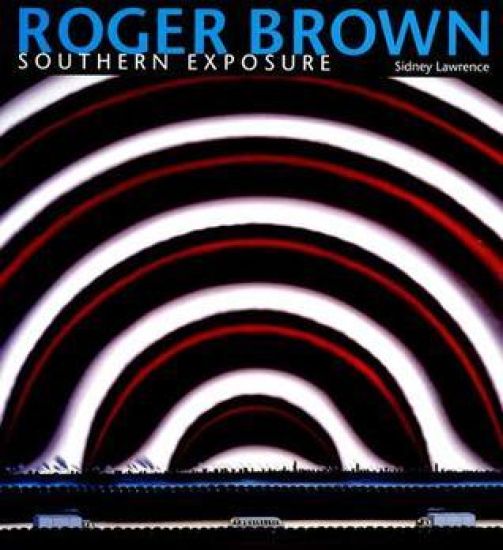
Roger Brown

Roger Brown

Sidney Lawrence; Lee Gray

The University of Alabama Press
2007
nidottu
Visionary art by an Alabama native who grew to affect the world far beyond his small-town southern roots The work of Roger Brown (1941-1997) - a nationally celebrated artist, innovator of the Chicago "Imagist" movement, and an Alabama native - has been exhibited many times and is held in numerous collections, public and private. However, no view of his life and work is as personal as "Roger Brown: Southern Exposure". Published to coincide with a traveling exhibit originating at the Jule Collins Smith Museum of Fine Art at Auburn University, this volume highlights a very intimate side of Brown's oeuvre: his connection to family and his southern roots. From his early childhood drawings to his homes in Chicago, Michigan, and California, and then his return to Alabama, we witness the talent of a boy turned artist and social critic. The son of a grocer/restaurateur and an artistically inclined housewife, Roger grew up in Opelika watching his father build things, his mother collect cherished mementos, and his younger brother's first endeavors as an artist. Brown's southern heritage remained relevant throughout his career. Brown himself noted that his work was "about" wherever he was at the time, what involved him intellectually, and his personal experiences. Laced with social commentary on politics, religion, and art, Brown inevitably filtered his work through his small-town southern roots, acknowledging the centrality of religious piety, moral obligation, and close-knit family ties. Also evident is Brown's interest in the creations of self-taught artists that he witnessed as a boy and in travels through the south. He found pleasure in seeking out the mundane, the used, and kitsch found in flea markets and thrift shops. These objects of ephemera became both inspiration and elements in his work. The works of art in this exhibition remain timely for their emphasis on the visual rhetoric of location, politics, the art world, and popular culture. They are testaments to the comprehension and visionary talent of an Alabama boy who grew to have an impact the world far beyond his small-town southern roots.