Recipient of the 2017 BRONZE Winner for Education Award from Foreword Indies. Get the educational services and support your child deserves Federal law guarantees every child a free appropriateeducation, and the goal of the Individualized Education Program (IEP) is toassure that every child with special needs receives what the law promises. Butyou know that your family must make sure the school follows through. Thispowerful book covers: - eligibilityrules and assessments - working withoutside experts - developingyour child's ideal educational program - preparing forand attending IEP meetings, and - resolvingdisputes with school districts. The 11th edition explains the law and provides key forms, sample letters, and resources you need at every stage of the IEP process. Withit, you can ensure your child gets a good education--the education your childdeserves.
Get the educational services and support your child needs and deserves If your child has special education needs, their Individualized Education Program (IEP) is your school's plan to meet those needs. As a parent, you want to understand and participate in the IEP process and to be able to advocate for your child This powerful book covers: eligibility rules and assessments working with outside experts developing your child's ideal educational program preparing for and attending IEP meetings, and resolving disputes with school districts. The 12th edition explains the law and provides key forms, sample letters, and resources you need at every stage of the IEP process. This book can help you to advocate for the education your child deserves.
Carol Siegel challenges the standard representation of Lawrence in feminist criticism and places his work in the context of women's literary traditions.
In The Human Right to Language, Lawrence M. Siegel, founder and director of the National Deaf Education Project in the United States, presents a powerful argument for the rights of deaf children to equal education. In 1982, the US Supreme Court ruled that Amy Rowley, a deaf six-year-old, was not entitled to have a sign language interpreter in her public school classroom. Siegel here offers a persuasive counterargument to this decision, contending that the Constitution should protect every child's right to communication and language as part of an individual's right to liberty. Siegel illustrates his case with details of the challenges deaf students face in mainstream education settings, and he offers many compelling examples of deaf children who are denied their chance at success because of inadequate communication access in schools. This is an extremely important look at education and Constitutional rights.
Bargaining Behavior by Lawrence Edward Fouraker is a comprehensive study of the negotiation process and the factors that influence bargaining outcomes. The book explores the behaviors and tactics used by negotiators in different situations, from simple one-on-one negotiations to complex multi-party negotiations. The author draws upon his extensive research and experience in the field of negotiation to provide readers with practical insights and strategies for achieving successful outcomes. The book covers a range of topics, including the psychology of bargaining, power dynamics, communication strategies, and ethical considerations. It also includes case studies and real-world examples to illustrate key concepts and techniques. Bargaining Behavior is an essential resource for anyone who wants to improve their negotiation skills and achieve better outcomes in both personal and professional contexts.This scarce antiquarian book is a facsimile reprint of the old original and may contain some imperfections such as library marks and notations. Because we believe this work is culturally important, we have made it available as part of our commitment for protecting, preserving, and promoting the world's literature in affordable, high quality, modern editions, that are true to their original work.
Bargaining and Group Decision Making: Experiments in Bilateral Monopoly is a book written by Sidney Siegel that explores the dynamics of bargaining and decision-making in situations of bilateral monopoly. The book is based on a series of experiments conducted by the author, which involve pairs of players negotiating over the allocation of a fixed resource. The experiments are designed to test various theories of bargaining and decision-making, and to investigate the effects of different factors on the outcomes of negotiations.The book begins with an introduction to the concept of bilateral monopoly, which refers to a situation in which there is only one buyer and one seller of a particular good or service. The author then outlines the various theories of bargaining that have been proposed over the years, including the Nash bargaining solution, the Rubinstein bargaining model, and the Kalai-Smorodinsky bargaining solution.The remainder of the book is devoted to a detailed description of the experiments conducted by the author. These experiments involve pairs of players who are given a fixed amount of money and are asked to negotiate over how to divide it between them. The author varies a number of different factors in the experiments, such as the initial endowments of the players, the timing of the negotiations, and the presence or absence of a third-party mediator.The results of the experiments are analyzed in detail, and the author draws a number of conclusions about the dynamics of bargaining and decision-making in situations of bilateral monopoly. The book is written in a clear and accessible style, and is suitable for anyone interested in the topics of bargaining, decision-making, and game theory.This scarce antiquarian book is a facsimile reprint of the old original and may contain some imperfections such as library marks and notations. Because we believe this work is culturally important, we have made it available as part of our commitment for protecting, preserving, and promoting the world's literature in affordable, high quality, modern editions, that are true to their original work.
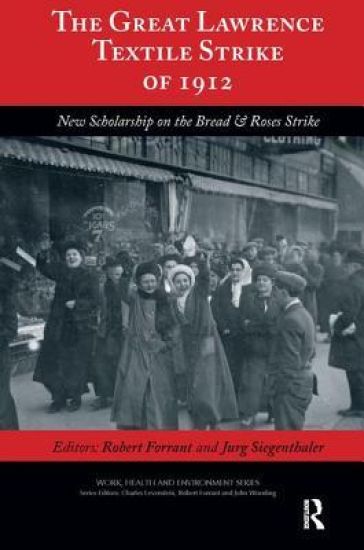
"In Lawrence, Massachusetts, fully one-half of the population 14 years of age or over is employed in the woolen and worsted mills and cotton mills". Thus begins the federal government's Report on Strike of Textile Workers in Lawrence, Massachusetts in 1912 . This book follows up, one hundred years later. The story's retelling offers readers an exciting reexamination of just how powerful a united working class can be. The Great Lawrence Textile Strike of 1912 - the Bread and Roses Strike - was a public protest by 20,000 to 25,000 immigrant workers from several countries, prompted by a wage cut. Backed by skillful neighborhood organizing, supported by hundreds of acts of solidarity, and unified by a commitment to respect every striker's nationality and language, the walkout spread across the city's densely packed tenements. Defying the assumptions of mill owners and conservative trade unionists alike that largely female and ethnically diverse workers could not be organized, the women activists, as one mill boss described them, were full of "lots of cunning and also lots of bad temper. They're everywhere, and it's getting worse all the time." Events in Lawrence between January 11 and March 25, 1912, changed labor history. In this volume the authors tackle the strike story through new lenses and dispel assumptions that the citywide walkout was a spontaneous one led by outside agitators. They also discuss the importance of grasping the significance of events like the 1912 strike and engaging in the process of community remembrance. This book appeals to a wide constituency. Most directly, it is of great relevance to historians of labor, industrialization, immigration, and the development of cities, as well as researchers studying social movements. The story of the Bread and Roses Strike resonates strongly with social justice supporters, the women's movement, advocates for children's well-being, and anti-poverty organizations. Social studies and college-level teachers will find it a rich resource. Graduate-level students will find inspiration for further research. The Bread and Roses strike has excellent name recognition and has always had a considerable international audience.
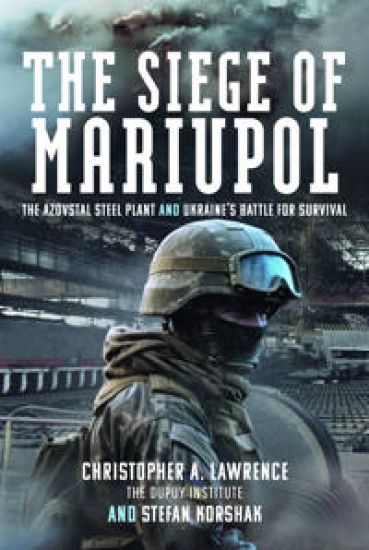
On 24 February 2022, the President of Russia, Vladimir Putin, unleashed an attack on Ukraine that has developed into the most significant war in Europe since the Second World War. The opening phase of this war was when Russian armour, along with mechanized and airmobile troops, advanced on Kyiv, surrounded Chernihiv, seized Kherson twice, and threatened the very existence of the Ukrainian state. The Siege of Mariupol tells the story of the heroic resistance of the Ukrainians in defending the areas in and around the large coastal city of Mariupol. Situated in the Donetsk Oblast, Mariupol was one of the initial objectives of the Russian offensive. By 2 March, Putin’s forces had surrounded the city and a fierce struggle ensued, in which Russian artillery bombarded Mariupol resulting in heavy civilian casualties. Conditions in the city rapidly deteriorated as water and electricity supplies were cut and food shortages became severe. The 700,000 inhabitants faced a devastating and growing humanitarian crisis as the siege continued for week after week. Repeated attempts to evacuate the civilians failed, until 15 March when just 20,000 people were able to escape. Week after week the bitter fighting raged on. Towards the end, however, it was the events at the Azovstal Iron and Steel Works that, to the whole world, came to define the dogged and determined Ukrainian defence. The plant became the heart of one of the main remaining pockets of resistance in Mariupol. Fiercely defended, it was described as a ‘fortress within a city’. The siege lasted until 20 May with the Russians finally taking control of the city. This book was written as the conflict ensued, giving it an unparalleled immediacy and poignancy. The Siege of Mariupol is an important historical document depicting the uncertainty and anxiety faced by the contesting forces and by the rest of the world as the war in Ukraine hung in the balance.
Observera att förlaget som ger ut denna produkt baserar innehållet i sina produkter på fria källor som Wikipedia. Boken är med stor sannolikhet endast ett utdrag ur dessa informationskällor, alltså inte en vanlig bok i den bemärkelsen.
This work has been selected by scholars as being culturally important, and is part of the knowledge base of civilization as we know it. This work was reproduced from the original artifact, and remains as true to the original work as possible. Therefore, you will see the original copyright references, library stamps (as most of these works have been housed in our most important libraries around the world), and other notations in the work.This work is in the public domain in the United States of America, and possibly other nations. Within the United States, you may freely copy and distribute this work, as no entity (individual or corporate) has a copyright on the body of the work.As a reproduction of a historical artifact, this work may contain missing or blurred pages, poor pictures, errant marks, etc. Scholars believe, and we concur, that this work is important enough to be preserved, reproduced, and made generally available to the public. We appreciate your support of the preservation process, and thank you for being an important part of keeping this knowledge alive and relevant.
In the bestselling The Physics of Star Trek, the renowned theoretical physicist Lawrence Krauss took readers on an entertaining and eye-opening tour of the Star Trek universe to see how it stacked up against the real universe. Now, responding to requests for more as well as to a number of recent exciting discoveries in physics and astronomy, Krauss takes a provocative look at how the laws of physics relate to notions from our popular culture -- not only Star Trek, but other films, shows, and popular lore -- from Independence Day to Star Wars to The X-Files. What's the difference between a flying saucer and a flying pretzel?Why didn't the aliens in Independence Day have to bother invading Earth to destroy it?What's new with warp drives?What's the most likely scenario for doomsday?Are ESP and telekinesis impossible?What do clairvoyance and time travel have in common?How might quantum mechanics ultimately affect the fate of life in the universe?
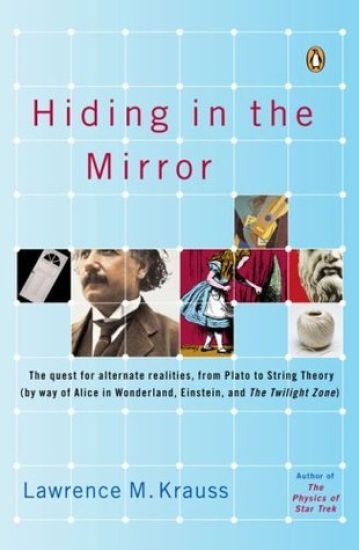
Draws on the works of scientists, mathematicians, artists, and writers, from Einstein and Picasso to C. S. Lewis, to consider the plausibility and human concept of alternate universes, exploring popular theories and misunderstandings about such topics as black holes, life in other dimensions, and string theory. Reprint. 30,000 first printing.
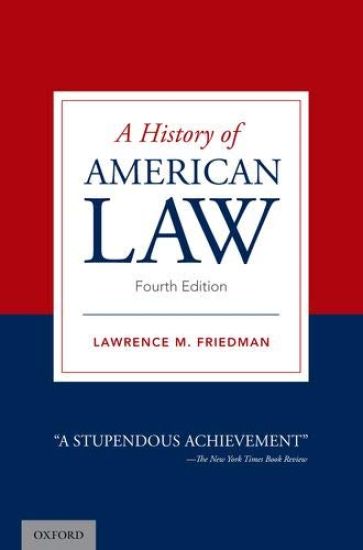
Renowned legal historian Lawrence Friedman presents an accessible and authoritative history of American law from the colonial era to the present day. This fully revised fourth edition incorporates the latest research to bring this classic work into the twenty-first century. In addition to looking closely at timely issues like race relations, the book covers the changing configurations of commercial law, criminal law, family law, and the law of property. Friedman furthermore interrogates the vicissitudes of the legal profession and legal education. The underlying theory of this eminently readable book is that the law is the product of society. In this way, we can view the history of the legal system through a sociological prism as it has evolved over the years.