Kirjojen hintavertailu. Mukana 11 244 527 kirjaa ja 12 kauppaa.

Kirjahaku

Etsi kirjoja tekijän nimen, kirjan nimen tai ISBN:n perusteella.

1000 tulosta hakusanalla Lawrence M. Woods

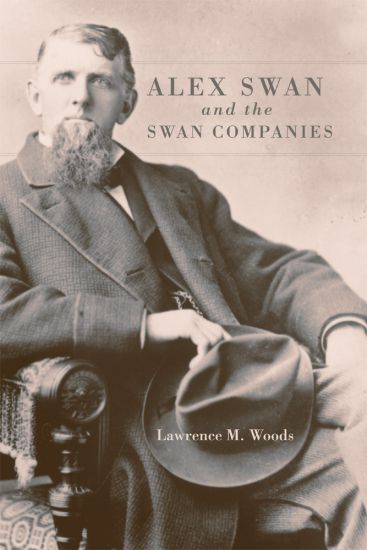
Alex Swan and the Swan Companies

Alex Swan and the Swan Companies

Lawrence M. Woods

University of Oklahoma Press
2016
nidottu
The Swan name is inseparable from the history of Wyoming and the West, and when Swan made his mark in Wyoming in the 1880s, ranching was king. The largest among Alex Swan's many corporate creations, The Swan Land and Cattle Company, Ltd., was one of the larger livestock companies to operate in the American West, and it survived long after it founder's financial debacle in the great winter of 1886-1887. At one time, the Swan was said to be the largest private landowner in Wyoming, and at its peak it was certainly one of the largest sheep companies in the country.This new work for the first time relates the life of Alex Swan, and offers a complete history of the Swan companies. Lawrence M. Woods has combed the surviving corporate records and other documents held in the United States and abroad.At the height of his financial life, Swan was said to be the richest man in Wyoming Territory, and his influence extended beyond business affairs to community service, both in Wyoming and in Iowa. Yet, after his dramatic financial collapse, there were many who ridiculed what he had done, and Swan's silence has left those criticisms on the record, without rebuttal.Swan, a leader in the Wyoming Stock Growers Association from its founding in 1873, served as its second president. Promoting the use of Hereford cattle on the high plains, he was a force in the Wyoming ranching world, especially after his move to Cheyenne in 1874. Woods details Swan's life in the years after his separation from the Scottish-controlled Swan Land and Cattle Company, especially his activities in Ogden, Utah.The Swan companies continued operation into the mid-twentieth century. John Clay played a major role in their operation, and he figures prominently in their story. Alex Swan and the Swan Companies is an important portrait of the inner workings of the western cattle industry and its leaders.The book has a bibliography, index, and three appendices. It is bound in rich brown linen cloth and has a foil stamped spine and front cover. Western Lands and Waters Series, XXII.
Wyoming's Big Horn Basin to 1901

Wyoming's Big Horn Basin to 1901

Lawrence M. Woods

University of Oklahoma Press
2020
nidottu
Custer's defeat at the Battle of the Little Big Horn did its part to win fame for the Big Horn Basin, and much has been written about the famous characters of Wyoming. But until now the region which is Wyoming's last frontier has not received comprehensive treatment. This new study examines the Big Horn Basin during its frontier period.Isolated by Indian lands and impassable natural barriers, the Big Horn Basin remained a frontier for years after the frontier faded from other Western regions. The Indian Treaties of 1868 had left the Basin effectively encircled by Crow, Sioux, and Shoshoni Indians. The Yellowstone cordillera, Big Horn River and Wind River cut off travel on the west, east and south. Secluded and remote, the Big Horn Basin attracted only the most rugged and foolhardy, giving it a history distinct in the American saga.Trail breakers, fur traders and gold seekers, the first to open the Basin to settlement, are each highlighted. The efforts of Jedediah Smith, Charles Kemble, William Gordon, Robert Campbell, William Ashley and others were the first to blaze routes into the Basin for fur trade. There is much information on military expeditions and Indian encounters led by the likes of Lt. John Mullins, Lt. Henry E. Maynadier and Capt. William F. Reynolds, and Col. Nelson A. Miles. James Bridger, Edward Shelly, and the Expedition of 1870 figure prominently. The adventures of various prospectors are included.Stock growing entrepreneurs and alliances receive prime attention in this study. The disastrous winter of 1886-1887 and the Johnson County Invasion are described at length. Cattlemen Mason and Lovell, Torrey, and a great many others are discussed in a sweeping roster of who's who.Horse and cattle thieves, robbers and outlaws are discussed, including Hank Gorman, Charles and Ed Anderson, and Albert Nard. The lawmen who brought justice to Wyoming are also heralded here: Thomas R. Adams, Ed Lloyd, and Walter W. Peay among others.The railroad through the Big Horn Basin and its impact on a once impenetrable frontier are spotlighted. The importance of the Hill Line, Toluca Line, Lower Hanover Canal Project, and Wind River Canyon Dam are all brought to light.Water appropriation, the Carey Act, and other development, immigration and settlement projects-including Mormon settlements-are all addressed by Woods. Governor William Alford Richards, W. S. Collins, and W.D. Pickett's contributions are chronicled.
John Clay, Jr.

John Clay, Jr.

Lawrence M. Woods

Arthur H. Clark Company
2001
sidottu
In the western cattle industry, John Clay's name looms large. The young scotsman entered the field in the late 1870s, and he was soon employed by Scottish investors, purchasing and overseeing land and cattle. From Texas to Kansas to Wyoming to California, Clay's story covers the full breadth of ranching in the West. Clay's story includes tales of trail drives, rustlers, the Johnson County Invasion, the Wyoming Stock Growers Association, the Swan Land and Cattle Company, Tom Horn, and much, much more.Called by some the dean of American stockmen, John Clay also ran perhaps the largest livestock commission firm in the country, and controlled a network of nearly two dozen banks that were directed by a private lending operation that we can only call large because there are no surviving records to give us a more precise measure. Through such diversity, Clay escaped the tribulations of other professionals in the same fields by controlling his assets in a way that was probably unique.But there was also the John Clay who followed the hounds in his native Scotland, astride the great horse Chicago, until his eyesight and growing weight forced him to retire from the hunt, and there was John Clay, publisher and author, whose work is nowhere fully catalogued, and a partial list fills several pages.Finally, there is the John Clay who led the cattlemen's confrontation with the "rustler" faction of frontier Wyoming at the time of the infamous Johnson County Invasion. Clay's blanket denials of involvement in that dispute have always been greeted with skepticism by historians, but the paucity of documentation has prevented more than a general review of the issue. Here, Clay's extensive presence in the West is placed in the context of that conflict.Most of what is known about John Clay and his family comes from his own prolific pen, and much of this biography comes from that source, but also added are some of the details which Clay did not give, and place his work in the context of an exciting period in the history of the American West.Cattle Ranche and Wyoming Cattle Ranche companies, Western Ranches, Limited, and the Swan Land and Cattle Company are just a few of the outfits which he managed. In 1890 was elected sixth president of the Wyoming Stock Growers Association, serving for six years during the tumultuous era which included the invasion of Johnson County. Jim Averell and Ella Watson (Cattle Kate) were lynched by men in the employ of Clay and his associates. Clay also had close contact with Tom Horn, and is suspected by some of having been his employer.Fully annotated and with an analytical index, the work includes a partial bibliography of the writings of John Clay, with a thorough bibliography of other sources on the man and the period. Seven illustrations enhance the work.
Asa Shinn Mercer

Asa Shinn Mercer

Lawrence M. Woods

Arthur H. Clark Company
2003
sidottu
The almost incredible diversity of Asa Mercer's experiences is striking. In adventures spanning the American continent, Asa was a surveyor, teacher, immigration promoter, collector of customs, ship salvager, manager of a shipping line, editor and publisher of books and newspapers, and finally a farmer and rancher. The list boggles the mind, and the unlikelihood of it all mounts up when one considers that these experiences were mostly financed by others' money. It is, withal, a remarkable story, and if written as fiction, would be termed unbelievable.His tale of the Johnson County War, and the story of "Mercer's Belles" are his best-known legacies today, but his career in the West encompassed far more, and his life is for the first time given full consideration in this excellent new biography.Seattle, 1861. After helping to survey Seattle, Mercer became the first instructor at the University of Washington (and, according to his memory, its first president), when it was a fledgling institution with one building and virtually no students. Through 1863 he directed the small school and recruited most of its students. He also was elected to and served one term in the territorial legislature.Mercer's Belles: Appointed as Immigration Commissioner for Washington Territory in 1863, he undertook the heavy responsibility of trying to correct the 9 to 1 imbalance of men to women. The story of his recruitment of women and others to immigrate to the Northwest is treated in detail. Secretary of War Stanton, Gen. U. S. Grant and many others, including stage coach king Ben Holladay, play prominent roles in this bizarre scheme.Promotional work: While in the Pacific Northwest, he authored The Washington Territory: The Great North-West, Her Material Resources and Claims to Emigration (1865). This was the first of many promotional tracts prepared throughout his career on various Western locations, all of which have become exceedingly scarce and extremely collectible.Oregon: As customs collector in Astoria, Oregon, he was accused of and tried for smuggling. He then became involved in shipping concerns and real estate speculation around Astoria. It was in western Oregon that he began his journalism career.Texas: In the early 1880s he founded and edited a number of newspapers in north Texas in the counties bordering the Red River and into the Panhandle, and became acquainted with range cattle industry.Wyoming and the Johnson County War: As founder and editor of the Northwestern Live Stock Journal he became associated with the Wyoming Stock Growers Association. He served as their mouthpiece until the infamous 1892 invasion of Johnson County by cattle barons, whereupon he turned on his supporters and wrote the classic Banditti of the Plains.Big Horn Basin: Mercer finished his long life on the western slopes of the Big Horn Mountains, and for him to finish a lifetime of adventure in such a quiet place was almost anticlimactic. He was still a booster and speculator, chasing oil claims and writing promotional tracts until his death in 1917.The work includes notes, bibliography, and index. Printed on acid-free paper and bound in rich red linen cloth with foil stamped spine and front cover. Issued in a limited edition of 500 copies. "Western Frontiersmen Series, XXXI."
Horace Plunkett in America

Horace Plunkett in America

Lawrence M. Woods

Arthur H. Clark Company
2010
sidottu
When Horace Plunkett left Britain for the American West in 1879, seeking relief for lung problems, he launched a ranching career in Wyoming that influenced the cattle industry and altered the course of his own life. Previous biographers have studied his career in British politics and his involvement in the agricultural cooperative movement. Lawrence M. Woods now offers a detailed look at Plunkett's American years. This is the first book to portray Plunkett as a major figure in the western-range cattle industry, unearthing new evidence that reveals how he mastered the microeconomics of ranching. Woods brings his own business and legal acumen to the narrative to describe how, even as other Britons failed to find fortune in the West, Plunkett continually pursued new business arrangements while navigating the thickets of American law. Woods also shows that Plunkett's influence carried well beyond the range. In Washington, D.C., he promoted his ideas on agricultural education and the rural cooperative movement, earning him the ear of President Theodore Roosevelt. And when the Great War broke out, Plunkett functioned as a kind of private diplomat, carrying messages back and forth between the administration of President Woodrow Wilson and the British government. Horace Plunkett in America draws on Plunkett's extensive diaries and on American sources hitherto unexplored by previous biographers to disclose more of the man than has ever been known. Featuring three dozen illustrations, it is a definitive look at the American chapter of a distinguished career.
What Happened in the Woodshed

What Happened in the Woodshed

Lawrence R. Ricci M.D.; Stephen Ludwig

Praeger Publishers Inc
2018
sidottu
A riveting exposé of child abuse in America and how the newest breed of pediatricians determines what happened, why, and at whose hands.Although more than one million children are abused each year in the United States, child abuse often remains a secret to family members, professionals, and politicians who neither see nor understand it. Child abuse pediatricians are the newest breed of pediatricians, specialized in exposing abuse. With detective-like acumen, child abuse pediatricians deduce through careful medical analysis who has abused and who has been abused. Describing the most compelling cases among the thousands that they have evaluated, author Lawrence Ricci reveals the trauma, pain, disability, and sometimes death that abused children experience at the hands of trusted adults.This gripping look at the dark side of American families is about good parents and poor ones, perpetrators and victims, and collateral victims such as innocent family members. It is also about the professionals who have made it their career to expose child abuse and to treat children who have suffered from it. The conclusion calls for systematic changes that could help to stem the tide of child abuse.
Make More Noise!

Make More Noise!

Emma Carroll; Kiran Millwood Hargrave; Catherine Johnson; Ally Kennen; Patrice Lawrence; M.G. Leonard; Sally Nicholls; Ella Risbridger; Jeanne Willis; Katherine Woodfine

Nosy Crow Ltd
2018
nidottu
"You have to make more noise than anybody else" - Emmeline Pankhurst, leader of the British Suffragette movementAn incredible collection of brand new short stories, from ten of the UK's very best storytellers, celebrating inspirational girls and women, being published to commemorate the 100th anniversary of women's suffrage in the UK. £1 from the sale of every book will be donated to Camfed, an international charity which tackles poverty and inequality by supporting women's education in the developing world. Featuring short stories by Kiran Millwood Hargrave, author of the Waterstones Children's Book Prize-wining The Girl of Ink and Stars, M.G. Leonard, author of Beetle Boy, Patrice Lawrence, author of the Waterstones Children's Book Prize-winning Orangeboy, Katherine Woodfine, author of The Mystery of the Clockwork Sparrow, Sally Nicholls, author of Things a Bright Girl Can Do, Emma Carroll, author of Letters from the Lighthouse, and more!
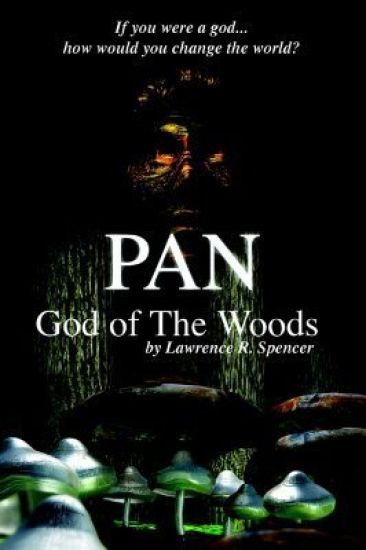
Pan - God of The Woods

Pan - God of The Woods

Lawrence Spencer

Lulu.com
2007
pokkari
Pan, the Greek god of forests, shepherds and fertility, has long represented the pagan gods in general. With the advent of the Christian church communication with the pagan gods was very heavily suppressed by priests who have a vested interest in eliminating religious competition, by any means required, including, but not limited to lying, stealing, cheating, murder, mayhem, extortion, torture and blackmail. As a result, general public attention to the pagan gods disappeared about 2,000 years ago. PAN-God of the Woods assumes that the pagan gods may still be active, living beings. If any of the ancient gods are still around in the 21st century, what are they doing now? If they are here now -- still watching, still powerful, still immortal -- where or how might we contact them? If Pan is still around which of us mortals could not use the helping hand of a friendly god once in awhile? -- Lawrence R. Spencer